Catch ‘22′ while you can

Time was when January was quiet for special libraries, with staff being away and usage down. But not any more. This year the Research Library has got off to a brisk start with a series of visitors.

First up is a return by Lara Allport of The National Grid

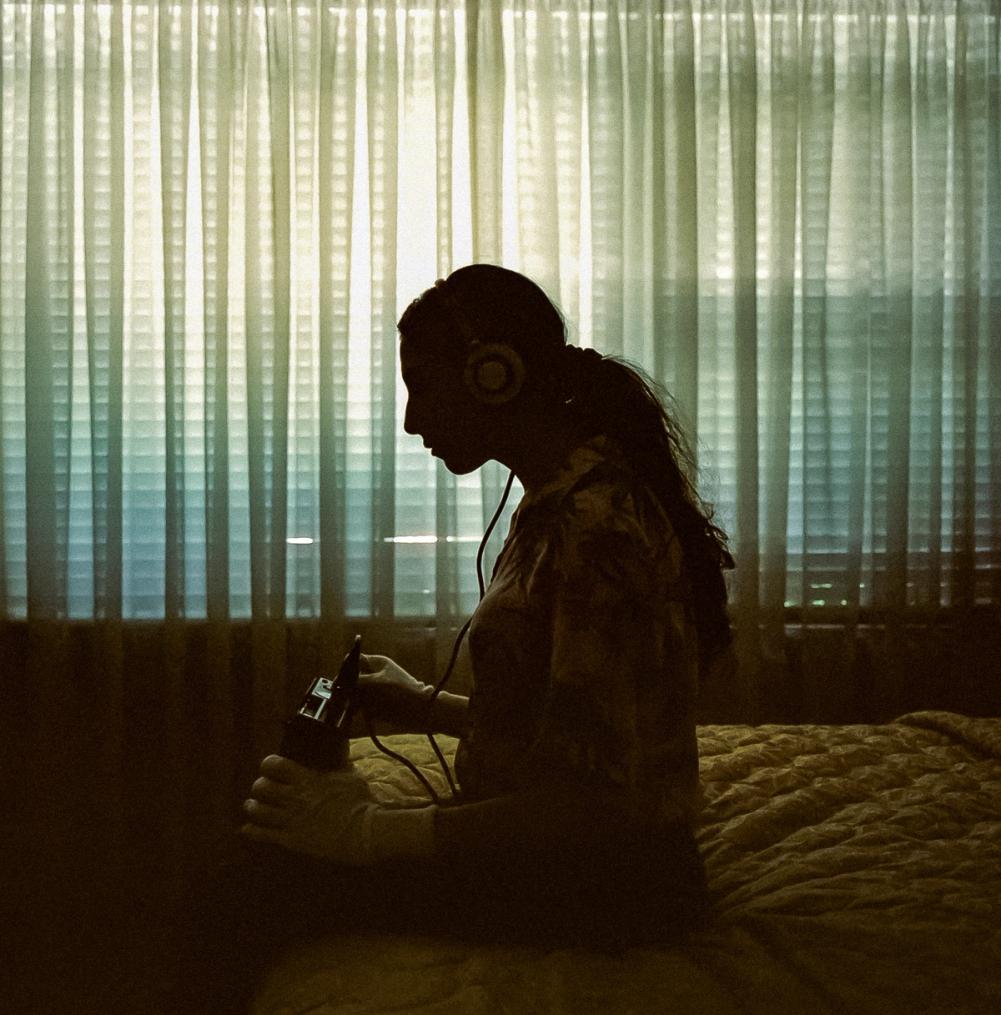
This time, Lara is gathering images and ideas for an exhibition she is producing called ‘22’.

‘22’ is a group show, celebrating female artistic talent from around the world. Each of the 22 artists is required to produce an original piece especially for the exhibition, which means of course that all the works will be premiering at the same time. ‘22’ opens Friday 18th June, 2010 at The National Grid Gallery in Brookvale. The band KissKiss ‘n Tell will be performing live on the night.

The artists involved:

1. Karina Zerefos (aus)
2. Lara Allport (uk)
3. Bridge Stehli (aus)
4. Bec Crockett (aus)
5. Katherine Barrett (uk)
6. Carley Casey (aus)
7. Ruth Cadioli (aus)
8. Shannon Crees (aus)
9. Kelly Thompson (nz)
10. Bec Winnel (aus)
11. Rachel Wells (aus)
12. Fumi Mini Nakamura (us)
13. Andrea Innocent (aus)
14. Rebecca Dent (aus)
15. Mia Taninaka (aus)
16. Kaitlin Beckett (aus)
17. Lang Leav (aus)
18. Jaimee Paul (aus)
19. Rozanna Johnson (aus)
20. Kristy Milliken (aus)
21. Maddi Boyd (aus)
22. Claire Reid (uk)

See more about Lara and her artwork.

Who’s there?

Today we’ve had another welcome visit to the Research Library by Michelle Maddison, curator at the Museum of the Riverina in Wagga Wagga

Michelle is at the Powerhouse doing background research for her new exhibition “Knockers”.

This exhibition features more than 250 doorknockers from the collection of former Wagga resident the late Mrs Sylvia M. Seccombe, who started acquiring them in 1933.

Her collection was so impressive that Michelle originally considered calling the exhibition “Mrs Seccombe’s marvellous knockers”. However she settled on ‘Knockers” as being somehow, well, snappier.

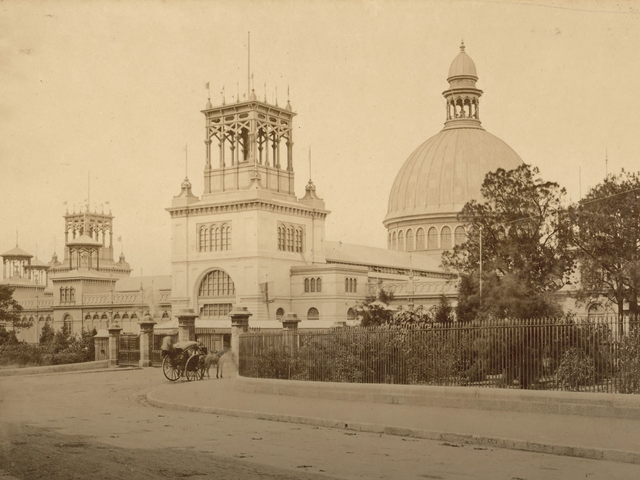
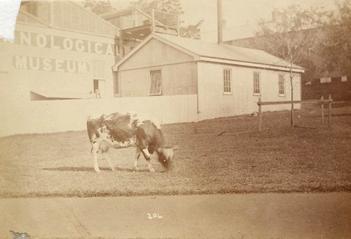
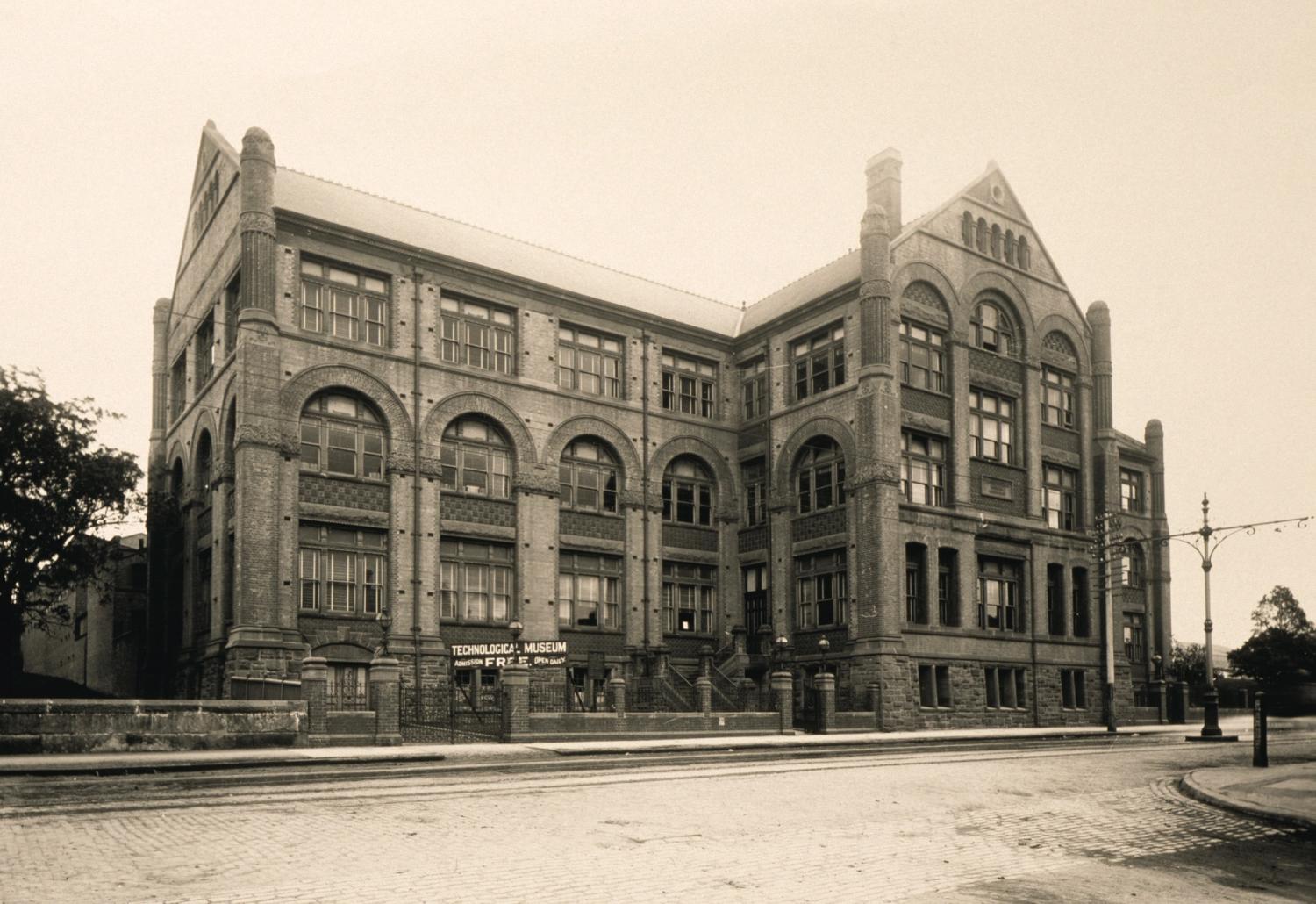
There is a link to the Powerhouse Museum, as Sylvia Seccombe was the daughter of Richard T. Baker, the second Curator of the Technological Museum (as it was then known) from 1895 to 1921. Michelle believes that Mrs Seccombe’s collection clearly shows the influence of her curator father in the way the objects were stored and catalogued.

“Knockers” opens at the Museum of the Riverina, Wagga Wagga on December 10.

Cappuccino, anyone?

Last week, we had an interesting visit from Lisa Nash and Bernie Lenterne from the Teaching and Learning Resources Unit (ie library) of the Catholic Education Office, Parramatta.

TLRU has a physical location at Mount Druitt, where it provides multipurpose workspaces available for video and audio editing, meeting, performances, reading and study. As an added inducement, Lisa and Bernie have installed a coffee machine which is so popular that library users are now able to whip up their own cappuccinos.

Like most specialist libraries, TLRU’s physical collection of books and journals is augmented by a virtual collection of education resources, or ‘e-resources’, which provides access to online databases such as
ERIC and EbsoHost for staff research and curriculum development. Not so common in special libraries, staff also have access to an electronic book library.

TLRU provides services for staff such as research, video and audio services (eg training in videoing and podcasting), Teacher Librarian support, professional memberships, access to television and newspapers.

To find out more about this interesting library, have a look at Lisa’s Blogspot.

E-victing books from the library

What happens when schools decide that a physical library is no longer necessary? When books and journals are removed from the shelves, and the shelves themselves removed? If books as objects are replaced by digital information, what exactly does this mean? How will it work? What effect does it have on students? On teachers? On thinking processes?

Cushing Academy, a prep school near Boston has embraced a digital future.

Connections and calibrations

Recently I was asked to contribute a piece about the Powerhouse Museum’s Research Library to the Collections Australia Network.

CAN links collecting institutions across Australia and provides online services to professional and volunteer workers involved with public access collecting institutions. These services are particularly beneficial to small and medium-sized collecting institutions in regional Australia. For more information contact CAN manager Ingrid Mason or outreach officer Sarah Rhodes.

Here is the piece I wrote. Bear in mind that it’s written for an audience of librarians and has library-speak sprinkled throughout. In spite of that I think it gives an accurate picture of the Research Library. Besides, I couldn’t resist the opportunity to wax lyrical about its amazing collection:

“The Powerhouse Museum and its Research Library began at the same time, in 1880.

The Library collection has been developed in parallel with the Museum object collection, the purpose being to reflect what and how the Museum collects. With a content that underpins exhibitions and programmes, the Library principally supports curatorial research. It also supports the corporate objectives of Museum management.

Since 1986, the Research Library has contributed to Libraries Australia and its predecessors. In 2005 it commenced membership of the National Library’s LADD service, which has streamlined the Inter Library Loan process and markedly increased borrowing requests from other libraries.

Aeronautical history, design, antiques, ceramics/pottery, costume and costume history, technology and society, numismatics, philately, textile crafts, textile making, music, interior decoration, jewellery, photography, physics, glass, graphics, fashion design, furniture, museology…the diversity of subject areas makes it hard to describe the Library’s collection. Perhaps it’s best summed up as eclectic: technology and decorative arts intersecting within a social history context.

Over the last 129 years, it has been growing steadily through a combination of purchases and donations. There is virtually no weeding, as older publications are indispensible in providing a record (ie snapshot) of a particular era. Thus the Research Library’s collection presently consists of approximately 40,000 items that include books, serials, and audiovisual material. These are catalogued to the third (and highest) level of description within AACR2, using the Dewey and LCSH classification systems. The aim is for browsability, which suits our internal clients. Even when Dewey numbers have changed, we’ve retained the earlier sequence because it is easier for our users. Some numbers within the museology subject area have been re-located, but we retain the older classification as it enhances browsability of the museology collection. In common with many special library collections, idiosyncrasies and in-house conventions are maintained. For instance, following the request of curatorial staff many years ago, books on pottery and porcelain are arranged by country rather than by material or forms.
This style of cataloguing has resulted in a vibrant collection that is highly accessible. The detailed descriptions allow for intricate calibrations that result in rich returns when searching. As a reference librarian, I am constantly surprised and delighted by unexpected connections in subject areas. As for the Library staff, our years of experience as users and interpreters of the Research Library’s resources have provided us with an instinct for knowing what fits the collection and what does not. We are fortunate to be able to say that the Library collection is a joy to work with. “

Although this is a Research Library for Powerhouse Museum staff, members of the public may visit by appointment. Just email me or phone (02) 9217 0258 to set up a time.

Reggio Emilia et al

It’s always exciting to receive new books in the library, especially in these times of tight budgets, and the latest clutch of acquisitions is no exception. Even better, we got to preview them before ordering instead of selecting from a catalogue, thanks to education officer, Kath Daniel, of Education & Program Development, who arranged a visit from Mary Fetterplace of The Book Garden

All the books are about the process of art and creative expression in early childhood, but the standouts are the ones from the Reggio Emilia in Italy. Even the titles are interesting: ‘Dialogues with places’; ‘Children, spaces, relations: metaproject for an environment for young children’; ‘Making learning visible: children as individual and group learners’ ; ‘The hundred languages of children’. Not only beautiful, the books are practical. I asked graphic designer, Kate Lamerton who is the online producer of the wonderful Powerhouse Museum children’s website what she thought.

According to Kate, these publications articulate exactly the philosophy that is being worked towards on the PHM children’s website – to inspire and suggest without being prescriptive; to encourage both creative expression and an awareness of the aesthetic of art.

The books are currently being catalogued and will soon be available for loan to staff and to other libraries on Inter Library Loan through the Libraries Australia Document Delivery Service, For further details contact the Research Library’s Inter Library Loans expert Dimity Holt dimityh@phm.gov.au

For more about the Reggio Emilia foundation/philosophy of early childhood education read on

Museums as soup kitchens for the soul

If you think museums as soup kitchens sounds weird, try thinking of them as community hubs. Museums consultant, Elaine Heumann Gurian, has no trouble with visualising either, in fact it was she who developed these concepts. Elaine visited the Powerhouse Museum last week to discuss the changing face of museums with staff.
Elaine challenges the idea of Museums being institutions of passive education and exhibitions. She urges museums to interact with their audiences, by inviting community participation and collaboration in what is displayed. This is already happening online through social media such as Flickr, Twitter and Facebook, but Elaine suggests that participation go a step further – a face to face engagement with visitors while they are in the museum.
Here, Elaine writes about her ideal, an imaginary place of the near future, the Blue Ocean Museum.

It never rains…

Yesterday afternoon, during a particularly heavy fall of rain, it was all hands to the pump in the library, when one of our users rushed from the shelves to say there was water streaming down a wall and on to our folio collection.

While one of us phoned for plastic sheeting, I raced with bucket and cloths down to the area where two people were grabbing books from the affected shelves and stacking them on the floor out of harm’s way. By the time the plastic sheeting arrived, the shelves affected by the leaks were cleared and we draped plastic sheeting over the surrounding shelves to cover the contents from splashes. I was then able to turn my attention to the books on the floor, mopping them and standing them to air.

While all this was going on a Museum staff member on a ladder, investigated the leak from outside the building, and the cause of the problem was revealed. A plastic DVD case, hurled from the next door appartment building, had landed in the gutter and blocked the downpipe. While many objects thrown from the appartments are found on the roof (why??), this was the first time that one had lodged in such an awkward place. Anyway, as soon as it was removed, the leaking stopped.

Well, the books are now dry and safe, Today’s job is to put them back in order and on the shelves!

Australian farming in the 1930s

Today’s library visitor came to research the heritage farming machinery and techniques of Savernake Station, a sheep farm near Corowa in New South Wales. We set her up with the 1992 video about Savernake Station, Heritage farming in Australia.

The use of original 16mm footage, shot in the 1930s, accompanied by a short selection of still photographs, show the activities of the farming year, from ploughing and sowing to harvesting. What’s interesting, is that they feature both modern and traditional methods: horses and tractor are side by side. These images capture the transition of framing methods from horse-powered farming and early mechanical inventions to the forerunners of today’s modern equipment and largescale farming practices.

Our researcher was delighted to find out that 1935 was a vintage year for farming in NSW. The sun shone at the right time, just enough rain fell when it was needed. The resulting harvest at Savernake Station that year was a record – the film shows the construction of a 180 ton thatched haystack.

You can visit Savernake today, check out their eco tours and farmstays.

Whisper who dares

I’ve heard of horse whisperers, dog and cat whisperers, but until last week I’d never heard of a Muse Whisperer. Enlightenment came in the form of an email query from Felicia Rose Adler, Muse Whisperer . Felicia has a kalaga which she believes belongs to a special person, and is on a mission to find this person. As Felicia says, life is a tango – let’s dance! By the way, if you’re interested in rugs, have a look at the tea and carpets blogspot.