Archive for the 'Scientific Instruments' Category

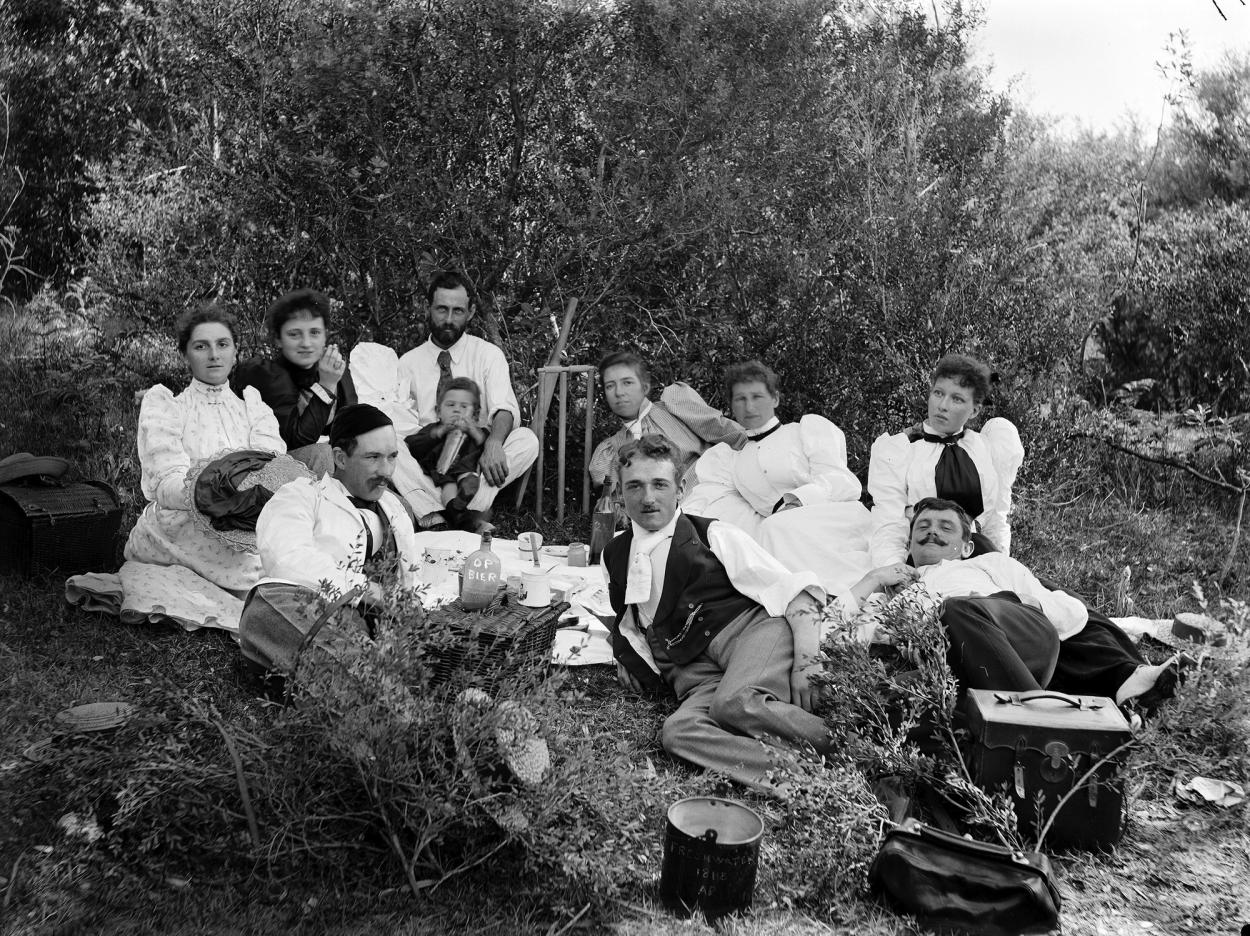
Expedition to establish first Meteorological Observatory Kosciuszko, 1897

Expedition to establish first Observatory (detail), by Charles Kerry, Kosciuzko, New South Wales, Australia, 1897, Powerhouse Museum, 85/1284-1337

Expedition to establish first Observatory (detail), by Charles Kerry, Kosciuszko  New South Wales, Australia, 1897, Powerhouse Museum, 85/1284-1337

There are numerous ways in which information is added to our collection. One of the most obvious is a result of the work done by staff to update our records but another important source of information comes as a result of the continual enquiries and suggestions from the general public.

A really good example of this occurred a few months back when I received an email from Adrian Ingleby enquiring about some photographs the Powerhouse Museum held relating to the ascent of Mount Kosciuszko to establish the first observatory there. Adrian’s interest was in a relative of his Bernard Ingleby (you can see him above, he’s the young guy on the right wearing the beanie) who accompanied Clement Wragge on this expedition. After a few discussions and an exchange of emails Adrian put me on to a wealth of amazing information about two of the photographs which were in the collection, and this post is a result of that exchange.

Continue reading ‘Expedition to establish first Meteorological Observatory Kosciuszko, 1897′

You Better Watch Out – NSW Police Random Breath Testing

NSW Police  Insignia

This time of year is one of consumable abundance in Australia. We are encouraged to indulge in large quantities of high calorie, highly processed sugar-rich foods; and to consume alcohol. Although a legal and celebrated intoxicant, alcohol is a strong mood altering drug, and consumption levels can be quite difficult to gauge. Intoxication in individuals can vary greatly, depending on weight, health, tolerance, and state of mind at the time of consumption; however, the New South Wales Police have adopted and enforce the maximum level of alcohol per 100 millilitres of blood be under .05 grams to legally operate a vehicle on a public road. Some individuals may drive a vehicle knowing that they are likely over this limit; others may have no real idea – having consumed alcohol in a socially accepted and sometimes expected manner. This may well ruin their Christmas and New Year holidays!

Continue reading ‘You Better Watch Out – NSW Police Random Breath Testing’

Einstein’s Theory of Relativity Proven in Australia, 1922

In late August 1922 a group of astronomers, naval men, and Aboriginal stockmen began the arduous task of unloading their complicated scientific equipment and stores from boats onto a deserted beach on the coast of Western Australia. The shallow nature of the approach meant the boats were anchored three or four miles from the high-water line and the stores, after being brought to shore, were then transported by donkey wagons to the observation site at Wollal. This was no ordinary expedition and its members knew the eyes of the world were on them waiting to see if they would be the ones to finally prove Einstein’s controversial ‘Theory of General Relativity‘.
Continue reading ‘Einstein’s Theory of Relativity Proven in Australia, 1922′

Guns and public opinion

Owen Machine Gun

90/322 Machine Gun, Owen Mark 2/3, Lysaghts, Port Kembla, NSW, Australia, 1948 – Powerhouse Museum Collection

Firearms are a polarizing issue. The middle ground is a stripped no-man’s-land. The argument against prevalent gun ownership is of course more than ever legitimate. And honest gun ownership, confined to sportspeople, professional shooters and primary producers is provisional; and reasonable. Ownership outside these areas, except where the firearms have been irreversibly disabled, is criminal. One of the most fundamental reasons humans have designed and engineered firearms – for protection and self-defence – is not a legitimate reason for firearm ownership anywhere in Australia.
Continue reading ‘Guns and public opinion’

Photographing the 1874 Transit of Venus

P3548-780.jpg

Composite portrait, frontispiece for publication 'Transit of Venus 1874', 1892, Powerhouse Museum,P3548-780

The Transit of Venus on 6 June 2012 is the latest occurrence of an event that has shaped the scientific history of Australia. Captain Cook’s expedition to observe the 1769 transit in Tahiti led to the European settlement of Australia. The 1874 transit may not have been quite as auspicious but it did lead to some major advances in the use of photography for astronomical observations.

Continue reading ‘Photographing the 1874 Transit of Venus’

World Meteorological Day – early meteorology in Australia

 Lightning strikes on the Sydney Harbour, 7 December, 1892. The photograph was exposed over four minutes giving an impression of five separate stri...

Lightning strikes on the Sydney Harbour, 7 December, 1892. The photograph was exposed over four minutes giving an impression of five separate strikes. Government Astronomer H C Russell calculated the height of the Darling Harbour flash from the cloud to the water to be approximately 1540 feet.

Lieutenant William Dawes, who came out to Australia with the First Fleet, made the first recorded meteorological observations in Australia but the next set were probably made from Parramatta Observatory between October 1822 and March 1824. 
Continue reading ‘World Meteorological Day – early meteorology in Australia’

Flash of insight led to brilliant Australian invention

aas-00206267-300x167.jpg

Atomic absorption spectrophotometer. Powerhouse Museum Collection.


Dr Alan Walsh had an ‘aha’ moment while gardening in 1954. Straight away, he phoned a friend and said: We’ve been measuring the wrong bloody thing! A CSIRO chemist, he wasn’t referring to delphiniums (blue) or geraniums (red). He was thinking about atoms that emit characteristic colours when heated in a flame – elements such as strontium (red) and selenium (blue).

At that time, the concentration of certain atoms in a sample was determined by measuring the amount of light the sample EMITS when heated in a flame. He realised it would be better to measure how much light of a particular colour (wavelength) the sample ABSORBS. He thought his ‘atomic absorption’ method would be more accurate than the emission method.

Now Walsh had been thinking about this problem off and on for years. In his ‘aha’ moment he realised it was possible to get around the major stumbling block: the need to filter out the emitted light so it didn’t swamp the measuring device.

Walsh soon set up an experiment to test his ideas. It worked brilliantly. With the help of other scientists and technicians, he designed a new type of lamp containing the element to be measured. His technique did prove to be more accurate than the old method – and it was more sensitive, and useful for many more elements. His work led to the creation of a local industry making atomic absorption spectrophotometers (AAS). It also led to scientific and practical advances in many fields as CSIRO scientists developed new techniques and labs around the world purchased the instruments.

One of these instruments was offered to the Museum a few years ago by Tim and Kylie Bennett from Alstonville in northern NSW. They were planning to upgrade to a new AAS for their analytical service lab, and the donation of their old one was very welcome. They told us its original owner was the University of New England, where it had been used for studying domestic ruminant physiology.

Now that more information is available online, it appears highly likely that the ruminants studied were sheep and the instrument was used to show (among other things) that they need copper and zinc in their diet to grow good quality wool. A nice connection to our wool and textile collections!

More information is also available about the work of the Bennetts’ company, Soiltec. As its name suggests, it was involved in analysing agricultural soils, but it also analysed plant material. This work was largely aimed at helping farmers grow crops without adding unnecessary quantities of fertiliser to the soil. A nice connection to our sustainability theme!

Making connections is a vital role for museums. These include connections between objects and ideas; connections between disparate objects; connections between objects and images; and, most importantly, connections between objects, ideas and people. I hope my chemistry-themed blog posts for the International Year of Chemistry have made some interesting connections for you.

Turning on the Canon Canola 1614P

A couple of weeks ago the Museum received a request from Peter Miller for access to a collection object.  Now this type of access is not always granted as it is resource intensive – an object needs to be moved to a suitable location for viewing and a curator or conservator may need to be on hand to move the object – remember this material is kept by the Museum for the people of NSW in perpetuity and so we want it to last.

However if a genuine benefit to the Museum in the form of new research and information about the object is an outcome then we see this type of request as beneficial.  Now this chap wanted to inspect a Canon Canola 1614P, a desk top programmable calculator and not only that he wanted to turn it on.  Why?  Because Peter was writing (for computer) an emulator and turning it on would help Peter “establish how certain operations worked, when they are not completely described in the operator’s manual.”


I thought this was a great endevour as an emulator of the Canon Canola would let everyone see how it worked without having the real thing and in some form preserve its character for others to enjoy.  We checked with conservation of course and bought it up to speed with electronics providing the variac which would introduce current slowly.  You can see the result of our efforts below and enjoy Peters vivid description of its operation and peculiarities.

Brian Schmidt wins the Nobel Prize

It’s an exciting time for astronomy in Australia, with the recent announcement that Professor Brian Schmidt is to receive the 2011 Nobel Prize for Physics and the strong possibility that the nation could be selected next year as the site for the Square Kilometre Array (SKA). Both optical astronomy (Schmidt’s area of expertise) and radio astronomy (the domain of the SKA) have flourished here since World War 2. Australia is thoroughly embedded in the amazing international effort to observe, measure and understand the universe.

blog-schmidt-00200100-300x235.jpg

Powerhouse Museum Collection. Gift of Mt Stromlo Observatory, 1989.

While most of the Powerhouse Museum’s astronomy collection relates to the history of our own Sydney Observatory, we have a few items used at Mt Stromlo, where Schmidt carried out his prize-winning observations. Professor Ben Gascoigne built this polarimeter at Mt Stromlo in 1963 to detect magnetic fields in distant dust clouds. The instrument, currently on display at Sydney Observatory, was designed to be bolted onto a telescope, gather the light scattered by dust particles, and detect the alignment of particles that indicates the presence of a magnetic field.

Now Brian Schmidt was born and studied in the USA but carried out key work in Australia. The aura of winning a Nobel Prize is such that we are happy to claim him as one of ours, while also making the same claim about Professor Elizabeth Blackburn, who was born and studied here but migrated to the USA, where she did the work that won her the 2009 Nobel Prize for Medicine.

Both Schmidt and Blackburn hold dual citizenship, so they can be claimed legitimately by both nations. Importantly, these scientists can be seen as valuable role models for the youth of both countries, which is why the Museum is interested in telling their stories – as well as the stories of less stellar scientists such as the talented Ben Gascoigne, whose other claim to fame was as the husband of artist Rosalie Gascoigne (both of whom were born in New Zealand but chose to live in Australia).

History week: science delivers our daily bread

Guthrie-medal-00808347-300x295.jpg

Powerhouse Museum Collection.

It’s International Year of Chemistry and History Week, which this year has food as its theme: a perfect time to meet Frederick Bickel Guthrie, the chemist on this medal. Guthrie worked with a better-known Australian scientist, William Farrer, to develop strains of wheat that were resistant to both drought and rust, a fungus that damages grain and reduces yields. Rust is causing problems in the wheat industry again today.

wheat-rust-215x300.jpg

Powerhouse Museum Collection.

This sample of rusted wheat was collected in 1890. Farrer’s Federation wheat variety helped the wheat industry revive in the following decade. This is why he featured on our first $2 banknote alongside drawings of wheat stalks.

wheat-farrer-2-300x150.jpg

Powerhouse Museum Collection.

Farrer systematically crossed wheat varieties and selected for desirable qualities, but he only grew small plots of each type. In a world-leading research program, Guthrie made a miniature roller mill to produce flour from the small quantities of grain that Farrer produced. He carefully analysed the flour’s gluten, bran and pollard content, noted its strength and colour, baked tiny loaves of bread from it, and advised Farrer which varieties were most nutritious and gave the best quality bread.

wheat-stalks-300x225.jpg

Powerhouse Museum Collection.

Here are the wheat stalks that artist Gordon Andrews used as models for his banknote drawing. They are in very good condition, stored in our archives along with his sketches. The fact that wheat can be stored for long periods helps make it a valuable commodity and a staple crop in many countries.

wheat-threepence-272x300.jpg

Powerhouse Museum Collection.

Wheat also featured from 1938 to 1966 on our pre-decimal currency, on the threepence coin. Like the $2 note, it is a testament to the value of this crop to our daily lives and national economy.

wheat-Simon-300x225.jpg

Powerhouse Museum Collection.

Guthrie popped up again when I decided to research the use of instruments like this chondrometer, made by Henry Simon in England. Despite the fancy name, it’s simply a device for measuring a small volume of grain (in the conical vessel) and weighing it by hanging the little bucket from the steelyard, whose base screws into a hole in the top surface of the box: a neat, portable unit for checking the density of a sample taken from a wheat crop. Density is a guide to wheat quality and determines the space required to store and transport the crop.

I was surprised to discover that this instrument is so crucial to wheat economics that in 1918 the NSW government set up a ‘chondrometer investigation committee’. I wondered if Guthrie was a member of this body – and one contemporary news item confirmed that he was. The committee considered the available chondrometers and approved a model that combined various features of those on the market.

Franklin-300x212.jpg

Powerhouse Museum Collection. Donated by Tooth and Company Ltd under the Australian Government's Tax Incentives for the Arts Scheme, 1986.

Back in the basement, I discovered a NSW standard chondrometer, with the name of Sydney maker AL Franklin faintly visible on the steelyard. This instrument complies with the main recommendation of the committee: to cover a smaller range of densities, from 32 to 75 pounds per bushel (compared to 13 to 70 on the Simon chondrometer and 0 to 80 on others) and thus give more precise measurements.

wheat-mill-model-286x300.jpg

Powerhouse Museum Collection.

Our collection includes objects that represent every facet of the wheat industry and the everyday use of wheat products, from ploughs to harvesters, from a wheat wagon to grinding mills, from flour bags to toasters. This 1880s model shows all the processes that take place in an automated flour mill. I was intrigued by the final step: the ‘silk dressing machine’ above the bags. It turns out that silk is still the best material for dressing (sifting) flour. One more search was in order: do we happen to have any dressing silk in our collection? The answer is yes: two swatch books with silk of varying mesh sizes! The moire effect makes them a bit tricky to photograph, so here is a small sample of one of them.

wheat-silk-300x168.jpg

Powerhouse Museum Collection. Gift of David Sheedy, 1991