Archive for the 'Regional Services' Category

Powerhouse Museum Movable Heritage Fellow for 2013 -Leanne Wicks from Kandos

Miners hard hat, 1947, Kandos

Miners hard hat, 1947, Kandos

Coming up with an idea for a research project was not difficult for me living on the edge of the Western coalfield of NSW.  Evidence of Kandos’ past reliance on the winning of coal doesn’t take much digging. 

Continue reading ‘Powerhouse Museum Movable Heritage Fellow for 2013 -Leanne Wicks from Kandos’

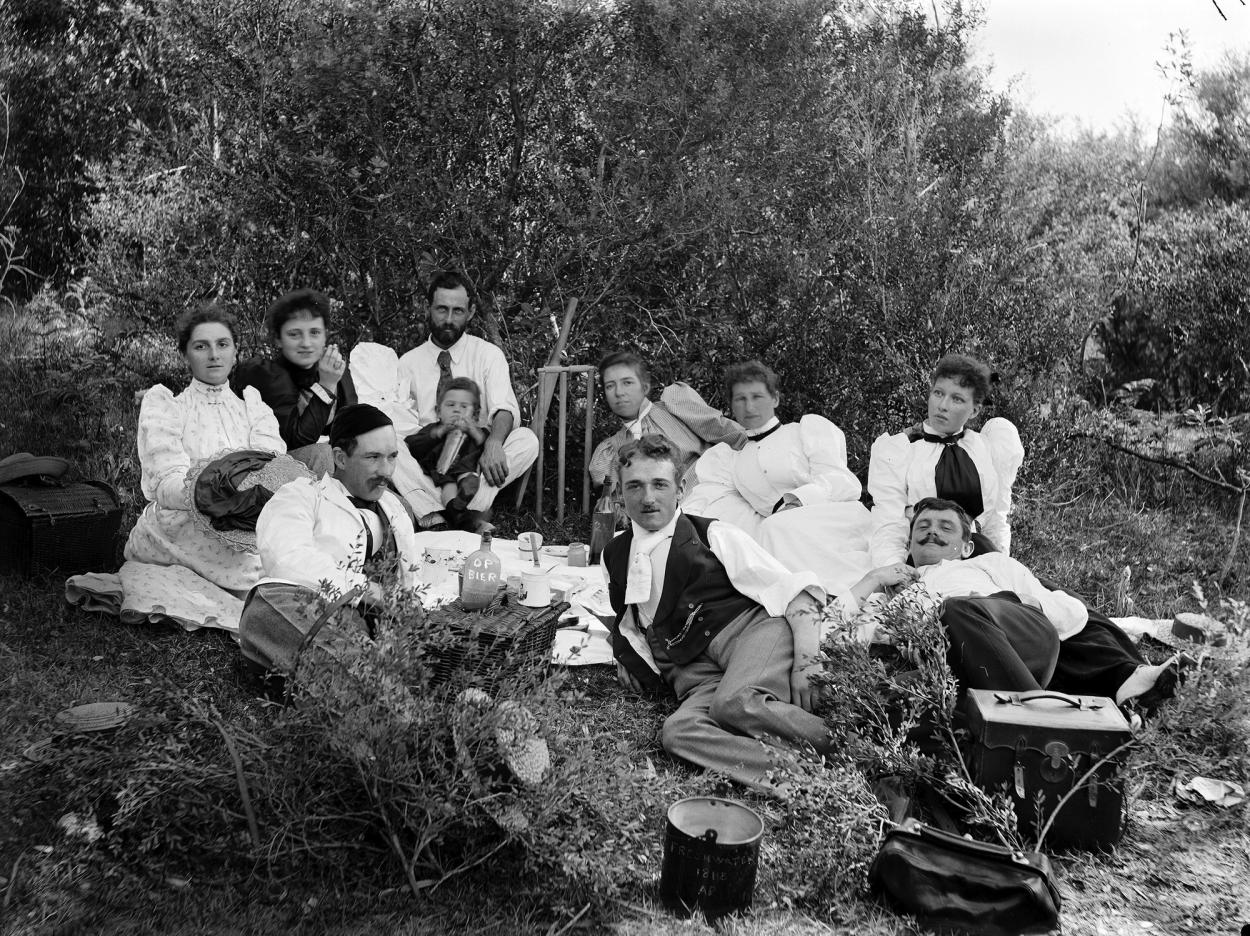
Doing jigsaws at work, recapturing an 1880s image

The Mr Taylor recovered glass plate negative

The recaptured image from an all but destroyed glass plate negative

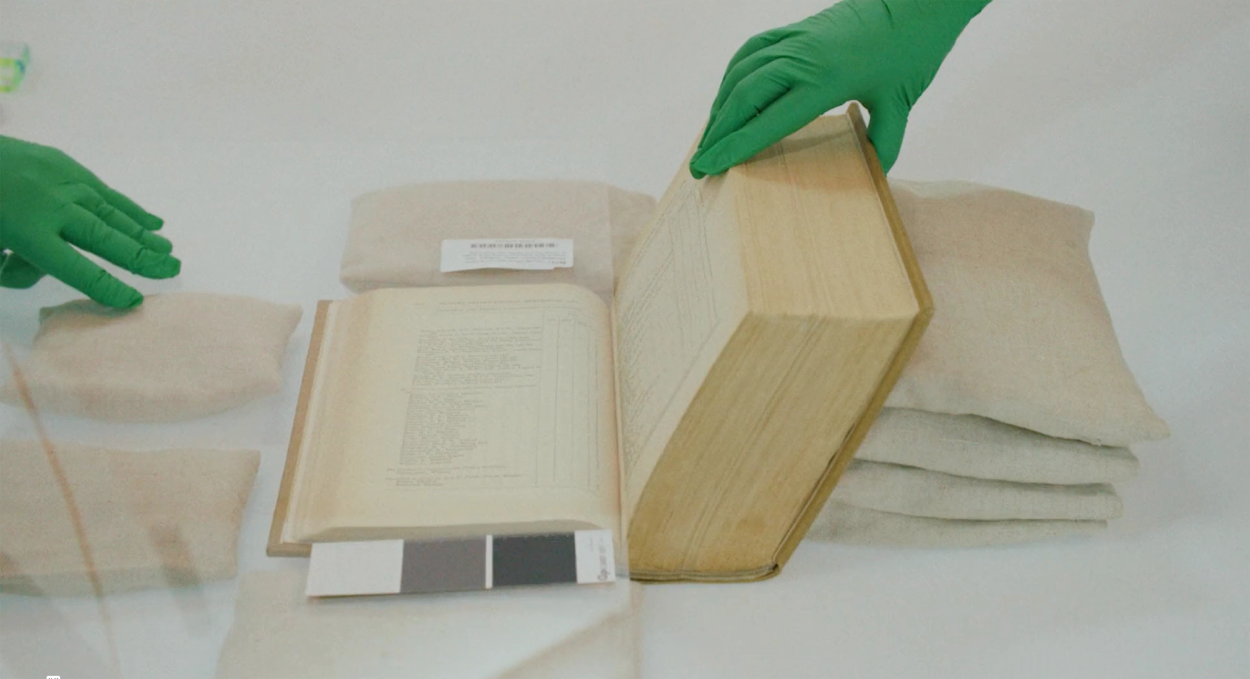
Most people don’t have the patience to attempt what our recent intern, Amir Mogadam from the Universtiy of Newcastle has just finished – probably one of the most challenging jigsaws you’re ever likely to see. But conservators are a patient if somewhat quirky mob. Amir worked with conservator Rebecca Main on a storage project to condition report, treat and rehouse a collection of large glass plate negatives (515 x 415mm) which were produced around 1870-1880 at the Freeman Brothers Studio, Sydney.
Continue reading ‘Doing jigsaws at work, recapturing an 1880s image’

Flappers, Frocks and Fashioning the Modern Woman, Tales from the Australian Dress Register

Flapper Dress of Marjorie Florence Smith. Collection and image courtesy: Cavalcade of History and Fashion Inc

Flapper Dress of Marjorie Florence Smith. Collection and image courtesy: Cavalcade of History and Fashion Inc

The end of the First World War saw a tremendous change in society and the horrors of war prompted people to question the rigorous social and moral values of the preceding Edwardian Era. As with any time in fashion history, contemporary concerns and thought affected fashion and so, the nineteen twenties came to symbolise in dress everything that the end of the First World War had brought about –relaxed social attitudes, greater freedoms for women, an economic and creative boom, and most importantly the turn towards ‘modernity’.

Continue reading ‘Flappers, Frocks and Fashioning the Modern Woman, Tales from the Australian Dress Register’

Hume Costume Collection – Boorowa Museum. A report from the Powerhouse Museums Movable Heritage Fellow for 2012

museum.small_1-450x337.jpg

Boorowa Museum

Each year the Powerhouse Museum’s Regional Services Program offers a Movable Heritage Fellowship to students residing in New South Wales enrolled at any University campus. Movable Heritage refers to any natural or manufactured object of heritage significance. The successful applicant undertakes a research project as part of the Fellowship on one or more objects in a community museum, historical society or other collecting institution. They are awarded $5,000 and also spend one week at the Powerhouse Museum receiving expert guidance by a supervising member of staff.

The winner of the 2012 Movable Heritage Fellowship was Rosie Strange. In this post, Rosie shares with us the nature of her costume research project and the experiences she has gained working with Lindie Ward, textile and lace curator at the Museum.

Continue reading ‘Hume Costume Collection – Boorowa Museum. A report from the Powerhouse Museums Movable Heritage Fellow for 2012′

Tales of a travelling platypus, supporting regional museums

2004/71/1 Rug, platypus, skin/ felt, New South Wales, Australia, 1880-1930. Collection: Powerhouse Museum

2004/71/1 Rug, platypus, skin/ felt, New South Wales, Australia, 1880-1930. Collection: Powerhouse Museum

Bright and early on a Monday morning in September, Conservators Carey Ward and Vanessa Pitt made the long and sometimes bumpy ride in the Powerhouse Museum (PHM) truck to Alstonville Plateau. Carey and Vanessa had been given the task of taking a very special A category object to the Crawford House Museum – a rare platypus skin rug made from the pelts of approximately 80 platypuses, and bordered in possum fur, backed by soft felt.

Continue reading ‘Tales of a travelling platypus, supporting regional museums’

Gulgong Pioneers Museum Blog

602_Pioneers-300x191.jpg

Gulgong Pioneers Museum. Image courtesy Mudgee tourism

I was contacted late last year by Marie Gorie from the Gulgong Pioneers Museum about a project she was about to undertake. She wanted to re-order the textile store. Maintaining a collection store takes a lot of time and resources and obviously, as the collection grew, some of the maintenance had slipped.
Continue reading ‘Gulgong Pioneers Museum Blog’

Tamworth, the electricity town: A report from the Powerhouse Museum’s Movable Heritage Fellow for 2011

My name is Sally Inchbold-Busby and I have had a very rewarding year working on an oral history project at the Tamworth Powerstation Museum (TPM) as recipient of the 2011 Powerhouse Museum’s Movable Heritage Fellowship. I used my experience in Tamworth to complete my final internship for my Master’s Degree in Museum Studies at the University of Sydney.
Tamworth has a remarkable industrial history. In 1888, Tamworth became the first town in the southern hemisphere to have its streets lit by a power station owned and operated by a municipal council. To celebrate the Centenary of electric street lighting in 1988, a group of electricity industry employees created Australia’s first all-electric museum. Today visitors can see a nationally significant collection that includes a working replica of the original power plant and an amazing collection of photographs, industry apparatus, light globes and electrical appliances spanning from early development to the 1960s.
The broad aim of my project is to research and collect the oral histories behind the key objects within the museum’s collections. A further outcome is the development of a publication to provide public access to previously undocumented information. I am working with Sandra McMahon who is TPM Manager and Director of the Tamworth Regional Gallery under the auspices of the Tamworth Regional Council. My brief is to develop a handbook that will take the reader through the museum’s narrative while telling the story of the Tamworth’s electricity industry – the idea being to draw out the social aspects of the story to complement the museum’s strong technical base.
During the first half of the year I set myself the task of selecting twenty-five objects on which to base the story and my oral history research. This was not an easy task as there are so many fascinating objects in the many collections at the museum. I spent considerable time getting to know the collections and the people who work with them. Because I am interested in early steam engines, I decided to focus the first part of the story on the development of the 1888 power station. From there I selected objects that represented the technological and social changes brought about by the introduction of electricity.

IMG_2446-450x300.jpg

1888 power plant - John Fowler engine and boiler set with replica Crompton dynamo: Image: courtesy Tamworth Powerstation Museum

Throughout the year I have worked closely with the museum’s team of volunteers, who as former employees of the industry have some great stories and a wealth of information to pass on. I have interviewed nine people who have provided insight into what it was like to work in the power station and the importance of the industry to Tamworth. The stories I have heard and will include in my publication are moving, dramatic and entertaining. Here is an excerpt from an interview with Mal Crocker recalling peak load times at the power station in the early 1950s.

I witnessed a power generation overload which was quite exciting. The engine room where the turbines were housed would vibrate at times of peak loading. Most winter mornings around 8.00am when the industry had started for the day, all the offices and shops would have their lights on. In the homes it was breakfast time which meant the jug, toaster, stove and the radiator were all drawing power at once. This was peak load time when all the machinery was operating at high demand. The engines would settle down as the morning progressed but the power station really did rock.”

I have also learnt a lot of new things. For example; As mentioned above I know why the power station shuddered on cold winter mornings and that Hotpoint irons got their name when the maker’s wife said the heat needed to focus on the tip.

Hotpoint-Advertisement-Stand-450x411.jpg

Hotpoint iron display stand, 1950s; Image courtesy of Tamworth Powerstation Museum

Through the Movable Heritage Fellowship I have been able to put into practice the understandings I gained from my studies. I have pursued my personal interest in industrial heritage while producing a publication that will be useful to the museum and its visitors. It has been particularly satisfying to develop my own project and follow it through to completion. Throughout I have been supported by the Powerhouse Museum and my colleagues in Tamworth. The development of working relationships has been very important to the success of my project. I have met some wonderful characters and have enjoyed many cups of tea. My project is due for completion later this year and I am currently working on its design. I can’t wait to see the finished product, a publication called ‘The Night The Lights Went On’.#
The Powerhouse Movable Heritage Fellowship for 2012 is now accepting applications from continuing students who would like to undertake a research project on an object or group of objects in a community museum, historical society or other collecting institution. The Fellow will receive $5,000 and spend a minimum of one week at the Powerhouse Museum working with a supervisor.

# A handbook that will take the reader through the museum’s narrative while telling the story of Tamworth’s electricity industry is being launched by Powerhouse Museum energy curator, Debbie Rudder on November 9th, 2011 in Tamworth at the Powerstation Museum.

The many uses of a black dress: Stories from the Australian Dress Register

1.-Bessie-Rouses-black-bodice1-450x675.jpg

Bessie Rouse's black bodice, 1885-86. Collection: Historic Houses Trust of NSW, Photograph: © Alex Kershaw

Black clothing has become a ubiquitous choice for the twentieth century adult. Yet in the nineteenth century black clothing had specific associations and uses. The black garments on the Australian Dress Register show both the versatility of black and how its use in fashion gradually changed during the late nineteenth century and early twentieth century.

Black has many, often contradictory, connotations. Over time it has been a symbol of grief, wickedness, humility, the Devil, seduction, austerity and glamour. It is the dramatic and grown-up opposite to white.

Before synthetic dyes were available blackish fabric was made by dying and re-dying fabric to produce extremely dark tones. This was time consuming and therefore black fabric was expensive. Ironically, the coloured fabric which symbolised austerity was relatively pricey. The destructive nature of the dying process meant that black fabrics were particularly unstable and pre-eighteenth century black dress is rare today.

During the course of the nineteenth century black became especially prominent in the form of menswear and mourning dress. With the industrial revolution and increased urbanisation, black became the dominant colour in urban menswear. Black was also a sensible colour choice, easily disguising the grime of the city and manual labour.

The 1882-1884 morning suit, entered onto the Australian Dress Register by the Grenfell Historical Society, is a classic example of a man’s black formal suit.

The Victorian era gave great significance to the outward display of mourning. Queen Victoria only wore black following the death of her husband in 1861, endorsing lengthy displays of mourning, particularly for widows. Mourning dress was typically of the same cut as contemporary fashions, but made from black lustreless fabric such as crepe. Gradually, as time passed from the bereavement, the woman could wear more luxurious fabrics and accents of lighter tones of grey and lilac.

Black mourning wear could be reused or altered for other purposes. On the Australian Dress Register, Bessie Rouse’s black bodice from 1885-1886 shows signs of alteration and could have been a mourning garment transformed into an elegant evening bodice. In the late nineteenth century black became a daring choice for evening wear and by the early twentieth century intricate, and expensive, mourning practices had begun to wain.

Around the turn of the twentieth century, black and dark colours were often favoured by mature women. There are two examples of such dresses from the early twentieth century on the Register.

2.-Jain-Crain-overpiece-450x461.jpg

Beaded lace overpiece worn by Mrs Jane Crain, 1902 – 1910. Collection: The Museum of the Riverina

The black dress and beaded lace overpiece worn by Mrs Jane Crain in the early twentieth century, held at the Museum of the Riverina, and Hilda Smith’s black silk satin and lace dress, owned by the Griffith Pioneer Park Museum. The ADR entry for Hilda Smith’s dress quotes The Girls Own Annual of 1909 as stating that ‘black dresses are to be very fashionable.’

Hilda Smith's black silk satin and lace dress, 1908 – 1912. Collection: Griffith Pioneer Park Museum

Hilda Smith's black silk satin and lace dress, 1908 – 1912. Collection: Griffith Pioneer Park Museum

In the early twentieth century the first incarnations of ‘the little black dress’ appeared and following World War I black became a cosmopolitan choice. Coco Chanel was noted for her use of black in the 1920s, and her ‘little black dress
Black became a colour of style for all manner of occasions, for women and men. For example, Miss Mather’s black crepe de chine dress from the 1930s, now in the care of the Manning Valley Historical Society, is an elegant example of black daywear from the 1930s.

4.-Black-crepe-de-chine-dress-450x902.jpg

Ladies black crepe de chine dress, 1930 – 1940. Collection: The Manning Valley Historical Society

With all its mixed associations black has become a style staple – at once modern and timeless, sensible and glamorous.

Rosie Cullen-Volunteer, Australian Dress Register
Further reading:

R. Clark; Hatches, matches and dispatches (National Gallery of Victoria, Melbourne, 1987).

D. Ludot; The little black dress: vintage treasure (Thames and Hudson, London, 2001).

J.R. Harvey; Men in black (University of Chicago Press, 1995).

M. Trudgeon; Black in fashion: morning to night (Council of Trustees of the National Gallery of Victoria, Melbourne, 2008).

V. D. Mendes; Black in fashion (V&A Publications, London, 1999).

Changing gender distinctions in dress: Stories from the Australian Dress Register

1.1-William-Charles-Wentworth-court-costume-450x593.jpg

William Charles Wentworths court costume, 1855-1865. Collection: Historic Houses Trust of NSW, Photograph: © Alex Kershaw

Most cultures differentiate between male and female dress – in fabric, colour, style and accessories. In western culture, gender differentiation in dress has gradually changed. Many entries on the Australian Dress Register reflect the evolution of distinctions between men, women and children’s dress in the 19th century and into the 20th century.

During the 19th century, the differences between men and women’s clothing became more pronounced. Men abandoned the coloured silks and satins, embroideries and lace that they had worn for centuries.
Elements of decoration persisted into the 19th century, as can be seen on William Charles Wentworth’s mid-19th century court costume, which belongs to the Historic Houses Trust and is decoratively embroidered in bright colours. Overall, in the 19th century, the trouser suit, typically in muted colours, became the ubiquitous male outfit.

IMG_3881-450x638.jpg

Mourning suit , 1882-1884, Collection: Grenfell Historical Society

Thomas Rolls’ morning suit bought in England in the early 1880s, and now held by the Grenfell Historical Society, exemplifies this style.
Women’s dress became more androgenous in the 1920s, after World War I. It was fashionable for women to take on a boyish appearance, cutting their hair short, flattening their chests and wearing calf length, shift dresses.

3-David-Jones-Dress-450x851.jpg

2008/8/1 Evening dress made for May Camille McDonald (Dezarnaulds), David Jones, 1923. Collection: Powerhouse Museum

On the Register, the David Jones dress from the Powerhouse Museum, and the Museum of the Riverina’s beaded dress made by Miss Una Simpson, are both from the early 1920s and show the simple shape of women’s dress in this period.

4-Beaded-dress-made-by-Una-Simpson-450x514.jpg

Beaded dress mde by Una Simpson, 1925-26. Collection: Museum of the Riverina

Trousers, previously only male attire, very gradually became acceptable for women.
It is not only in overall style and colour that gender distinctions can be found, but also in the details of a garment. The way men’s coats and jackets button left over right is inherited from the days when a man drew his sword with his right hand from his left side. The buttons were placed on the right-hand side so that the fabric didn’t catch as he drew his sword. In contrast, a woman’s jacket, coat or bodice fastens on the other side, i.e. her right side over left.

Pockets are another garment feature which historically reflected gender. In the 19th century externally visible pockets on men’s clothing were widespread and could be accentuated, for example, by a handkerchief or watch chain in a breast pocket. In contrast, women’s pockets in the 19th century were generally hidden from view in the seams and folds of their clothing.
The black dress from the Museum of the Riverina worn by Mrs Jane Crain in the early 20th century has a pocket hidden within its cotton petticoat.

5-Quirindi-Wedding-dress-450x601.jpg

Wedding dress, 1877. Collection: Quirindi and District Historical Society

The Quirindi and District Historical Society’s 1877 wedding dress features one decorative pocket, but also has a hidden pocket on the inside of the garment. Discrete pockets were considered more feminine and therefore appropriate for ladies.

While gender distinctions were quite pronounced in adult clothing in the 19th century, such differentiation was not considered important at an early age. In general, infants wore long white dresses until they could walk and toddlers wore shorter loose fitting dresses. Until the age of five or six, children wore pinafores, dresses or suits with short skirts. Gender was marked by the parting of the child’s hair, on the right for boys and in the centre for girls, as well as slight differences in garment material and trim.

6-James-Somervilles-pelisse-450x427.jpg

James Somerville's pelisse, 1880-1890. Collection: The Cavalcade of History and Fashion

Boy’s dresses buttoned up the front and girls up the back. James Somerville’s pelisse of broidery anglaise from the early 1880s, belonging to The Cavalcade of History and Fashion, is an example of a male child’s dress which buttons up at the front. Between the ages of five and seven, at the discretion of their mothers, boys were dressed in short trousers and given their first short haircut, marking their first step towards independence.

7.2-Boys-black-velveteen-suit-450x941.jpg

Boy’s black velveteen suit, 1928-1930. Collection: Griffith Pioneer Park Museum

Between 1890 and 1920 children’s clothing became more gender specific. Around the end of the 19th century boys began to be put directly into trouser suits, such as the black velveteen suit held by the Griffith Pioneer Park Museum, rather than skirted suits. Colour coding children’s dress according to gender, such as blue for boys and pink for girls, was not common prior to the 1920s.

Today women wear many styles of dress traditionally reserved for men. Yet this loss of gender distinction has not been mirrored in male attire and children’s clothing is more gender specific than it has been historically. Similarly, some garment details, such as pockets, have lost their gender associations, while other distinctions remain. Evidently, the relationship between dress and gender is continuously evolving.

Rosie Cullen-Volunteer, Australian Dress Register

The Australian Dress Register launch: collecting Australian costume

The Museum has been working with regional organsiations and communities to create the Australian Dress Register, a collaborative, online project about dress in New South Wales pre 1945. This includes men’s, women’s and children’s clothing ranging from the special occasion to the everyday. Museums and private collectors are encouraged to research their garments and share the stories and photographs while the information is still available and within living memory.

2011-Aug-16-Group-450x293.jpg

Dress Register launch at the Museum of the Riverina with from left to right: Rebecca Evans, Rosie Cullen, Sarah Pointon, Lindie Ward, Dawn Casey and Rebecca Pinchin

The Australian Dress Register was officially launched at the Museum of the Riverina in Wagga Wagga on Tuesday 16 August by Daryl Maguire MP, the local Member of Parliament and Government Whip. The Powerhouse Director, Dawn Casey and staff involved in the project gathered with regional curators from Broken Hill, Griffith and, of course, Wagga Wagga, joined by an audience of family members linked to the entries and interested local residents, to celebrate this important occasion. They had plenty to discuss.

A fascinating display of garments from regional galleries, that have already been entered on the register, was put on display and Luke Dearnley showcased the site online for the audience and explained how it functions. This sophisticated website is a leader in its field. There are many diverse entries from public and private collections that capture intriguing stories about community history across NSW.

These entries will increase as more regions contribute their dress stories and the register will go Australia wide in the near future.

2011-Aug-16-089-450x501.jpg

Norman Myott, grandson of Hilda Smith whose black dress (1908-1912) is on display behind the boys outfit 'Boys black velveteen dress, Griffith Pioneer Museum