Archive for the 'Photography' Category

Doing jigsaws at work, recapturing an 1880s image

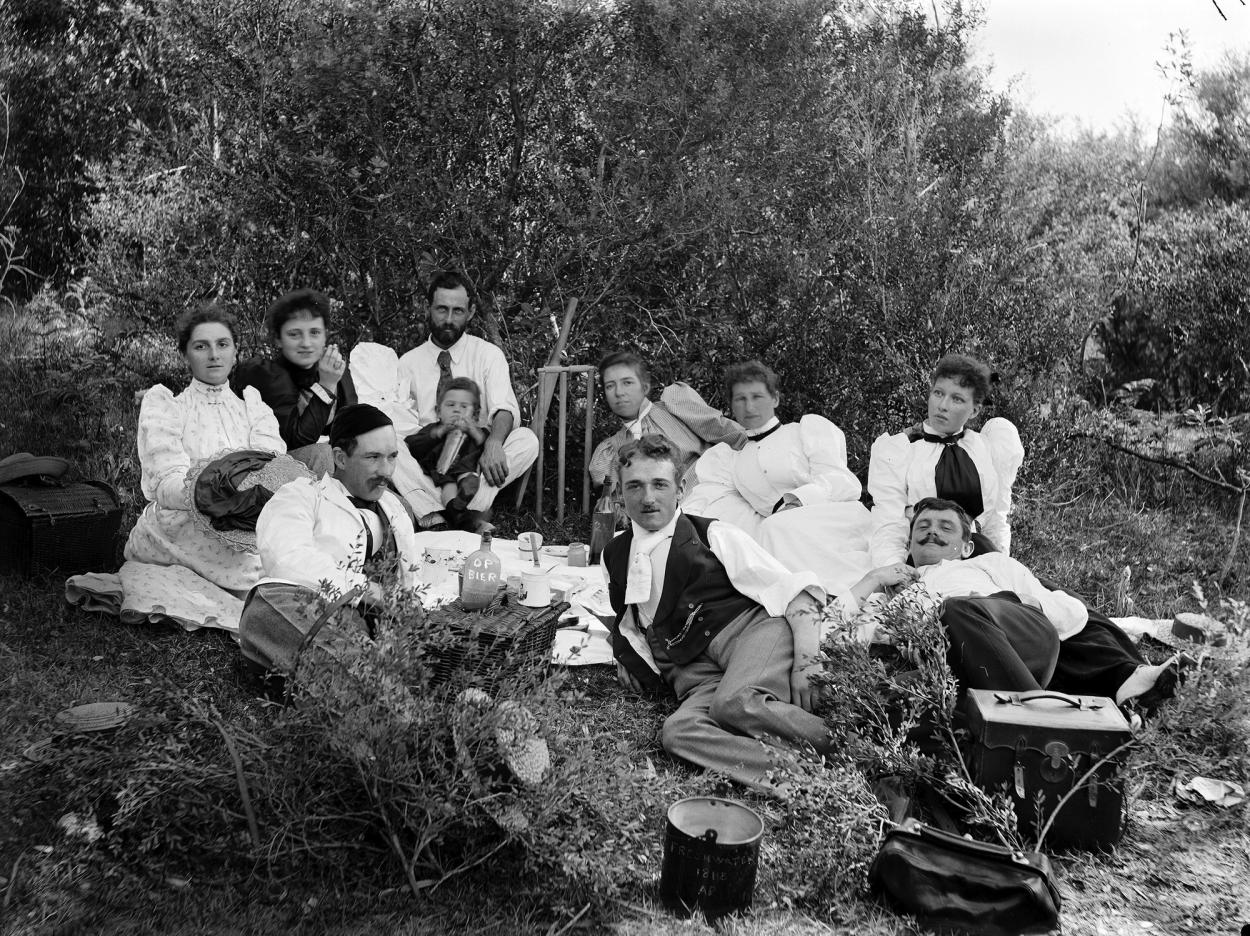
The Mr Taylor recovered glass plate negative

The recaptured image from an all but destroyed glass plate negative

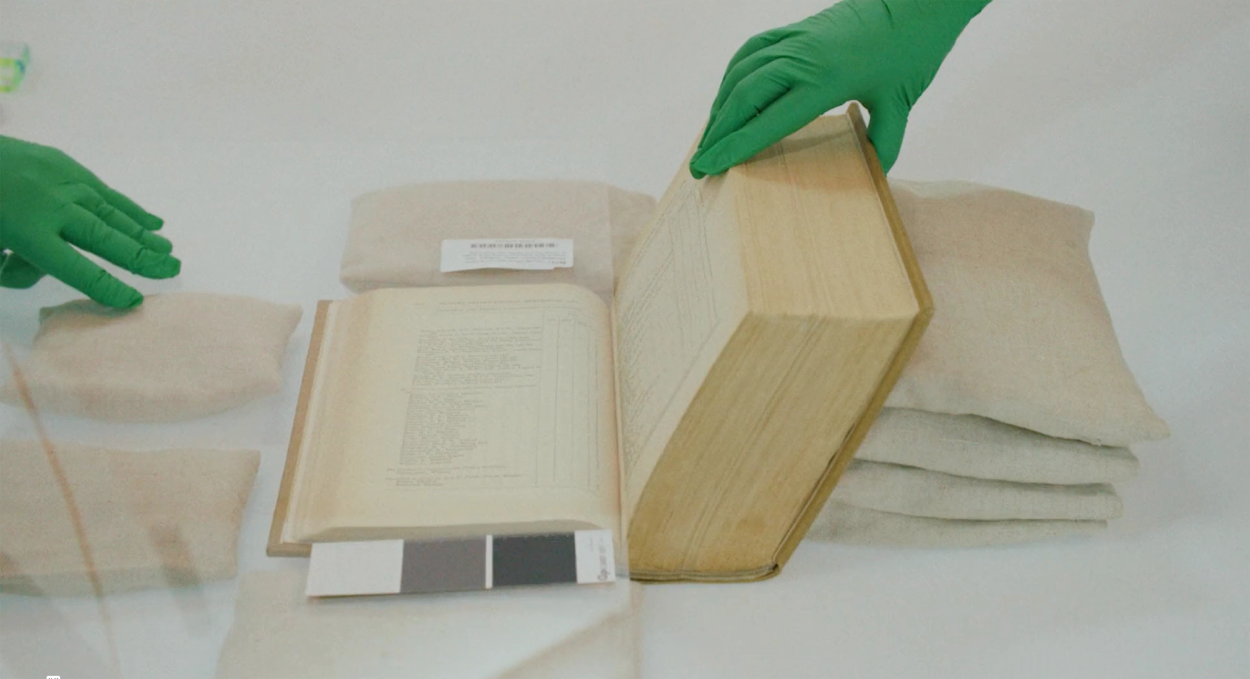
Most people don’t have the patience to attempt what our recent intern, Amir Mogadam from the Universtiy of Newcastle has just finished – probably one of the most challenging jigsaws you’re ever likely to see. But conservators are a patient if somewhat quirky mob. Amir worked with conservator Rebecca Main on a storage project to condition report, treat and rehouse a collection of large glass plate negatives (515 x 415mm) which were produced around 1870-1880 at the Freeman Brothers Studio, Sydney.
Continue reading ‘Doing jigsaws at work, recapturing an 1880s image’

Architects and photographers

2.42-2391-8.16x20-small-450x357.jpg

Max Dupain, Sydney Ancher house, Neutral Bay, 1958. Courtesy Max Dupain & Associates.

The careers of architects and photographers are often intertwined. An outstanding case is Max Dupain, Australia’s leading photographer of architecture, whose work was crucial in building the reputations of several architects including Harry Seidler, Sydney Ancher and Glenn Murcutt.

Continue reading ‘Architects and photographers’

3D scanning in the 1930s

Powerhouse Museum collection, object  2004/68/1. Gift of Frederick Pollock, 2004.

Powerhouse Museum collection, object 2004/68/1. Gift of Frederick Pollock, 2004.

If you visit the Powerhouse Museum between 10 am and 1 pm on 9 March for our 25th birthday celebrations, you will be able to see the accurate detail captured in this bronze bust of Sydney pharmacist Ernest Pollock. Created by the process of Sculptography in Osaka in 1934, it demonstrates that 3D scanning is not a recent achievement. I will be one of several curators in the museum over the weekend, each with a group of objects to discuss with visitors. The theme of my selection is ‘making things’.

Continue reading ’3D scanning in the 1930s’

String bags, AIDS and Papua New Guinea

A looped string bag or bilum made from plant materials in Papua New Guinea in the early to mid 1900s. Powerhouse Museum collection 2011/44/12-2

A looped string bag or bilum made from plant materials in Papua New Guinea in the early to mid 1900s. 2011/44/12-2 Powerhouse Museum collection

Always bulging, because that’s their nature, string bags are almost a thing of the past, relegated to memory by designer totes and paper carrier bags. One of the few string bags I see these days is the orange one my daughter uses to stuff all the beach toys into. This week however I’m reminded of those capacious multi-purpose string bags known as bilums that are traditional to Papua New Guinea. The connection? The photographic exhibition Access to Life which has just opened at Sydney’s Powerhouse Museum for World AIDS Day 2012. Sydney is the tenth city in the world to show Access to Life, but the first to add Papua New Guinea as a special regional component.

Continue reading ‘String bags, AIDS and Papua New Guinea’

Designer Suburbs – architects and affordable homes in Australia

Pettit & Sevitt brochure 1964. Powerhouse Museum collection, gift of Ken Woolley.

Pettit & Sevitt brochure 1964. Powerhouse Museum collection, gift of Ken Woolley.

My new book Designer Suburbs: Architects and affordable homes in Australia is back from the printers and will be launched soon.

Designer Suburbs began a couple of years back when our former curatorial colleague Judith O’Callaghan asked me if I’d like to co-author a book about the architect-designed project homes of the 1960s and 1970s.

We were struck by the fact that the houses built by Pettit & Sevitt in Sydney and Merchant Builders in Melbourne are still regularly featured in the popular media as examples of the best of suburban architecture, thirty years or more after the demise of these building companies.

Continue reading ‘Designer Suburbs – architects and affordable homes in Australia’

Round and round the world we go, travel in the 1930s

Dahl riding a merry-go-round, 1930s, Collection Powerhouse Museum

Dahl riding a merry-go-round, 1930s. Collection: Powerhouse Museum

I have just catalogued the 1930s photographs from The Dahl and Geoffrey Collings Archive as part of an internship project for my Masters of Art Curatorship at the University of Sydney. Although photography was only a small part of their practice, beginning in the mid 1930s, it paints a very broad picture of their holistic approach to art and design.

Continue reading ‘Round and round the world we go, travel in the 1930s’

Sydney streets in the 1980s

Hay Street, 1987-1989, photo by Alex Matte, City of Sydney Streetscape Survey.  © Alex Matte.

Hay Street, 1987-1989, photo by Alex Mattea, City of Sydney Streetscape Survey. © Alex Mattea.

A couple of years back I was contacted by a photographer named Alex Mattea. From 1987 to 1989 Alex photographed every building and every street in the Sydney CBD. He wanted to show me the results.

During the 1980s Alex was alarmed by the head-long speed of the city’s transformation. Familiar buildings and views were disappearing apparently unmourned. He felt that a record should be made of what was being lost, and spent months creating one. I borrowed Alex’s negatives for a time and had some of them scanned and assembled as street panoramas. You can see of few of them here.

Continue reading ‘Sydney streets in the 1980s’

Einstein’s Theory of Relativity Proven in Australia, 1922

In late August 1922 a group of astronomers, naval men, and Aboriginal stockmen began the arduous task of unloading their complicated scientific equipment and stores from boats onto a deserted beach on the coast of Western Australia. The shallow nature of the approach meant the boats were anchored three or four miles from the high-water line and the stores, after being brought to shore, were then transported by donkey wagons to the observation site at Wollal. This was no ordinary expedition and its members knew the eyes of the world were on them waiting to see if they would be the ones to finally prove Einstein’s controversial ‘Theory of General Relativity‘.
Continue reading ‘Einstein’s Theory of Relativity Proven in Australia, 1922′

Photographing the 1874 Transit of Venus

P3548-780.jpg

Composite portrait, frontispiece for publication 'Transit of Venus 1874', 1892, Powerhouse Museum,P3548-780

The Transit of Venus on 6 June 2012 is the latest occurrence of an event that has shaped the scientific history of Australia. Captain Cook’s expedition to observe the 1769 transit in Tahiti led to the European settlement of Australia. The 1874 transit may not have been quite as auspicious but it did lead to some major advances in the use of photography for astronomical observations.

Continue reading ‘Photographing the 1874 Transit of Venus’

Freeman Brothers Studio – Large Format Photographs

H8504-22 Unidentified male, from photographic negative,  collodion / glass, Freeman Bothers Studio, Sydney, 1871 - 1880

Unidentified man, from collodion negative, Freeman Brothers Studio, 1871-1880,Powerhouse Museum, H8504-22

Over the last couple of months I have been working on a previously uncatalogued collection of large format, 50.8 cm x 44.5 cm, glass plate negatives donated to the Powerhouse Museum in 1969. The 28 collodion portraits were found in a chest in our stores at Castle Hill and have been identified as all being originally taken by the Freeman Borthers Studio here in Sydney. We are currently conserving and cataloguing the photographs but hope to be posting them onto flickr commons by the end of the year for researchers to use.

The Freeman Brother Studio lays claim to being the longest running studio in Australia. It was established as the ‘Freeman Brothers and Wheeler’ by William Freeman and his brother James in George Street in 1854; it was still running nearly 150 years later. James was the more experienced of the two having worked in Richard Beard’s gallery in Bath before coming to Australia and was certainly instrumental in the success with which they plied their trade in Sydney.[1]

One of the keys to their success was their continual upgrading of equipment and premises to deliver the latest techniques. As a result they attracted the cultural elite of Sydney to their studios where they were photographed using the techniques of the day. Thus surviving examples can be found as daguerreotypes, ambrotypes, collodion glass plates, flexible sheet negatives all of which were then used to make albumen, gelatin and platinum prints on card, glass, and paper.

In 1864 the brothers undertook a major renovation of their studio which opened to the public in January 1865. Here they claimed … the most artistic arrangements in the distribution of light and shadow have been effected in their Gallery. In carrying out these alterations, Messrs. Freeman Brothers have availed themselves of the very best and latest improvement in the construction of a Photographic Studio, which have been forwarded them from home, “and which they have adapted to the requirements of ‘ the climate according to the dictates of their experience. By a simple and beautiful arrangement, any kind of light can be thrown on the sitter, to suit the varieties or dress or complexion, so that the sunniest effects of a Lawrence or a Reynolds can be obtained, varying down to the most somber and effective tones of a Rembrandt. These remarks Messrs. Freeman wish apply to all the varieties of Photographic Portraiture, from the largest style adapted to Photography down to the universally popular Carte de Visite. While announcing the above important improvements, Messrs. Freeman wish to recall the attention of the public to their beautiful Sutton’s Panoramic Apparatus from the camera, of which they have now a splendid and varied collection of Views of Sydney and its neighborhood …[2]

In January 1867 James Freeman went to England leaving his brother and their partner Victor A. Prout to take control of the business.[3] Why James left is unclear, perhaps illness or an argument but it was clearly unexpected for it was February before the official notice of his retirement from the studio of ‘Freeman Brothers and Prout’ was published in the papers. From this date William and Victor Prout took over the formal management under the name of ‘Freeman and Prout’.[4]

In 1868 the studio acquired over 20,000 negatives from the demise of Dalton Brothers, one of Sydney’s other pre-eminent studios. It turns out the acquisition was not just photographs for in advertising this acquisition they also called attention to the tinted and coloured cards and miniatures produced by Miss Hunt, … for so long favourably known while in Mr. Dalton’s employment …. Miss Hunt must have greatly added to the studio for the surviving coloured work from Dalton Studio ranks among the best produced in this period in Australia.[5]

James Freeman’s retirement appears to have been accompanied by a desire to return to England for in 1868 both brothers returned to there. This arrangement lasted only for a few years until William returned to manage the Sydney studio after the death of James in 1870. The studio suffered a huge blow in November 1871 when a fire on the premises destroyed their entire stock of negatives, including those acquired from Dalton Studio’s.[6]

In 1890 Freeman Brothers passed to William Rufus George who managed the studio until his son Alfred took over in 1903. Harold Cazneaux worked for the studio from 1904 to 1918, a period which saw them embrace a more informal style of portraiture and wedding photography. During the depression the studio was in competition with the street photographers who would snap passers by in the street. Valentine Waller who managed the business though this period was instrumental in lobbying for the State Government to bring in the regulation and registration of this form of photography in 1937. The company continues to survive and evolve moving to digital photography in 2003.[7]

The scale of their enterprise did not seem to affect the quality of the work they produced; in fact the studio from its inception spared no effort in touching up, and printing, their photographic prints. This combination of high quality work and patronage by the elite of Sydney makes their early work excellent examples of nineteenth-century Australian photography, illustrated by their winning silver and bronze medals at the London International Exhibition in 1862.

In December 2012 these photographs were loaded into Flickr.

References
Advertisement, The Sydney Morning Herald, Tuesday 3 January 1865, page 8
Alan Davies, Freeman Studio in the Picture Gallery, exhibition catalogue, State Library of New South Wales, 2003
Advertisement, The Sydney Morning Herald, Saturday 2 May 1868, page 1
Notices, The Sydney Morning Herald, Tuesday 12 February, 1867, page 1
Notices, The Sydney Morning Herald, Saturday 2 May 1868, page 1
Government Notices, The Sydney Morning, Saturday 11 November 1871, page 2

——————————————————————————–

[1] Alan Davies, Freeman Studio in the Picture Gallery, exhibition catalogue, State Library of New South Wales, 2003
[2] Advertisement, The Sydney Morning Herald, Tuesday 3 January 1865, page 8
[3] Notices, The Sydney Morning Herald, Saturday 2 May 1868, page 1
[4] Notices, The Sydney Morning Herald, Tuesday 12 February, 1867, page 1
[5] Advertisement, The Sydney Morning Herald, Saturday 2 May 1868, page 1
[6] Government Notices, The Sydney Morning, Saturday 11 November 1871, page 2
[7] Alan Davies, Freeman Studio in the Picture Gallery, exhibition catalogue, State Library of New South Wales, 2003