Archive for the 'Planes, Trains, Automobiles and Engines' Category

Ford to close in Australia: an Australian icon, the 1965 Ford Falcon XP

Sectioned XP Ford Falcon, Powerhouse Museum Collection. Gift of the Ford Motor Company of Australia, 1966. B1644

Sectioned XP Ford Falcon, Powerhouse Museum Collection. Gift of the Ford Motor Company of Australia, 1966. B1644

On 23 May, 2013, Australians were stunned to learn that Ford was to finish production of cars in Australia in 2016. The first Ford cars were sold in Australia in 1904 and a sales office opened in Melbourne in 1909, established by Ford of Canada. In the same year a local manufacturing plant was established in Victoria, at Geelong, 70 km SW of Melbourne. The Broadmeadows assembly plant, 16 km N of Melbourne, was opened in 1958 and an engine machine shop built in the expanded plant two years later. This enabled production to almost double from 50,000 to 90,000 units in 1961.

Continue reading ‘Ford to close in Australia: an Australian icon, the 1965 Ford Falcon XP’

National Historical Machinery Rally, Mudgee 2013

Powerhouse Museum Collection, object B1067. Gift of the University of Sydney, 1947.

Powerhouse Museum Collection, object B1067. Gift of the University of Sydney, 1947.

Mudgee is the place to be from 19th to 21st April. Historic engines and tractors will be there in force, but there will be a lot more to interest visitors, from Clydesdale horses to old-style games for children. Powerhouse Museum curators have selected a group of highly significant objects to take to the event, including this early Daimler high-speed petrol engine, four early gas engines, specimens of fine wool grown in the Mudgee area, a rare woollen convict jacket and an amazing fine-wool jumper knitted by Mudgee’s own Myra Mogg in 1935.

Continue reading ‘National Historical Machinery Rally, Mudgee 2013′

Revisiting the 1988 ultralight flight from England to Australia

The CFM Shadow ultralight aircraft, 'Dalgety Flyer' flying from England to Australia in 1988. Photo courtesy of Brian Milton.

The CFM Shadow ultralight aircraft, ‘Dalgety Flyer’ flying from England to Australia in 1988. Photo courtesy of Brian Milton.


Imagine flying from England to Australia in a tiny ultralight aircraft with a cockpit not as big as a coffin and a flying speed of 90 kph. Well Brian Milton did just that as part of Australia’s bicentenary celebrations. After the record-breaking flight Milton’s ultralight was given to the Museum. Now 23 years later its English pilot has contacted me with a gripping account and photos of his very dangerous ditching in the Persian Gulf during the flight:

Continue reading ‘Revisiting the 1988 ultralight flight from England to Australia’

The halcyon days of the Sunbeam motorcycle

B2577 Motorcycle and parts, 'Sunbeam' touring motorcycle, painted metal/plastic, John Marston Ltd, Wolverhampton, England, 1929

Sales catalogue for Sunbeam motorcycles, England, 1929

This charming drawing is from the cover of a sales catalogue for the 1929 range of Sunbeam motorcycles. The drawing shows a man astride his Sunbeam in the English countryside, with an empty country road stretched out behind him. These were the days of little traffic, few road rules and certainly no helmets. Driving and motorcycling could be pure adventure!
Continue reading ‘The halcyon days of the Sunbeam motorcycle’

The future of Sydney’s transport – a view from the 1940s

Ilustraion of a future transport mode by Charles Frederick Beauvais

97/195/1-1/18 Pencil drawing, ‘Aerobus’, paper/pencil, Charles Frederick Beauvais, Sydney, 1945. Collection: Powerhouse Museum

Why not a helicopter from Wynard to Town Hall? Charles Frederick Beauvais, an illustrator and industrial designer came up a with a variety of futurists transport solutions for Sydney in the 1940s. In this drawing of a futuristic Sydney he shows an helicopter bus service from Wynard Station to Sydney suburbs. The aerobus in the centre of the drawing has a sign ‘Mosman ‘on the front. This image appeared in Pix magazine, 15 December 1945, as part of an article titled, ‘Atomic Age, artist foresees New Transport Methods’.

Continue reading ‘The future of Sydney’s transport – a view from the 1940s’

Dick Smith’s Variety Club Bash Car

The 1964 EH Holden driven by Dick Smith on the first Variety Club of NSW Bourke to Burketown Bash in 1985. Gift of Variety, the Children's Charity, 2004. Collection of the Powerhouse Museum, 2004/50/1.

The 1964 EH Holden driven by Dick Smith on the first Variety Club of NSW Bourke to Burketown Bash in 1985. Gift of Variety, the Children’s Charity, 2004. Collection of the Powerhouse Museum, 2004/50/1.

Last Sunday the 2012 Variety Club of NSW Bash participants left the inner-Sydney suburb of Balmain for their annual trip. The unusual Australian term, ‘Bashing’ probably short for bush-bashing was used in 1985 by businessman, adventurer and philanthropist, Dick Smith, when he invited a few mates on a drive to the outback. The drive was eventually called the Bourke to Burketown Bash and went from Sydney to Bourke, in far western NSW, and on to Burketown, in Northern QLD. The idea was to relive the fun and adventure of the Redex car trials of the 1950s, popularised by Gelignite Jack Murray, and to raise money for the Variety Club of NSW, a charity which provides goods and service for children with special needs.

Continue reading ‘Dick Smith’s Variety Club Bash Car’

Steamfest 2012 Mystery Object Revealed

00593115-450x238.jpg

Collection of the Powerhouse Museum, Sydney. 86/741. Gift of the State Rail Authority Archives, 1986.

Would you have guessed the mystery rail object on display in the Museum’s marquee at Steamfest this year? Visitors to this event held in Maitland, NSW, over the weekend of 28/29th April were encouraged to have a go.

Continue reading ‘Steamfest 2012 Mystery Object Revealed’

The saga of a rare and wonderful engine

Otto-full-00z24767-196x300.jpg

Powerhouse Museum Collection, Gift of the University of Sydney, 1954.

Professor Henry Barraclough was on a mission. He was visiting Europe in 1914 to find interesting engines for Sydney University, and there was one that he was particularly keen to acquire: an early Otto and Langen gas engine, the first commercially successful internal combustion engine.

Continue reading ‘The saga of a rare and wonderful engine’

Celebrating the Australian Aviatrix Lores Bonney

00q00263-450x347.jpg

Lores Bonney and her aircraft, My Little Ship, at Archerfield Aerodrome in 1932 before her round-Australia flight. Collection: Powerhouse Museum.

In celebration of International Women’s Day for 2012 I’d like to highlight the amazing short but inspiring aviation career of Maude (Lores) Bonney (1897-1994), one of Australia’s pioneers. Lores’ passion for flying began after a flight in 1928 with aviation legend, Bert Hinkler, her husband’s cousin. In 1930 she began flying lessons in secret while her husband, Harry Bonney, played golf. When Lores confessed her aviation pursuits, he helped her buy a DH60 Gipsy Moth aircraft which she called affectionately “My Little Ship”. Being a leather manufacturer he had two full-length suede flying suits made for her.

Continue reading ‘Celebrating the Australian Aviatrix Lores Bonney’

How many stories can one object tell?

turbine-blade-front-300x213.jpg

Powerhouse Collection. Gift of Mr C A Saxby, 1970.

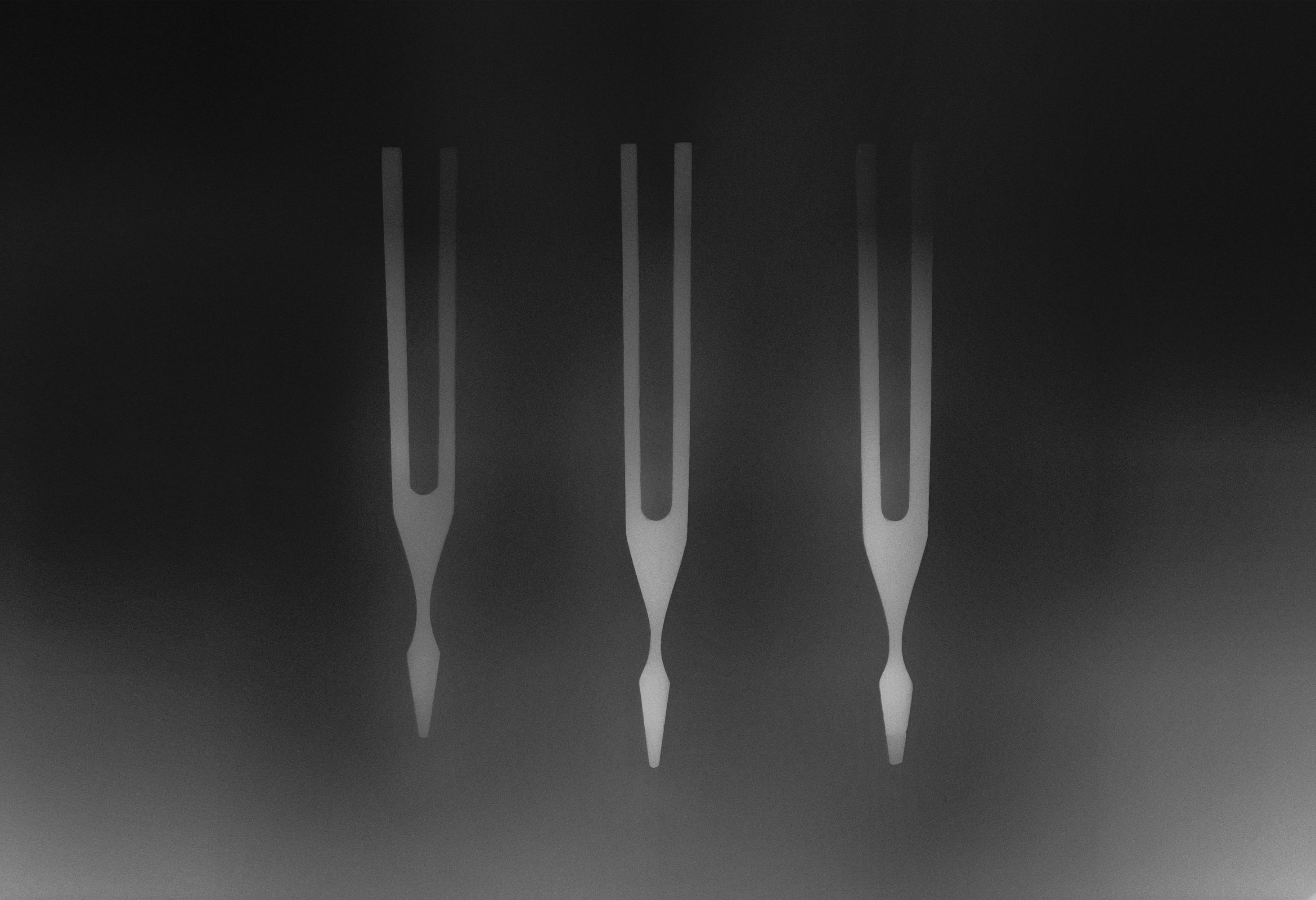
When I decided to feature our rare Whittle aircraft engine in a recent blog post, I entered the term ‘Whittle’ in our database. Data on the engine appeared, along with a photo. Another object also popped up, with little data and no image. Intrigued, I had to check out this ‘early experimental Whittle turbine blade with fir tree base’.

I’d seen turbine blades before, but none as small as this, just three inches (75 mm) long and one inch (25 mm) wide. I didn’t have a clue about the fir tree base, but I did know it couldn’t be made of timber! And I wanted to know more about the donor, Mr C A Saxby, and whether the Whittle attribution was true; if it was, the object could connect us directly with an important and contentious research program, Frank Whittle’s development of the jet engine during World War II.

turbine-blade-side-300x176.jpg

Powerhouse Collection. Gift of Mr C A Saxby, 1970.

Whittle’s autobiography (Jet: the story of a pioneer) explained that the fir tree base was developed by his team to overcome the problem of wobbly blades. A turbine has a large number of blades attached to a fast-spinning rotor, and vibration at the attachment points reduces both efficiency and lifespan. Whittle’s earliest experiments used the established ‘bulb root’ design, a cylindrical base that fits in a matching slot; in cross-section, this resembles a plant bulb in a round hole. The fir tree base, which has a series of steps that lock the blade into the rotor more effectively, is the standard design today.

But who was Mr Saxby, and how did he come to have the blade? Exam results in Trove gave me his Christian names, Colin Ambrose. A 1935 article turned up a grainy photo of him; the caption placed Saxby as one of a select group to graduate from Sydney University that year with honours in electrical and mechanical engineering.

So Saxby was a bright young engineering graduate at the time Whittle began his research. Did he travel to England and work with Whittle? One of our archivists searched for correspondence related to the object – and scotched that theory. The real story was that Saxby was the Acting Advisory and Inspecting Engineer to the NSW Government and was sent to England to tour various engineering works soon after the war ended. When he was at the Vickers works, an employee offered him the turbine blade. As Vickers made jet engines during the war, with advice from Whittle, it is highly likely that the story of the blade is true.

Curators must be sceptical about provenance because apocryphal stories can develop around objects, often linking them to famous people or events. However, provenance is not the only story. One object can tell many stories, and in this case they include: a problem to be solved; engineers striving to find a solution; the technology this contributed to; use of that technology in warfare and later in civilian aviation; technology transfer from Whittle to Vickers; and the story of Colin Saxby, his contribution to engineering in NSW, and his decision to donate this interesting souvenir to the Museum, to inspire future generations.