Archive for the 'Music' Category

Mystery Beatles object

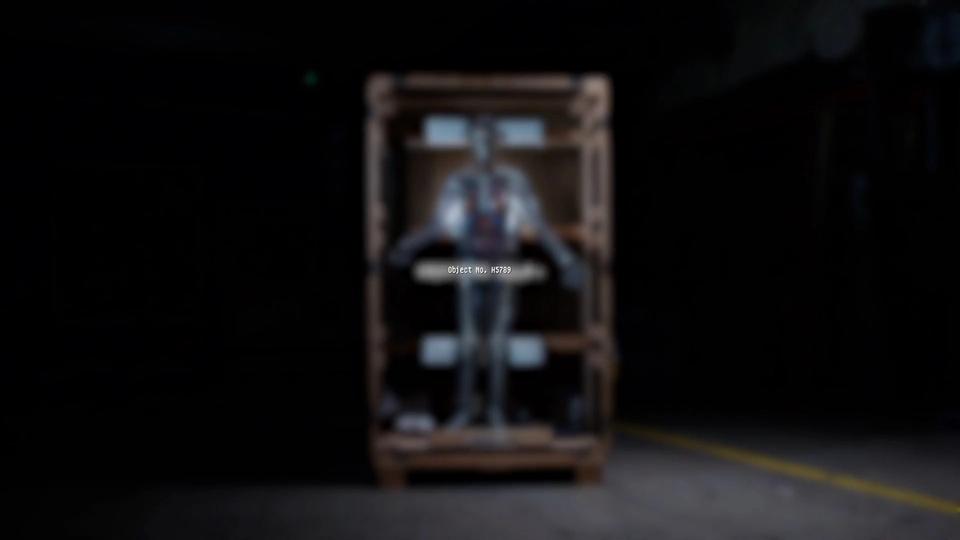
2012/50/1 Shop display, mechanical, The Beatles, wood / metal, maker unknown, Sydney, New South Wales, Australia, 1963-1964. Collection: Powerhouse Museum.

2012/50/1 Shop display, mechanical, The Beatles, wood / metal, maker unknown, Sydney, New South Wales, Australia, 1963-1964. Collection: Powerhouse Museum.

The Museum has started to develop a new exhibition about the Beatles’ 1964 tour of Australia. We recently acquired an unusual object from around that time. Does anybody know where it originated?
Continue reading ‘Mystery Beatles object’

The Museum’s fotoplayer comes to life again

The player piano is on the left and the organ pipes and effects box on the right   H10302

The player piano is on the left and the organ pipes and effects box on the right H10302

The Powerhouse Museum’s Style 20 Fotoplayer is a wonderful instrument on display in the Kings Cinema within the Museum. It was made to provide music and sound effects to accompany silent movies and is an upright player piano, with an effects box.
When a roll is played, it activates the piano and the organ sections, but the other special effects need to be operated by hand. This means that the person operating the Fotoplayer needs to know the movie they are accompanying really well, so that they can operate the effects at the right time (doorbells, gunshot sounds from the drums etc etc.). No mean feat! Continue reading ‘The Museum’s fotoplayer comes to life again’

String quartet by Kitty Smith – varnished with Dragons Blood

String quartet by Kitty Smith vanished with dragons blood

94/230/1-4 String quartet by Kitty Smith: Collection Powerhouse Museum

This splendid string quartet (two violins, a viola and a cello) was made by Kitty Smith (1912-2005) a professional violin maker who started her craft in the 1930s. Kitty was the daughter of Arthur Edward (A E) Smith (1880-1978) who is considered the most important violin maker in Australia.

These instruments came to mind recently on a visit to the Sydney Royal Botanic Gardens when we stopped to admire this Dragon’s Blood Tree, Dracena draco. The tree was still growing happily in spite of having fallen over. ‘Dragon’s Blood’ – the red sap from this tree can be used as an ingredient in varnish. It is soluble in alcohol, ether and oils and imparts to its solvent a rich red colour.

Continue reading ‘String quartet by Kitty Smith – varnished with Dragons Blood’

The Ukulele Craze

Uke-small-450x244.jpg

Recently ukuleles have been undergoing quite a revival with ukulele clubs and festivals springing up all over the world (there are at least seven clubs in Sydney). But Hawaiian music and ukuleles were very popular in Australia during the 1920s and 1930s and remained so until the 1950s. This ukulele from our collection was made in Hawaii in the 1930s by Jonah Kumalae, a prolific and famous maker who is credited with creating the first ukulele craze when his ukuleles were exhibited at the 1915 Panama Pacific International Exposition in San Francisco.

Continue reading ‘The Ukulele Craze’

The Violin Twins 10th Anniversary

Vatiliotis-Violin-PHM3-450x259.jpg

Violin made by Harry Vatiliotis, 2001. Collection: Powerhouse Museum

A bit of background…As the new millennium was about to begin composer and violinist Romano Crivici and I came up with a crazy idea – could we get two almost identical violins and test them against each other to see if their respective sounds changed over time?

Most people seemed to think that the sound of an instrument did change, but had anyone really tested it? And in fact, could it be tested? Now for the really crazy part – it’s not uncommon for violins to be played for a very long time, so if tests were possible, would they need to be conducted for the next 200 years or so to really see what changes were happening?

If we were going to go ahead with this idea we’d need to use brand new violins and a skilled maker who could attempt to make “twins”. Romano was keen to get a new violin and liked the work of Sydney maker Harry Vatiliotis. The Museum also commissions musical instruments for its collection from time to time from local makers which helps to document their work and their thoughts behind making. Harry had worked with the esteemed AE Smith, thought by many to have been Australia’s most renowned violin maker, and whose workshop had seen some of the leading Australian makers pass through it such as William Paszek, William Dolphin and Lloyd Adams. The Museum’s collection already had instruments by Smith and his associates including Sampson, Griffin, Paszek, Dolphin, Clarke, Newham and Kitty Smith so a Vatiliotis would help to make the collection even more complete. Harry kindly agreed to the idea of trying to make two violins from the same larger pieces of timber and as similarly as he could, one for Romano and one for the Powerhouse. These were finished in 2001.

To complete the plan – call in the scientists! Thankfully Professor Joe Wolfe, Associate Professor John Smith and then PhD student, now Doctor, Ra Inta from the University of NSW Physics Department’s Musical Acoustics Lab also agreed to put some tests together on these two instruments to see if changes could be measured.

Apart from physical tests done on parts of the violins during their construction some perception tests were also carried out to see if musicians, both as audience and players, could hear differences in the violins and be able to pick one from another. Another thing we wanted to see was if a violin played by a player regularly and was subjected to different environments also differed in sound from an instrument played on only once or twice a year in a museum and held in a fairly constant environment.

Several tests were carried out over subsequent years to record any changes. 2011 saw the 10th anniversary of the start of what is called the Violin Twins Project and gave a chance for Harry Vatiliotis and his son Michael to come in to the Museum a few weeks ago to see and hear the violins and see how they’ve been travelling. Romano brought his own violin and played both it and its Powerhouse Twin. It was a great opportunity to reunite the maker, the player and the instruments for these informal comparisons.

It should be stressed that this latest comparison was just that – a chance to compare the sounds after 10 years. It was not an official scientific test under perfect conditions. However, the general consensus amongst those present was that both instruments still sound very similar with the Powerhouse violin having a more open sound and Romano’s being a bit darker in tone. However, as the Powerhouse instrument had relatively newish strings and Romano’s older played-in strings this may have also accounted for some of the sound differences.

We’re all waiting to see what these two violins will sound like in 2211!

Post by Michael Lea, Curator, music & musical instruments

Dame Nellie Melba Turns 150

The 19th May 2011 marks the birth of one of Australia’s greatest performers, Dame Nellie Melba.

melba-frock-450x685.jpg

98/26/2 Costume, opera, dress, worn by Dame Nellie Melba, c.1910. Gift of Sydney Opera House Trust, 1998. Collection: Powerhouse Museum.

Perhaps the most internationally renowned Australian performer in the period before the Second World War, Dame Nellie Melba was recognised as one of the worlds greatest sopranos with her fame living on to the present day. Born Helen Porter Mitchell in the Melbourne suburb of Richmond in 1861 she made her professional singing debut in Melbourne in 1884. Travelling to London in 1886 with her father she made her opera debut in Brussels later the following year. After further successful roles in Paris she returned to London to perform at Convent Garden in 1889 in the opera Romeo et Juliette to great acclaim.

It was not until 1902 that Melba returned to Australia for her first national concert tour and over the following years she made several visits to her home country. In 1909 she performed not only in Australian capital cities but also travelled to many regional areas. Forming the Melba-Williamson Opera Company, Melba was in Australia again from 1911 and from this point, especially during World War 1, spent more time in Australia until the war ended when she went back to perform again in Europe.

This recently acquired concert program is of particular relevance to Sydney and relates to the period when Melba came back to Australia in 1921. Realising the high price of concert tickets she decided to give a series of “Concerts for the People” in both Melbourne and Sydney during 1922 at the reduced cost of five shillings and sixpence to allow more people to hear her sing. Sixteen concerts at Melbourne Town Hall saw about 30,000 people attend (1). The Sydney concerts, held at the Sydney Town Hall, were also anticipated to be a resounding success with the Town Hall capacity being for 3,000 patrons. The fourteen Sydney concerts held between 21 March and 28th April 1922 were often to packed houses. Of the second concert a journalist noted (2).

She is not a singer whose voice varies much, good health and a perfect production, combining to keep it in almost unvarying perfection.

Later in the series the Sydney Morning Herald reported on the 8 April that, based on the current bookings, there would be 35,000 people attending the concerts. By this date there were still six concerts in the series to go. At her second final Sydney concert Melba announced that it was her 29th People’s Concert (including the Melbourne concerts) and that she had sung to over 100,000 people (3). At the conclusion of the final concert of the series on 28 April she told the audience (4).

“I have never enjoyed singing as much in my whole career as I have at these ‘Concerts for the People’

The following years saw Melba performing both in Europe and Australia, her final Australian performances of her career being in late 1928. Dame Nellie Melba died in Sydney on 23 February 1931.

Melba-Program-450x600.jpg

Melba program, Concert for the People, 1922. Gift of Pam Burden, 2011 Collection: Powerhouse Museum

.

The Powerhouse Museum’s collection includes several objects linked with Dame Nellie Melba including photographs, audio recordings and concert programs such as the recently acquired program above.

H7077 Evening jacket owned and worn by Dame Nellie Melba, C 1910. Gift of Keith Wood, 1962. Collection: Powerhouse Museum.

H7077 Evening jacket owned and worn by Dame Nellie Melba, C 1910. Gift of Keith Wood, 1962. Collection: Powerhouse Museum.

There are also several pieces of costume worn by Melba both in her off-stage life, such as an evening jacket above, and in the operatic role of Marguerite in ‘Faust’ (98/26/1 & 98/26/2 Gifts of Sydney Opera House Trust, 1998) shown at the beginning of this post.

Other objects in the collection with a Melba connection include a ceremonial sword owned by Melba’s father when appointed a member of the Victorian Commission attending the Indian and Colonial Exhibition in London in 1886 (H7080 gift of Keith Wood, 1962). Another interesting Melba-related artefact in the Powerhouse Museum’s collection shows Dame Nellie’s generosity – a Bechstein baby grand piano dating from 1924 which was given to the donor’s parents as a wedding gift (94/270/1 gift of Anne Fairbairn, 1994).

Other cultural institutions around the country are also celebrating Melba’s birthday, The Arts Centre, Melbourne, the The Melba Online Museum lists many events in Melbourne and the The Australian National Film & Sound Archive has links to audio recordings of Melba singing in their collection.

References
1 Sydney Morning Herald 22/3/1922 p.14
2 Sydney Morning Herald 24/3/1922 p.11
3 Sydney Morning Herald 25/4/1922, p.8
4 Sydney Morning Herald 29/4/1922 p.13

Further reading:

K. Brisbane; Entertaining Australia (Currency Press, Sydney, 1991)

J. Davidson; Melba, Dame Nellie (1861-1931)”, Australian Dictionary of Biography – Online Edition

J. Hetherington; Melba (FW Cheshire, Melbourne, 1967)

B & F MacKenzie; Singers of Australia from Melba to Sutherland (Lansdowne Press, Melbourne, 1967)

Newspaper articles on Dame Nellie Melba at TROVE

400th anniversary of the King James Bible

bible-NT-300x191.jpg

Powerhouse Museum Collection. Gift of Mrs Gwenda Abbott, 1981.

The King James Bible was first published on 2nd May 1611. It was the first authorised English-language version of the Bible. James Cook carried such a Bible with him on his voyage to Terra Australis, and many of the early British settlers would have brought this version of the Bible with them. Most would have known selected verses and carried the words in their minds as well as on paper.

The first king of Great Britain, James I, had commissioned the translation in 1604, and over 40 scholars contributed to the new version. They drew on the work of earlier translators (such as William Tyndale, who was condemned to a fiery death for his efforts) as well as going back to the original Hebrew and Greek texts. The scholars worked individually before comparing notes and agreeing on each verse and chapter. Poet Andrew Motion has made the following comment on the resulting work.

“The King James Bible is a cornerstone of our culture and our language. Whatever our faith, whatever we believe, we have to recognise that the rhetorical power of this book, and in particular its power to fuse history with poetry, connects at the most fundamental level with our own history and poetry.”

This particular Bible was owned by Edgar Leslie Bainton, a musician and composer who became director of the NSW Conservatorium of Music in 1934 and strongly influenced music performance and music education in NSW. The Bible was a wedding present from his father (a minister of religion, as were all his brothers) and mother (sister of the principal of a theological college) in 1903. It was donated to the Museum by one of his daughters.

bible-closed-300x142.jpg

Powerhouse Museum Collection.

Given Bainton’s family background, it is not surprising that he composed music for several hymns and conducted the St Matthew Passion in Sydney each Easter from 1939 until his retirement in 1946. He also loved poetry, and the language of the King James Bible would have been highly significant in his life. The battered state of the book’s cover suggests it was well used, but, apart from his parents’ message near the front, there are no pen or pencil marks on the pages: Bainton was not the type of bible student who marks favourite verses or writes annotations beside contentious passages.

Vale Dame Joan Sutherland (1926-2010)

mozart_flute-450x320.jpg

Collection: Powerhouse Museum. Photography by Nitsa Yioupras.

The passing of the great Australian soprano Dame Joan Sutherland this week was a very sad event and her influence on Australian musical culture will be sorely missed. However, she also left a great legacy for those that had the privilege to know her and train and perform with her.

Dame Joan left Australia to continue study in England at the Royal College of Music in 1951. She made her Covent Garden debut in 1952 after she was accepted into the Royal Opera House, Covent Garden singing the role of the First Lady in Mozart’s Opera, The Magic Flute.

Die Zauberflöte (The Magic Flute) was completed by Mozart in 1791 just a few months before his death in December of that year. The 30th of September marked the 219th Anniversary of the first performance of the opera in Vienna. Currently on display in the Powerhouse Museum’s musical instrument exhibition is an early published copy of the Magic Flute dating from 1795. It is a reduction of the original score arranged for voice, violin and piano. (EA & VI Crome Collection, 1976).

Collection: Powerhouse Museum

Collection: Powerhouse Museum

Other items in the Museum’s collection relating to Dame Joan Sutherland include three photographic negatives in the collection of photographer Alec Murray (1917-2002) which feature Dame Joan in her role as Lucia in Lucia di Lammermoor which she performed at Covent Garden in 1959 (Gift of Alec and Sue Murray, 2008). A school house badge in the Museum’s collection from her old school St Catherine’s Waverley features a harp and the letter “S” for the school house Sutherland, named in honour of Dame Joan. (Gift of St Catherine’s School, 1989).

Devereux Viola

viola21-450x361.jpg

Viola made by John Devereux, 1869. 2003/36/1. Collection: Powerhouse Museum. Photography by Marinco Kojdanovski.

In the Museum’s Conservation Department, Tim Morris and Bronwen Griffin have been taking apart an unusual tuning peg mechanism for a viola.

The viola was made by John Devereux in Melbourne, Victoria, Australia in 1869. John Devereux was one of the earliest professional makers of violin family instruments (violins, violas, cellos and double basses) in Australia. He was known for using Australian timbers and made special adaptations to his instruments to suit the heat and humidity of the Australian climate.

viola2-450x303.jpg

Collection: Powerhouse Museum. Photography by Nitsa Yioupras.

A quote from the Argus Newspaper, Melbourne talks about the tuning mechanism. It’s part of a slightly longer account of a visit and presentation of a violin by Devereux to HRH Prince Alfred, The Duke of Edinburgh in 1868 which resulted in him getting a royal appointment which appears on his labels after this point:

His Royal Highness expressed himself much pleased with his present and listened attentively to Mr Devereux’s instructions relative to the pegs of the instruments, an invention of the maker. These are ingeniously constructed so as to prevent the slips which pegs of the old fashioned pattern were liable to. (The Argus, Melbourne, 15/1/1868, p.5 col.b.)

Normally, a viola (or violin or cello) tuning peg is wooden with a finger grip at one end and a tapered wooden pin, which fits through holes in the instrument’s peg box, below the scroll. The string is pushed through a hole in the shaft and wound around several times by turning the peg until the correct pitch is reached. The peg is held in place by string tension and by push-fitting the taper into the peg box. This is a simple method, which usually works, but can be affected by changes in humidity. Pegs can become too loose and slip, causing the instrument to go out of tune, or too stiff to move, also making the instrument impossible to tune.

viola3-450x373.jpg

Collection: Powerhouse Museum. Photography by Nitsa Yioupras.

Devereux’s invention was to replace the tapered section of the wooden pin with a straight metal rod to which the string was attached as above. This rod passes through the holes in the peg box and extends to a threaded section, over which a wooden finger grip is secured with a metal ferrule. This assembly encompasses a flange on either side of one wall of the peg box, which squeezes against the timber when the ferrule is tightened, creating a clutch mechanism. The tuning peg looks and acts pretty much like an ordinary wooden one, but is less susceptible to changes in the weather.

For more information on other Devereux instruments in the Powerhouse collection, see here.

Bronwen Griffin, Mixed Media Conservator and Tim Morris, Metals Conservator

Beginning Electronic Music- Tristram Cary part 2

Please note this post is part of a series. For part one of the Tristram Cary story, see here.

By 1962 Cary was not the only composer including electronic and concrete sounds in their work. In 1957 Daphne Oram and Desmond Briscoe began developing what they called “Radiophonic” sound for broadcasts of drama from the BBC Third Programme. Their works included Samuel Beckett’s All that Fall and Giles Cooper’s The Disagreeable Oyster (both 1957).[1] Then in 1958 the BBC established their Radiophonic Workshop at Maida Vale, London, where the main technique at this stage was tape manipulation and editing. Oram left the BBC in 1959 to set up her own studio and develop a synthesiser that used hand-drawn waveforms on film to control the oscillators.[2] The BBC proved to be one of Cary’s main employers and he produced several commissions a year for them. From 1960 he contributed to several BBC educational programmes on contemporary music for which the Radiophonic Workshop produced some of the music.

In 1962 Delia Derbyshire joined the BBC. About this time there were Ferrograph tape-recorders, a WWII period outside-broadcast (O/B) sound mixer, a reverberation chamber and a wobbulator which (although originally mechanically swept) consisted in an oscillator swept by a second oscillator. It was an engineering test instrument but here will be the beginnings of voltage control. Another batch of tape recorders (now Philips machines) with editing blocks and remote start controls were added about this time. There was also a set of 12 oscillators, each of which could be independently tuned, and whose outputs were switched by a 12 key “keying unit” that fed the selected oscillator to a type of valve amplifier known as a “variable-mu pentode” in which the gain (amplification) of the valve was controlled by an external voltage source which had adjustable attack and decay timing and thus functioned as a voltage controlled amplifier (VCA).[3] Cary built himself a Transient Waveform Modifier which was a set of four amplifiers based on similar devices, [PHM: 2009/83/2]. To be discussed in a coming blog.

New-Picture-5-450x328.jpg

Tristram Cary in the Fressingfield studio, operating his double ring modulator.

It was Derbyshire who realised Ron Grainer’s original visual score for the title music for Dr Who, developing the sounds that so many of us grew up with, and thereby introducing electronic music to the generation for whom it was all so influential. Cary’s role in Dr Who was in making some of the incidental music for several early episodes, including the introduction of the Daleks. The Dalek’s voices were made by Brian Hodgson using a ring modulator built from a pair of transformers with a ring of four diodes between them.

Also in 1962 Cary decided to move out of London. He bought a farmhouse, “Wood Farm”, in Suffolk, where he stayed until 1974, and around mid-1963 re-established his Fressingfield studio in an out-building. He abandoned the disc cutter for more tape-recorders and assembled the studio from devices that he eventually built into a wall of electronics in racks and a minimal patching and switched selection control panel with a six channel mixer. There he built several pieces of equipment that the Powerhouse Museum now has in its collection. These are a voltage controlled oscillator and an envelope shaper, and will be discussed in following blogs.

cary-450x310.jpg

The main oscillators, control panel, and tape-recorders in Cary's Fressingfield studio.

Around this time (c.1960) Peter Zinovieff, the son of Russian émigrés to Britain, and whose hobby was electronic music, began to buy waveform generators, noise generators and other stuff from the war surplus electronics stores in London. He also bought a couple of tape-recorders and started making electronic sound with this gear, building a crude sequencer using telephone relays.[4] He had met Daphne Oram and she taught him how to assemble sounds into music. He later worked with Delia Derbyshire and Brian Hodgson of the Radiophonic Workshop forming the group Unit Delta Plus who played live electronic music at the Roundhouse in London, among other activities.

Around 1965-6 Zinovieff met David Cockerell an electronic designer who had already designed a ring modulator and a voltage controlled oscillator.[5] In 1967 Zinovieff bought a pair of DEC PDP8s which he intended to use to make computer music. As the PDP8 was not in itself powerful enough to do direct tonal synthesis it was coupled to a variety of analogue devices (VCOs, VCFs, etc) which could produce tones, thus creating a hybrid system in which the computers generated control voltages for the analogue components.[6] With Cockerell’s technical support, Zinovieff began to assemble the PDP8s into a computer-driven sequencer to control the proposed system for the production of sampled sound (an idea that came from the ideas of musique concrete) which was to consist in a block of filters and oscillators. Cockerell took charge of the engineering in Zinovieff’s studio in 1968. Meanwhile in 1967 Zinovieff met Tristram Cary and in 1968 the three of them set up Electronic Music Studios (EMS) to run the PDP8 lab and build the instruments necessary with which to compose electronic music.

Cary had been appointed director of the Electronic Music Studio at the Royal College of music in 1967 and had a studio built, which was ready to use in September 1968.[7] Cary’s students at the RCM included Laurence Casserly and Howard Davidson. Earlier that year (January 15, 1968) Cary and Zinovieff produced what may have been the first electronic music concert in Britain.[8] As well as works by Cary and Zinovieff it included compositions by Ernest Berk, Delia Derbyshire, Daphne Oram and Ivor Walsworth, George Newson, Jacob Meyerowitz and Alan Sutcliffe.[9] Sutcliffe had written a stochastic music composition on an ICL computer and recorded it to paper-tape, which he and Zinovieff then realised as ZASP on Zinovieff’s PDP8 in this concert.[10]

A little earlier Robert Moog had proposed the use of voltage control in a paper to the 1965 Audio Engineering Society (AES) convention in New York.[11] It wasn’t actually a new idea, for example a wobulator or sweep frequency generator could be built using voltage control, but Moog used an exponential control ratio and this meant that a change of one volt in control voltage produced an exponential change in the frequency and thus you had a one volt per octave control system. From there, a keyboard controlling the frequency of the oscillator was a simple thing. Not that many of the early electronic composers were at all interested in using keyboards. But that option did make Moog’s synthesisers trendy in popular music.

[1] Darren Giddings, “Concrete Mixers, The story of the BBC Radiophonic Workshop”, 2003. [http://www.mb21.co.uk/ether.net/radiophonics/mixers.shtml]. See also Wikipedia on Desmond Briscoe [http://en.wikipedia.org/wiki/Desmond_Briscoe] and Wikipedia on the Radiophonic Workshop [http://en.wikipedia.org/wiki/BBC_Radiophonic_Workshop]

[2] This is described in Steve Marshall, “Graham Wrench: The Story Of Daphne Oram’s Optical Synthesizer,” Sound On Sound, February, 2009. Available at http://www.soundonsound.com/sos/feb09/articles/oramics.htm     

[3] See “Derbyshire Electronic Music Pioneer” http://www.delia-derbyshire.org/index.php , and Ray White (2004). BBC Radiophonic Workshop: An Engineering Perspective, chapter 2 [http://whitefiles.org/rws/r02.htm]

[4] Trevor Pinch and Frank Trocco, Analog Days: The invention and impact of the Moog synthesizer, Cambridge, Mass.: Harvard University Press, 2002, pp.280ff.

[5] Ibid., p.285.

[6] Tristram Cary, Illustrated Compendium of Musical Technology, London: Faber & Faber, 1992, p.100.

[7] Lawrence Casserley, “Reflections on Ten Years of Electronic Music at the RCM,” RCM Magazine, vol.75, no.3, 1979

[8] Francis Routh, Contemporary British Music: The Twenty-five Years from 1945 to 1970, chapter VI, The Contemporary Scene. Available at http://www.musicweb-international.com/routh/Contemporary.htm

[9] Ibid.

[10] Michael Kassler, “Report from Edinburgh,” Perspectives in New Music, vol.7, no.2 (Spring, 1969) p.178. Kassler is reporting on the IFIP ’68 conference.

[11] R.A.Moog, “Voltage Controlled Electronic Music Modules,” Journal of the Audio Engineering Society, vol.13 (1965), pp.200-206.