Archive for the 'Conservator’s Corner' Category

How do you package and send glass objects to Washington State ?

2005/188/1 Glass diorama, 'Little Known Facts', glass, designed and made by Tom Moore, Adelaide, South Australia, Australia, 2004.

2005/188/1 Glass diorama, ‘Little Known Facts’, glass, designed and made by Tom Moore, Adelaide, South Australia, Australia, 2004

Very carefully. This was the dilemma that 2 conservators and 2 registrars were recently faced with.To ensure a safe transit, each of the beautiful delicate glass objects has had a padded acid –free box made for it. Continue reading ‘How do you package and send glass objects to Washington State ?’

Doing jigsaws at work, recapturing an 1880s image

The Mr Taylor recovered glass plate negative

The recaptured image from an all but destroyed glass plate negative

Most people don’t have the patience to attempt what our recent intern, Amir Mogadam from the Universtiy of Newcastle has just finished – probably one of the most challenging jigsaws you’re ever likely to see. But conservators are a patient if somewhat quirky mob. Amir worked with conservator Rebecca Main on a storage project to condition report, treat and rehouse a collection of large glass plate negatives (515 x 415mm) which were produced around 1870-1880 at the Freeman Brothers Studio, Sydney.
Continue reading ‘Doing jigsaws at work, recapturing an 1880s image’

All is not lost – the collection recovery book

The Cootamundra Railway Disaster 1885

This photo of the Cootamundra Railway Disaster 1885 is the front cover of ‘All is not lost – the collection recovery book.


Remember the floods from last year and the year before? The earthquakes in New Zealand? The hurricanes in far north Queensland? The bush-fires in Victoria? How can you forget? Well conservators around Australia and New Zealand have been kept busy assisting with the salvaging of many personal and public collections. In terms of being prepared for an emergency situation, there are some key points that have been raised by museum staff that have experienced a major disaster. They advice having: disaster plans in place; plenty of equipment and supplies on hand; a pre-arranged area to relocate the collection to, possibly off site; allocating roles and teams to carry out the salvage operation to prevent duplication and confusion and to do staff training. In helping with the Powerhouse Museum’s own disaster preparedness, the Conservation Department has recently published a book on salvaging materials after a disaster, called ‘All is Not Lost – the Collection Recovery Book’. It is a sturdy, spiral bound book aimed at assisting people in museums, historical societies and anyone who has items that have been affected by a disaster.
The pink ted prop dries off during a disaster training session

The pink ted prop dries off during a disaster training session

There is a wealth of materials on the web about disaster planning and recovery but you may not have electricity in an emergency situation. We decided to produce a disaster flip book that provided quick, basic instructions about salvaging different materials that have been damaged by fire, water or impact. Conservators contributed sections for the book that was originally intended for our own department. I received a call from a colleague in the Riverina who was assisting the local members of the Lockhart Historical Society who had suffered severe flooding in their building. The Lockhart locals did a wonderful job in salvaging what they could. The advice I gave was from the draft text for the disaster flip book. After that, we decided the book would be useful for anyone salvaging items from a disaster.

Cleaning mould from a prop

A conservator demonstrates how to remove mould safely.


A lot of salvaging is common sense, but there are many tasks to do in a recovery situation and it is essential to allocate teams and team leaders to direct people and avoid confusion in an emergency situation. As well as information about salvaging different materials, the book provides flow charts on disaster planning and recovery, definitions of salvage terms, dealing with mould outbreaks, instructions on what to freeze and what not to freeze as well as an extensive bibliography. .

If you do have damaged items, please feel free to contact the Conservation Department at the Powerhouse for advice on how to salvage and conserve them.

Disaster planning - gather materials and equipment that would be useful in a salvage operation

Disaster planning – materials and equipment useful in a salvage operation

The Museum’s fotoplayer comes to life again

The player piano is on the left and the organ pipes and effects box on the right   H10302

The player piano is on the left and the organ pipes and effects box on the right H10302

The Powerhouse Museum’s Style 20 Fotoplayer is a wonderful instrument on display in the Kings Cinema within the Museum. It was made to provide music and sound effects to accompany silent movies and is an upright player piano, with an effects box.
When a roll is played, it activates the piano and the organ sections, but the other special effects need to be operated by hand. This means that the person operating the Fotoplayer needs to know the movie they are accompanying really well, so that they can operate the effects at the right time (doorbells, gunshot sounds from the drums etc etc.). No mean feat! Continue reading ‘The Museum’s fotoplayer comes to life again’

Fans of the Powerhouse Collection

Italian fan featuring Apollo and Daphne made between 1730-1760 (A5414)Collection: Powerhouse Museum

Italian fan featuring Apollo and Daphne made between 1730-1760 (A5414)Collection: Powerhouse Museum

Looking at ways to house our rich and diverse collection of dress accessories have always been a constant challenge. When an area of the basement store was set aside for the storage of dress and accessories in the early 1980s, we were at the forefront. A quarter of a century later some of the methods that were adopted, now appear tired and in need of attention.
Continue reading ‘Fans of the Powerhouse Collection’

Gulgong Pioneers Museum Blog

602_Pioneers-300x191.jpg

Gulgong Pioneers Museum. Image courtesy Mudgee tourism

I was contacted late last year by Marie Gorie from the Gulgong Pioneers Museum about a project she was about to undertake. She wanted to re-order the textile store. Maintaining a collection store takes a lot of time and resources and obviously, as the collection grew, some of the maintenance had slipped.
Continue reading ‘Gulgong Pioneers Museum Blog’

The conservation of a transistor radio

Entire-object-450x592.jpg

96/43/1 Transistor radio, flower basket, , Toshiba, Tokyo Electrical Company Limited, Japan, 1957; Collection Powerhouse Museum

A transistor radio, designed as an ‘oriental’ flower basket by Toshiba in 1957 for the western market, recently came to the conservation lab for treatment. It is made of cream and red plastic with a chrome handle and it has a radio and speaker inside. From the outside, the radio seemed to be in reasonable condition so conservator, Vanessa Pitt gave it a surface clean. She wanted to remove the dust that could be seen through the slats in the base of the radio.

Continue reading ‘The conservation of a transistor radio’

Fact or fiction using forensic science in conservation

turkmen-300x280.jpg

2000/67/1 Horse cover, knotted pile weave, wool, Tekke Turkmen, Russian Turkestan, 1907. Collection: Powerhouse Museum

Trying to date an object can be a challenge particularly if it has been in the collection a while with little background information. Now there are a few ways of identifying the origins of an object. In this case we have determed the age of a textile by identifying the red dye.

Continue reading ‘Fact or fiction using forensic science in conservation’

Meet the conservator: Carey Ward

00z54161-450x300.jpg

Photography by Marinco Kojdanovski, Powerhouse Museum.

Meet Carey Ward,
Project Manager, Conservation

How did you come to work at the Museum?
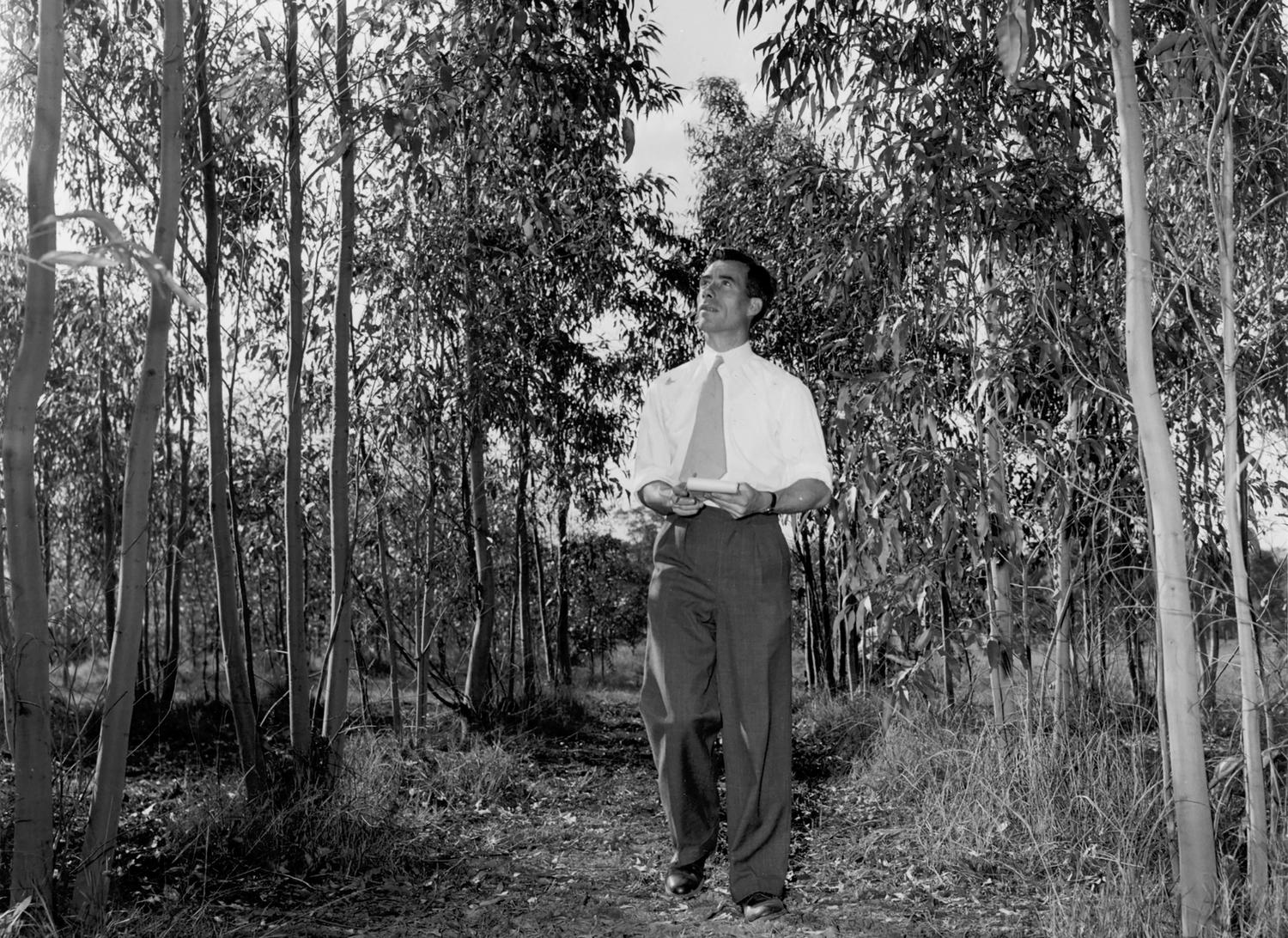
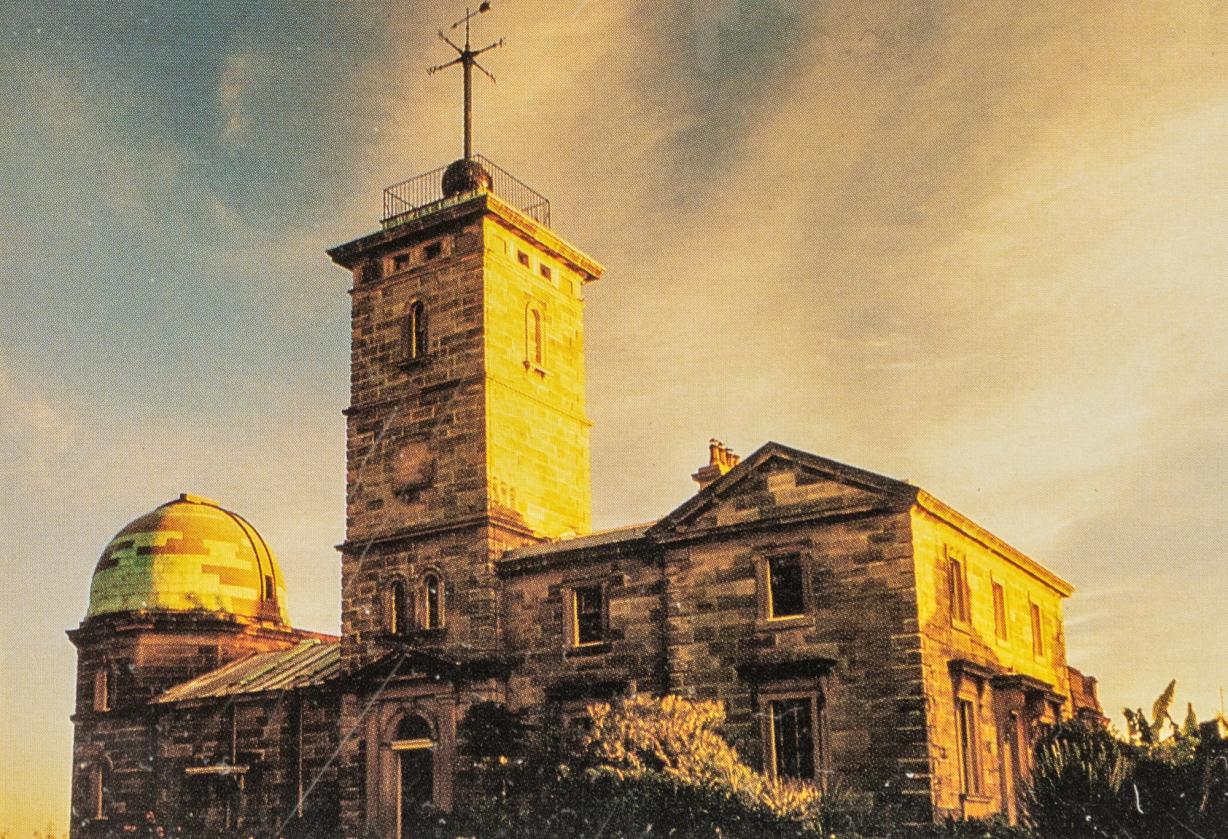
I started work at the Observatory in 1980 as the Scientific Instrument Maker and I was responsible for the maintenance of the clocks, telescopes and timeball, including making sure it dropped at 1.00 pm every day. Like the objects I now work with, I was ‘acquired’ by the Museum when the Observatory came under its wing in 1982. So when I do leave, I will have to be ’de-accessioned’.

Can you explain what your role is and describe a typical work day for you ?
I don’t have a typical work day as such. That is why I have managed to stay at the Museum for 30 years, every day is different. I am currently working in Conservation and my main role is to manage the stored collection at Castle Hill where we store the medium to large objects. I also organise the transport and movement of large objects where we sometimes use specialised contractors to move awkward objects such as trains and planes. Last month we installed the ‘Maid of Abundance’ sculpture in the Discovery Centre at Castle Hill. This involved moving a number of large objects and using two cranes to manoeuvre the sculpture into place without hitting the suspended aircraft.

What has been the most memorable experience or experiences for you in you 30 years at the Museum?
This would have to be working with the automated wool harvester . This is a robotic sheep shearing machine that was built onto the back of a semi-trailer in Adelaide. In 1992, my colleague Dave Rockell and I spent a week in Adelaide preparing this object to travel to Sydney. It was a prototype and had never been on the road so we were faced with many problems getting it roadworthy with very limited tools and equipment. Since then, we have taken it back to Adelaide and then again moved it from Adelaide to Naracoorte where it has taken pride of place in the Sheepsback Wool Museum. Last month, I had the chance to go back to Naracoorte to condition check and do some more work on it. It was like visiting an old friend.

You must have seen a lot of changes in the Museum over the last 30 years. What has been the most significant for you?
The most significant change for me has been the development and rationalisation of the Museum’s off-site stores at Castle Hill and opening them to the public. This has meant visitors can get a behind-the-scenes glimpse of the stored collection, allowing many objects that have never been viewed before to be seen. At the moment we are trialling selected group tours through H Store, where they will be able to see the fabulous model collection, printing presses and aircraft.

If you had to choose, what object would you try to rescue if there was an emergency evacuation of Castle Hill or the Museum?
There are so many objects it would be hard to decide but I think that if the opportunity arose where something could be saved, I would choose the original Hargraves flight models. These include his prototype steam aero engine, propeller and wing designs and some of his early kites. These are truly significant objects as they show quite clearly how he worked through from flapping wings (ornithopter model) to the aerofoil wing shape we still use today in propellers and wings

Conservator’s Corner: Knight in shining armour

00z51355-450x419.jpg

Photography by Kate Chidlow @ Powerhouse Museum, all rights reserved

We have had a Finnish furniture conservation student, Sanna Makarainen, with us in the Conservation Department undertaking a 3 month internship with Bronwen Griffin, Mixed Media Conservator. Sanna recently worked on a mounted knight for the Tinytorium exhibition.

Photo-1.-Sana-on-Tinatorium-009-450x337.jpg

Photography by Kate Chidlow @ Powerhouse Museum, all rights reserved

Firsly, she brush-vacuumed the object thoroughly all over. Using the brush, Sanna removed all the surface dirt from the metal, leather and fabric construction materials. A small plastic tube was attached to the nozzle of the vacuum cleaner to reduce the suction flow. Tulle was attached to the end of the tube with a rubber band to ensure that if any fragments were accidently loosened, they could be easily caught in the gauze, rather than getting sucked into the vacuum cleaner.

Photo-4-kaikenlaista-kakaa-335-450x303.jpg

Photography by Kate Chidlow @ Powerhouse Museum, all rights reserved

Photo-3-kaikenlaista-kakaa-342-450x337.jpg

Photography by Kate Chidlow @ Powerhouse Museum, all rights reserved

The leather straps on the knight’s leg guards had deteriorated and separated and needed to be consolidated. Sanna removed the leg guards to give her better access to the straps. Some of the leather strapping was in poor condition and needed to be supported. Sanna used a heated spatula, Beva film and silk behind the leather to give it more strength. In two places, the leather strapping had to be re-adhered, so Sanna used Beva impregnated stablitex to sandwich the leather together.

Photo-2kaikenlaista-kakaa-296-450x337.jpg

Photography by Kate Chidlow @ Powerhouse Museum, all rights reserved.

There was quite a bit of red rot in the saddle leather. Sanna protected the fragile saddle with fabric to prevent further abrasion occurring when the knight is seated on the saddle and horse. Some loose fragments from the hooves were re-attached with Paraloid B72 adhesive.

Kate Chidlow
Conservator