Photo of the Day

A new photo from the Powerhouse Museum every day

Stuttgart Folk Festival, 1931

00q00520

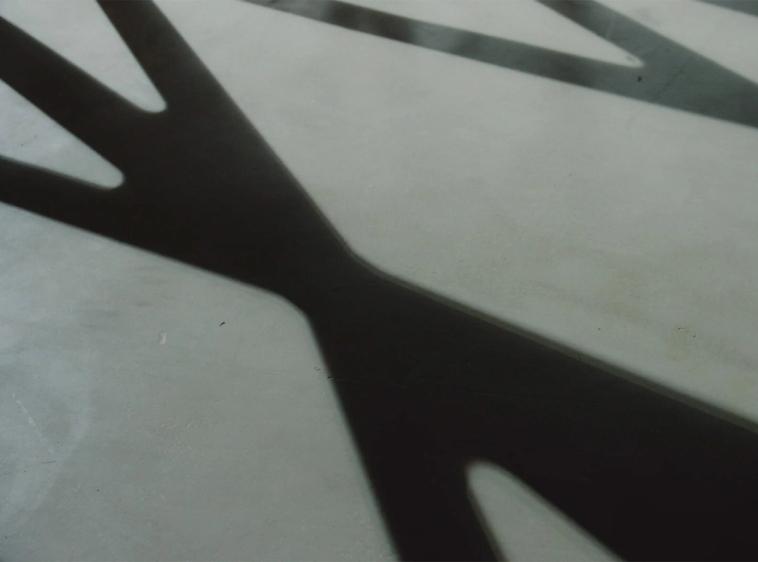
This photograph, by Hedda Morrison, was taken at the Stuttgart folk festival in 1931. In this photograph, Morrison has adopted the conventions of the New Realism in the use of an extreme close up and high angle view.

Hedda Morrison, (1908-1991), was born Hedda Hammer in Stuttgart, Germany. She acquired her first camera, a Box Brownie, at the age of 11. In 1929 Hedda enrolled at the State Institute for Photography in Munich. After completing studies at the Institute for Photography she worked in the studio of photographer Adolf Lazi (1884-1955) back in her home town of Stuttgart.

By 1933 Hedda Morrison had left Germany to work in China. In Peking Morrison managed Hartung’s photographic studio from 1933-1938. After her contract expired she continued to work freelance from a small darkroom in her home in Nanchang Street. The young photographer travelled around the city, usually by bicycle, often photographing its inhabitants. This photograph is one of many that document local craft workshops, is part of the Hedda Morrison Photographic Collection


Photography by Hedda Morrison
Powerhouse Museum Collection

No known copyright restrictions.


Photo booth series #12: are you what you wear?

photo booth#12

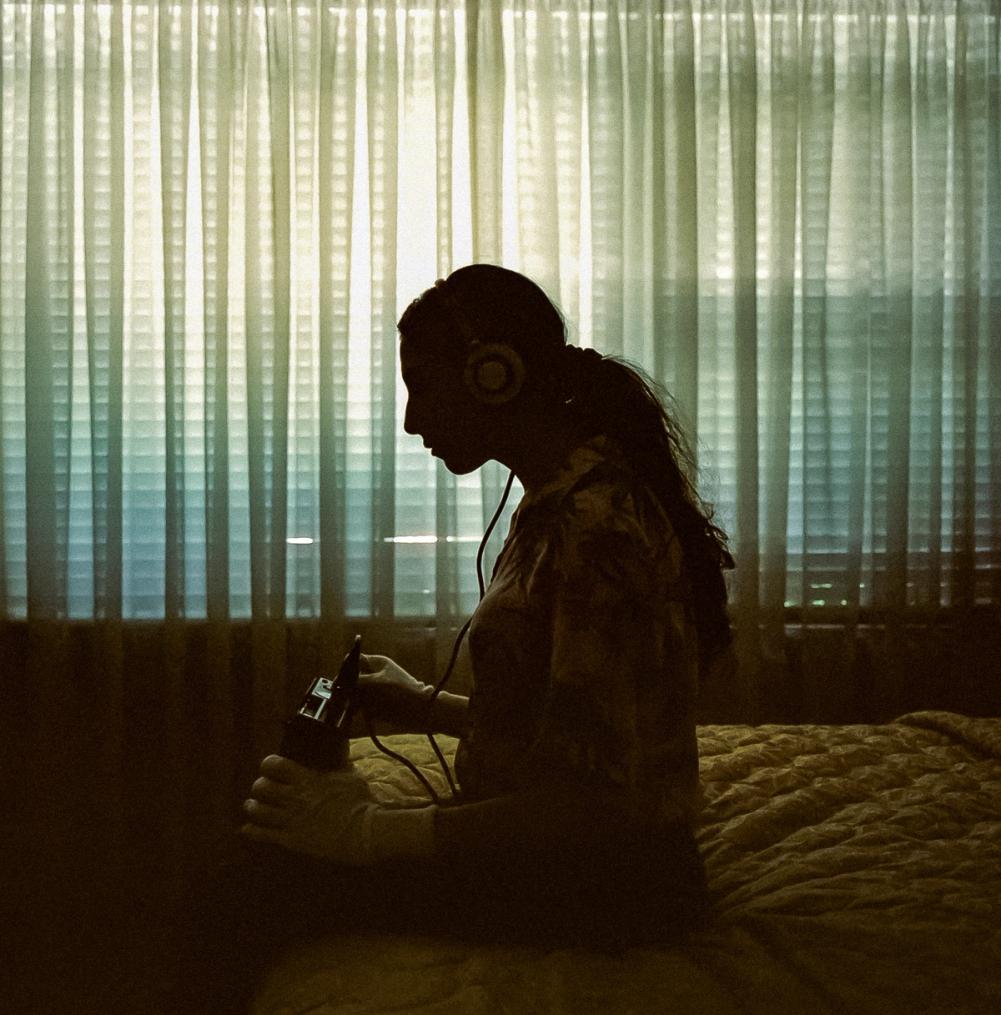
This photograph was taken in our exhibition Faith, fashion, fusion: Muslim women’s style in Australia where faith, fashion and Muslim identity are explored through the work of a group of Australian Muslim designers and selected stories from women in the Muslim community. One of the experiences that we have made in the gallery space is a photo booth where we are inviting our visitors to tell a story about themselves. We have prompted the conversation by asking the question

Are you what you wear? Your style only tells a small part of your story. In a few words tell us something about yourself that we wouldn’t know from your appearance.

The photo above was submitted by the woman featured in the photo. We will be sharing these photos with you in the gallery, online and a selection will be highlighted here on Photo of the Day.


Maurie Gilman’s Ginger Jar Orchestra

94/63/1-103/33Glass negative, quarter plate, group portrait of a dance band, Tom Lennon, Sydney, Australia,1932-1947

In the Sydney of the 1930s, 40s and 50s, The Ginger Jar cafe was one of two places that a good girl shouldn’t go, according to historian, Bill Boldiston. The other was Ziggies in King Street.  The Ginger Jar Cafe was located in Her Majesty’s Arcade in Pitt Street. Of the two venues, the Ginger Jar was considered to have the best music. The management employed a regular band and sit-ins by quality musicians were encouraged.

Jazz historian Jack Mitchell believes that the photograph above was taken early in 1934 at the time when Maurie Gilman succeeded Dick Freeman as leader of the Ginger Jar Orchestra. He was able to identify most of the members of the band. From left to right: “Tiny” McMahon (tenor saxophone), Dick Freeman (drums), Maurie Gilman (saxophones, clarinet), Bert Mars (saxophone), unknown, probably Lynn Miller (trumpet). Bert Mars was later replaced in the band by Colin Bergersen. The unknown member of the band is probably the pianist.

This photograph from the Tom Lennon photographic archive collection and was taken when Tom Lennon was the official photographer for Dance Band News.

Tom T. Lennon, was a commercial photographer whose studio was at 64 Victoria Road, Drummoyne. The 1796 negatives in the Powerhouse Museum Tom Lennon archive are largely of balls and dinners held in Sydney, but also include weddings, funerals, work events, parties, portraits, pets, fashion, horse races, and various places and events. At the time that this photograph was taken, Tom Lennon was the official photographer for Australian Dance Band News. Other images from the Tom Lennon archive have been posted previously on Photo of the Day.

Research by Paul Wilson, Archivist.


Photography by Tom Lennon

No known copyright restrictions


Newsroom, c. 1928

92/293-29 Mounted photograph, showing newsroom,labeled `1' 

The photo shows the Chief of staff surrounded by journalists, whose duty is to ‘write up’ the news handed to them by the Chief. To the right is the pneumatic tube system whereby copy and messages are despatched or received. In the background are files of the morning papers of Australasia, for reference. A boy from the cable office is evidently just bringing in some oversea(sic) news, while near the Chief is a battery of telephones, in charge of a boy, to link up with all departments and the big city outside.

At the time this photograph was taken, the newspaper was king. So significant was printing as a technology that this museum, at that time The Museum of Applied Arts and Sciences, acquired a didactic display on the subject of the printing trade of which this photograph was a part. The photograph is likely to have been taken at the offices of The Sydney Morning Herald. It is also likely to have been staged but nevertheless us a glimpse of the world of newspaper journalism in the early days of the 20th.  The journalists are surrounded by the latest in contemporary technology. Their ordered, exclusively male office is interesting to compare with the changes that occurred in journalistic practice throughout the rest of the 20th century culminating in the present day 24 hour news cycle, primarily electronic and augmented by social media and ‘citizen’ journalism.

In the Museum’s annual report the display on the printing trade was listed under ‘Exhibits of Interest’ added during that year. According to the report, the exhibit was prepared and arranged by S.T. Leigh and Company, with the co-operation of Carmichael and Co., Ltd, Edwards, Dunlop and Co., Hartland Hyde, J. Heine and Sons Ltd., The Sydney Morning Herald; White and Gillespie, (Syd.) Pty. Ltd., F.T. Wimble and Co., Ltd. The display, which consisted of fourteen showcases occupying a whole bay, included lithography, photography, three-colour process block-making and newspaper printing.

Below the image can be seen in its original mount with explanatory text. Despite the advances in printing technology, at the time that the exhibit was displayed labels in the museum were still written by hand.

Today is World Press Freedom Day, a date designated by the UN to encourage and develop initiatives in favour of press freedom, and to assess the state of press freedom worldwide. For more information on World Press Freedom Day, see the UNESCO website.

 92/293-29 Mounted photograph, showing newsroom,labeled `1'

Photographer unknown

No known copyright restrictions


Florence in feathers

00q00321

Feather fans from the music hall stage used by performers such as Mistinguett at the Moulin Rouge and the Ziegfield Follies dancers were a source of inspiration for fashion designers post World War 1. With their propensity for movement feathers were particularly appropriate for formal occasions involving dancing.  This photograph shows the stylish young Florence Broadhurst, who was to become one of Australia’s best-known designers. Her loose dress with feather trim and fans indicates that this photograph may have been taken at some time during the 1920s when she worked as a performer and later ran a dance school in Shanghai.

Born into a middle-class family in Mt Perry, Queensland, Florence exhibited musical talent from an early age and performed regularly for family and friends. Later she joined a troupe called The Globe Trotters and, in her early twenties, travelled with them fifteenth month tour of Asia, departing from Brisbane in 1922. Some female impersonators in the group nicknamed the young Queenslander ‘Bobby’ and this became a stage name. After the tour, which included Singapore, Bali and Manchuria, Broadhurst and some other performers returned to Shanghai, the commercial centre of colonial Asia, where ‘Bobby’ opened The Broadhurst Academy.

The Broadhurst Academy Incorporated School of the Arts, a finishing school created to attract clients from the wealthy British and American expatriate communities, was Florence Broadhurt’s first business venture. The Academy offered classes in a range of disciplines including dancing, elocution, deportment and short-story writing.

Today, Broadhurst is best-remembered for her striking wallpaper designs. Some of these designs, along with other photographs from the album that includes this image, can be viewed in the Powerhouse Museum online collection database.

More photographs of performers wearing feathers on stage can be viewed on Pinterest.

Post by Kathy Hackett, Photo Librarian

Collection, Powerhouse Museum. Photographer unknown. 97/98/1-4/10

No known copyright restrictions


Vicars Woollen Mills

00222723

This photograph shows women operating machinery at the The Vicars Woollen Mills in Marrickville. The mills were relocated from a Sydney factory to Victoria Road Marrickville in 1893. The company employed just 60 hands, under the guidance of John and William Vicars. The mills obtained the contract for supplying the lucrative National Military Training Scheme contract during WWI, and by 1911 the company processed 3,000 bales of wool and employed 400 hands.

Today is May Day, a traditional day of festivities throughout the centuries in the western world. According to Wikipedia, May Day is most associated with towns and villages celebrating springtime fertility with village fetes and community gatherings. In the Catholic calendar, May 1st is the Feast of St Joseph the Worker, the patron saint of workers. In many countries May Day is also celebrated as International Workers Day.

For more about the Vicars Woollen Mills, see the Marrickville Library website.

Photography by E.B. Studios

No known copyright restrictions


Sunny Brooks at the Wentworth Hotel

94/63/1-44/11 

The photograph above, from the Tom Lennon archive collection, shows American band leader and trombone player, Sunny Brooks addressing a luncheon in his honour at the Wentworth Hotel  in Sydney on the 23rd of April, 1935. Brooks’ piano accordion player who travelled with him to Australia can be seen on the far right. His accordian bears the letters ‘MAURY’.

Brooks had been brought to Australia by the Australian Cabaret and Amusement Corporation to play at the New Palais Royal at Moore Park. His band was advertised as ‘Sunny Brooks and his Hollywood Orchestra’ which included local musicians.

The next day, The Sydney Morning Herald reported:

A large party, most of whom were musicians, assembled at luncheon at the Wentworth to welcome Mr. Brooks. Mr. Brooks, in a speech, said the welcome extended to him was a revelation in hospitality, for in his country visiting musicians often encountered something different. 

Today is the second UNESCO International Jazz Day, designated so to raise awareness in the international community regarding jazz’s virtues as an educational tool, as a vehicle for peace, unity, dialogue, and for enhanced cooperation between peoples. 

Tom T. Lennon, was a commercial photographer whose studio was at 64 Victoria Road, Drummoyne. The 1796 negatives in the Powerhouse Museum Tom Lennon archive are largely of balls and dinners held in Sydney, but also include weddings, funerals, work events, parties, portraits, pets, fashion, horse races, and various places and events. At the time that this photograph was taken, Tom Lennon was the official photographer for Australian Dance Band News. Other images from the Tom Lennon archive have been posted previously on Photo of the Day.

Research by Paul Wilson, Archivist

Photography by Tom Lennon

No known copyright restrictions


Dress circle at the St James Theatre

Photographic print, black & white, St James Theatre auditorium, Sydney, New South Wales, Australia, 24 May 1960

This image is a photographic print from the Bob Lucas archive of Australian cinema. It shows the now demolished St James Theatre which was located at 107-111 Elizabeth Street, Sydney, near the current David Jones building.

It is a later image than my previous post which showed the theatre probably in the final stages of its fitout. Typed on the reverse of this image is the note ‘St.James Thr.-Sydney-24.5.60.’  St James Theatre had three tiers of seating and this appears to a view from the back of the top tier looking at the magnificent curtain.

The St James Theatre opened in 1926 as a ‘live theatre’ but spent most of it’s life as a ‘movie palace’ owned by MGM.  The interior of the theatre was described as magnificent with a silver and blue colour scheme and rose tinted curtains and seats. The interior was apparently renovated (poorly) at some point  but from what can be seen in this black and white photo, much of its original decoration was still in place in 1960.

Sadly this theatre which was ‘designed for patrons to gasp at it’s beauty for eternity’ was demolished to make way for an office block in 1971.

Post by Lynne McNairn,
Digital Media

Photographer unknown, 1960
© All rights reserved

Reference: The opening of the St James Theatre Sydney by Leann Richards Hat Archive


Lighting up or lighting down at St James Theatre

2007/191/1-1/70  Photographic print, black & white, auditorium of St James Theatre undergoing restoration, Sydney, New South Wales, Australia, 1930s?

This image is a photographic print from the Bob Lucas archive of Australian cinema. It shows the now demolished St James Theatre which was located at 107-111 Elizabeth Street, Sydney. The image shows the auditorium with a spectacular light fitting sitting on the floor. There are many workers and onlookers present probably waiting for the light to be hoisted into place. The St James Theatre was opened in 1926, so perhaps this light fitting was one of the final installations.

St James Theatre was built as a live musical theatre by the Fuller Brothers and Hugh J Ward. According to The Sydney Mail, it represented ‘the last word in comfort and elegance of appointments and artistic decoration.’ The architect was Henry E White who later contributed towards the design of the Sydney State Theatre. The St James opened in March 1926 to spectacular success with the still popular musical ‘No No Nanette.’ The song ‘Tea for Two’ was one of the hits from this show. Sadly for the builders this euphoric start did not last, with a combination of the depression and the arrival the the ‘talkies’ sending the original owners to the wall.

The theatre became a cinema in 1929 and after a brief return to live theatre in 1930, it became a permanent home to movies in 1931. Later renovations saw the theatre loose some of its lavish 1920s decoration and in 1971 the building was demolished and replaced with an office block.

Post by Lynne McNairn, Digital Media

Photographer unknown, c 1930
No known copyright restrictions

Reference: The opening of the St James Theatre Sydney by Leann Richards, Hat Archive


From Cairo, on the banks of the Nile, 1915

Document from the Powerhouse Museum Collection

This photograph from the Boddington Family Collection shows a river scene in Cairo, in the early years of the 20th century. The colour printed postcard was sent from Egypt by a young soldier, Frederick Boddington, to his family in Mackay, Queensland. On the reverse side of the card, reproduced below, he wrote:

Dear Joe,

This photo is taken from a bridge which I cross on the tram fairly often. Generally there are dozens of these boats or dahabeahs waiting for the bridge for them to lift and allow them to pass. We are getting worked pretty hard now and [illeg] means the front very shortly. We will very soon leave here I think on account of large amount of sickness among the troops. What do you think of the size of the [..ffs?]

The card is postmarked Cairo, 1915.

Frederick and his brother George, as members of the Infantry Battalion, AIF – the famous 3rd Australian Infantry Brigade, were among the first Australian soldiers ashore at what is now known as ANZAC Cove.

Frederick E Boddington and his brother George K Boddington both survived their Gallipoli experiences, but Frederick was wounded. In a letter to his parents, written from the Luna Park Pavilion Hospital in Cairo, he describes in vivid detail accidentally running into a Turkish trench at night.

Both brothers later died in France. Frederick E Boddington was killed in action on 11 April 1917 at the First Battle of Bullecourt, and George K Bodddington died on 12 May 1917 from wounds sustained on 10 May at the Second Battle of Bullecourt. A third brother, Charles, survived the war.

This item is one of an archive including the brothers’ medals, death plaques and photographs, as well as a ‘mourning medal’, letters, postcards and other items relating the gravity of loss for their family.

Document from the Powerhouse Museum Collection

Photographer unknown

No known copyright restrictions