Author Archive for Paula Bray

Faith Fashion Fusion

Over the past year staff at the Museum have been developing content for the exhibition Faith, Fashion, Fusion: Muslim women’s style in Australia opening in May this year. From streetstyle to red carpet dresses, the exhibition will explore the emerging modest fashion market and the work of a new generation of Australian clothing brands offering stylish clothing for Muslim and non-Muslim women.

Through filmed interviews and photo shoots we have been capturing the stories and creative process behind some of these fashion labels. Our first photography session documented Hijab House’ fashion shoot for its mid summer 2010 campaign. Established in 2010 by Tarik Houchar Hijab House was the first Australian Muslim women’s fashion retailer to open inside a mainstream shopping centre and it was their striking marketing images that made the store stand out in the busy mall environment. Tarik commented that initially he would

see a lot of non-Muslim shoppers walk past and look up and seem amazed at that kind of product being offered in a suburban mall. It was challenging at first, but people are now very accepting of it. They love the concept and they love the accessibility of our brand.

Tarik conceived the ‘You’re late for Tea’ collection as pretty and playful and themed his shoot around the tea party in Alice in Wonderland noting the theme

is very culturally relevant because obviously Muslim women can’t drink things like alcohol, so tea and social engagements are very important for our culture.

This image shows models Edem Dokli, Anastasia Zhelobovskaya and Giarne Wedes posed as if about to take tea – all that is missing is the tea set. Tarik was inspired by the work of Swedish illustrator Lovisa Burfitt so in post production had the photographs overlaid with text and the accoutrements of a tea party. The final image appeared on Hijab House’ Facebook page and as a huge graphic in the window of Hijab House at Bankstown Centro, Sydney.

Post by Glynis Jones, Curator
Photography by Sotha Bourn
© All rights reserved

Trainspotting 2011

This is our Trainspotting 2011 photo competition exhibition that is currently on display at the Museum. We have 47 amazing photographs featured in this exhibition from our 2011 competition that we run on Flickr. This exhibition will only be on until the 13th February. Don’t forget that you can also enter your photos into our 2012 Trainspottting photo competition which is now open. All the details are on our website and you can also enter via our Flickr group.

Photography by Marinco Kojdanovski
© All rights reserved

Traditional Sanjo music

This is a detail of a Korean musician dressed in national costume playing an instrument and performing traditional Korean, Sanjo folk music that featured during the opening of our exhibition Spirit of jang-in: treasures of Korean metal work.This opening was celebrating the exhibition which traces the development of metal craft from ancient artisans to the spectacular ‘kingdoms of gold’ of the Silla royalty, the influence of Buddhism on craft skills and practice, the simple beauty of everyday objects, and the impact of the dark days of the early 20th century. Reflecting a contemporary spirit of jang-in, a selection of works from Korean artists living in Korea and Australia is also featured.

This exhibition closes on the 12th of February.

Photography by Sotha Bourn
© All rights reserved

Interlace

This is one of the digital artworks that is featured in our Love Lace exhibition. The work, created by Cecilia Heffer and Bert Bongers, consists of video projection: silkscreened, machine stitched silk organza on soluble substrates embedded with sensors, interacting with a digital interface projection of the Australian landscape.

This is their artist statement:

InterLace is an interactive video lace installation. The work sits between the definitions of a built environment and a multimedia environment. It is a response to the space and landscape of the travels by the artists separately and together within Australia.

Designed as a visual, spatial and tangible sensory experience, the work transforms lace in a three-dimensional augmented environment. Traditional expressions of lace pattern are redefined through the use of innovative materials, process and video technologies.

Sensors stitched into fragile delicate lace surfaces detect changes in light, and the proximity and movement of the audience. The work becomes an augmented fabric, with a multiplicity of layers of image and meaning; exploring the spatial mysterious interplay between real and virtual worlds. Its layers explore light and shadow between material and ephemeral perceptions of negative and positive space.

Photography by Marinco Kojdanovski
© All rights reserved

George Street

George Street near Hunter Street, Sydney

This image taken sometime between 1884-1917 comes from our Tyrrell glass plate negative collection. This full plate is titled ‘George Street near Hunter Street’ and was photographed by Kerry and Co. Our collection states:

This photographic negative is one of 2900 Kerry & Co. photographs in the Powerhouse Museum’s ‘Tyrrell Collection’ once owned by Sydney bookseller, James Tyrrell. Almost all of these negatives are 21.5 x 20.3 cm (10 x 8 inch) glass plates and many of those now held by the Powerhouse Museum collection would have been used to create postcards. In addition to the Kerry & Co. Studio images, the Tyrrell Collection at the Powerhouse Museum includes glass plate negatives published by Henry King and a number of other negatives by unattributed photographers

Using the zoomify tool on our website you can read all the signs featured on the building facades. Here is a screenshot as an example.

Photography by Kerry and Co
No known copyright restrictions

2012 Year of the Dragon

Happy Chinese New Year.

This is the Year of the Dragon, one of the most powerful and lucky signs in the Chinese New Year zodiac. According to the official Sydney celebrations, Dragons are innovative, flexible, self-assured and passionate, making good artists diplomats and politicians.

This image is from our collection has the following description in our database.

Glass lantern slide, “Bronze Dragon”, bronze dragon and phoenix statues in front of the Hall of Audience, hand coloured glass / paper, maker unknown, China / Australia, c.1930. Hand coloured glass lantern slide showing bronze dragon and phoenix statues in front of the Hall of Audience. Both of these statues have a marble plinth and symbolize the Emperor.

No known copyright restrictions

Use Only Fresh Food – Milk

This is a postcard from our collection that was produced by the NSW Fresh Food and Ice Company Ltd, Australia, around 1900-1910. On the back of the postcard is the caption:

The NSW Fresh Food and Ice Company Ltd, We make a special feature of early morning calls

This sweet young girl wearing a pin striped dress, that has been hand-painted green, and is standing next to a broken jug of milk that has been spilled on the floor. Interestingly the National Museum of Australia also has a copy of this postcard in their collection. The National Library of Australia has this great truck accompanied with the caption

“N.S.W. 25 Harbor St. Fresh Food & Ice Co. Ltd., Pure ice cream.”

No known copyright restrictions

Designers and photographers at work # 4: Olive Cotton shoots Max Dupain, 1937

This silver gelatin print by Olive Cotton provides a rare, early glimpse ‘behind the scenes’ at an outdoor fashion shoot. The photographer is Max Dupain (1911-1992), and the model, Noreen Hallard. Dupain works on the Cronulla sand dunes south of Sydney, on a shot for David Jones Department Store fashion publicity. At the time, Olive Cotton was the photographer’s assistant and Dupain was beginning to establish himself as a leading local commercial photographer.

In the late 1930s it was becoming common practice to take fashion photographs out of doors. We would all go in Max’s small car to a favourite location where he would take the required shots, my role being to help the models with their make-up and changes of costume.

Olive Cotton: photographer, Sally McInerney, National Library of Australia, 1995, p28

Cotton and Dupain were later married (1939-1941). Although the shot was captured in 1937, the year Dupain shot his iconic Sunbaker image, which can be viewed on the National Gallery of Australia website, this particular photographic print (Powerhouse Museum collection 95/317/1; purchased 1995) was printed much later, in 1992, as part of a limited edition series (this print being 8/25) after Olive Cotton rediscovered it at the end of a role of film as she was going through her negatives.

By showing the photographer and model at work on location, and documenting the presence of the photographer’s assistant (photographer, Olive Cotton), the photograph beautifully contextualizes the history and production of Australian fashion photography by not only illustrating the early use of outdoor locations, but also showing the simple production set-ups of the day.

The beach became a popular or preferred backdrop for fashion photographers working in Australia, partly because of the atmospheric appeal of the light, texture and space, but also because beaches challenged the photographer’s skills and ability due to unpredictable circumstances, including light and weather conditions. Many photographers continued the tradition of working on Australian beaches into the forties and through to the nineties – Laurence Le Guay, Helmut Newton, Alec Murray, Bruno Benini, Henry Talbot, David Mist, Graham Shearer and others, and naturally the vogue continues today, (see My Nikon Life).

Post by Anne-Marie Van de Ven, Curator

Photography by Olive Cotton
© All rights reserved

Korean performers

This photograph was taken during the opening of our Korean exhibition Spirit of jang-in: treasure of Korean metal craft. This was taken with a slow shutter speed to allow the Echo of a Millennium Korean dancers bright, pink costumes to blur with the movement of their performance. This opening was celebrating the exhibition which traces the development of metal craft from ancient artisans to the spectacular ‘kingdoms of gold’ of the Silla royalty, the influence of Buddhism on craft skills and practice, the simple beauty of everyday objects, and the impact of the dark days of the early 20th century. Reflecting a contemporary spirit of jang-in, a selection of works from Korean artists living in Korea and Australia is also featured.

Photography by Sotha Bourn
© All rights reserved

Trainspotting competition is open

IMG_6459_websize_BW_border

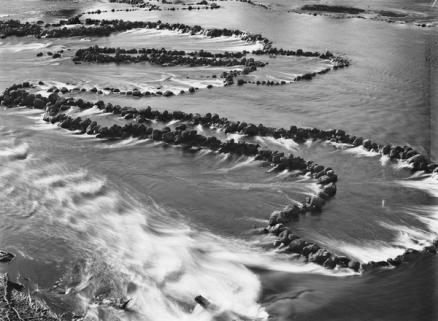
This is one of the photographs that was entered into our Trainspotting photography competition for 2011. This was a highly commended photograph entered into our railway infrastructure category and now features in our exhibition that is on at the Museum right now. The photographers caption reads:

Waiting at Frampton Siding to take photos of moving trains. While waiting, my mind got creative…

If you have any photos that you would like to enter into our Trainspotting 2012 photography competition then please do. We have many categories to chose from including a mobile phone category. We are encouraging photographers to be as creative and experimental in the approach to the entries. More details are available on our website.

Photography by goanna.equine
© All rights reserved