Archive for the 'Photo of the day' Category

Loco 3265

Photo Nº: 00z40309

Since its public launch on 20 September 2009, the Museum’s reconstructed steam locomotive 3265 has been hired by two steam train operators for their day trip excursions. On Sunday 4 October, 3265 performed faultlessly as it hauled a Cockatoo Run service operated by 3801 Limited to the Southern Highlands. On Saturday 7 November, 3265 shared some hard work with locos 3526 and 3642 en route to Blackheath hauling a special train operated by the NSW Rail Transport Museum. Hundreds of passengers and thousands of delighted onlookers took in the spectacular site of a rarely seen “triple header” steam train working the steep Blue Mountains grades.

The restoration of 3265 received an award from the Association of Tourist and Heritage Rail Australia at the International Rail Heritage Conference held from 14-17 October at the Workshops Rail Museum, Ipswich, Queensland. The award is testimony to the high standard of work invested in the project by Powerhouse Museum staff and the dedicated team of volunteers who worked for 11 years to finally realise their objective.

On Monday 9 November, 3265 was prominently displayed at the opening of the new Roundhouse at the Rail Transport Museum at Thirlmere. The Roundhouse represents the first stage in RailCorp’s redevelopment of the Thirlmere site where both the Powerhouse Museum’s steam locomotives, 3830 and 3265, will soon be stored, displayed and maintained.

Photography by Marinco Kojdanovski
License: Creative Commons Attribution-Noncommercial-No Derivative Works 2.0
Post by Andrew Grant, Curator
Photo of the Day 2nd anniversary statistic: one of our top 5 posts is Future of image licensing

The 80s are back

welding

I’m excited about my first blog post. As the museum’s industrial designer I have been realising John Hirsch’s dream of a 1m³ interactive Rubik’s Cube replica for the upcoming 80’s exhibition. He’s our Interactives Department Electronics Engineer, something of a McGyver.

It’s a touch sensitive cube with colours you could drag across the surface, all made possible by new sensing technology we developed and coloured light projected by LED’s from behind plastic sheets.

I started with CAD concepts of a metal light box of laser cut parts welded with the precision necessary to fit the many layers of parts still to come.

Photo collage and post by Krister Gustafsson, Industrial Designer
© All rights reserved
Photo of the Day 2nd anniversary statistic: one of our top 5 posts is Whats in the Workshop #1

George Walker

H5572-1

This 1856 photograph is of George Walker who would eventually become the Mayor of Paddington, in Sydney. While ambrotypes from the 1850s and 1860s can still found in antique shops and markets ones in which the sitters are identified are much rarer. Even rarer still are examples of prominent Sydney figures like this one.

No known copyright restrictions
Post by Geoff Barker, Assistant Curator
Photo of the Day 2nd anniversary statistic: one of our top 5 posts is Lansdowne Hotel

The 80s are back

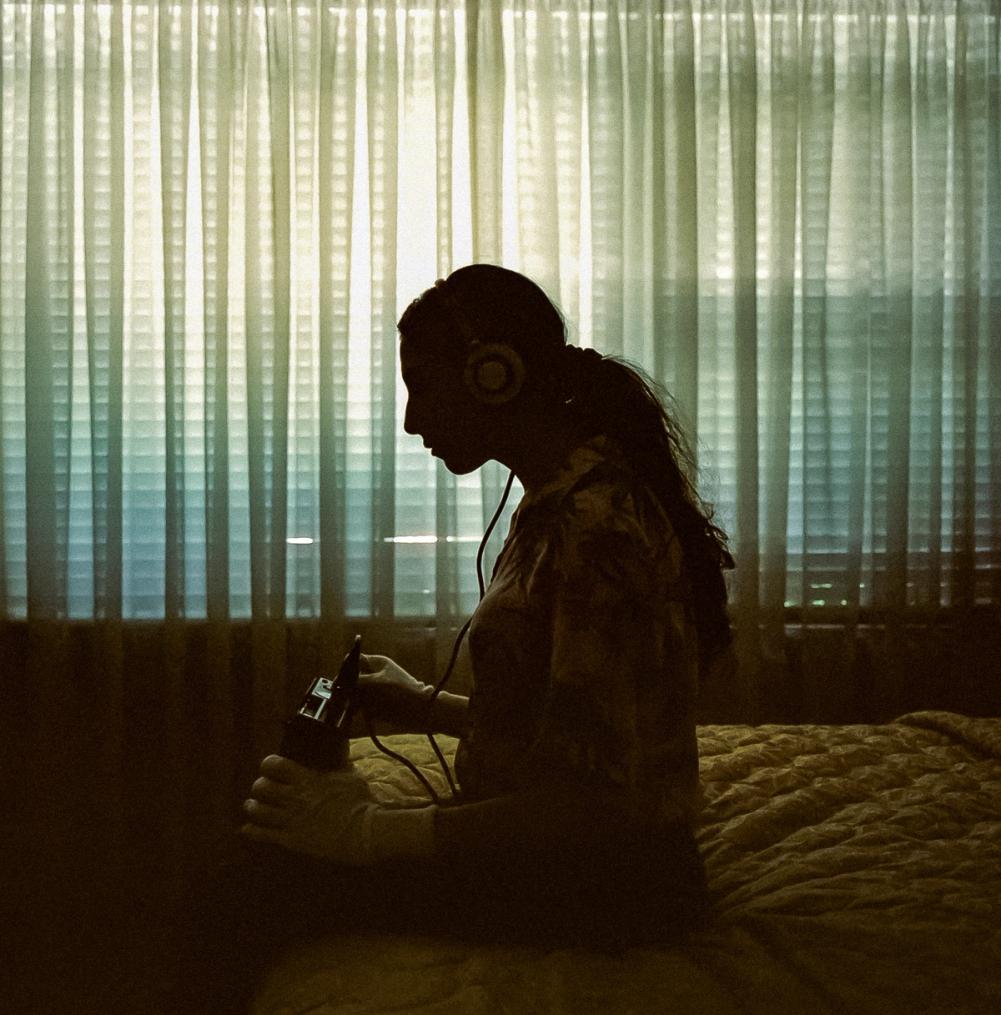
IMG_0529[1]

The exhibition is in construction and we are preparing a lot of content at the moment that will be featured in this exhibition that will take you back to the decade of decadence, extravagance, big hair,shoulder pads and much more. This image (sent throught the Polarize app) is a behind-the-scenes shot of the testing of some audio-visual, image and lighting content that will make up an entry experience for the audience just prior to entering the exhibition. The 80s are back will open in December.

Photography by Paula Bray
License: Creative Commons Attribution-Noncommercial-No Derivative Works 2.0
Photo of the Day 2nd anniversary statistic: one of our top 5 posts is The Commons anniversary

Redfern Railway Station: a transport hub

2469669056_e88213df7e

Redfern Station in Sydney opened in 1855, just north of its current location. In the early 1900s the main terminal was moved a few hundred metres further north and became known as Central Station.

The Central terminus was designed as a vital transport interchange where people and goods moved between trains, horsebuses, steam trams, horse-drawn cabs and carts. Good planning made change possible, as buses, cars, electric trains and light rail took their place. Although the vehicles have changed, Central Station serves thousands of people very well each day.

Photography by Charles Kerry & Co
No known copyright restrictions
Posty by Sandra McEwen, Principal Curator
Photo of the Day 2nd anniversary statistic: one of our top 5 posts is Sydney Hyperbolic Crochet Coral Reef exhibition

The heart of the Milky Way

galactic_centre

This is a stunning view showing the centre of the Milky Way galaxy in infrared light that was made with data from the Spitzer Space Telescope.

With visible light, dust between the Earth and the galactic centre obscures the view. However, infrared observations see through this dust, and this false-colour image shows old, cool stars in blue while the dust illuminated by hot, younger stars is red. The brightest white spot in the middle is at the very centre of the galaxy, which also marks the site of a supermassive black hole, about 26,000 light years away. The plane of the Milky Way’s flat disk is apparent as the main, horizontal band of clouds.

Credit: NASA/JPL-Caltech/S. Stolovy (SSC/Caltech).
Post by David Malin
Photo of the Day 2nd anniversary statistic: 1009 subscribers to the RSS feed.

Ballet portrait of Massine

00x12115

This is one of numerous intimate portraits from the Bruno Benini photography archive acquired by the Powerhouse Museum with funding assistance from the Commonwealth Government’s National Cultural Heritage Account in 2009. Dramatically lit and boldly choreographed, the image captures an intimate moment in the dance routine and the working life of Leonide Fedorovich Massine (1895/6-1979) one of the greatest dance masters and choreographers of the 20th century. Compositionally the image gains great theatrical presence as Massine and the female ballerina occupy only a small part of the spot lit picture plane, the remainder of the image remains in stark contrasting blackness. The name of the female ballerina, the specific ballet and the theatre are not yet known. Perhaps you can help us with our research? Bruno Benini took the photograph in London during 1958.

Photography by Bruno Benini
© Estate of Bruno Benini
Post by Anne-Marie Van de Ven, Curator

Photo of the Day 2nd anniversary statistic: 330 comments with 18000 words in those comments

Photo of the Day turns two today!

IMG_0844

Today we are celebrating Photo of the Day turning two. I am going to share some of the statistics with you over the next week that I have about this blog, the first being that we there are 141, 000 words associated with the images. The statistics are interesting but more than the stats it is the amazing feedback that we get back from you that inspires us. There is some incredible research going on and connections being made. Thank you for participating with this blog it is very much appreciated.

Photography by Paula Bray
License: Creative Commons Attribution-Noncommercial-No Derivative Works 2.0

William Hetzer stereoviews join the Commons

4091215204_bb62d1f7c7

This week we have added another small collection of photos to the Commons on Flickr and this is one of twelve stereoviews that we are now making available for you to see and use. This original was created by William Hetzer and was published in one of the earlier sets of William Hetzer’s stereoviews, This image is especially relevant to the Powerhouse Museum collections as it is the earliest photographic record of Australia’s first Locomotive. Appropriately named Locomotive No. 1, this train is now part of the Powerhouse Collection. This locomotive arrived in Sydney in February 1855 and worked on the NSW rail lines until March 1877 when it was withdrawn from operation after having travelled more than 250,000 kms.

Flickr member Thiophene_Guy has already made an animated gif of this image and describes this as:

The purpose here is not to duplicate the original image, from the Powerhouse Museum collection but to generate an animated gif to assist viewing.

See the gif here

Stereoview by William Hetzer
No known copyright restrictions

Constructing Artefact H10515

My time-lapse sequence of the Artefact H10515 exhibition was shot with a Canon EOS-1D Mk1 fitted with a 20mm f2.8 wide-angle lens and a Canon Remote Control Timer which I set to trigger every 2 or 15 minutes depending on the amount of activity I thought would occur each day.

The camera was mounted on the lighting-grid in the ceiling of the exhibition using a Manfrotto 3D tripod head on a super clamp. In that location the camera was surrounded by exhibition lighting which would probably be repositioned during the exhibition installation so I added a pair of make-shift ‘barn-doors’ on either side of the lens to minimise lens-flare.

Once I had the camera positioned I connected its AC converter to a continuous power supply and set the camera to manual focus with Aperture-Priority automatic exposure set to f11 at 100 ISO. The exhibition is relatively dark and I knew my exposures would vary between 5 and 30 seconds but that suited me because I wanted to blur the motion of people working on the installation.

The project took about 30 days to shoot using two 4Gb SandDisk Extreme III CF memory cards and every day or two I checked the camera and swapped cards so it would continue its capture while I used Adobe Photoshop CS3 to download, edit and process the latest RAW files into screen-sized JPGs.

Altogether I shot about 2000 images, which I edited down to around 1100, and 850 effective shots that could be used in 60-second and 90-second versions of the time lapse sequence. The shorter of these started at the point where the exhibition developers installed new rear-projection material on the inside of the glass cube to achieve better image contrast than the material originally specified.

Finally I used an early version of Apple iMovie software to produce the two time-lapse sequences using a duration of 0.3 seconds for the majority of the images, with longer transitions at the beginning and end where I used titles and some supplementary images to finish off the project.

Photography and post by Geoff Friend
© All rights reserved