2004 marks the 150th anniversary of William Stanley Jevons' arrival in Sydney. Jevons was born in Liverpool, in England. He studied chemistry in London, and came to New South Wales at the age of 19 to work at the Sydney Mint. The Gold Rush was in full swing, and his job was to assess the quality and purity of the precious metal from the diggings. This work put him in a unique position, at the intersection of geology, chemistry, economics and industry. Wanting to document as many aspects of life in Australia as he could, Jevons also took up photography, even taking his camera equipment to the goldfields. After five years in Sydney, Jevons returned to England, where he eventually became the first Professor of Economics at University College in London.
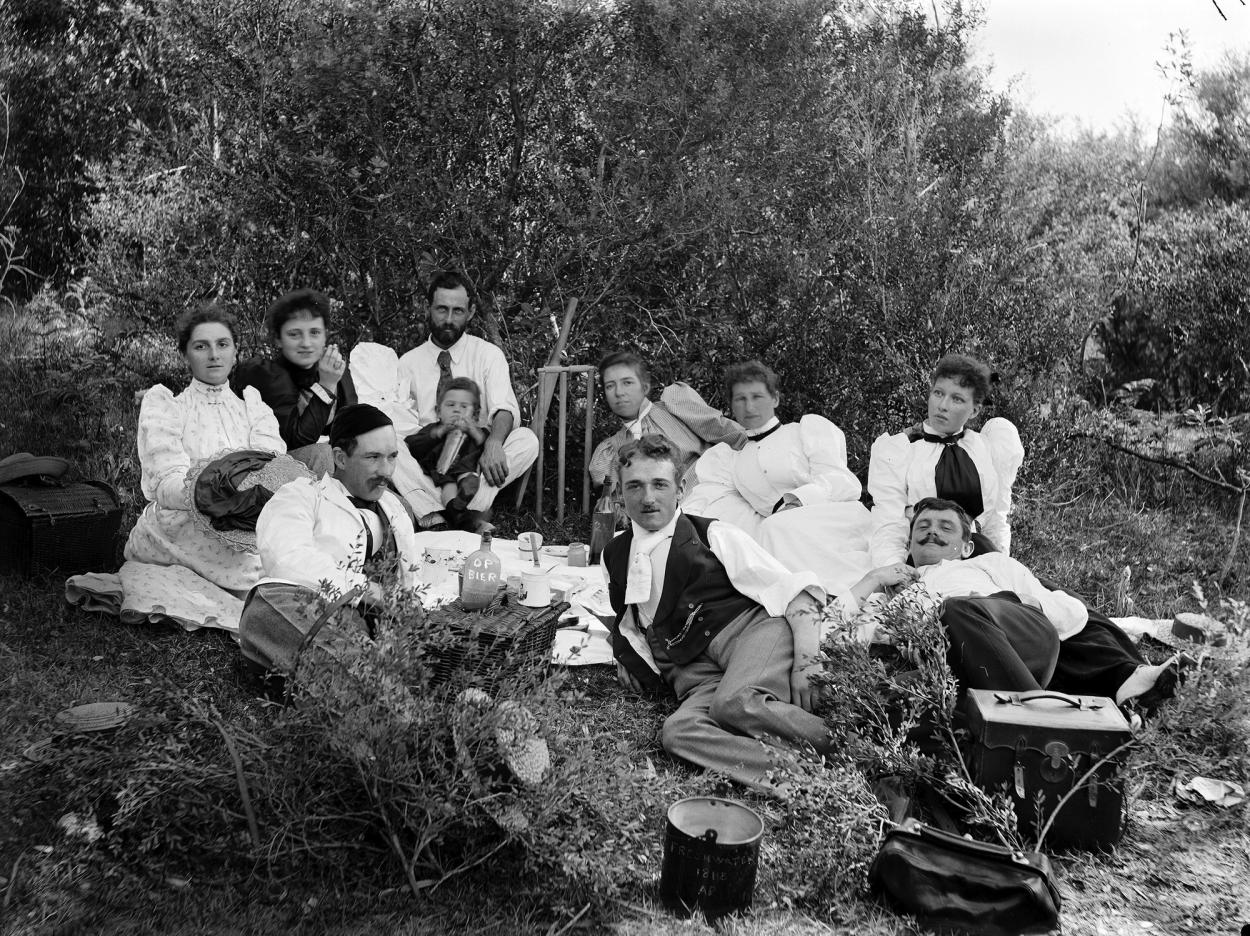
Jevons began his assaying at the Macquarie Street Mint in 1855, but rather than limiting himself to chemistry, he enthusiastically embraced the potential for a whole range of studies which the colony of New South Wales provided: in botany, through his study and collection of local plants; in geology, documenting the geology of the Sydney basin; in meteorology, writing the first study of Australian and New Zealand weather patterns and researching cloud formation; and in political economy, through his groundbreaking 'social surveys' of Sydney and Goulbourn and speculations on the economics of railway construction. At the same time, he also used the very new medium of photography to make hundreds of pictures of the life and landscape around him.
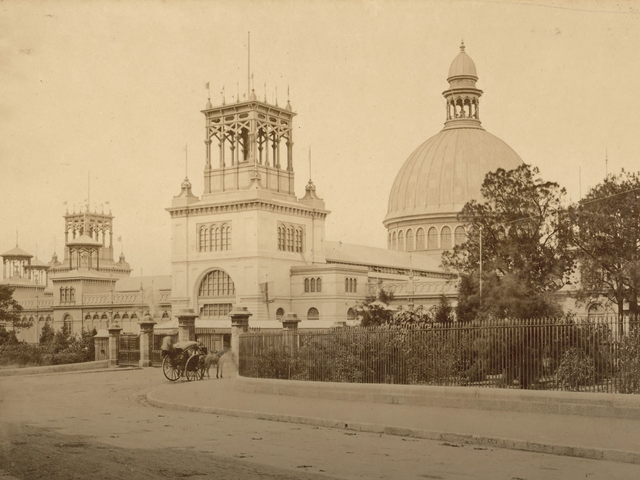
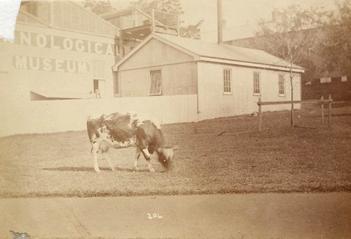
The Jevons exhibition will include a substantial collection of his photographs, most of which have never previously been shown. This collection, produced at a time when photography was in its infancy, includes extensive views of Sydney, the Macquarie Street Mint, Middle Harbour, Double Bay and Bondi, the goldfields near Braidwood, as well as some of the earliest interior photographs of work practice and domestic life taken in Australia.
While in Sydney Jevons kept a detailed journal and diaries, and sent regular letters to members of his family describing the environment, his activities, his ideas, and innermost thoughts. So what influence did his time in Sydney have on Jevons' thinking, and what role did it play in bringing his ideas to fruition? In fact, Jevons said later that nearly all his ideas came to him during the period he spent in Sydney. The new colonial city certainly gave him the time, the money and the intellectual freedom to undertake work in a wide range of areas: meteorology, photography, geography, geology, botany and natural science and a social survey of the city itself.
Using his own words, and in particular his letters and diaries, the exhibition will focus on Jevons' Sydney years in order to consider how this young man, in this newly developing city, came to formulate the initial conceptions of a number of today's prominent social and scientific discourses, like economics, statistics, logic and sociology. In essence, Jevons theories about value can be seen to reflect a change in the dominant industrial forms of the mid nineteenth century – from the stationary steam engine and factory production to the mobile technologies of transport and communication, like railways and the telegraph.
After five years Jevons left Sydney in order to return to England, where he went on to become a key figure in the fields of political economy and social reform. While his name is not generally well known today, Jevons is credited with having made economics a mathematical discipline, and he is regarded as one of the founders of the form of neo-classical economics that dominates our current economic thinking and political discourse. Additionally, in 1869 he invented what is conceivably the world's first machine for doing logic inference, a machine that anticipated the contemporary computer by 100 years.
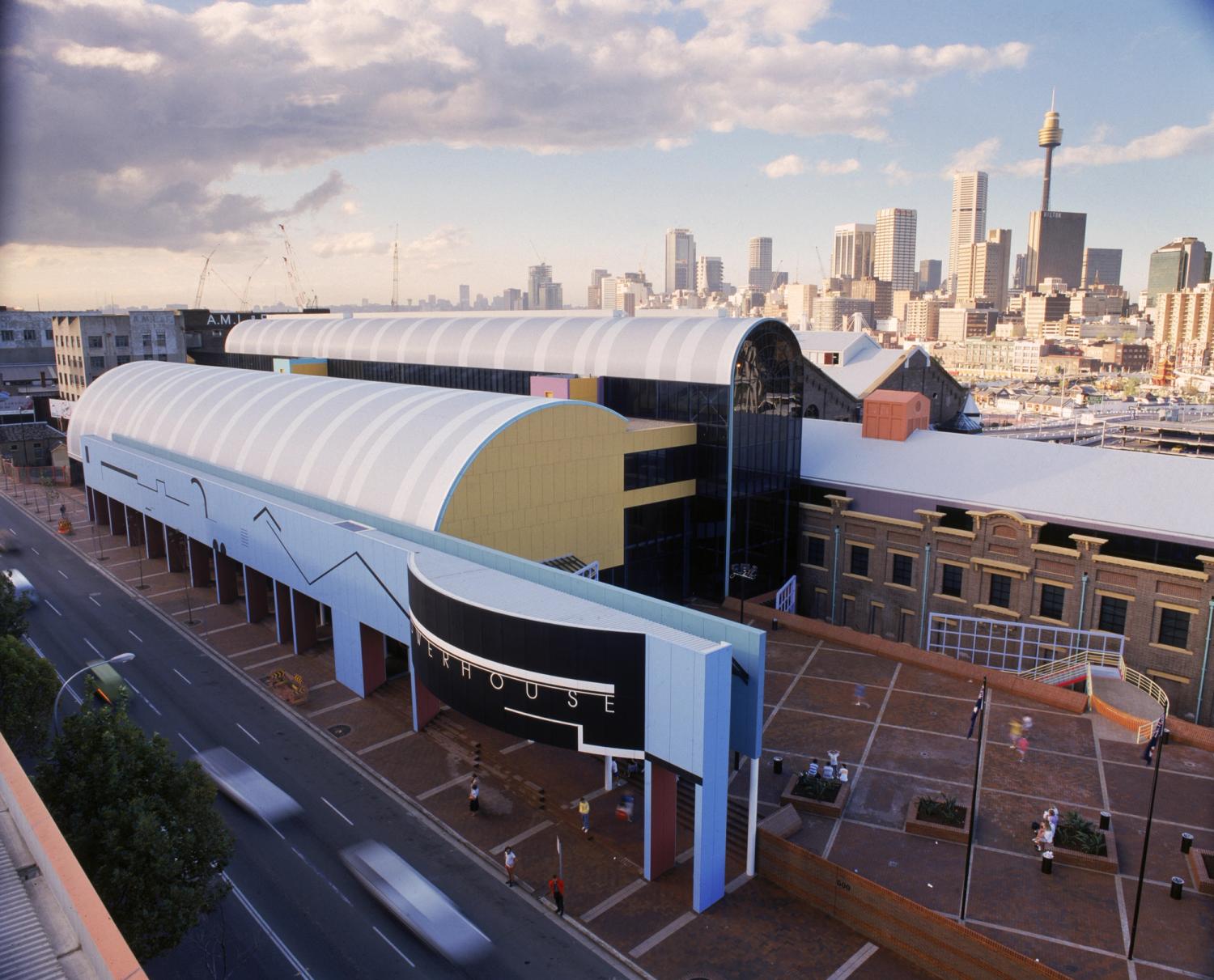
Given William Stanley Jevons' participation in, and influence upon, fields as diverse as science, photography and urban geography, and particularly as this work was conducted in colonial Sydney, the Powerhouse Museum is ideally placed to mount this exhibition. The Museum collection includes Jevons' telescope, along with assaying equipment from the Mint (including balances) and examples of the coins produced, and photographic equipment of the kind used by Jevons and his photography circle. Additionally, the Boulton &Watt beam engine and Loco No 1 will be incorporated into the exhibition, Jevons' story adding further to their interpretation.
One of the most exciting artefacts to be included in the exhibition will be Jevons’ original logic machine or 'Logic Piano'. On loan from the Museum of the History of Science, Oxford, this will be a rare opportunity for Australian audiences to view this extraordinary 19th century proto-computer.