Powerhouse Museum Collection Search 2.53
Category history:
   
Mount Stromlo Spectrum Scanner
Oddie Telescope Mount Stromlo
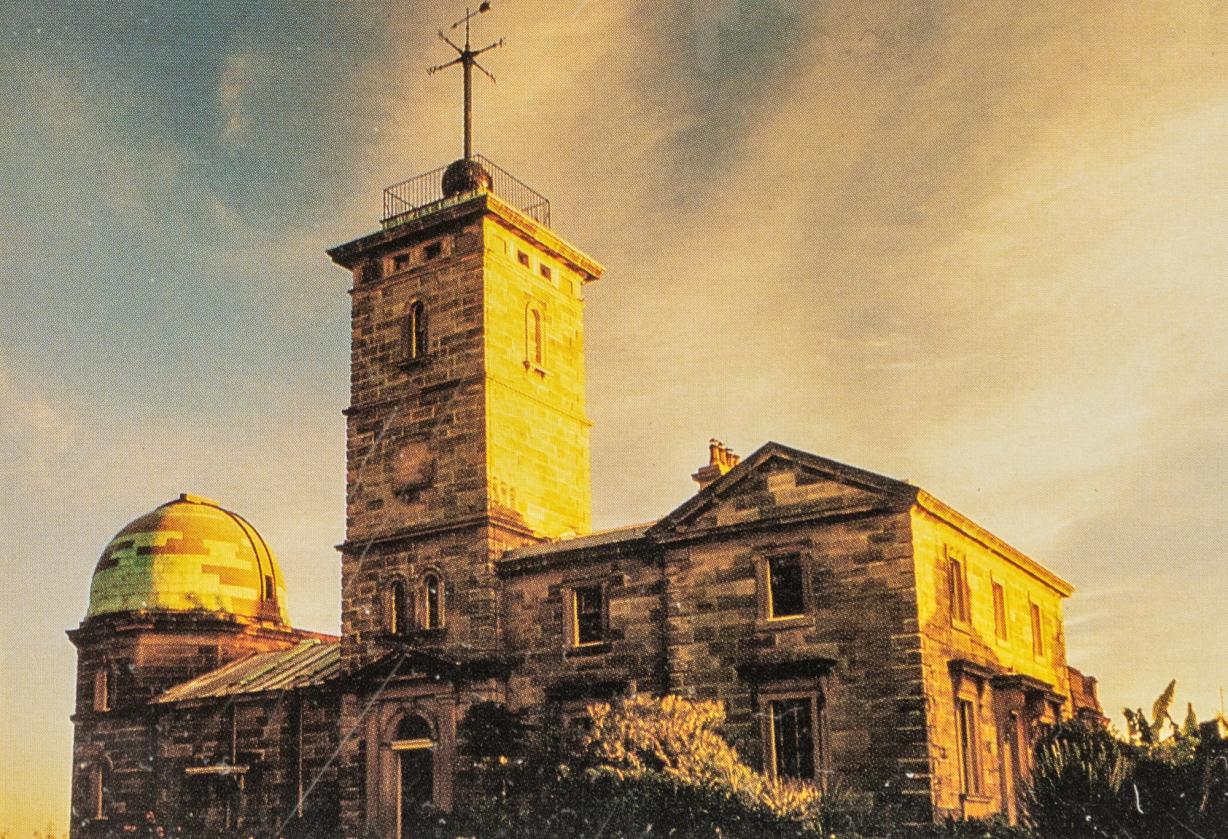
The first observatory at Mount Stromlo was set up in 1911 to house the 9-inch Grubb refractor telescope donated by James Oddie to the Solar Physics Committee in 1909. For the next 17 years this small building remained the main observatory. Things really changed between 1926 and 1930 when the buildings of the new Commonwealth Solar Observatory were finished, and the instruments, and staff were finally established at Mount Stromlo.

The top of Stromlo's electrical sub-station had a dome which housed the 'Farnham' 6-inch telescope and a camera to engage in a photoelectric program. A Gunther and Tegetmeyer stellar photometer unit was acquired but it proved hard to use and was removed from the telescope in 1930. Even so the Director Walter Duffield's prime interest was spectroscopy and for this reason it remained a cornerstone of research at Mount Stromlo from the earliest years.

In 1957 a new Director, Bart Jan Bok, was appointed and between then and 1966 the Observatory underwent a period of expansion. One of the factors which helped this was Bok's encouragement of scholarships and visits by professional colleagues As a result the 188cm (74-inch telescope) became one of the two telescopes at the front line of Southern hemisphere observations for over 20 years. This was due in a large part to Bok's arrangement for the American, Theodore (Ted) Dunham Jnr. to come to the Observatory. Dunham had already designed and built a state of the art Coudé spectrograph for the Mount Wilson Observatory and he did the same for Stromlo's 188cm telescope.

There were teething problems with the telescopes primary mirror and a great deal of engineering skill was brought to bear in mounting the spectrograph, as a hole had to be carefully dug into the solid rock at the base of the telescopes pillar. But the finished telescope transformed the potential of the telescope for the study of stellar atmospheres and emission nebulae and helped extend the observatory's international credentials for astrophysical work. One reason for the urgent following of this line of research was that in 1957 Margaret and Geoffrey Burbridge, William Fowler and Fred Hoyle had published a seminal paper on the formation of chemical elements from primordial hydrogen and helium. A race to determine … cosmic element abundances ensued and … Dunham's spectrograph was invaluable, putting Stromlo at the forefront of this particular area of research".

The success of the spectrograph, which provided the basis for much of the work at Stromlo, led Bok to invite Lawrence Aller, another pioneer in the field, to set up a photoelectric spectrograph on the 'Great Melbourne' telescope which had been modified into a 127 cm (50-inch) telescope. Aller arrived in 1960 bringing with him a single tube 'Michigan scanner' which improved on traditional photographic spectroscopy as it used photo electricity scanned past a tube or series of tubes.

In 1954 Aller and William Liller had published a paper on the measuring of the spectra of planetary nebula with a photometer, and by 1956 their success enabled Liller to design and build a direct recording photoelectric spectrophotometer at the Mount Wilson Observatory. This device, which was brought to Mount Stromlo, used a Farnsworth 16-PM-1 photomultiplier with an Ag-Cs2O-Cs cathode for infrared and an EMI 6685 photomultiplier for the blue spectrum, both cells were refrigerated.

From October 1960 to January 1961 Liller's new device was attached to the 66cm (26-inch) telescope at Mount Bingar to study the spectrum of n-Carinae. After this Aller, and another Stromlo staff member, D. Faulkner, moved the device back to Mount Stromlo where, on 30 January 1961, it was attached to the 'Great Melbourne' telescope to take more readings. After June 1961 Faulkner began recording a second series but all observations were made with the direct-recording photoelectric spectrophotometer designed and constructed by Liller (1957). Slight modifications made for Australian observations correcting lens introduced for telescope rations of f/12 and f/8. Also two component system consisting of a convex and concave lens introduced to avoid vignetting.

By 1963 the profile of the observatory in this field of research led to the International Astronomy Union's Symposium on Magellanic Clouds being held at Mt Stromlo. And in 1964 a two-channel version was commissioned on the 50-inch telescope to be followed by a 33 channel device. By 1965 there was no doubting the popularity of the use photoelectric methods as 50% of that year's 3200 observing hours at Siding Spring were noted by Bok as being suitable for photoelectric photometry. At Mount Sromlo the figures were 29% but the demand for the automatic photoelectric scanner attached to the 127 cm (50-inch) telescope was obviously one reason Bok had plans to make a second instrument.

In addition the observatory was making simultaneous observations using the Coudé spectrograph, scanner and photoelectric techniques, the last of which had an observable wavelength range from 3300-11000 Ĺ. At this time one of the observatory's staff, Dr. Alex Rodgers, was working with Dr. Searle and Mr. M. Bessell, studying a number of variable stars using the photoelectric scanner and were producing measurements which contradicted previous speculation about the origin of ? Carinae. One result of this intense interest was Rodgers involvement in the construction of this second automatic photoelectric scanner (89/1364).

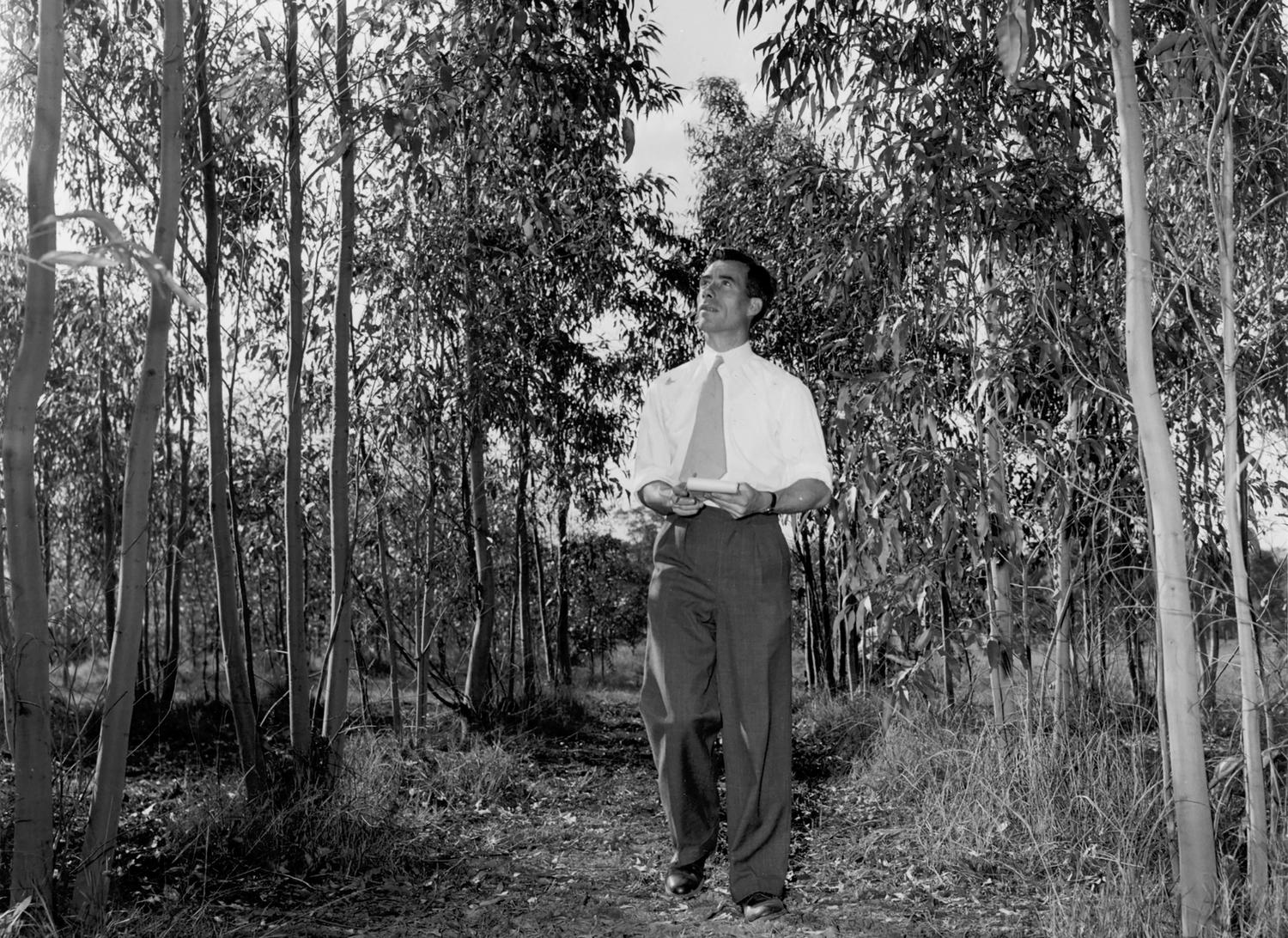
Alex Rodgers was born in Newcastle in 1932 and he studied at the University of New England before winning the H. C. Russell Prize in 1953. This enabled him to get an Australian National University (ANU) Scholarship to study at Mt Stromlo in 1954. His doctorate on 'A Photometric study of the Southern Coalsack', the dark patch of the Milky Way near the Southern Cross, was completed in 1958. Rodgers spent all his working life at Mt Stromlo, even becoming director from 1986 -1992.

Geoff Barker, Assistant Curator, January 2010

References
Aller L., 'Photoelectric Spectroscopy of n Carinae', Proceedings of the National Academy of Sciences of the United States of America, Vol. 55, No. 4, 1966
Aller L. H., Faulkner D. J., Norton R. H., Photoelectric Spectrophotometry of Selected Southern Stars, Jet Propulsion Laboratory, California Institute of Technology, November 1965
Bok, B. J., Mount Stromlo Observatory of the Australian National University; Report for the year ending 1965, December 31, 1965
Frame T., Faulkner D., Stromlo; an Australian observatory, Allen & Unwin, Crows Nest, Australia, 2003
Haynes R., Haynes R., Malin D., McGee R., Explorers of the Southern Sky; a history of Australian astronomy, Cambridge University Press, Melbourne, 1996
Liller W., Aller L., 'Photoelectric Spectrophotometry', Proceedings of the National Academy of Sciences of the United States of America, Vol. 49, No. 5, 1963
Subjects:
+ Astronomy
+ Astronomical equipment
Objects
Spectrum scanner from Mt Stromlo Observa
 

Copyright
Images on this site are reproduced for the purposes of research and study only. Whilst every effort has been made to trace the Copyright holders, we would be grateful for any information concerning Copyright of the images and we will withdraw them immediately on Copyright holder's request.
Object viewed times