Powerhouse Museum Collection Search 2.5
Category history:
   
Australian Eclipse Expedition to Flint Island 1908
Eclipse Expedition, Flint Island, Kiribati, 1908
In September 1907 F. K. McClean, of the Royal Astronomical Society, set off from England for a small island in the middle of the Pacific. His destination, "Flint Island", is located north of Tahiti and it was here that he hoped to observe an eclipse of the sun scheduled for January the next year.

Even though McClean had failed to make up a party in England, he took with him some 15 cases of equipment. This was obviously more than one person could handle and to overcome this Mclean hoped to find colonial astronomers willing to accompany him. Upon reaching Colombo, he received a telegram from C. J. Merfield of Sydney, the first to offer his services to the expedition.

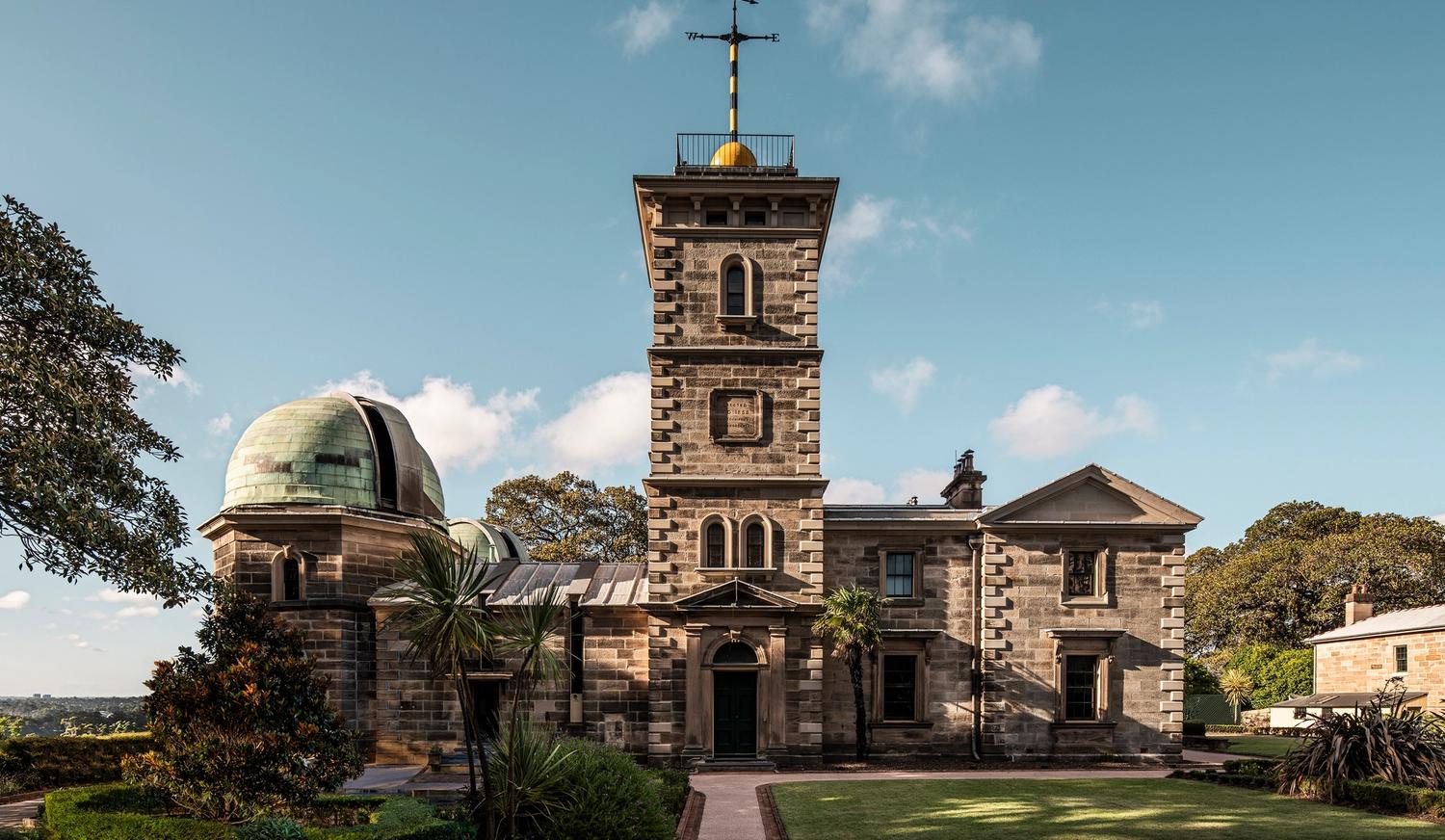
Once in Sydney McClean was introduced to James Short, astronomical photographer and W. E. Raymond who both worked at Sydney Observatory, as well as Joseph Brooks a retired surveyor. These men along with, the Reverend F. W. Walker and Henry Wincklemann from New Zealand eventually made up the Flint Island eclipse team.

This team arrived at Flint Island on Monday the 23rd of December. Once they had negotiated the small channel blasted in the coral reef which surrounded the island they set up camp close to that of the Lick Observatory party led by Professor W. W. Campbell. Thus, for a few weeks, the tiny island became home to two expeditions who shared their equipment and stores as they prepared for the January 3rd eclipse.

The Lick Observatory expedition was far better equipped as it had been sponsored by William Croker. How well funded we can see from the list of stores compiled by William Campbell's wife, Elizabeth. Amongst other things, the list included, a dozen tins of ginger snaps, 36 pots of assorted jams, ten rolls of toilet paper, eight pounds of chocolate and two boxes of Upmann's Regalia Graciosa cigars. For McClean's expedition this must have seemed luxury indeed.

The morning of the eclipse was fine but by 10 am conditions had become cloudy and there was a heavy bout of rain before totality. In spite of this six glass plates were taken by McClean, Brooks and Walker, using a De La Rue Chronograph. Ten more, six using a 4 inch Dallmeyer lens and four with a telephoto lens of 1-1/4 inch aperture were taken by James Short, assisted by Mr. Caffin. In an interesting side note Short mentions that the Dallmeyer lens was the same one last used to photograph the 1874 transit of Venus. Henry Winckelmann took eight plates using a Ross telephoto camera and W. E. Raymond sketched the event as he viewed it through a Grubb 4-inch telescope.

In what must have been an intense flurry of activity McClean's group left the island that same afternoon aboard the Taviuni. On board they developed the De La Rue photographs while Winckelmann and Short developed their plates when they returned home. Positives from the De La Rue coronograph were taken in Auckland by the professional photographer Josiah Martin and some of these were sent directly to London.

While the conclusion of this eclipse expedition was successful the one organised by McClean, to observe the 1910 eclipse at Port Davey, in Tasmania, was not so lucky. The line of total eclipse for this event touched no land except the Antarctic and Tasmania and it was scheduled to occur, in winter, in one of the wettest parts of the country. Once again James Short accompanied McClean but this time the expedition failed to get any photographs of the event due to poor weather.

Geoff Barker, Curatorial, October 2008


References
McClean, F. K., Report of the Eclipse Expedition to Flint Island, January 3, 1908, Richard Clay and Sons, Limited, Bread Street Hill, E.C., and Bungay, Suffolk, date unknown
Pang, Alex Soojung-Kim, 'Gender, Culture, and Astrophysical Fieldwork: Elizabeth Campbell and the Lick Observatory-Corker Eclipse Expeditions', Osiris, second series, volume 11, Science in the filed, University of Chicago Press on Behalf of the History of Science Society, stable URL http://www.jstor.org/stable/301925
Subjects:
+ Sydney Observatory
+ Astronomical telescopes
+ Astronomy
+ Scientific equipment
+ Photography
Objects
Solar Eclipse, Flint Island, Kiribati, 1
 

Copyright
Images on this site are reproduced for the purposes of research and study only. Whilst every effort has been made to trace the Copyright holders, we would be grateful for any information concerning Copyright of the images and we will withdraw them immediately on Copyright holder's request.
Object viewed times