Powerhouse Museum Collection Search 2.5
Category history:
   
This object belongs to
Theme containing this object

Mechanical calculator, 1880 - 1883
Images: 01 02 03 04 05 06 07 08 09 10 11 12 13 14 15

The Museum of Applied Arts and Sciences holds the largest collection of material internationally of the aviation pioneer, Lawrence Hargrave. While no single individual can be attributed to the invention of the aeroplane, Hargrave belonged to an elite body of scientists and researchers (along with Octave Chanute, Otto Lilienthal and Percy Sinclair Pilcher) whose experiments and inventions paved the way for the first powered, controlled flight achieved by the Wright Brothers on December 17, 1903.

This particular adding machine represents the period of Lawrence Hargrave's life before he was committed to full-time aeronautical experimentations. It was produced during his role as Extra Observer (Astronomical) at Sydney Observatory and demonstrates his mechanical mindedness and ingenuity in non-aviation related aspects of his life. Although this adding machine was not especially reliable, it is one of the earliest known examples of adding machines developed and used in New South Wales.

Lawrence Hargrave's greatest contribution to aeronautics was the invention of the box or cellular kite. This kite evolved in four stages from a simple cylinder kite made of heavy paper to a double-celled one capable of lifting Hargrave sixteen feet off the ground. The fourth kite of the series, produced by the end of 1893, provided a stable supporting and structural surface that satisfied the correct area to weight ratio which became the foundation for early European built aircraft. For example, Hargrave's box kite appears to be the inspiration for Alberto Santos Dumont's aircraft named '14bis', which undertook the first powered, controlled flight in Europe in 1906. Similarly, Gabriel Voisin states in his autobiography that he and his brother Charles, who manufactured the first commercially available aircraft in Europe, owe their inspiration to their construction to a Hargrave box kite, while via correspondence with Octave Chanute, there is also evidence for Hargrave's box kite influencing the aircraft used by the Wright Brothers during their historic flight in 1903.

Hargrave's contribution to aeronautics can also be observed in other ways. For example, he conducted important research into animal movement and produced a number of flapping models which successfully demonstrated a means of propulsion. He also designed and produced alternative power sources including a variety of engines. Beyond aviation, Hargrave undertook exploration work in the Torres Strait and New Guinea and assisted in the discovery voyage of the Fly River with Luigi d'Albertis. He also researched and wrote on Australian history and was an early proponent for the establishment of a bridge across Sydney Harbour.

References
Adams, M., "Wind Beneath His Wings - Lawrence Hargrave at Stanwell Park" (September 2004)
ADB Online, "Lawrence Hargrave", http://www.adb.online.anu.edu.au/biogs/A090194b.htm (Downloaded 18/7/2007)
Grainger, E., "Hargrave and Son - A Biography of John Fletcher Hargrave and his son Lawrence Hargrave" (Brisbane, 1978)
Hudson Shaw, W & Ruhen, O., "Lawrence Hargrave - Explorer, Inventor & Aviation Experimenter" (Sydney, 1977)
Roughley, T.C., "The Aeronautical Work of Lawrence Hargrave" (Technological Museum, Sydney Bulletin No.19, 1939)
This adding machine was probably designed and produced by Lawrence Hargrave during his employment at Sydney Observatory. It dates somewhere between 1880 and 1883.
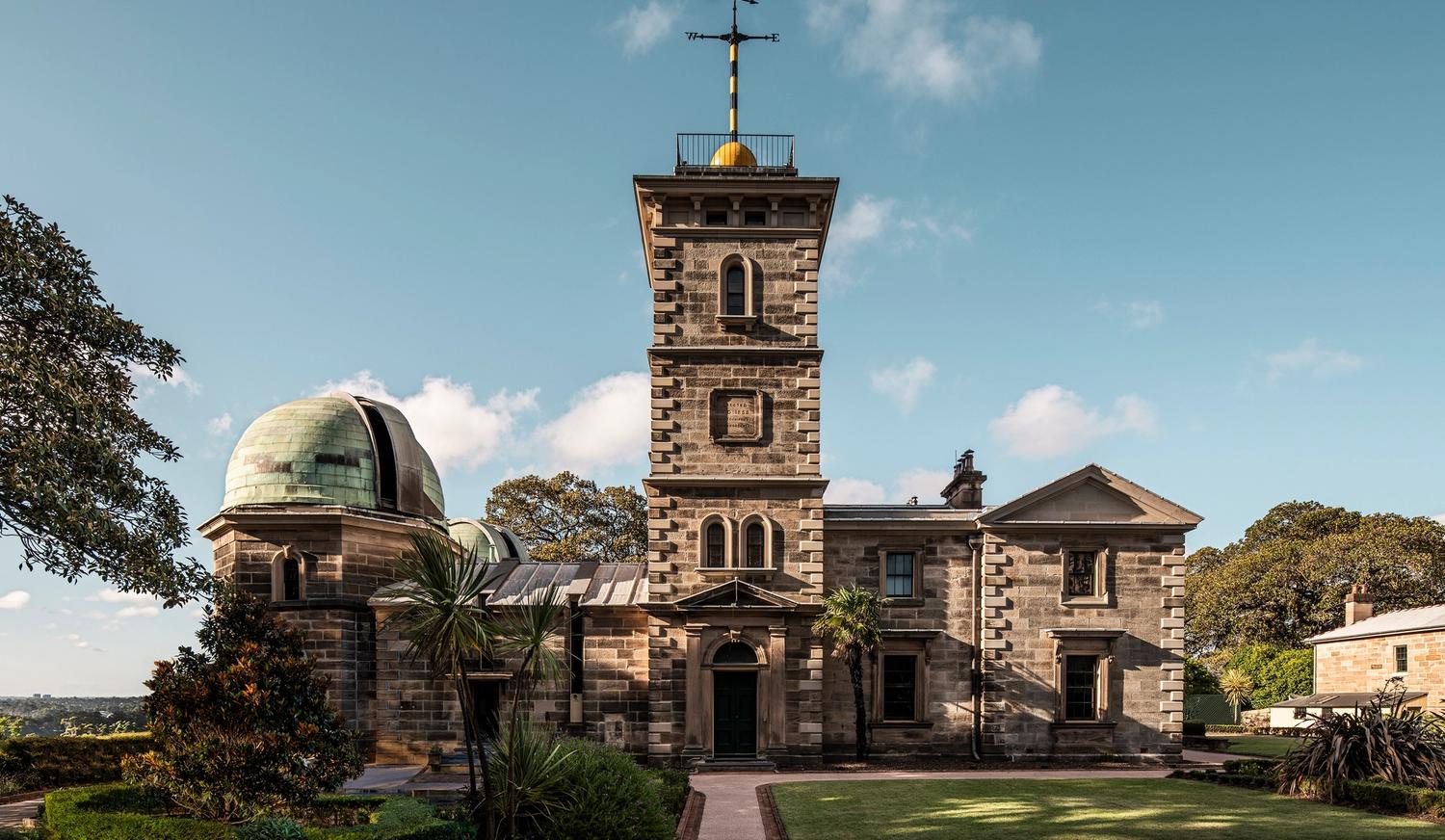
Shortly after Hargrave married Margaret Preston Johnson, he commenced employment as an Extra Observer (Astronomical) at Sydney Observatory under the supervision of the Government Astronomer, H. C. Russell. On October 1, 1878 Hargrave began work and during his first three month trial earned a salary of £16-13-4 per month. In the 5 years and 2 months he spent at the Observatory (resigning on December 8, 1883), Hargrave was fortunate enough to have observed the transit of Mercury at Katoomba; the Krakatoa explosion and the transit of Venus at Mount Dromedary.

Hargrave was also responsible for conducting extensive arithmetical calculations in his role as Extra Observer. The mundane nature of this work most likely prompted him to produce this machine to make the tasks of adding simpler and quicker. According to the Abstract of Proceedings of the Royal Society of New South Wales (dated October 7, 1908), this implement was thought out by Hargrave in 1880 with four machines being made altogether. The best one was presented to the late H. C. Russell.

Two drawings of very similar adding machines, both made by Hargrave and dated 1880 (which are held by the Mitchell Library in Sydney) describe the method of operation. Hargrave writes:

"To work the machine - set it at zero by adding the complement of the number shown on the wheels, in this case 39475 + 60525 = 00000 thus, push in 6 on section A of the machine; 0 on section B of the machine; 5 on section C of the machine; 2 on section D of the machine and 5 on section E of the machine. It is best to begin at the right hand side; otherwise the dials would have shown 99995, and adding the 5 units to make it 00000 is a severe test of the workmanship. The clutch pinion is loose on the shaft in each section. Section E has not the wide and narrow 10 teeth pinions shown in the sectional elevation. Section A has not the one tooth pinion."

Despite these instructions, none of Hargrave's adding machines were reported to be reliable. In a letter to Dr H. W. MacLaurin, for example, Hargrave admits "my instrument failed through imperfect workmanship - before putting faith in any calculating machine, test it repeatedly".

This particular adding machine was transferred to the Museum of Applied Arts and Sciences from Sydney Observatory in 1985.

 This text content licensed under CC BY-NC.

Description
Calculator, mechanical, adding machine, used at Sydney Observatory, made by Lawrence Hargrave, Sydney, New South Wales, Australia, 1880-1883

Wooden base with mounted rectangular 'platform' of brass and steel. Centre portion has three rows of nine nail-like keys which act on three sprung levers pivoted behind the keyboard. Levers have geared arc which acts against gear connected to the four wheels. Wheels have cork squares painted with digits (10).

Maker: Hargrave, Lawrence; Australia; 1880 - 1883


User: unknown; Sydney Observatory
85/339
Production date
1880 - 1883
Height
150 mm
Width
295 mm
Depth
120 mm

 This text content licensed under CC BY-SA.
This object belongs to:
Lawrence Hargrave Collection
Subjects:
+ Sydney Observatory
+ Mathematics
+ Hargrave, Lawrence


Copyright
Images on this site are reproduced for the purposes of research and study only. Whilst every effort has been made to trace the Copyright holders, we would be grateful for any information concerning Copyright of the images and we will withdraw them immediately on Copyright holder's request.
Object viewed 6081 times. Parent IRN: 49. Master IRN: 49 Img: 146287 Flv: .