Object statement
Archive, Herrick Maurice (Maurice) Cork, illustrator, commercial artist, WWII camoufluer and art director, Sydney, New South Wales, Australia, 1920s-1980
This archive belonged to Maurice Cork, an illustrator, commercial artist, WWII camoufluer and art director who lived and worked almost exclusively in Sydney. It relates closely to a larger collection of Maurice Cork artworks (2011/99/1) purchased by the Museum around the same time as the archive was donated. Together these collections reveal a lively, graphic world of traditional Australian illustration and visual communication design - through artworks, papers and documents related to one artist working within the advertising and publishing industries.
Cork grew up in the country but moved to Sydney to study art at the Julian Ashton Art School. He then worked with Farmers Department store in Sydney, before joining K G Murray Publishers in 1936. There he produced many works for Murray's popular, albeit slightly risque, Australian men's 'girlie' magazine, Man. Man was published from 1936 when Cork first joined K G Murray, though to 1974. Prominent Sydney photographers Max Dupain and Laurence Le Guay were other contributors to this magazine.
Later Cork joined the George Patterson (advertising) Agency as an art director, around 1949.
The Maurice Cork archive documents his work through papers and original illustrations and artworks, reference material and correspondence. It contains an important body of material relating to Cork's life and work as a camoufluer with the Camouflage Unit of the Department of Homeland Security during WWII (artworks, photographs, documents and correspondence).
Significantly, the collection also reveals the slow demise of the commercial artist with the rise of the photographer as the key producer of pictorial content for the popular press from the 1930s though to the 1950s. Cork pictorially illustrates this demise by depicting elegantly dressed men with portable cameras at the races and professional cameramen with their big, intrusive, field press cameras on assignment.
Historically, illustrators like Cork worked in sweat shop conditions generating artworks at great speed to tight deadlines. The process of drawing requires time and skill to produce an idea, a likeness, a mood, a feeling and an atmosphere, so the sweatshop environment put great creative pressure and strain on the artists. However, Cork appears to have been able to churn works out at speed. Many of the works in his collection still retain instructions and pencilled deadlines on their mounts. He later went on to become a publishing, and then an advertising agency, art director with the George Patterson agency.
Cork's style was competent, distinctive and accomplished. It moved from very fine lines to at times quite sombre, yet powerful, black and white illustrations, onto more optimistic and colourful, often quite 'schmaltzy' designs. Some works convey the horror and intensely fearful, atmosphere which surrounded WWII.
Anne-Marie Van de Ven, Curator September 2011
Collected and/or produced by Maurice Cork.
Herrick Maurice (Maurice) Cork
(b. 4 March, 1914 Central Tilba, NSW; d. Sydney, 2003)
Commercial artist, illustrator, camoufleur, painter, watercolourist, art director
Biography prepared by Anne-Marie Van de Ven, Curator, 2011
1914: b. Central Tilba, NSW
Son of Herrick Ashton Cork and Winifred Helen Cork (nee Read), both members of early Australian farming families. (Robert, James and William Cork, brothers from St Giles, Norwich, UK arrived Australia 1827. Ref: Ewin, J., Meet the Pioneers, 1991)
1926: Graduated from Tilba Tilba Public School. Received Permit to Enrol in the Seventh Class of a Junior Technical, Commercial, Household Arts, Rural, District, or other in Super-Primary School.
c1928: Left school, travelled to Sydney.
c1930: Studied art at Julian Ashton Art School, Sydney
Mid-1930s: Worked as window painter / illustrator at Farmers Department Store, Sydney (possibly under Ewart Collings).
1936: Joined KG Murray Publishing Company as a staff artist on 14 December 1936 with starting salary of 5 pounds per week. Later became art director.
WWII: Camoufleur in Darwin, with the Commonwealth of Australia, Department of Home Security, Camouflage Unit.
1943: Married Dorothy Butler, school teacher (b. 19 March 1918 at Bombala, NSW) on 2 September 1943, North Sydney, NSW. Dorothy later became a well known pulp fiction writer.
1945-1947: Continued working with KG Murray, also working as a freelance artist.
1947: Exhibited in 'Circle Seven' Art Exhibition, David Jones Sydney 25 June-12 July, 1947, with Frank Beck, Ewart Collings, Gus Digman, Bernard Hesling, Newton Hedstrom, and Marjorie Penglase. Douglas Annand wrote the Foreward for the catalogue, Ewart Collings designed the cover.
1949: Joined George Patterson (advertising) Agency in Sydney (estab 1930s) as a commercial illustrator / art director.
1953: Designed and built house in Turramurra.
1972: Retired from George Patterson Agency.
1972-1990s: Travelled extensively - Europe, Africa (Morocco), Asia.
2003: Died Sydney
References:
Exhibition catalogue/leaflet, Circle Seven Art Exhibition, David Jones Sydney 25 June-12 July, 1947
Miscellaneous papers, Maurice Cork archive
Author interview with son, Vern Cork, August 2011
* See also Dorothy Cork diaries, 1937-2005 (SLNSW collection).
Archive of Maurice Cork, donated to the Museum by his son Vern Cork. The archive relates closely to another, slightly larger collection of artworks, photographs and related tear sheets which has also been acquired by the Museum.
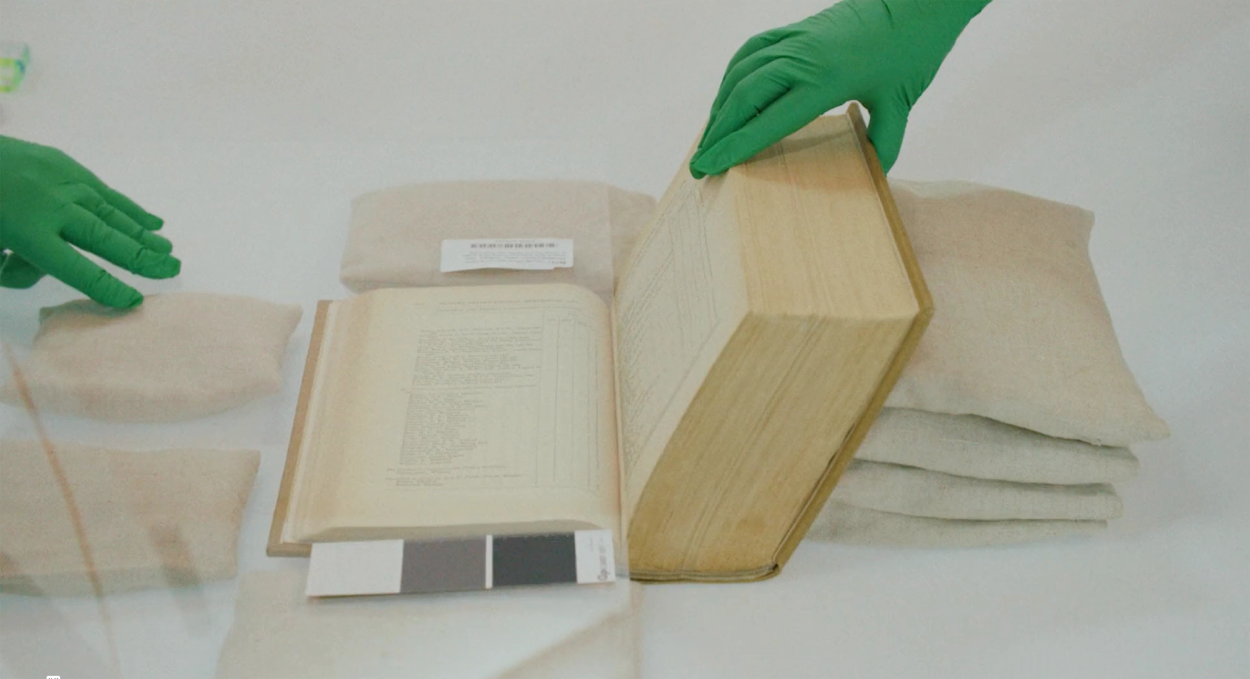
Both collections were at risk of being dispersed or lost until Vern Cork, the son of the artist, and his friend Kay Johnston offered them to the Museum. The collection was for a time exposed to profuse levels of moisture and at risk of total decay.
Vern Cork is delighted that both his father Maurice Cork's, and his mother Dorothy Cork's legacies, will be now be preserved - Maurice Cork's collection at the Powerhouse Museum, the Dorothy Cork pulp fiction and poetry collection at the State Library of New South Wales.