Object statement
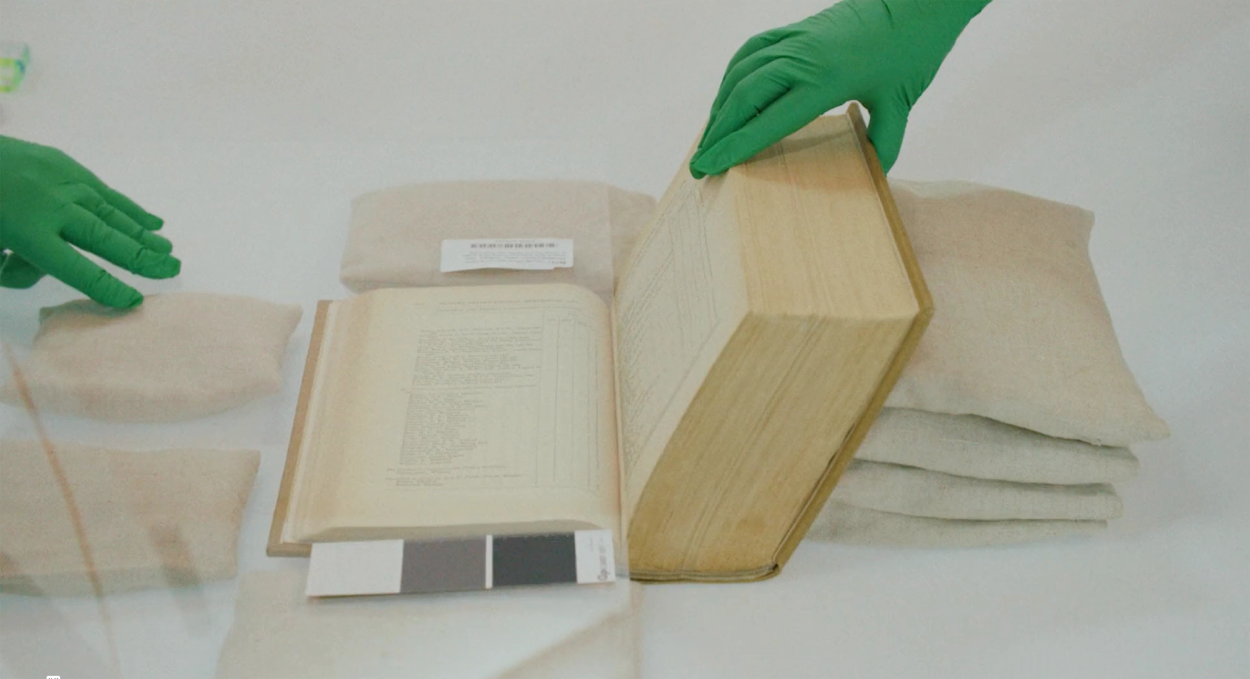
Training material for New South Wales Police breath testing including manual, U-matic video (7), 16mm film (11), LP records and still-frame film, instructional poster, paper / plastic / metal / wood, various makers, United States of America and Australia, 1969 - 1990
This equipment documents part of a long battle against drink driving in New South Wales. Between 1925 and 1970 there was a steady increase in road fatalities in Australia, but since the 1970s serious measures have been taken to address this major cause of death. As a result there has been a considerable decline, not only in the rate of fatalities per 100,000 persons in Australia, but also in the outright number of deaths per year. According to a report prepared by the Australian Bureau of Statistics in 2002, major contributions to this turnaround have come from improvements to roads and vehicles, enactment of road safety legislation, intensive public education and enhanced police enforcement technology.
One set of the key developments has been the introduction of blood alcohol limits, massive public education about the dangers of drink driving, random breath testing and a well structured system of penalties for driving over the limit.
In New South Wales legislation making it an offence to drive with a blood alcohol concentration above a specific level was introduced in 1968. Blood alcohol concentrations are measured by analysing the concentration of alcohol in a person's breath. Measuring the blood alcohol concentrations with sufficient accuracy to meet the demands of legal evidence had become possible with the invention of the Breathalyzer ® by United States police technician Robert Borkenstein in the 1950s.
Initially, police could only test drivers and riders if they were involved in an accident or were breaking the road regulations in some way. But in 1982 random breath testing was introduced. Over the years different instruments have been used for roadside breath tests, including the Alcomaster DS190 and the Alcotest 0.3. The Lion Alcolmeter S-D2 has been recently phased out, replaced by a new passive testing instrument, the Alcolizer LE, which has a small colour screen and GPS.
The procedure followed by police these days is to first administer a roadside breath test. If the result is positive the motorist is taken into custody and an evidential breath analysis is carried out by a specialist breath analyser operator.
The equipment in this collection was donated by the Breath Analysis and Research Unit in the Traffic Technology Section of NSW Police. It documents developments in breath testing since 1969 when the NSW Police Department first used a 'Breathalyzer' breath analysing instrument. Donation of the equipment was arranged by Sergeant Martin Betcher who commenced working with the Breath Analysis Section as a young policeman in 1980 and has been involved in using the changing technologies and training others to use them since that time.
Damian McDonald
March 2010
References:
Australian Bureau of Statistics, Year Book Australia 2002, Transport, Special Article - A history of road fatalities in Australia
http://www.abs.gov.au/Ausstats/abs@.nsf/0/9afd4e13d7da281fca2569de0028b40c?OpenDocument
Betcher, Sergeant Martin, Breath Analysis and Research Unit, NSW Police, in conversation with Megan Hicks, curator of health and medicine, Powerhouse Museum, 2005.
Moynham, A. F., Perl, J., Anderson, S.G., Jennings, S.R, & Starmer, G.A., Evidential breath analysis in New South Wales: an exercise in pragmatism
http://casr.adelaide.edu.au/T95/paper/s5p5.html
The training manual was produced by the New South Wales Police, 1990.
The U-matic videos were manufactured by Fuji Film, Kodak, and Scotch 3M. The video productions on the media were produced by the New South Wales Police, the Victorian Police, Film Australia, and the BBC UK.
The 16mm films were made by Colour Film, Australia, and Coronet, UK; the content was produced by Film Australia and Encyclopedia Britannica Educational Corporation, UK.
The LP records and still frame film was produced by Harcourt, Brace and World, USA.
It is unknown who produced the instructional poster.
The material in this collection was used by the New South Wales Police to educate officers on the effects of consuming alcohol and operating a motor vehicle. The audio-visual media, which dates back to the late 1960s, illustrates that, even prior to random breath testing was legislated, the New South Wales Police were training officers quite broadly about the issues surrounding alcohol consumption.
The later material is specifically for training officers in the use of breath testing devices. All this material has now been superseded by newly procured equipment and training ephemera.