Object statement
Prototype chair, 'Integra', moulded polyester resin (Perspex), designed by Charles Furey & Associates for Sebel Furniture, Australia, c. 1971-1973, used by Charles Furey, Australia, probably 1971-2009
This chair is perhaps the only surviving example of a pre-production (prototype) version of the immensely successful 'Integra' chair that was to become the first one-piece stackable moulded polypropylene chair in the world (Watson 2002: 59). It is a valuable record of the process and experimentation that is part of developing a highly successful product, and is an exemplar of the dogged determination a designer needs to exercise in order to fulfil their brief.
This prototype chair is similar in form and proportions to the production version but differs in that it is made of a clear plastic material otherwise never used in the Integra line and in having separate feet pads that insert into the end of each leg; a major compromise on the brief given to Furey by Sebel to produce a one-piece, injection-moulded plastic chair. Other details such as the underside ribbing are inevitably different according to the requirements of the material and were refined further over the lifetime of the production form. Ultimately Furey developed the Integra from this version so that it didn't require the additional feet and made a truly one-piece moulding. The eventual use in the production version of less-brittle polypropylene likely facilitated this development.
The Integra was to win the Australian Design Award in 1977 and was a finalist in the Prince Philip Prize (Award) for Australian Design. The Integra was ideal for mass production as it was efficient to produce (a single person could make a chair every three minutes) and was a practical product that was comfortable and colourful and able to be stacked up to fifteen high. The Integra was a great sales success and widely exported with over one million examples alone sold to US prisons by 2002 (Watson 2002: 59).
This prototype 'Integra' has the added distinction of having been personally used by Charles Furey and his family as one of a number of dining chairs. This is the only surviving example of this version probably due to the practice of Charles's young children's joy in bouncing the chairs on their legs in imitation of a pogo stick!
Paul Donnelly. Curator design & society
This prototype chair was designed by Charles Furey & Associates for Sebel Furniture in Australia, c. 1971-1973.
This chair is a pre-production version of the 'Integra' chair made during the development of what was to become the first one-piece stackable moulded polypropylene chair in the world (Watson 2002: 59). Charles Furey (1917-2009) further developed the 'Integra' from this version so that it did not require the additional feet seen in this example, allowing it to become truly one-piece. The use in the production version of less-brittle polypropylene (replacing ABS from 1975) likely assisted in this development for while hard surfaces could wear the ends of the legs, it was not likely to splinter as would the prototype's harder plastic.
From the mid-1960s Charles Furey & Associates had been commissioned by Sebel Furniture to design what was to become the 'Integra' chair. Sebel Furniture was founded by Harry Sebel in Sydney in the early 1950s. He had migrated from Britain with a background in the design and manufacture of metal goods (Watson 2002: 59). After initial success in metal chairs with 'Stak-a-bye' and 'Fold-a-bye' Sebel began working with plastics and it was with this material that Furey made his mark for the company; first with the 'Furey' then the 'Hobnob'.
It was with the 'Integra', however, that Sebel had its greatest success. The 'Integra' side chair (of which this acquisition is a prototype) came out in 1973 followed in 1976 by the linkable armchair. Initially the Integra was made in ABS plastic but changes to the dyes in 1975 enabled production in the lighter and cheaper polypropylene (Watson 2002: 59). The 'Integra' was ideal for mass production as it was efficient to produce (a single person could make a chair every three minutes) and was a comfortable, colourful and practical product that was able to be stacked up to fifteen chairs high. The 'Integra' was widely exported and by 2002 over one million examples 'in functional grey' had been sold to US prisons (Watson 2002: 59). Regarding the direction his company was taking at the time, Harry Sebel remarked in 1976, ' . . . I do believe my company's experience is a case history of a successful melding of the furniture industry with plastic technology . . . we want to do more and more of this. Because we are convinced that this is the way we have to go' (Watson 2002: 59).
Sebel Furniture continues today to be a successful producer of many types of furniture, including plastic. The 'Integra' remains a staple product of the Sebel catalogue.
Paul Donnelly. Curator, Design & Society
Refs:
Watson, Anne, 'Mod to Memphis: Design in Colour 1960s-80s', Powerhouse Publishing, Sydney, 2002
Sebel catalogue http://www.sebel.com.au/showroom/index.cfm?flag=true&page='product_info.cfm?'&bottom='pgID=1$^ProdID=12$^showID=0$^title=true$^CGID=1'
The 'Integra' won the Australian Design Award in 1977 and was a finalist in the Prince Philip Prize (Award) for Australian Design. The example in this acquisition was, according to the donor Eddie Furey, one of six used by his father Charles as dining chairs. Eddie recalls that he and his siblings (children of Charles's second marriage) delighted in sitting in these chairs and bouncing them like a pogo-stick! Probably as a consequence of this activity this is the only surviving example. Charles Furey developed the Integra from this version so that it didn't require the additional feet seen here and was to become truly one-piece. The eventual use in the production version of less-brittle ABS plastic from 1973 to 1974 and polypropylene from 1975 likely facilitated this development.
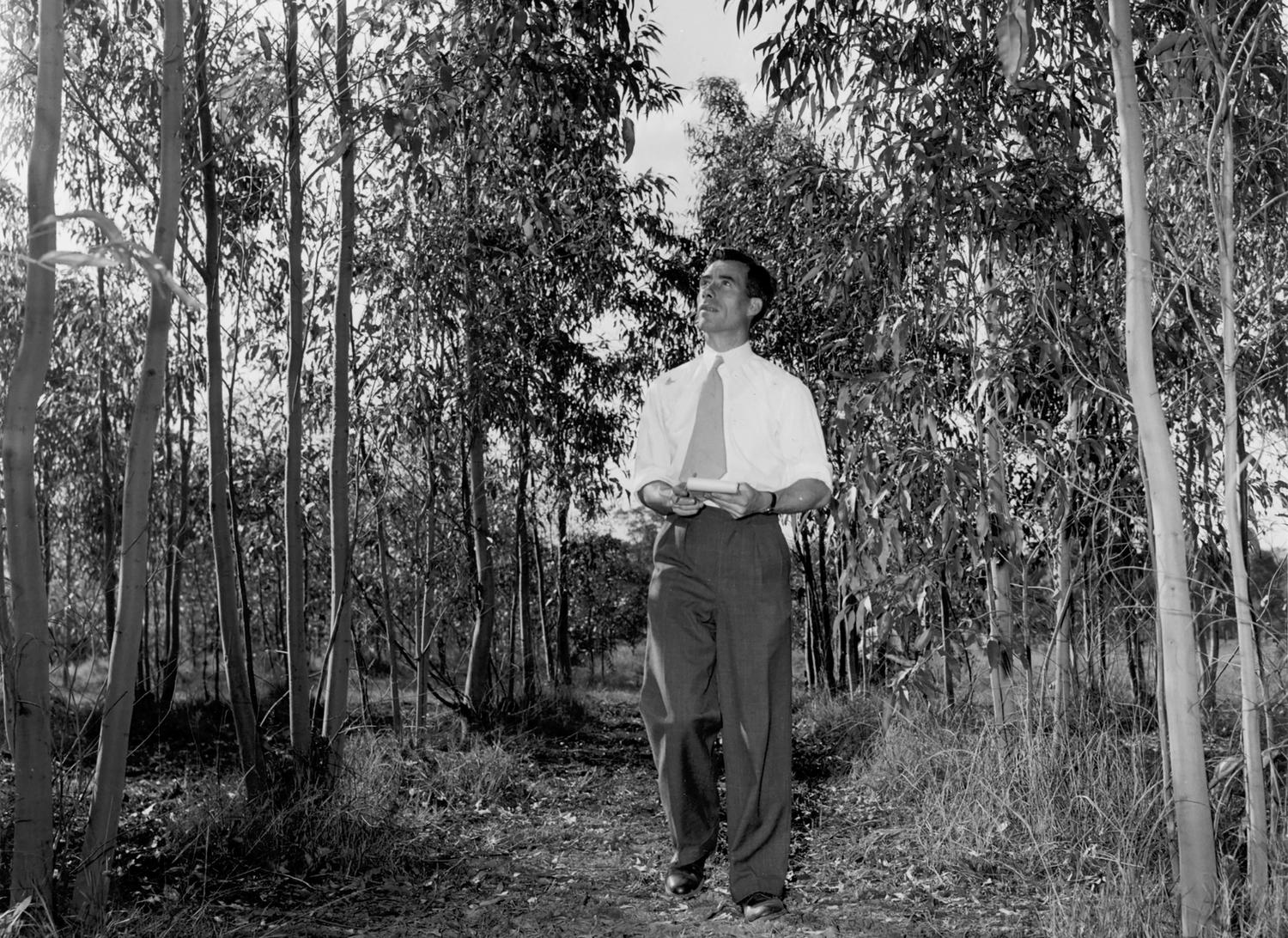
Charles Furey was born on Philip Island, Victoria. He attended Sunshine Technical College and Melbourne High School, and then studied art at the School of Mines, Bendigo. After a period as a maths and art teacher at Bendigo High School Furey was pronounced unfit for military service due to psoriasis and became an engineering draughtsman. In this role he was exposed to the potential of working in industrial design and from 1947-1953 shared a practice with graphic designer Graham Marsh. After this partnership finished Furey worked for Kiwi International, the 1956 Olympic Games Arts Festival Industrial Design exhibition, and from 1957-1963 was senior industrial designer at Australian Consolidated Industries (ACI). At ACI's subsidiary, Crown Crystal Glass (quickly to become Crown Corning) he orchestrated the change in direction for local domestic glassware through the introduction of new American equipment (Hartford 28) that was able to produce mass-produced glass with the seamless appearance of a hand-blown product. This paved the way for his successors Ted Kayser and Denise Larcombe to design what would become major award winning export lines of glassware well into the 1980s.
Between 1964 and 1986 Furey consulted for a number of companies under the umbrella of Charles Furey and Associates and it was in this phase that Harry Sebel of Sebel Furniture engaged him to design what became the 'Integra' chair. As is evident in his subsequent work, Furey became a great exponent of ergonomics - 'For me, designing through to the final product starts with establishing the ergonomic requirements. Ergonomics is the guiding light' he is quoted as saying (Howlin - Indesign Magazine). Reflecting the values of simplicity and usability, Furey was also strongly drawn to the Bauhaus ideals exemplified in Mies van der Rohe's, 'Less is more' approach. The 'Integra' chair's functional simplicity where careful guidance of form provides rigidity is a great testimony to these ideals.
Paul Donnelly. Curator, Design & Society
Refs:
Watson, Anne, 2002. 'Mod to Memphis: Design in Colour 1960s-80s', Powerhouse Publishing, Sydney.
Howlin, Jan, 2007. 'Luminary: Charles Furey, Indesign Magazine, no. 28.
Web version (accessed 2 August 2011) http://www.indesignlive.com/articles/people/in-profile/tribute-charles-furey#axzz1TpI32sd0
Sydney Morning Herald obituary (by Tony Stephens), Friday 3 July 2009.