Object statement
Pendant light shades (3), 'Taniko Light', bamboo / plastic, designed and made by David Trubridge, New Zealand, 2009
These lights are significant as design objects, and also as an example of a product that has been sustainably designed to minimise its negative impact on the environment. The two 'opposite' light forms have been designed to nest and are cut from a single sheet of bamboo plywood, with the only waste being sawdust from the cutter. Bamboo is a sustainable resource that has the ability to grow up to two feet a day. Once harvested, new shoots grow in place of the old plant in a continuously renewing cycle. David Trubridge only uses timber from sustainably managed plantations and all his pieces are designed to use the minimum amount of material for the maximum amount of effect.
Adoption of sustainable design is not a passing trend. It is fast becoming a mainstream way of thinking as we face more and more challenges in sustaining our food supply, water, and our environment. The throwaway mentality of modern day culture combined with the current environmental crisis puts a spotlight on sustainable design. It plays an important role in delivering products that have a greater lifespan, and a better efficiency in their use of materials and energy. Sustainable design is vitally important to help eliminate the negative environmental impacts of industrial production.
References:
www.davidtrubridge.com
The Philosophy of Sustainable Design
Fan Shu-Yang, Bill Freedman, and Raymond Cote (2004). "Principles and practice of ecological design". Environmental Reviews. 12: 97-112
Erika Dicker
Assistant Curator, July 2009
These 'Taniko Light' pendant light shades were designed and made by David Trubridge in New Zealand in 2009.
'Taniko Light' is a pendant light shade made from bamboo plywood panels fastened with cable ties. The patterns are derived from Maori taniko weaving patterns. There are two 'opposite' light forms in this design and their shapes are designed to nest, minimising material waste, and creating interesting repeated shapes when used in numbers.
Born in the UK, David Trubridge graduated from Newcastle University (United Kingdom) in 1972 as a naval architect. For the next ten years he lived and worked in rural Northumberland where he taught himself furniture making. From 1981 to 1985 he sailed the Pacific and the Caribbean with his wife Linda and two young sons. Trubridge settled in New Zealand in 1985 and has since forged an international reputation for his furniture designs in slatted wood. One of his first New Zealand designs, the 'Canoe Chair' , 1989.
Trubridge's first major work, 'Body Raft' was designed in 2000, launched in Europe at the Milan Furniture Fair in 2001 and has since been put into production by the Italian company Cappellini. In 2002 Trubridge produced the first version of the 'Sling', an elegant curved rocking recliner made from a single layer of steam-bent, slatted hardwood. 'Sling' won the Designers' Institute of New Zealand Best Award 2002 for Best of Product Design/Furniture and was also shown in the Pacific Edge display in the Milan Fair's Salone Satellite 2002. Trubridge's 'Glide' a variant of the 'Sling' was used in the 100% New Zealand tourism advertisements. In 2004 Trubridge and his company, Cicada Works, designed and made an order for 500 outdoor chairs and tables for the Mirvac resort at Bunker Bay, Western Australia. In December 2004 Trubridge spent 11 days in Antarctica as an Antarctica New Zealand Arts Fellow, an experience that inspired his installation 'On Thin Ice' at the Napier Museum in 2006.
Reference:
http://www.davidtrubridge.com
Accessed 22/07/2009
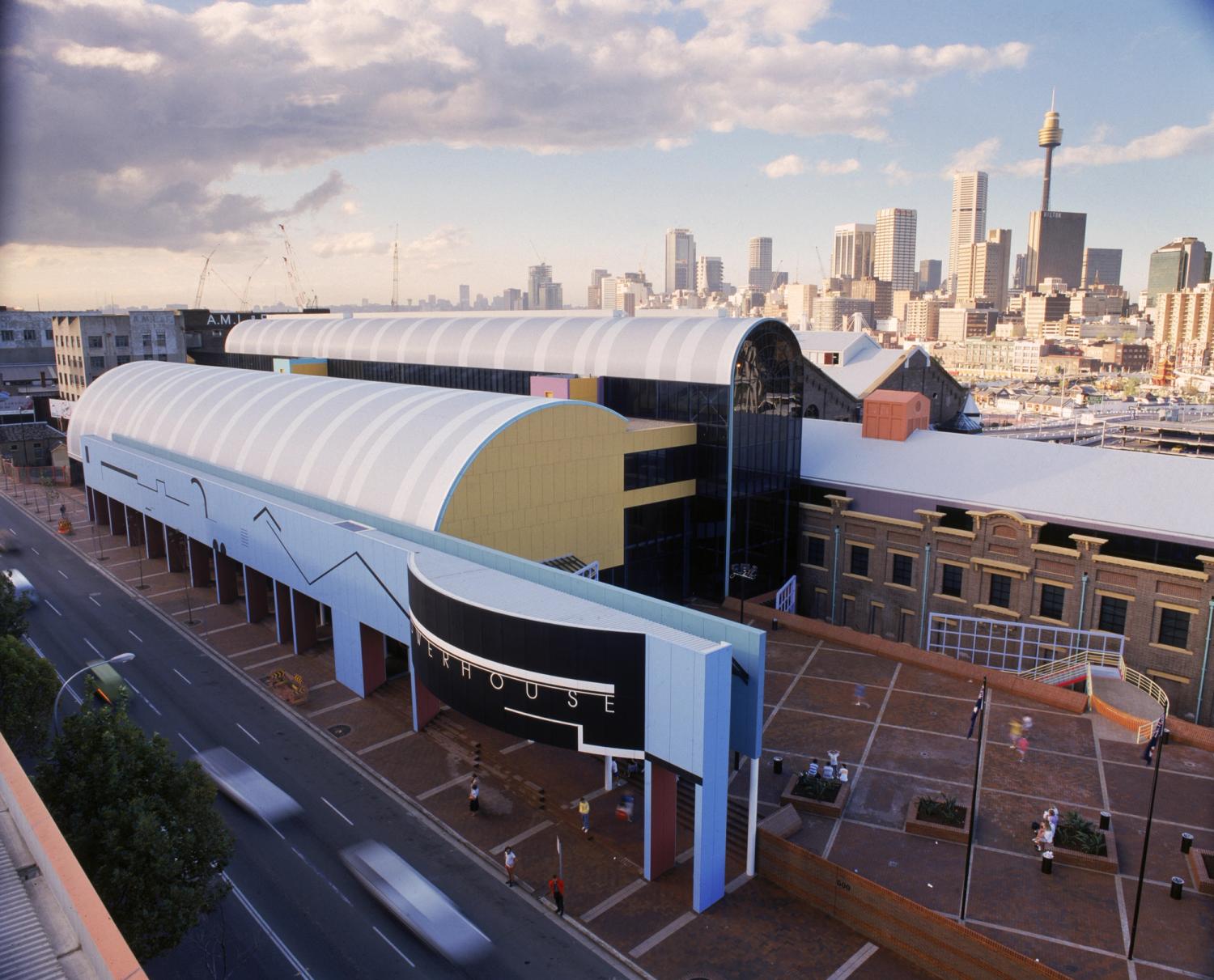
The 'Taniko Lights' were launched at the 2009 Milan Furniture Fair and were displayed in 2009 at the Powerhouse Museum in the 'Eat Green Design' showcase as part of the Sydney Design 09 festival.
Created by Cilla Maden of Collaborate, Eat Green Design was a temporary exhibition, restaurant and theatrette, hosting diners, guest speakers, and the latest 'green' products. It encouraged participants to stretch the perception of what 'sustainability' means and challenged them to explore the ways in which they could incorporate the principles of ecologically sustainable design into their own lives.
The Eat Green Design installation was designed and purpose-built by award-winning architect Hannah Tribe of Tribe Studio, Surry Hills, and demonstrated best practice principles in sustainable architecture and interior design. It also showcased a selection of innovative, sustainable products from independent designers from around Australia
The Powerhouse Museum and Eat Green Design, invited designers to submit products to exhibit in a showcase during Sydney Design 09 festival. The display featured some of the best Australian product designs, highlighting the latest in sustainable, green design concepts.
The judging panel called for submission of products, by designers, and chose the most outstanding entries. Criteria included the use of efficient design - designed to minimise resource use (materials, energy, water), Safe design - avoids the use of toxic or hazardous materials, and Cyclic design - can be reused or remanufactured; uses recycled materials; materials can be easily recycled. Products must have assessed energy, water, and material efficiency throughout the design cycle, and be designed to minimise negative environmental impacts.
Reference:
www.eatgreendesign.com