
Object statement
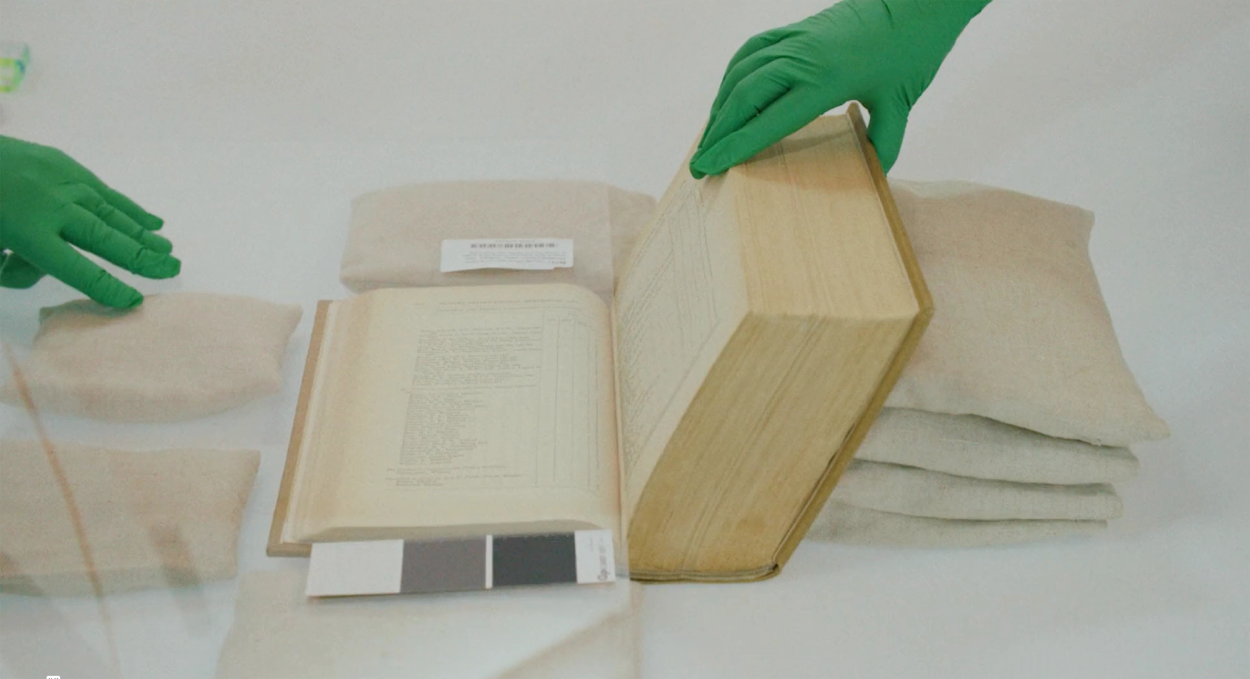
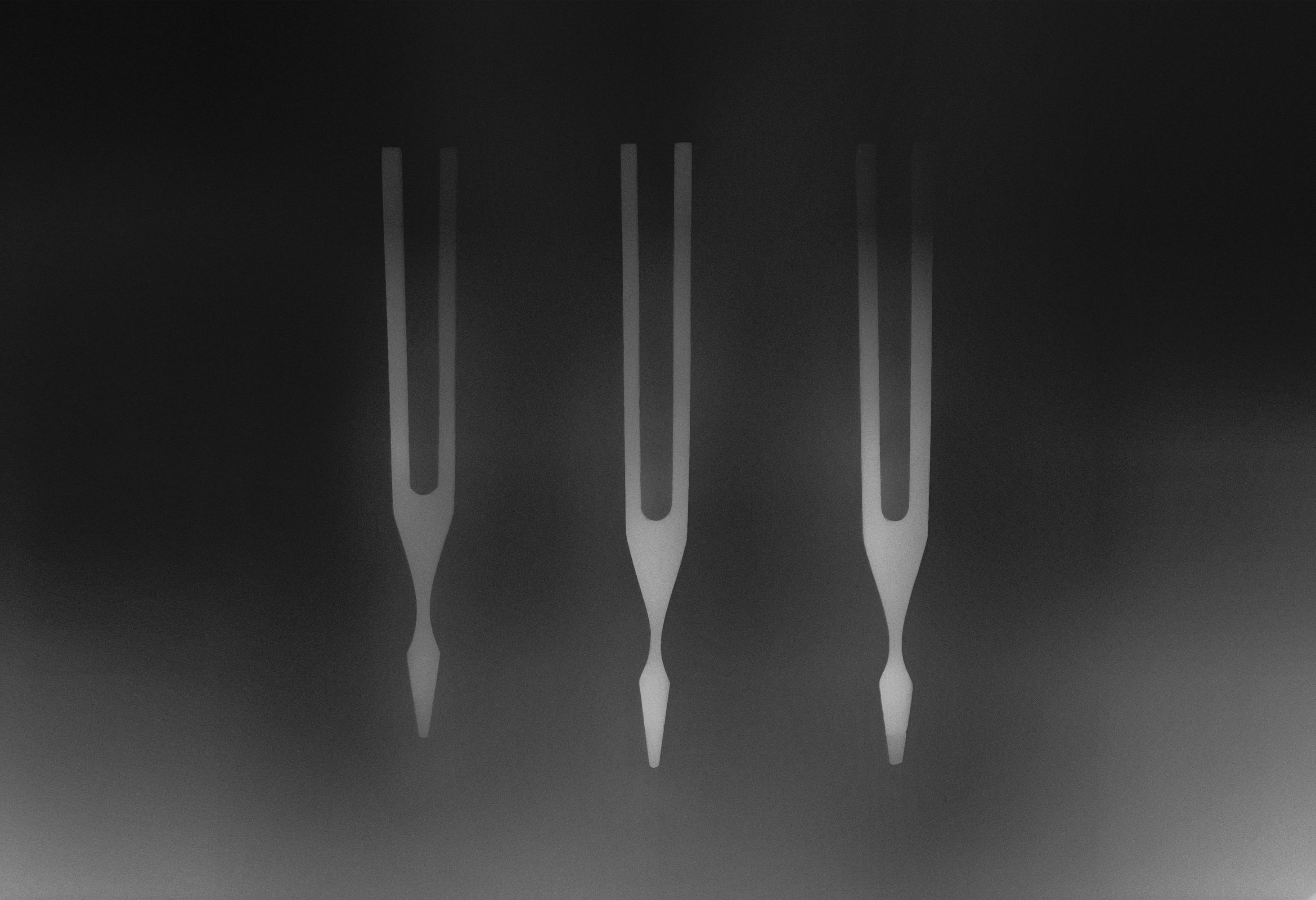
Record turntable, metal / wood / plastic / electronic components, made by Dual, used by Tristram Cary, England, 1968-1974
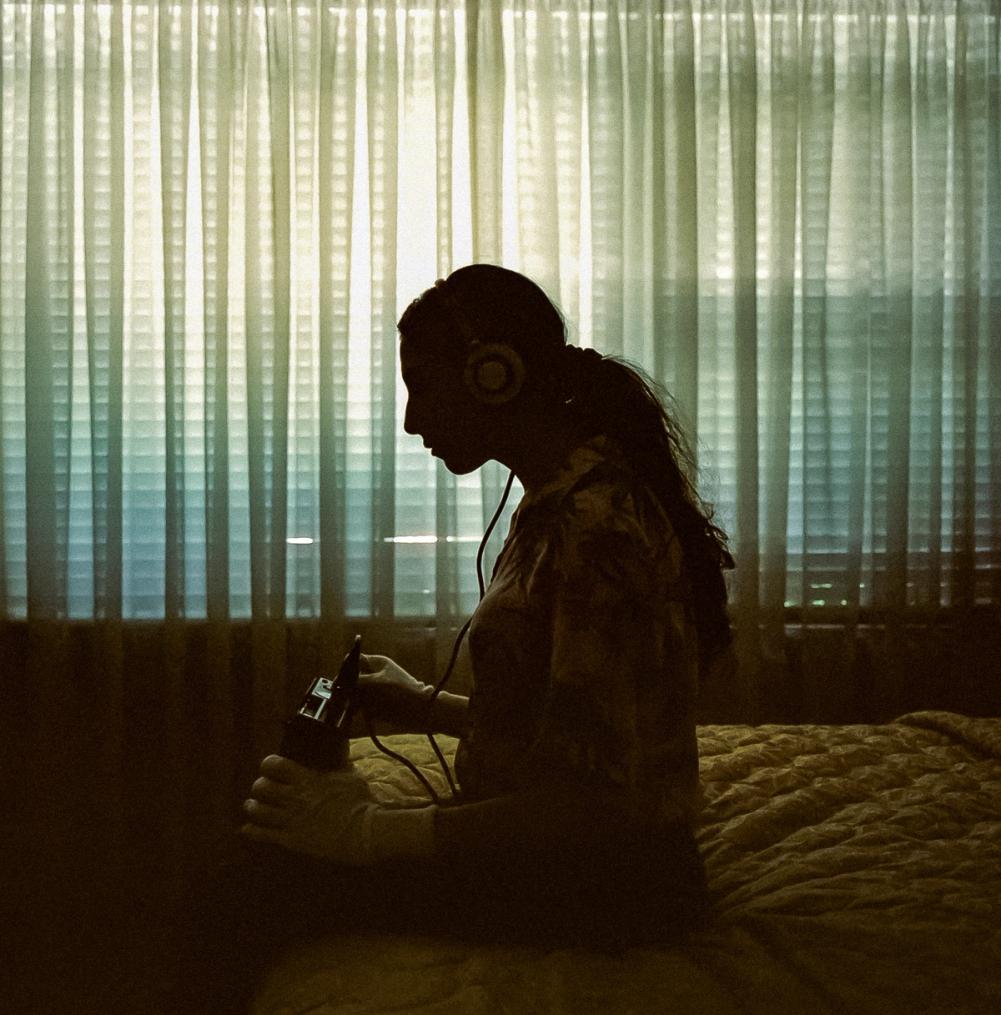
This Dual turntable was part of the equipment used by Tristram Cary specifically for the presentation of live electronic music. It is one of a pair of standard Dual turntables that was used during the performance of the composition called "Trios" where a process of live mixing between the turntables with the aleatoric selection of tracks was part of the performance. Each turntable was operated by one of Cary's sons.
Electronic music began with the development of the tape recorder and the capacity to cut up the audiotape and re-splice it to make small samples of sound and use them in longer sequences of sound that did not reflect the original source. At a later time Cary used record cutting equipment to make collections of sounds and segments of electronic music that were then used in a live mixing configuration. When electronic music was first developed studios consisted of packages of test instruments, like the function generators and custom built devices used in Cary's studio. The development of electronic music subsequently took off with the appearance of audio synthesisers like Robert Moog's Moog Modular system in the US from 1965 and the EMS equipment which began to appear in the UK in 1969. Cary had contributed to this both as a composer of electronic music for film and television as well as through his classical compositional practice. He also provided musical support and physical design advice to his friends Peter Zinovieff and David Cockerell which led to the establishment of the company Electronic Music Studios and the development of the VCS3. When Cary moved to Australia in 1973 he came out to teach staff at the Music Department of the University of Melbourne how to use their newly acquired Synthi 100. In 1974 he moved to Adelaide and established the electronic music studio at the Elder Conservatorium of the University of Adelaide. He also assembled his own private studio at his house in the Adelaide suburb Glen Osmond. His private studio still retained some of the original equipment but he must have commissioned new devices as he developed new compositional techniques.
A huge variety of ways of presenting live electronic music have been explored over the years since it began in the 1950s and "Trios" constitutes one interesting procedure which has, largely incidentally, become the basis of one important sector of popular music known as D-Jaying.
Stephen Jones
Assistant Curator
Tristram Cary (b. Oxford, UK, 1925 - d. Adelaide, 2008) was a pioneering English composer who worked in electronic music. His first studio was set up in the UK about 1965. He was instrumental in the development of the audio synthesiser being in part the impetus behind the development of the Electronic Music Studios' (EMS) Synthi A, and VCS3. In 1974 he moved to Australia, first to Melbourne University to teach electronic music using the EMS Synthi 100 at Melbourne University and subsequently to Adelaide to teach composition and electronic musk at the Elder Conservatorium, University of Adelaide.
He gained his knowledge of electronics as a Naval radar operator during WWII. During this period he heard of the development of tape recording and he realised that he could edit and make musical works by cutting up the tape with a razor blade and re-splicing it. As he later said:
"It occurred to me that Â? here was a chance to have a new sort of music altogether. The editing capacity meant that you could cut sounds together that were not normally together." [David Ellis, "Music pioneer celebrates milestone", Lumen, The University of Adelaide Magazine, winter, 2005, http://www.adelaide.edu.au/lumen/issues/5381/news5593.html ]
After the war he returned to university at Oxford and then went on to Trinity College of Music in London. He began to experiment with electronic sound in 1949, bought his first tape recorder in 1952 and began composing electronic and orchestral music. His first great success was the score for the film The Ladykillers (1955) starring Alec Guinness and Peter Sellers. He continued to write film and television music and is famous for producing the music for several episodes featuring the Daleks in the BBC's Dr. Who.
Around 1965 Bob Moog began selling his early synthesisers in America. In 1967, Cary established an electronic music studio for the Royal College of Music and assembled his own studio in his London house. Up until this time most electronic music had been produced within large workshop style studios using an assemblage of electronic workshop test equipment (function generators and filters and the like) and hand built special purpose devices.
Cary met and consulted for Peter Zinovieff who had established a private electronic music studio in Putney (on the south bank of the Thames in London). Zinovieff had purchased a DEC PDP-8 minicomputer to explore computer music and established it in the studio. David Cockerell was an experienced electronic designer who built a ring modulator that gave the distinctive sound to the Dalek's voices in Dr. Who. He became Zinovieff's engineer in 1968. Cary, Zinovieff and Cockerell, through their common interest in electronic sound, worked together to come up with an audio synthesiser that would be more portable and a lot cheaper than existing devices such as the Moog synthesisers.
Legend has it that the Australian composer Don Banks, who was resident in London in the 1960s, also wrote film music and was interested in incorporating jazz into his compositional repertoire, had asked Zinovieff and Cary to make him a small voltage controlled synthesiser. With Cockerell as the main electronic designer, they mapped out how to build what became the VCS1, of which three were built. One of those three is in the collection of the Powerhouse Museum [H9953-13]. By 1969 they had established the company Electronic Music Studios and began marketing the VCS3 (a larger version of the VCS1) with 3 VCOs, a VCFilter, an envelope generator and other interesting modules. Again the electronics were designed by David Cockerell, the case was designed by Cary and the whole project was supported by Zinovieff. Apart from its small size the most interesting aspect of the VCS3 as against the American synthesisers of the period was that it used a small plug settable patching matrix to connect outputs of sources to inputs for control or audio signals.