
Object statement
Archive, papers, off-prints, thesis and circuit diagrams relating to the work of R.J.Keith, electrical engineer at the Commonwealth Scientific and Industrial Research Organisation Mathematical Instruments Section (1947-1954); Weapons Research Establishment, Adelaide, 1954-1962; Traffic Research Section, University of New South Wales, 1963-1973
This collection of documents provides an important record regarding the training, research, and design and development activities of electrical engineering in Australia during the period of the develpment of digital computers and rocketry.
It is a useful research collection that throws light on little discussed aspects of the research into the development of digital computing, the transition to the technology of transitors and the use of real-time computing techniques in rocketry and in other aspects of data gathering via telemetry, for example in vehicle traffic detection and performance tracking.
The collection consists of an important series of papers relating to the development of various technologies associated with computing, radio-telemetry in rocketry and traffic management systems in Australia. It also contains a collection of notes of lectures and papers on various aspects of the early use of transistor technology in electronics. It was gathered by R J Keith.
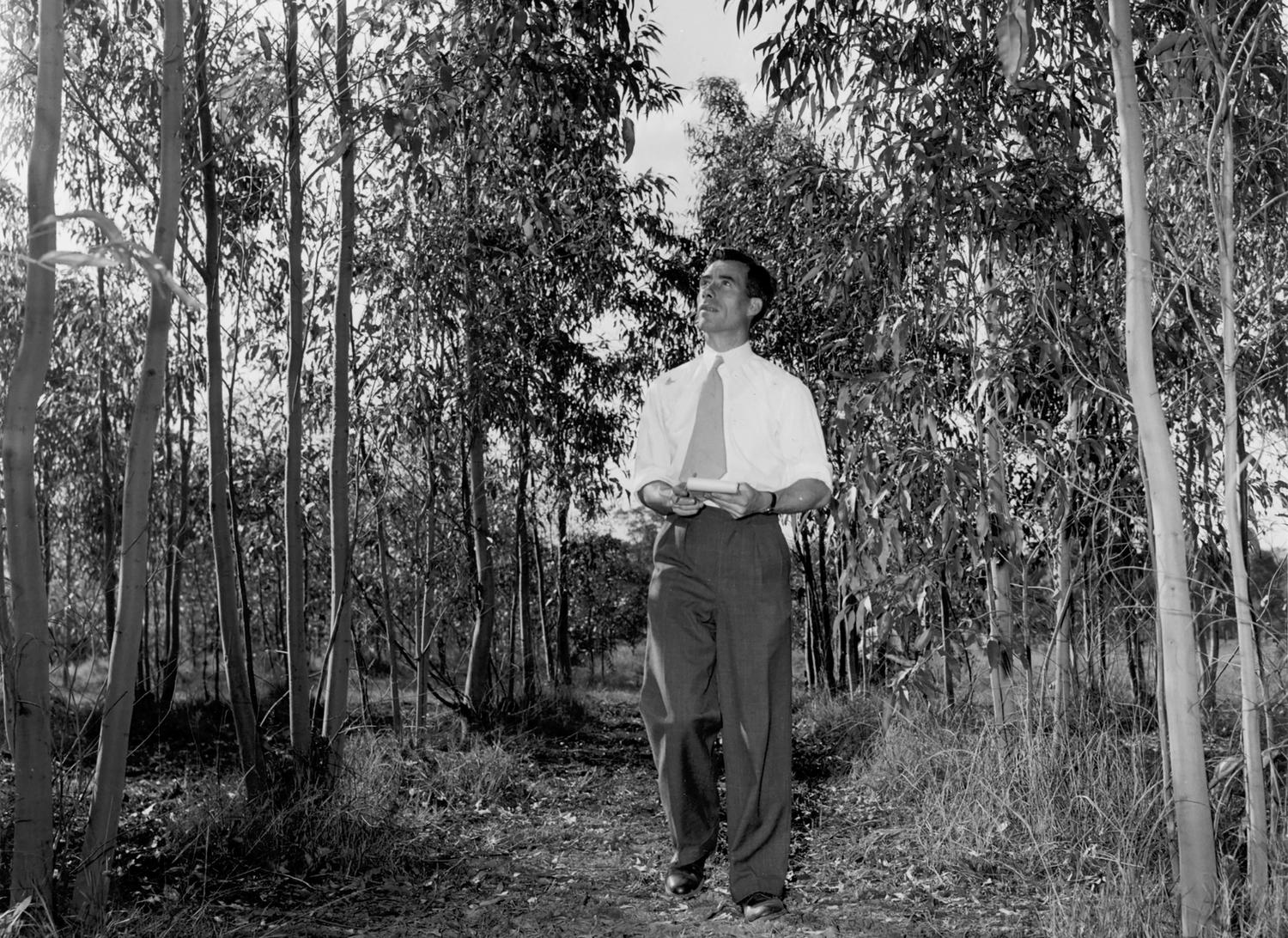
R J (Ron) Keith was an electronic engineer who worked in the areas of computer design and traffic engineering from his initial traineeship at AWA 1942 though until at least the 1980s. He trained in Electrical Engineering while working at AWA and studying at the Sydney Technical College, and received his Diploma in 1947. In 1951 he received a Bachelor of Engineering degree from the University of New South Wales and in 1969 he was awarded a Master of Engineering degree from the University of Adelaide.
In 1947 he joined the Mathematical Instruments Section of the CSIRO as a technical officer. While at CSIRO he investigated techniques for converting fractional decimal numbers into binary values, studied the logical design of digital computers, with particular emphasis on arithmetic circuits, and developed an electro-static computer memory using the cathode ray tube.
In 1954 he joined the Weapons Research Establishment (WRE) in Adelaide as a Scientific Officer in the Information Studies Group where he worked on the development of a telemetry system for gathering data during the flight of a missile.
In 1956 he was sent to the UK as an Australian Attached Scientist where he worked at the Royal Radar Establishment, where he investigated the application of transistors and ferrite cores to logic circuits for a second generation of digital electronic computers.
On his return to Australia, in1958, he was appointed Senior Scientific Officer in the Computing Electronics Group at WRE, where he was in charge of the section responsible for the design and construction of a high speed, solid state digital computer, known as ATROPOS, which was to be used in the real time processing of data utilised in predicting the flight of a missile so that its impact location could be readily determined. He remained at WRE until 1962.
In 1963, he moved to Sydney and become the Senior Project Scientist for the Institute of Highway and Traffic Research at the University of NSW, where he remained until 1969 (working for Ross Blunden). There he established a computer laboratory, and electronics laboratory and instruments workshop. He was responsible for the development of a Traffic Analyser for the Australian Road Research Board and a vehicle speed measurement calibration system. From 1969 thorough to 1973 he was Senior Project Scientist for the School of Transportation and Traffic (UNSW) and worked on instrumentation for the evaluation of Vehicle Detector performance, a reflectometer for reading the efficiency of the reflective qualities of road signs, a device for measuring the brightness of street lamps and the elastic characteristics of road pavement surfaces.
R J Keith trained in electrical engineering at Amalgamated Wireless Australasia (AWA) during and immediately after WWII. He gained experience in both design and production of electronic equipment. He later worked for the department of Supply's Weapons Research Establishment (WRE) and finally for the School of Transport and Traffic Engineering at the University of New South Wales.
AWA was established in 1913 as a joint venture between local businessmen and Telefunken. It acquired the rights to various radio patents to establish coastal wireless stations around Australia. Immediately after the commencement of WWI trained operators were sent to capture the German radio stations around the Pacific and replace them with Allied services and some of these men and their equipment was supplied by AWA. In 1923 AWA developed the equipment used in the first Australian broadcasting radio service and they also manufactured radio receivers under the Radiola brand. Other products included marine radio sets and equipment for Wireless-Telephony and Telegraphy. In 1929 they implemented a high powered international radio-telegraph transmitter/receiver system.
With the Great Depression they and began manufacturing components in 1933 assisted by protective tariffs. They also became involved in the development of air services, developing radio navigation beacons that were established at Essendon in Melbourne and Mascot in Sydney in 1935.
During WWII they developed and/or manufactured a range of devices that could no longer be imported and also built Australian versions of radio communications equipment, radar systems and air navigation devices. They became involved in the development of the Distance Measuring Equipment (originally designed by CSIRO Radiophysics) which evolved into the Microwave Landing System and subsequently Interscan (which was developed in co-operation with the aviation company Hawker De Havilland in the 1960s). Ron Keith worked from March 1942 until July 1947 as a trainee at AWA during and immediately after the Second World War. He indicates in his cv that he worked for a year 'on the design of a crystal controlled time standard.
CSIRO's Section of Mathematical Instruments was proposed by W R [Ross] Blunden and D.M. [David] Myers in 1946 and established within the Division of Electrotechnology by Myers in 1948 to research devices for easing the calculation load in scientific data reduction. In July 1947 R.J. Keith joined the Section (MIS) as a technical officer, where he engaged in the study of the logical design of computers. He worked on the Logical Design of an Arithmetic Unit for decimal and binary Electronic Digital Computers and in the replication in Australia of English work on the Williams-Kilburn tube type of electrostatic storage computer memory. [Papers on both projects are included in archive.] He remained at MIS until June 1954.
The Weapons Research Establishment (WRE) began as the Long Range Weapons Establishment under an agreement with the British Government allowing it to use Australia air space to test guided missiles. The facility was set up in the desert at Woomera in South Australia. WRE projects included the Ikara guided anti-submarine weapon system for the RAN, development of analogue-to-digital converters and a signal/data stream multiplexor for military field communications. WRE also modified an Elliot 401as their scientific computer WREDAC which was used for processing data recorded during missile flights. WREDAC was operating concurrently with both SILLIAC and UTECOM.
In June 1954 R J Keith was appointed as a Scientific Officer in the WRE Information Studies Group where he designed and implemented a system for converting telemetry data gained during a missile flight test into a digital form for recording to computer tape for subsequent computer processing.
It was during the period of the operational life of the SILLIAC, UTECOM and WREDAC machines that transistors began to replace vacuum tubes in electronic devices. To further Australian knowledge of these devices Ron Keith was sent to the Royal Radar Establishment in the UK in 1956 as an Australian Attached Scientist where he investigated the use of transistors and specialised ferrite core devices as components in digital computers.
When he returned from the UK in 1958 he was attached to the Computing Electronics Group of the WRE where he began working on the design of the arithmetic unit of the WRE's ATROPOS system. This machine was a transistorised version of the TREAC system developed at the Radar Research establishment in the UK by Trevor Pearcey (who had developed CSIRAC). It was designed to process in-flight data gathered by telemetry from the missile systems being tested at Woomera.
Keith remained at the WRE until the end of 1962, and in January 1963 he took a position as Senior Project Scientist with the Institute of Highway and Traffic Research at the University of NSW. He developed a traffic analyser which measured vehicle headway, velocity, length and acceleration while in a traffic stream. The data was recorded to computer tape in an analogue form and then converted to digital for computer analysis. Effort was put into improving the detection of vehicles using photoelectric detectors that could automatically compensate for changes in the ambient light. Other projects included detector performance evaluation, light level reflection from traffic signs and vehicle speed detection. He joined the School of Surveying (UNSW) in 1973, but there are no papers in this archive from that period.