Powerhouse Museum Collection Search 2.53
Category history:
   

Support the Powerhouse with a tax-deductible gift

Make a donation

Make a donation

Make a donation
Documents > Architectural drawings

+ 2007/61/1-5/1 Architectural rendering, m...
+ 90/317-44 Architectural drawing, alterat...
+ 2007/61/1-5/3 Architectural rendering, m...
+ 90/317-47 Architectural drawing, rough s...
+ 2007/61/1-5/5 Architectural rendering, T...
+ 90/317-50 Architectural drawing, New Pre...
+ 85/2236 Paintings & drawings (13), archi...
+ 86/1623 Architectural Drawing, water fro...
+ 86/1624 Architectural Drawings, Bungalow...
+ 2008/165/5 Architectural drawings (3), h...
+ 90/317 Architectural plans and drawings ...
+ 90/317-1 Architectural drawing, polychro...
+ 90/317-2 Architectural drawing, polychro...
+ 90/317-5 Architectural drawing, location...
+ 90/317-6 Ink drawing, site plan Acklands...
+ 90/317-7 Architectural drawing, elevatio...
+ 90/317-8 Architectural drawing, ground f...
+ 90/317-9 Architectural drawing, first fl...
+ 90/317-10 Architectural drawing, first f...
+ 90/317-11 Architectural drawing, ground ...
+ 90/317-16 Architectural drawing, ground ...
+ 90/317-17 Architectural drawing, ground ...
+ 90/317-18 Architectural drawing, front e...
+ 90/317-19 Architectural drawing, elevati...
+ 90/317-20 Architectural drawing, ground ...
+ 90/317-21 Architectural drawing, ground ...
+ 90/317-23 Architectural drawing, propose...
+ 90/317-25 Architectural drawing, standar...
+ 90/317-26 Architectural drawing, details...
+ 90/317-27 Architectural drawing, counter...
+ 90/317-31 Architectural drawing, alterat...
+ 90/317-32 Architectural drawing, alterat...
+ 90/317-43 Architectural drawing, alterat...
+ 2007/61/1-5/2 Architectural rendering, M...
+ 90/317-46 Architectural drawing, floor p...
+ 2007/61/1-5/4 Architectural rendering, m...
+ 90/317-49 Architectural drawing, existin...
+ 2007/61/1-5/6 Architectural rendering, m...
+ 90/317-51 Architectural drawing, New Pre...
+ 90/317-52 Architectural drawing, New Pre...
+ 90/317-53 Architectural drawing, New Pre...
+ 90/317-54 Architectural drawing, steel a...
+ 90/317-60 Architectural drawing, elevati...
+ 90/317-62 Architectural drawing, foundat...
+ 90/317-64 Architectural drawing, front e...
+ 90/317-66 Architectural drawing, detail ...
+ 90/317-68 Architectural drawing, alterat...
+ 90/317-69 Architectural drawing, alterat...
+ 90/317-70 Architectural drawing, alterat...


Architectural drawings of Powerhouse Museum, 1987
zoom image
Images: 01 02 03 04 05 06 07 08 09 10 11 12 13 14 15

Object statement
Architectural drawings (14), Powerhouse Museum, tracing paper / microfilm / ink, designed by Lionel Glendenning, made and used by New South Wales Department of Public Works, Sydney, New South Wales, Australia, 1987
These original architectural drawings have significance as a record of the development and presentation of the Powerhouse Museum Stage 2 construction project. They were created in 1987, not for documentation purposes, but for presentation and publishing. They were used to promote the project to a range of stakeholders by giving an impression of the interior and volume of the spaces.

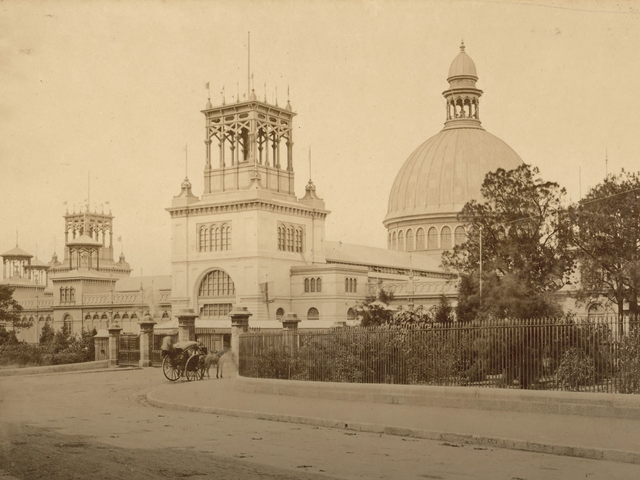
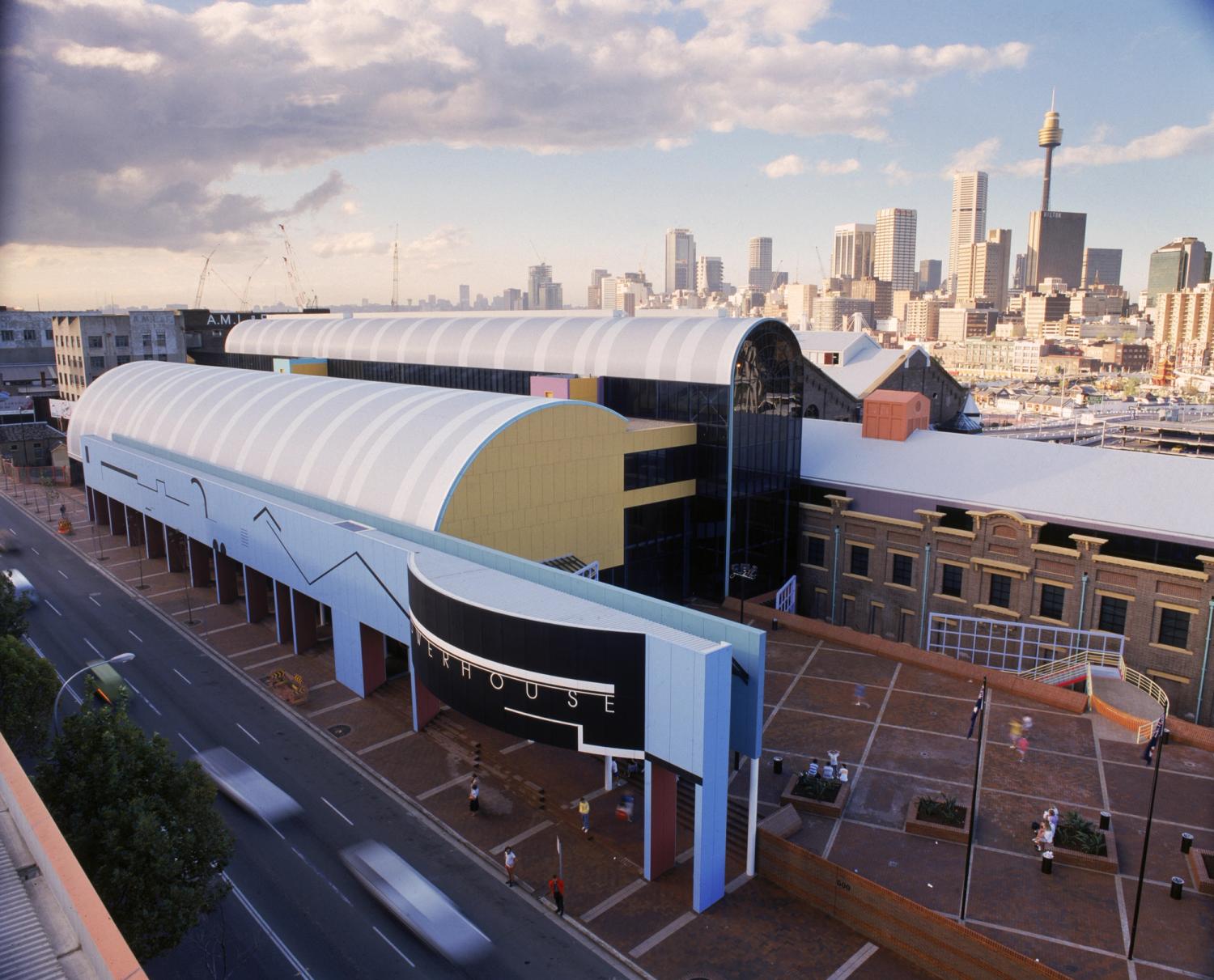
In 1979 the NSW government of Neville Wran announced that the Museum of Applied Arts and Sciences would move to the site of the Ultimo power station. Architect Lionel Glendenning imagined how the derelict building's vast rectangular spaces, classical proportions and arched walls could accommodate the Museum's broad collection, with its large objects like the Catalina flying boat, the Boulton and Watt steam engine and Locomotive No 1, while also housing intimate galleries for the decorative arts collections and other themed exhibitions. His bold scheme rehabilitated the remaining building fabric and juxtaposed it with a new building that blended with the old, while looking to the future. Known today as the Wran Building, this new space was inspired by the grand railway stations and exhibition halls of the 19th century, especially Sydney's Garden Palace. The Powerhouse Museum opened in March 1988.

These drawings include plans, elevations, axonometric drawings, an isometric drawing and a plan projection. The axonometric drawings are representations of three dimensional spaces using a right angle projection to give an overall spatial character. The isometric drawing uses a 30 degree projection. The plan projection was an unusual style of presentation. These drawings used a method of rendering that, although no longer done, was cutting edge at the time. 'Drawing skill is diminishing due to the impact of computer drafting systems.' (Lionel Glendenning, discussion with Peter Cox, 26 February 2008). Today's CAD systems produce results that are more photo-realistic, losing perhaps the humanity found in the Powerhouse drawings and allowing for little interpretation.

These drawings shed light on the Powerhouse project's development. 'It is like having the sketches for an oil painting. The drawing phase conveys meaning and also shows changes made as the project progressed' (Lionel Glendenning, discussion with Peter Cox, 26 February 2008). Drawings like these are relevant to students of architecture and will be increasingly rare.

References:
'Realising: Memories, Reminiscences and Thoughts. Jennifer Sanders in conversation with Lionel Glendenning', in Graeme Davison and Kimberley Webber, 'Yesterday's Tomorrows: The Powerhouse Museum and its Precursors 1880-2005', Powerhouse Publishing, 2005, pp230-239.

Peter Cox
Curator
February 2008
These original architectural drawings show the completed design for the Powerhouse Museum building by Lionel Glendenning, Principal Architect (Public Buildings), Government Architect's Branch, NSW Department of Public Works. Glendenning's second-in-command was Sam Broudo. The drawings were made at the NSW Department of Public Works between August and October 1987, when the construction of the building was nearing completion. To ensure the style of drawing was as he wanted, Glendenning produced schematic sketches but the drawings themselves were the work of others. The axonometric and isometric drawings were hand-drawn by Barry Talbot-Smith, using Rapidographs, German-made technical drawing pens. Barry was one of the team members that numbered about twenty Architects and Draughtspersons who contributed through the life of the project. The Harris Street elevations were the work of D. Nesic and the plans were most probably drawn by G. Ozme, J.Yuen, B. Talbot-Smith and D. Nesic.

Glendenning wanted drawings specially created for purposes of presentation and publishing. Therefore they are simplified; the plans and elevations do not contain dimensions and there is little lettering. The isometric and axonometric drawings were unusual at the time.

'They surprised people because that style of drawing had not been seen for a while in Australia. I picked it up from architecture magazines in the United States and Europe, where people like James Stirling in the UK were producing isometric drawings of their work ... It's a dying art in a sense. Architects rarely today bother to cut such complicated sections' (Lionel Glendenning, discussion with Peter Cox, 26 February 2008).
These original architectural presentation drawings were used by Principal Architect Lionel Glendenning and his team in the Government Architect's Branch, NSW Department of Public Works, to promote the Powerhouse Museum Stage 2 to a range of stakeholders as it neared completion. The drawings were supplied to journals and magazines from Australia and overseas, where they generated interest about the project.

After the Powerhouse opened in 1988, the drawings were kept in sliding drawers at the Department of Public Works. When the Department moved from Essex House to the McKell Building in 1990, the drawings were to be thrown out. Barry Talbot-Smith, who had made most of the drawings, took them home to ensure their preservation. He subsequently offered them as a donation to the Museum's collection.

 This text content licensed under CC BY-NC.

Description
Fourteen original architectural drawings of the Powerhouse Museum Stage 2, ink on B1 tracing paper or plastic microfilm. Most are labelled with descriptions:

1. 'Power House / Axonometric / North East Corner / Original Format / 750W x 900 H' on tracing paper

2. 'Power House / Axonometric / South East Corner / Original Format / 750W x 900 H' on tracing paper

3. 'Power House / Axonometric / North West Corner / Original Format / 750W x 900 H' on tracing paper

4. 'Power House / Axonometric / South West Corner / Original Format / 750W x 900 H' on tracing paper

5. 'Museum of Applied Arts and Sciences / Stage 2 / External Works Elevations', on plastic microfilm

6. 'Museum of Applied Arts and Sciences / Stage 2 / External Works Elevations / 70% Reduction Duplicates / Presentation', on plastic microfilm

7. 'Museum of Applied Arts and Sciences / Stage 2 / External Works Elevations / Foil Elevations', on plastic microfilm

8. 'Original 2', showing Level 2 in plan format, on tracing paper

9. 'Original 3', showing Level 3 in plan format, on tracing paper

10. 'Original 4', showing Level 4 in plan format, on tracing paper

11. 'Original 5', showing Level 5 in plan format, on tracing paper

12. 'Original 6', showing Level 6 in plan format, on tracing paper

13. Unlabelled isometric drawing of Powerhouse Museum, looking down at an angle from the north-east, on tracing paper

14. Unlabelled presentation drawing of Powerhouse Museum, with a plan projection in one direction and elevations at each end, on a sheet of tracing paper that is longer and thinner than the others.

Made: 1987
2008/88/1
Production date
1987

 This text content licensed under CC BY-SA.
Acquisition credit line
Gift of Barry Talbot-Smith, 2008
Subjects
+ History of the Museum of Applied Arts and Sciences
+ Public architecture
+ Australian architecture
Short persistent URL
Concise link back to this object: http://from.ph/379137
Cite this object in Wikipedia
Copy and paste this wiki-markup:

{{cite web |url=http://from.ph/379137 |title=Architectural drawings of Powerhouse Museum |author=Powerhouse Museum |accessdate=23 May 2013 |publisher=Powerhouse Museum, Australia}}


Copyright
Images on this site are reproduced for the purposes of research and study only. Whilst every effort has been made to trace the Copyright holders, we would be grateful for any information concerning Copyright of the images and we will withdraw them immediately on Copyright holder's request.
Object viewed 8649 times. Parent IRN: 2132. Master IRN: 2132 Img: 227475 Flv: H:3396px W:4925px SMO:0 RIGHTS:.