
Powerhouse Museum Collection Search 2.53
Category history:
   

Support the Powerhouse with a tax-deductible gift

Make a donation

Make a donation

Make a donation
Computers > Computer hardware

+ 2010/1/98 Microcomputer, Jolt, metal / e...
+ 2010/1/104 Electronic computer, cords an...
+ 2010/1/109 Computer, PDP-8, Perspex / me...
+ 2010/1/248 Educational benchtop computer...
+ 2010/38/1 Audiovisual synchronisation eq...
+ 2011/30/1 Portable computer and accessor...
+ 2011/30/2 Disk drive, for TRS 80 model ...
+ 2011/84/1 Hand built computer, metal / p...
+ 2011/85/1 Internet connection devices (1...
+ 2011/103/1 Commodore Amiga 500 computer,...
+ 2012/10/1 Network switching and connecti...
+ 2012/19/1 Computer with transformer and ...
+ 2007/52/1 Computer system, consisting of...
+ 2007/92/2 MIDI Processing Unit MPU-401, ...
+ 2007/144/1 Tri-pad read-write head, meta...
+ 2007/149/1 Personal computer, Sinclair Z...
+ 85/1694 Digital computer component, from...
+ 2006/118/1 Personal computer with access...
+ 2008/1/1 Desktop computer, with printer,...
+ 2008/11/2 Microchip reader and manual, p...
+ 2008/58/1 Computer hardware cabinets (6)...
+ 2008/58/2 Control desk for TOSBAC (Toshi...
+ 2008/58/4 Simulation panel, word tester,...
+ 2009/103/1 Computer, graphics production...
+ K318 Computer hardware (10), IBM 1401 ma...
+ 95/105/1 Central processing units (2), V...
+ 95/105/1-1 Central processing unit, VAX ...
+ 95/105/1-2 Central processing unit, VAX ...
+ 95/105/2 Adaptor cabinet, Unibus, VAX11/...
+ 95/105/3 Adaptor cabinet, Unibus, VAX11/...
+ 95/105/5 Tape drive unit TU78, VAX11/780...
+ 95/105/6 Tape drive unit TE16, VAX11/780...
+ K1431 Microcomputer, 'Microbee', 16KROM ...
+ 96/263/1 Computer hardware, unidentified...
+ 97/95/1 Computer hardware/software, opti...
+ 97/174/2 Computer, Apple Macintosh 128, ...
+ 97/203/2 Computer component, core store,...
+ 97/231/1 Computer Hardware (2), SNOCOM i...
+ 97/231/2 Computer hardware (13), SILLIAC...
+ 97/251/1 Interactive, three dimensional ...
+ 97/259/1 Computer hardware: Apple Mac XL...
+ 98/192/1 Computer and dust cover, ABC-26...
+ 99/127/1 Personal Computer, Commodore PE...
+ B1310 Noughts & Crosses - Machine "Elect...
+ B2128 Computer hardware (11 units), Nati...
+ 2002/99/1 Music synthesiser, Roland PMA ...
+ 2003/37/1 Computer hardware, Data Genera...


Computer and other hardware used with control desk of TOSBAC computer system used by Transgrid NSW, 1983 - 1994
zoom image

Object statement
Computer and hardware, used with control desk of TOSBAC (Toshiba Scientific and Business Computer) computer system, plastic / metal / wood / glass, various makers and places, 1983-1994, used by Transgrid NSW, Australia, 1985-2003
The monitor and keyboard unit, two monitors, telephone, maintenance kit, wall clock, labeling machine, and North American/Japanese style general purpose power outlet along with the control desk for the TOSBAC computer were all used as part of the interface between the operators and the computer system that was used to monitor and control the high voltage power distribution for New South Wales, Australia.

Transgrid, the organisation that donated these cabinets, oversees and coordinates high-voltage electricity transmission in NSW. They are one of the companies that were formed to take over the duties of the former State Electricity Commission.
The TOSBAC Series 7/70E System, of which these objects form a part, is a Supervisory Control and Data Acquisition (SCADA) system designed and marketed by Toshiba. It runs TREX 2 (Toshiba Real-time EXecution) which is a special operating system for SCADA. While the TOSBAC and TREX comprise a computer system designed for general control application, this system was especially commissioned to run the State grid in NSW. It was purchased in 1982 and was running by 1985.

DAC, (Data Acquisition and Control) as it is known by the Transgrid engineers who operate the system, is the third computer system to have been used to control the grid. The first was an analogue computer from Leeds and Northrop called George which was installed in the mid 1960s, and the second was a PDP/11 called Little George which ran from 1978 to 1985/6 when DAC was brought on line. The TOSBAC system illustrates the use of computers to implement sophisticated control of a major public utility, and the importance of computer systems to our technological infrastructure. It was still in use up until 2003 and had been controlling NSW's high-tension transmission for the better part of twenty years.

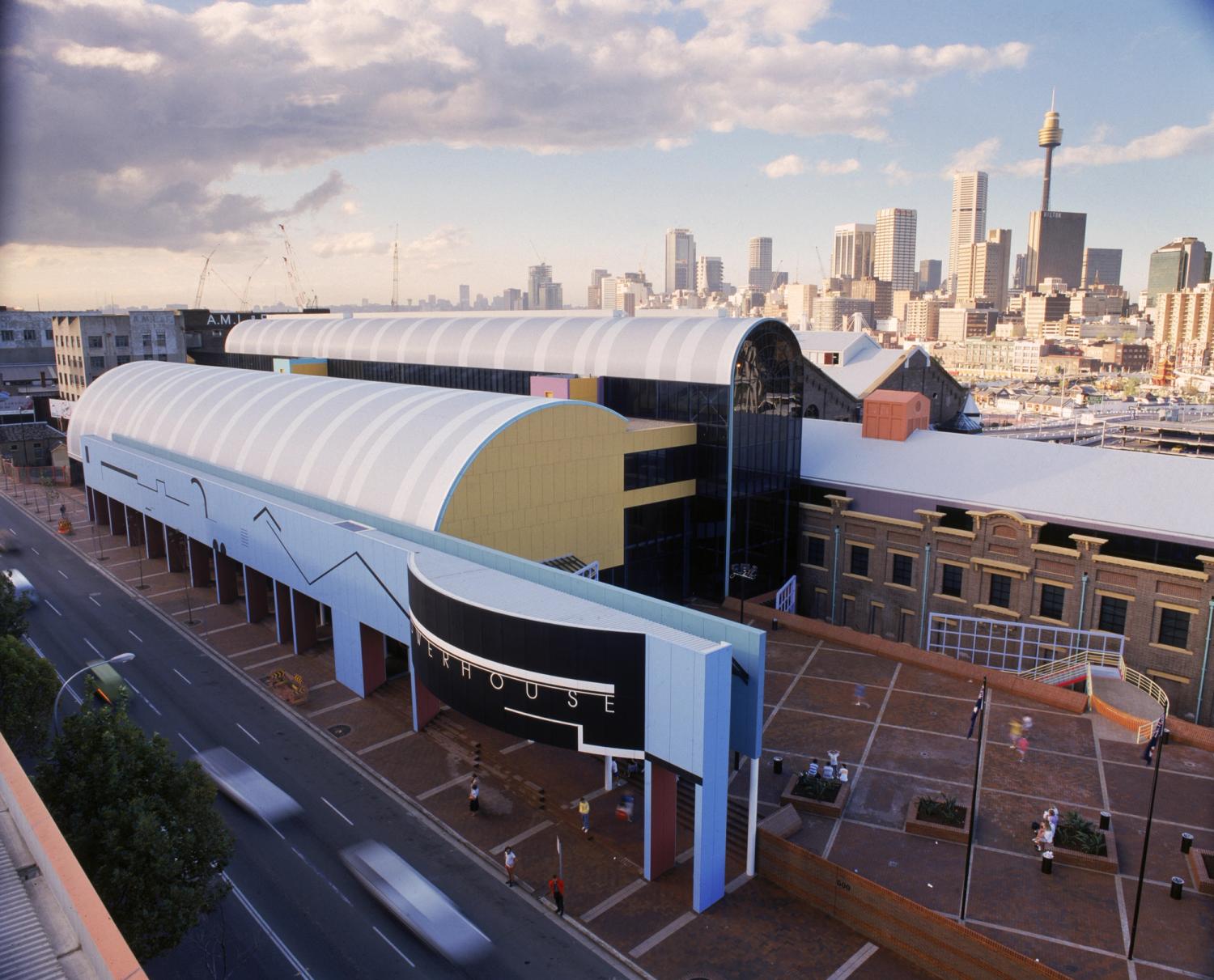
Prior to the grid being set up, power stations had to be built at the site of the power requirement. For example the Powerhouse Museum currently resides in the former power station built to supply electricity to Sydney's tram system.
he understanding of power transmission has had implications for computing history. American scientist and engineer Vannevar Bush built his famous differential analysers in order to perform the calculations necessary to understanding the behaviour of transient signals in electricity transmission lines.

Moreover, this computer system represents an essential aspect of industrial and technological practice: control. From the governors used with industrial steam engines in the 1800s through to the operating system on personal computers, all technology requires a control system. Electricity is one of the most valuable and volatile elements of modern life. A highly sophisticated and reliable method of control is required to enable the safe delivery of electricity. The TOSBAC system is a significant example of a control system designed to manage an often unpredictable but essential commodity.

Damian McDonald
October 2007
The computer and hardware was made by various manufacturers.

Toshiba was formed in 1939 with the merger of two companies: Shibaura Engineering Works and Tokyo Electric. The merged company - Tokyo Shibaura Denki - was nicknamed Toshiba, and in 1984 the company was officially renamed the Toshiba Corporation.

Mitsubishi Electric Corporation is based in Japan and was established in 1921.

Ericsson is a communications equipment company that was established in the late nineteenth century and is based in Sweden. Much of their large scale manufacturing in the recent years has been done in South East Asia.

Uchida is a Japanese office furniture supplier, established in 1910.

Electrical Equipment of Australia was a Sydney, Australia based company in the early/mid 1980s. The company now trades as Greenock Services Pty Ltd.
The keyboard and monitor unit, two monitors, telephone, maintenance kit, wall clock, labeling machine, and North American/Japanese style general purpose power outlet were used by Transgrid engineers and operators along with the control desk as part of a system which was commissioned to run the State Grid in NSW. It was purchased in 1983 and was running by 1985. The Mitsubishi monitor was purchased in 1994 to augment and update the monitoring interface.

DAC (Data Acquisition and Control), as it is known by the Transgrid engineers who operate the system, is the third computer system to have been used to control the grid. The first was an analogue computer from Leeds and Northrop called George which was installed in the mid 60s and a PDP/11 called Little George which ran from 1978 to 1985/6 when DAC was brought on line.

 This text content licensed under CC BY-NC.

Description
Computer and hardware, used with control desk of TOSBAC (Toshiba Scientific and Business Computer) computer system, plastic / metal / wood / glass, various makers and places, 1983-1994, used by Transgrid NSW, Australia, 1985-2003

Computer and hardware, used with control desk of TOSBAC (Toshiba Scientific and Business Computer) computer system, including monitor and keyboard, monitors (2), telephone, maintenance kit, wall clock, labelling machine, labelling tape (2), and power outlet.

The monitor and keyboard is a combination unit. It was manufactured by Toshiba Corporation, Japan in 1983, and was supplied with the TOSBAC system. It is marked as a 1 CIO model. The unit has a plastic casing and a tube-screen monitor and standard alpha-numeric keyboard.

The Mitsubishi monitor is a is a colour display monitor. It was manufactured by Mitsubishi Corporation in Japan, 1994. At the rear of the unit there are five RCA style inputs, and power inlet and a serial port. The monitor has a plastic case and a tube-screen monitor. It is a colour screen desktop model.

The Toshiba monitor was manufactured by Toshiba Corporation, Japan, c. 1983 and was supplied with the TOSBAC system. The monitor has a metal case, and a tube-screen monitor. It is labeled as a PRL8305A model. The unit has six RCA style inputs at the rear and a removable power cable.

The desktop telephone was manufactured by Ericsson Corporation in Taiwan, 1991. The unit consists of a hand piece and base connected by an extendable lead. It has a plastic case and a standard dialing keypad. The unit was used as part of the control desk communication.

The maintenance kit consists of a wooden box, compartmentalised inside and housing three bottles for specialist cleaning fluid with separate applicator nozzles, and three smaller applicators with thin, metal nozzles. The box is marked Toshiba TOSBAC on the top of the lid.

The North American/Japanese style general purpose power outlet consists of two double outlets mounted on a wood backing. There is a cable leading out of the left outlet that connects to a standard Australian power outlet. It was likely manufactured in Japan and supplied with TOSBAC.

The labeling machine consists of a moulded plastic case with a pistol-grip, trigger mechanism for application the label, and a mechanical programing array at the top of the unit. It has two tape refills. The label maker is marked Uchida - the same maker of the spare part/manual cabinets supplied with TOSBAC.

The wall clock is a standard timekeeping device. It is an EEQ Timatic, manufactured by Electronic Equipment of Australia.

Made: Toshiba Corporation; ; 1983 - 1994

Made: Mitsubishi Electric Corporation; ; 1983 - 1994

Made: Ericsson; ; 1983 - 1994
Marks
Monitor and keyboard unit: CRT Console; Model PRL8315A002; Serial Number PD7013; The Electricity Commission of NSW No CA/D748

Mitsubishi monitor: Model number HL3925ETKL; Serial Number 407000251

Toshiba monitor: CRT 4; Model Number PRL8305A041; Serial Number PD7041

Ericsson Telephone: Austel Permit A91/30C/0162

Maintenance kit: Toshiba TOSBAC

Labeling machine: MAWAREX Model 900

Wall clock: EEQ Timatic
2008/58/3
Production date
1983 - 1994
Height
360 mm
Depth
540 mm

 This text content licensed under CC BY-SA.
Acquisition credit line
Gift of Transgrid New South Wales, 2008
Subjects
+ Electricity
+ Electricity supply
Short persistent URL
Concise link back to this object: http://from.ph/374536
Cite this object in Wikipedia
Copy and paste this wiki-markup:

{{cite web |url=http://from.ph/374536 |title=Computer and other hardware used with control desk of TOSBAC computer system used by Transgrid NSW |author=Powerhouse Museum |accessdate=19 May 2013 |publisher=Powerhouse Museum, Australia}}


Copyright
Images on this site are reproduced for the purposes of research and study only. Whilst every effort has been made to trace the Copyright holders, we would be grateful for any information concerning Copyright of the images and we will withdraw them immediately on Copyright holder's request.
Object viewed 5612 times. Parent IRN: 2132. Master IRN: 2132 Img: 177428 Flv: H:1944px W:2592px SMO:0 RIGHTS:.