Powerhouse Museum Collection Search 2.53
Category history:
   

Support the Powerhouse with a tax-deductible gift

Make a donation

Make a donation

Make a donation
Models > Architectural models

+ 2010/13/1 Scale model with storage case,...
+ 90/586-10 Architectural model, building ...
+ 2012/60/1 Architectural model, 'Atlas' a...
+ 90/586-12 Architectural model, 'Bank Cou...
+ 2013/27/1 Models (2), architectural and ...
+ 90/586-14 Architectural model, two build...
+ 88/892 House model, the 'St Ives', Georg...
+ 2005/126/1 'Forum' architectural model, ...
+ D10182 Model, Metropolitan Water Sewerag...
+ 2008/29/1 Model, 1:100, of Sydney Observ...
+ 2008/127/1 Architectural model, sustaina...
+ H7 Model of Indian Temple, made from the...
+ H110 Model of a Japanese house, white pi...
+ H110A Model of Japanese tea house....
+ H1245 Model Swiss farm house, wooden.(LC...
+ H1246 Model Swiss chalet.(OF)....
+ H1249 Model, Swiss chalet, wood, maker /...
+ H4018 A complete model of a modern cotta...
+ H4293 Model of Japanese House (SB). Mode...
+ H4294 Model of Japanese Room (SB)....
+ 90/586 Architectural models (23), King S...
+ 90/586-1 Architectural model, 'Temple Co...
+ 90/586-2 Architectural model, 'Commercia...
+ 90/586-3 Architectural model, 'Continent...
+ 90/586-4 Architectural model, various sh...
+ 90/586-5 Architectural model, 'Star and ...
+ 90/586-6 Architectural model, 2 shopfron...
+ 90/586-7 Architectural model, 'Internati...
+ 90/586-8 Architectural model, 'Punch's H...
+ 90/586-9 Architectural model, building w...
+ 2011/95/1 Architectural model, China Cen...
+ 90/586-11 Architectural model, building ...
+ 2013/19/1 Architectural model, Villa Sho...
+ 90/586-13 Architectural model, 'Coles Bo...
+ 2007/90/1 Architectural model, Khalifa S...
+ 90/586-15 Architectural model, "Metropol...
+ 90/586-16 Architectural model, 'Imperial...
+ 90/586-17 Architectural model, 'Quong Ta...
+ 90/586-18 Architectural model, two build...
+ 90/586-19 Architectural model, 'Australi...
+ 90/586-20 Architectural model, 'Liverpoo...
+ 90/586-21 Architectural model, two build...
+ 90/586-22 Architectural model, 'Builder'...
+ 90/586-23 Architectural model, 'Royal Ex...
+ H4577 Model of Wesley College (LC)...
+ A82 Small scale model Japanese house, br...
+ A104 Small scale model Japanese building...
+ A485 Miniature monument, 'Carew Ancient ...
+ A486 Miniature monument, 'St Martin's Cr...


Castle Hill site model, 2005

No image is publicly available for this object.

Because of the age of the Museum's collection some objects in the Museum's collection have not yet been digitised. Some images are not available for Copyright reasons. Some images are not available for cultural or privacy reasons.

Object statement
Model, 1:200, of the Castle Hill site, custom wood / plywood / acrylic / polystyrene, made by Iain Scott-Stevenson for the Powerhouse Museum, Ultimo, New South Wales, Australia, 2005
The model is a three-dimensional representation of the Museum's land and buildings at Castle Hill. Its primary significance is concerned with the spatial arrangement of the new and old display and storage facilities, and how the layout of the buildings enhances public accessibility to the site.

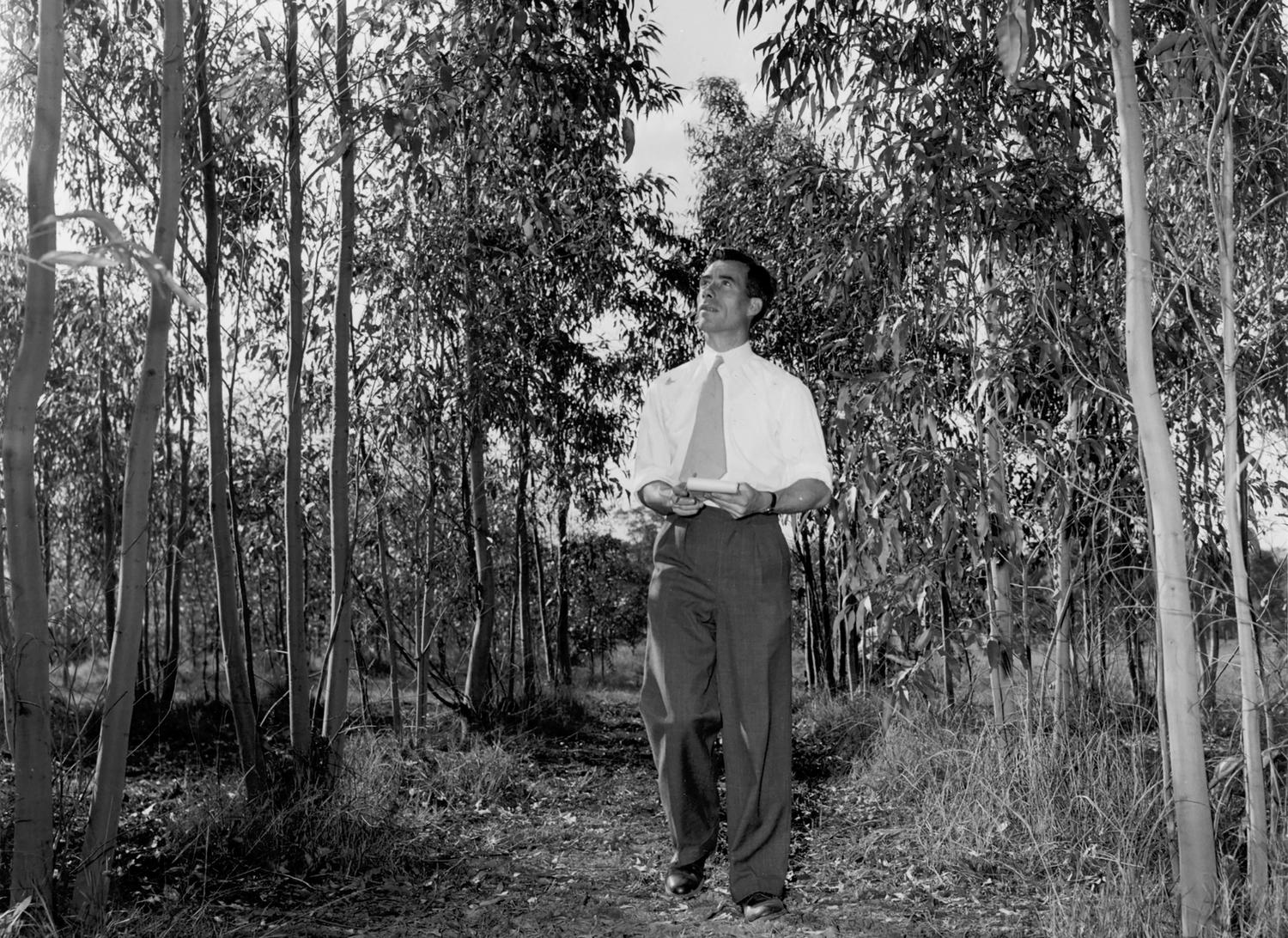
From the late 1940s until the end of the 1970s, the Castle Hill site was used to grow and harvest eucalyptus trees and other Australian flora for experimental research on their essential oils. When the research ended in 1979, the site change from scientific research to the storage and display of a range of objects in the Museum's collection. This was a momentous change for the Museum and the model is intended to show these major changes to the site.

This is the Museum's first and only model of the site and it was intended to demonstrate to the Museum's Board of Trustees the changes and new facilities (built June 2003 to June 2004) proposed for the Castle Hill venue.
The model is scaled at 1:200. The base is made from customwood. The landform is 3mm plywood. The cover is acrylic. The buildings are made in solid timber.

Iain Scott-Stevenson, the Museum's model maker, took three weeks to build the model in 2005 (post on-site construction).

The model was constructed using a set of plans included in the Development Application. The architect for the new facilities was Firth Dorreen (Peter Dorreen) and Anchor Mortlock Woolley, the later firm documenting the tender drawings based on Peter Dorreen's design.

The model cars and landscape features were supplied at a cost of about $700 (AUD) by the American firm Howard Models.

(Information on the architects and model supplier was provided by Rob Webb, who worked in the Museum's Properties Section (1991-2005), and who was involved in the refurbishment of the Castle Hill site).

The model was made for the Museum's Board of Trustees (post on-site construction), to show them the appearance of the new display and storage facilities and the general landscape features of the Castle Hill site.
In 1946, the Museum's Botanical Research Officer was sent on a search for agricultural land to be used as an experimental eucalyptus plantation. The seventeen acre (seven hectare) site he found at semi-rural Castle Hill, would be used over the next 30 years by the Museum's scientists to conduct research aimed at assisting Australia's essential oil industry. Thousands of seedlings, mainly eucalyptus, were planted to determine which yielded the most oil and were therefore suitable for commercial plantations. This was a direct response to increased international competition from places like South Africa, Swaziland and Spain, that had established their own eucalyptus oil industries in the post-war period, using eucalypts grown from Australian seeds.

The Museum, when it originally acquired the land in 1947, was a part of the Department of Public Instruction. Due to a technicality, it was that Department, not the Museum, which held title to the land. Therefore in 1974, when the Department of Technical Education decided they wanted to erect a technical college on the site, the Museum, no longer part of that department, had to argue its case to keep even a portion of the land for its essential oil research.

The late 1970s heralded major changes in the Museum's activities. The Museum Director and botanist Jack Lehane Willis (1918-2004), who had planted the first seedlings at Castle Hill, retired in 1978. Willis had the vision to realise that if the Museum was to survive as an institution, it would have to change its focus from scientific reseach to more general education, display and collecting. So in 1979, the decision was made by the State Government of New South Wales to discontinue the Museum's essential oil research. The scientific staff either retired, moved to other State government scientific departments, or started their own research on the essential oils of Australian plants. The closure of the scientific research program had ramifications for the Castle Hill plantation.

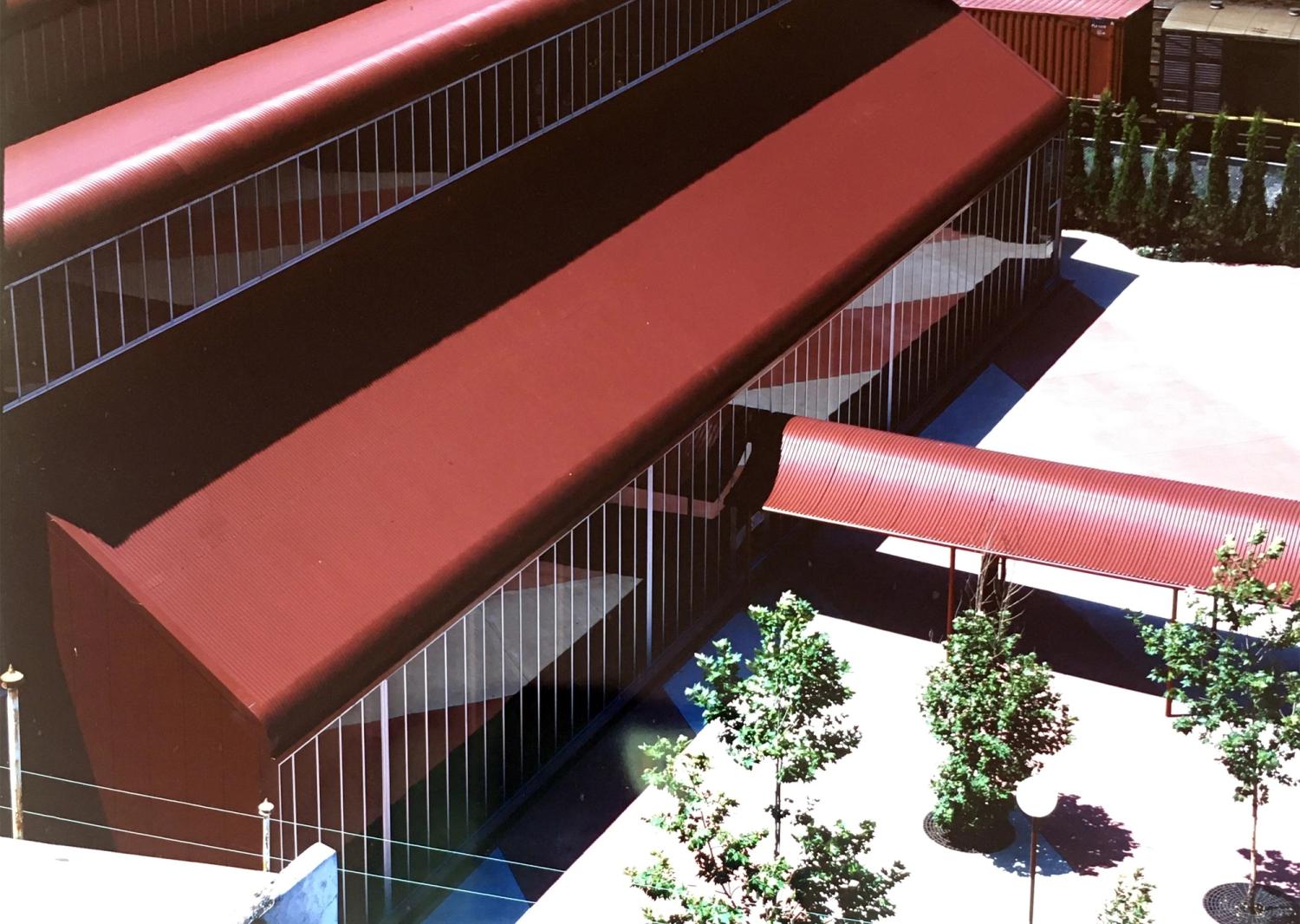
At this time, a modern store was constructed on the Castle Hill site to house the Museum's large transport and engineering objects (stores A and B). This went part of the way to solving the Museum's accommodation problems. The store was filled with more objects almost immediately. With storage still being rented at Alexandria, Arncliffe and Redfern, and then Jones Street, Ultimo, the New South Wales Public Works architect, Lionel Glendenning, was called upon in 1983 to prepare plans for a second storage facility at Castle Hill. Fortunately, Glendenning produced a plan that took into account the Museum's storage requirements while being sensitive to retain the site's plantation trees.

In 1993, after years of to-ing and fro-ing, TAFE approved the transfer of title to the Museum for part of the Castle Hill property. By the time of the formal transfer in 1994, the Museum's portion of the land housed four object stores, a caretaker's residence, maintenance and propagation sheds an office and conservation laboratories.

The new facilites at Castle Hill (E and H stores, and now officially titled the Powerhouse Discovery Centre) and associated landscaping, were officially declared open to the public by New South Wales Minister for the Arts Mr Bob Debus, on Saturday 10 March 2007.

 This text content licensed under CC BY-NC.

Description
Model, 1:200, of the Castle Hill site, custom wood / plywood / acrylic / polystyrene, made by Iain Scott-Stevenson for the Powerhouse Museum, Ultimo, New South Wales, Australia, 2005

The model is built upon a square timber base and it has a removable acrylic cover. The model depicts buildings A, B, C, E, F, G, H, roads on the site, Windsor and Showground Roads, model cars and landscaping. The caretaker's brick veneer home, located 'above' Building H, is not depicted on this model.

Made: 2005
2008/30/1
Production date
2005
Height
270 mm
Depth
860 mm

 This text content licensed under CC BY-SA.
Acquisition credit line
Produced by the Powerhouse Museum, 2008
Subjects
+ History of the Museum of Applied Arts and Sciences
Short persistent URL
Concise link back to this object: http://from.ph/373318
Cite this object in Wikipedia
Copy and paste this wiki-markup:

{{cite web |url=http://from.ph/373318 |title=Castle Hill site model |author=Powerhouse Museum |accessdate=22 May 2013 |publisher=Powerhouse Museum, Australia}}


Copyright
Images on this site are reproduced for the purposes of research and study only. Whilst every effort has been made to trace the Copyright holders, we would be grateful for any information concerning Copyright of the images and we will withdraw them immediately on Copyright holder's request.
Object viewed 6029 times. Parent IRN: 2132. Master IRN: 2132 Img: Flv: H:px W:px SMO: RIGHTS:.