Powerhouse Museum Collection Search 2.53
Category history:
   

Support the Powerhouse with a tax-deductible gift

Make a donation

Make a donation

Make a donation
Directly related objects
Tools > Tool kits

+ 2011/54/1 Motor scooter, Vespa P200E, wi...
+ 2013/5/1 Tool kit, assembly, installatio...
+ 2004/3/1-1 Tool kit, metal / wood / leat...
+ 2007/17/17 Tool kit, portable radio serv...


Tools > Party invitations

+ 2004/3/1-2 Invitation, cardboard, used b...
+ 2008/36/24 Invitation, 'Our Bridge' part...
+ 87/1096 Party plates & invitations, Mari...


Tools > Greeting cards

+ 2010/19/1 Greeting cards, (13), 'WW1 sil...
+ 85/591 Greeting/confirmation of contact ...
+ 2004/3/1-3 Greeting card, cardboard, own...
+ 2004/108/4 Greeting cards (3), Sydney 20...
+ 85/1595-78 Card, paper, maker unknown, S...
+ 85/2485 Greeting card, hand painted, Aus...
+ 89/1620 Valentine cards (2), paper/foil/...
+ 92/751 Greeting cards, Christmas 1991, A...
+ 92/1314 Greeting card, 'Australian Sunli...
+ 92/1315 Greeting card, 'The Musgrave Ran...
+ 92/1316 Greeting card, 'Ghost Gums', Byr...
+ 92/1317 Greeting card, 'The MacDonald Ra...
+ 92/1318 Greeting card, 'Croonar the Croc...
+ 92/1319 Greeting card, 'The Billabong', ...
+ 92/1320 Greeting card, 'The Waterfall', ...
+ 92/1321 Greeting card, 'The Magpie', Byr...
+ 92/1322 Greeting card, 'Coo-ee', Byram M...
+ 92/1323 Greeting card, boomerang, Byram ...
+ 93/12/2 Cards (9), paper, Linda Jackson/...
+ 95/28/139 Greeting card, homemade, 'Ti A...
+ 95/137/4 Cards (6), greeting cards, pape...
+ 96/173/1 Postcards (47), of Gunnedah & v...
+ 98/2/30-1 Greeting cards, memorabilia re...
+ 98/2/30-1/1/3 Greeting card, memorabilia...
+ 98/2/30-1/1/4 Greeting card, memorabilia...
+ 98/2/30-1/1/5 Greeting card, memorabilia...
+ 98/2/30-1/1/8 Greeting card, memorabilia...
+ 98/2/30-1/1/9 Greeting card, memorabilia...
+ 98/2/30-1/1/10 Greeting card, memorabili...
+ 98/2/30-1/1/11 Greeting card, memorabili...
+ 98/2/30-1/1/12 Christmas card, Christmas...
+ 98/2/30-1/1/13 Christmas card, Christmas...
+ 98/2/30-1/1/14 Christmas card, Christmas...
+ 98/2/30-1/1/15 Christmas card, Christmas...
+ 98/2/30-1/1/16 Christmas card, Christmas...
+ 98/2/30-1/1/17 Christmas card, Christmas...
+ 98/2/30-1/1/18 Christmas card, Christmas...
+ 98/2/30-1/1/19 Christmas card, Christmas...
+ 98/2/30-1/1/20 Christmas card, Christmas...
+ 98/2/30-1/1/21 Christmas card, Christmas...
+ 98/2/30-1/1/22 Christmas card, Christmas...
+ 98/2/30-1/1/23 Christmas card, Christmas...
+ 98/2/30-1/1/24 Christmas card, Christmas...
+ 98/2/30-1/1/25 Christmas card, Christmas...
+ 98/2/30-1/1/26 Christmas card, Christmas...
+ 98/2/30-1/1/27 Christmas card, Christmas...
+ 98/2/30-1/1/28 Christmas card, Christmas...
+ 99/113/20 Greeting card, 'Happy New Year...
+ 2001/33/1 Greeting cards with envelopes ...


Tools > Telegrams

+ 2007/158/4 Telegram, between Decca Recor...
+ 2004/3/1-4 Telegram, paper, used by Gust...
+ 87/942 Telegrams (3), wedding, Australia...
+ 97/306/5 Telegram, M. Guillaux's Bleriot...
+ 98/2/31-3 Advertisment, "Sydney Harbour ...
+ 98/2/78-1 Telegram, 'Press Telegram', p...
+ 98/2/78-2 Telegram, 'Lithgow Station', ...


Tools > Telegraph equipment

+ 93/56/1 Telegraphic printing specimens (...
+ K22 Morse Code Sounder, circular wooden ...
+ K31 Collection of carbon brushes, morse ...
+ K146 Telegraph Perforator Keyboard, used...
+ K151 Telegraph Printer, 5 unit type, mad...
+ K152 Tape Puller, used in Beam wireless ...
+ K180 3 Telegraph High Speed Relays, plug...
+ K332 Telegraph inker, 'Siemens' brass (S...
+ K426 Coil, use not known, could be teleg...
+ K815 World War II, Transceiver (LC). A.W...
+ B527 Telegraph Exhibit:- 1 duplex pole c...
+ B712 Electric telegraph equipment, 21 pi...
+ B712-3 Telegraph sounder, wood / metal, ...
+ B712-6 Relay telegraph, made by Siemens,...
+ B712-7 Telegraph sounder and key, used b...
+ B712-8 Telegraph sounder and key, used b...
+ B712-9 Telegraph sounder and key, used b...
+ B712-11 Telegraph resistance box, used b...
+ B712-13 Telegraph sounder, used by Posts...
+ B1241 Specimens of early Telegraph Print...
+ B1318 Telegraph, wood, made by Charles W...
+ B1612 Wheatstone, high-speed, Morse tran...
+ B1618 Morse code ink writer, electrical,...
+ B2180 Morse code key and Morse code soun...


Tool kit and documents, 1876 - 1887
zoom image

Object statement
Tool kit and documents (3), metal / wood / leather / velvet / cardboard / paper, used by Gustavus Adolphus Kopsch, Sydney, New South Wales, Australia, 1876-1887
The tool kit provides evidence of the type of items used for telegraphic testing and repair in the nineteenth century. The Royal Society conversazione card indicates Kopsch's professional interests in late colonial scientific Sydney, while the greeting card and telegram add a more personal/private side to the collection.

In general, these items add to the Museum's small extant collection of Kopsch material.
See parts for production details.
These items were created and used principally by G. A. Kopsch. One item (the 1887 Christmas greeting) was exchanged between son and father.


Gustavus Adolphus Kopsch (1832-1898)

Gustavus Adolphus Kopsch was born in Dresden, Saxony, Germany. He was the second son of Carl August Kopsch, Commissioner of Woods and Forests for the Kingdom of Saxony.

Gustavus came to Australia on the 'Meteor'; disembarking at Adelaide in 1852. One of his first projects was to build a private observatory for a Sir Thomas Eldin (G.A. and C.F.G. Kopsch archive, Mitchell Library, Sydney, ref. MLMSS 2810X), presumably in South Australia.

He moved to the Victorian goldfields in October 1854. However, Gustavus did not remain on the goldfields, as he accepted a job (21 January,1859) as instrument maker and mechanician with the Victorian Post Office, Melbourne. He held this position until 14 March, 1861. It was during this time that Gustavus Kopsch developed the first arc lamp for Australia (probably in 1860). The lamp, which is in the Museum's collection, was first demonstrated at Sydney University and then at Challis House, Martin Place, Sydney. In 1868, the first public demonstration of the lamp was held at Sydney Observatory on 23 January, coincidently with the Australian visit by the Duke of Edinburgh.

The light from the lamp was produced by a battery that consisted of 400 cells. It was demonstrated with a variety of coloured glass sheets that were placed in front of the reflector. The demonstration was considered to be a success and very popular, with the Sydney Morning Herald commenting: "This powerful and brilliant light, which showed its rays over the city was exhibited from the Observatory with great success. It was the most brilliant object in the illumination [sic] and deservedly obtained universal admiration. The brilliancy of the light and the shades it cast were noticed by hundred and thousands [sic] in and about the city and suburbs". The lamp was demonstrated again in 1928. With all this light 'flooding' the Observatory and the 'city' generally, it would have been of interest too, had the views of the Observatory astronomers been placed on the public record.

In 1876, Gustavus Kopsch was appointed Chief Mechanician to the General Post Office (GPO), Sydney. Early into his appointment, he developed a telephone that was used to transmit the human voice between the GPO and La Perouse. A further telephonic development occurred in 1882, when the first telephone was installed at the Royal Exchange, Sydney, under his supervision. Gustavus also developed the magneto-detonator switch for the blast work for the Zig-Zag Railway.

He married Annie Brown, of Emerald Hill, Victoria, on 28 March, 1860. The wedding took place in Melbourne. They had two children. Charles Frederick Gustave Kopsch (1866-1932) (qv), inventor and optician, and Gustavus A. Kopsch (b. 1869) who died in the year of his birth.

On 17 December, 1868, G. A. Kopsch became an Australian citizen. His Denization Act Certificate is held in the Kopsch archive, Mitchell, Library, Sydney.

Gustavus's business was first listed in the Sands Directory in 1873. He is listed as a mathematical instrument maker and his address is given as 8 Bridge Street, Sydney.

In 1885, Sands Directory lists G. A. Kopsch's residential address as 'Saxonia', The Boulevard, Petersham, New South Wales. By 1890, he had moved to 33 The Boulevard, Petersham.

Gustavus Adolphus Kopsch died in 1898, at Petersham. Annie Kopsch (nee Brown) died there in 1910.


Charles Frederick Gustave Kopsch (1866-1932)

He was the first born to Gustavus and Annie. Charles is listed in the Sands Directory in 1895 as Electrician and Optician at 8 Bridge Street, Sydney. He was the representative of physicist Lord Kelvin (William Thompson) [1824-1907] in Australia, and nautical optician to the Royal Navy in Sydney for a number of years.

The Sands Directory for 1900 has Charles' business at the Bridge Street address, and his private address is given as 27 Aubin Street, Neutral Bay.

He married Lila Jane Burgess from Tempe, Sydney, on 10 March, 1898. They had four children (see below, for more detail).

Charles completed all the requirements for the B.Sc. (Sydney University) and was admitted to the degree on 29 May, 1924. This was an unusually 'late' degree for his time, as he was 58 upon admission to the science degree!

In 1899, Charles purchased land at 1 Wybalena Road, Hunter's Hill, from a Donald Cameron, schoolmaster, and by 1902 Charles had constructed a large Edwardian house with an observatory. The house was named 'Karlsruhe', which was the name for the capital of the grand duchy of Baden, Germany. By 1915, his residential address is unchanged, and the business address is listed as 'Chas F.G. Kopsch and Co., 8 Bridge Street, Sydney. However, by 1924, he had moved his private residence to 'Currawong' on the south side of Woolwich Road, Hunters Hill. Charles resided in this house until his death in 1932. His wife, Lila, died in 1939, at Hunters Hill. The house was sold in 1942, whereupon the name was changed to 'Morningsea'. At the time of writing, the house remains on the corner of Wybalena and Woolwich Roads, Hunters Hill.

As previously mentioned, Charles and Lila Kopsch had four children. Gustav A. Kopsch, born 1898, Mosman, died in the same year at Petersham; Karl Frederick Gustavus Kopsch, born 1899, Mosman. He attended Shore Grammar School and left there in 1918. He was the Manager, G and R Electrical Co., Ltd., The Strand, Sydney; Annie F.C. Kopsch, born 1902, Hunters Hill; Alvin Conrad Kopsch, born 1906, at Chatswood. Alvin was educated to secondary level, attending Shore Grammar school. He left Shore in 1926 and worked for the rest of his life in Sydney, where he died in 1973. He resided at 6 Havilah Street, Chatswood, New South Wales, and at his death, the items referred to in this acquisition, were left in his house, as was the arc lamp that was developed by his paternal grandfather (Gustavus Adolphus Kopsch).

The arc lamp went to auction after Alvin's death. It was auctioned by Steers at Parramatta on Wednesday 19 February, 1975. The Museum was successful in bidding for this item.

The tool kit and the three cards comprising this acquisition did not go to auction, but they were passed directly to the beneficiaries of Alvin's estate, and then to Richard Gilfillan's family as per Alvin's will, which was probated on 7 March, 1974.

Acknowledgement

The curator is grateful to the donor of the material for supplying information about the Kopsch family, and to the librarians at the Mitchell Library for their assistance in locating the Kopsch family papers.

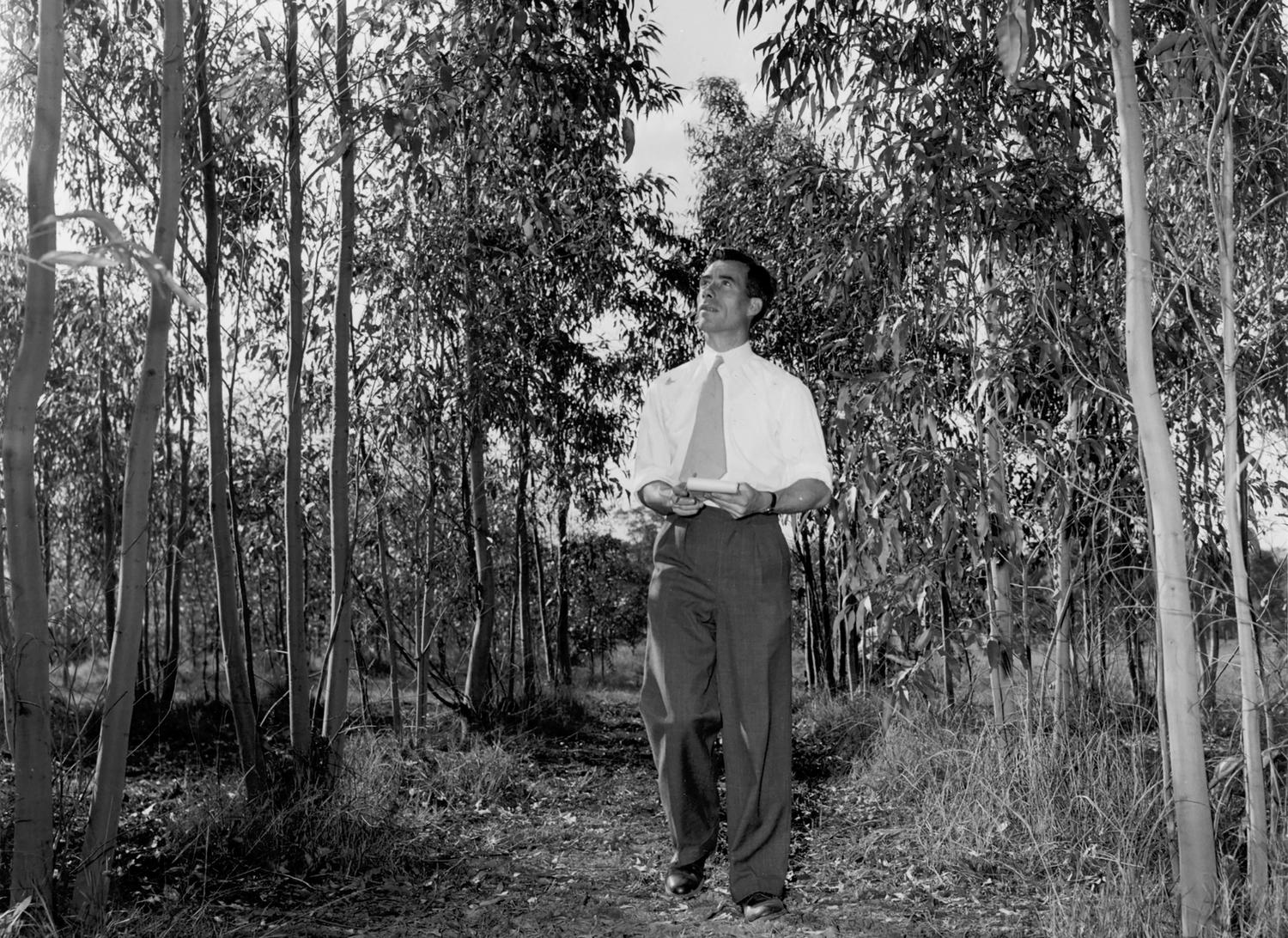
The picture of Gustav Adolphous Kopsch was taken from: D. Fraser (ed.) (1989). Sydney, From Settlement to City: An Engineering History of Sydney. Engineering Heritage Committee, Sydney Division, The Institution of Engineers, Australia, Sydney.

 This text content licensed under CC BY-NC.

Description
Tool kit and documents (3), metal / wood / leather / velvet / cardboard / paper, used by Gustavus Adolphus Kopsch, Sydney, New South Wales, Australia, 1876-1887.

The tool kit is packed in a red leather case with G.A. Kopsch Telegraph Department embossed on the lid. There are two spring tweezers, pliers, a round oil container, two screwdrivers (one with a timber handle), two tapered pins and a wooden vial containing a number of small screws. A chamois is included in the set of tools.

The Royal Society of New South Wales invitation (Lady's card) is a landscape format card with black ink print. It is an invitation to a Conversazione at the Great Hall of the University.

The Christmas (1887) greeting card has a poem on the front and is from Charles Frederick Gustave Kopsch (1866-1932), Gustavus's son. An 1887 penny has been imprinted into the card at the front upper left corner. A handwritten black ink message is on the reverse.

The telegram, from G. A. Kopsch, dated 4 August, 1883, is handwritten on the Electric Telegraph, South Australia, form and is addressed to Miss Antonia Kopsch, S.S. Australia, welcoming her to Australia.

Made: 1876 - 1887


Used: Kopsch, Gustavus Adolphus; Sydney; 1876 - 1887
Marks
See parts for marks information
2004/3/1
Production date
1876 - 1887

 This text content licensed under CC BY-SA.
Acquisition credit line
Gift of Richard Gilfillan, 2003
Subjects
+ Colonial life
+ Communication
+ Inventions and innovations
+ General Post Office, Sydney
Short persistent URL
Concise link back to this object: http://from.ph/319871
Cite this object in Wikipedia
Copy and paste this wiki-markup:

{{cite web |url=http://from.ph/319871 |title=Tool kit and documents |author=Powerhouse Museum |accessdate=22 May 2013 |publisher=Powerhouse Museum, Australia}}


Copyright
Images on this site are reproduced for the purposes of research and study only. Whilst every effort has been made to trace the Copyright holders, we would be grateful for any information concerning Copyright of the images and we will withdraw them immediately on Copyright holder's request.
Object viewed 9710 times. Parent IRN: 2129. Master IRN: 2129 Img: 100367 Flv: H:2280px W:2788px SMO:0 RIGHTS:.