Powerhouse Museum Collection Search 2.53
Category history:
   

Support the Powerhouse with a tax-deductible gift

Make a donation

Make a donation

Make a donation
This object belongs to
Themes containing this object
Scientific Instruments > Astronomical equipment

+ 2004/124/2 IRIS2 Hartmann shutter, infra...
+ 2004/124/3 IRIS2 cold stop, infrared spe...
+ 2004/124/4 IRIS2 multi-slit masks (2), i...
+ 89/1366 Spectrum comparator, Casella, En...
+ H7514 Illuminated rod, mounted on round ...
+ 92/1372 Maragraph, George Edwin Hart, Sy...
+ H9893 Astronomical equipment, mural circ...
+ H9893-1 Astronomical equipment, mural ci...
+ H9955 Optical equipment, stellar spectro...
+ H9957 Astronomical equipment, level trie...
+ H9974 Spectroscope, multi-prism, metal /...
+ H10025 Astronomical equipment, sun diago...
+ H10139 Optical instrument, for measureme...
+ H10185 Blink comparator, used and made a...
+ H10201 Astronomical equipment, minor pla...
+ H10202 Astronomical equipment, pivot tes...
+ H10255 Astronomical instruments, parts o...
+ H10259 Astronomical equipment, speculum ...
+ H10270 Optical equipment, 15 Reseaux pla...
+ H10294 Optical equipment, seven refracto...
+ H10295 Optical instrument, astronomical ...
+ H10306 Astronomical equipment, pivot tes...
+ 97/274/1 Phaser card, electronic, metal/...
+ 97/278/1 Mirror, glass/metal, part of Na...
+ 97/281/1 Image Photon Counting System, i...
+ 97/289/1 Feed horn, metal, used on Parke...
+ 97/289/2 Receiver, cryogenic, 6 cm wavel...
+ 97/289/3 Amplifier, parametric, 9 cm wav...
+ 97/289/4 Feed horn, brass, used on Parke...
+ 97/292/1 Amplifiers (3), low noise, fiel...
+ 97/293/1 Fibre image slicer, used at the...


Scientific Instruments > Testing equipment

+ 2005/165/1 Bell prover, metal / paint, m...
+ 85/1556 Headlamp tester, 'Servex', & boo...
+ 2006/8/1 Blood alcohol testing apparatus...
+ 2006/8/2 Case of ancillary equipment for...
+ 2006/8/5 Blood alcohol testing apparatus...
+ 2006/8/6 Blood alcohol testing apparatus...
+ 2006/8/7 Blood alcohol testing apparatus...
+ 2006/8/8 Blood alcohol testing apparatus...
+ 2006/8/9 Blood alcohol testing apparatus...
+ 2006/8/10 Disposable mouth pieces for bl...
+ 2006/8/11 Disposable mouth pieces for bl...
+ 89/53 Stamp accessories, water mark dete...
+ 2008/187/10 Universal shunt, 10 000 ohms...
+ 2008/187/12 Resistance box, megohm, lega...
+ 2008/187/13 Resistance box, megohm, with...
+ 2008/187/17 Electrical insulation tester...
+ 2008/187/20 'H' attenuation network, 135...
+ 2008/187/21 Level Meter, +30/-80 dB, typ...
+ H5941 Cement Tester - 3 needles on woode...
+ H7609 A comparator, medical, for colour ...
+ H8284 Optical testing device, consisting...
+ 93/225/1 Speed tester with packaging, gr...
+ H9525 Bi-metallic, heat tester, by "Inst...
+ H10306 Astronomical equipment, pivot tes...
+ 96/185/1 Testing machine, typewriter rib...
+ B927 12 wool screws with handles (SB)....
+ B1900 Gauge testing machine, hydraulic, ...
+ B2169 Valve tester ... & Audio frequency...
+ B2171 Multimeter and tube tester, Triple...


Pivot testing apparatus used with transit telescope at Sydney Observatory., 1876
zoom image
Images: 01 02 03 04 05

Object statement
Testing equipment, pivot testing apparatus used with transit telescope, metal / glass, used at Sydney Observatory, made by [Troughton and Simms], [London, England], 1876
This pivot testing apparatus was used in conjunction with the six inch transit telescope (H9899) made by Troughton and Simms which arrived in Australia in 1877. The apparatus was used to set up and align the telescope and presumably arrived at the same time. The telescope was reputed to be one of the best instruments at The Sydney Observatory at this time and was used to measure Sydney time and do most of the observational work.

This pivot testing equipment was made by Troughton and Simms and was specially designed to test the circularity of the pivots in the six inch telescope H9899. This was to ensure the pivots on which the telescope turned were on exactly the same level as they had to point exactly east and west and the angle of the telescope needed to be exactly at right angles to the line joining the pivots in all directions. The errors which crept in were checked daily and this connection to the six inch transit H9899 means the equipment remains a significant part of the Museum's collection relating to nineteenth century astronomy.

References
Russell, H., C., "Report of Astronomer for 1874 & 1875', New South Wales Government Printer, 1876
Royal Observatory publication, unacknowledged photocopy, blue file H9899

Geoff Barker, August, 2007
Cooke, Troughton & Simms
In 1782 John Troughton purchased Benjamin Cole's shop in Fleet Street, London enabling him to sell his own signed products. His instrument making business supported several dynasties of Troughton's before becoming Troughton and Simms and later still Cooke Troughton & Simms. This firm was one of the most well respected firms of instrument makers of the 1800s.

While his brother enjoyed some early success the business really expanded once Edward Troughton (1756-1835) took over the business in 1807. Edward and his brother John were both designers and manufacturers of instruments and the quality of their work won them contracts with the leading Government bodies of the time. These included The Royal Society, the Greenwich Royal observatory, the Board of Longitude, the Board of Ordinance and the East India Company.

One of the main factors in the success of the business was the use of a dividing engine which could speed up the laborious process of marking the small divisions of measurement necessary for scientific instruments. This machine was based on that designed by Jesse Ramsden (1735-1800) which had won a prize from the British Board of Longitude in 1775. As a result of this the Board of Longitude was allowed to instruct Ramsden to allow up to ten other instrument makers to copy his machine. One of these was John Troughton and the new machines established both Ramsden's and Troughton's reputations. The dividing engine speeded up both accuracy and production and rather than spending 12 weeks, six days a week and eight hours a day graduating two meridian circles this machine enabled the same job to be completed in around 10 hours.

The workshop produced a broad range of instruments from large telescopes and theodolites through to smaller mathematical instruments. Before 1835 most of the optics appear to have been supplied by Dollond as Edward Troughton was reputed to be colour blind. It is also important to note that from the early years the precision engineering of castings and turnings of their instruments were mainly outsourced to Maudslay Field & Donkin or Ransome's & May.

One of Edward Troughton's apprentices William Simms was taken into partnership in 1826 and after Edward died in 1835 Simms became the manager of the establishment and company became Troughton & Simms. Under Simms the company continued to expand and produced instruments for Britain and her colonies as well as for markets in Europe and America. When William Simms died in 1860 the estate was worth around £80,000. The company was next managed by William Simms (junior) and his cousin James who carried the firm into the industrial age.

The 1860s they moved the company from Fleet St to two acres of land at Charlton on Woolwich Road and by 1866 the factory employed 61 men and 20 boys. For the 1874 transit Troughton & Simms made only five transits and four portable azimuths but did refurbish some older telescopes loaned for the occasion. Telescopes and transits of the period were often hybrids with the structure ordered from Grubb's or Troughton & Simms with lenses from Cooke.

However by 1887 the company was able to produce all the parts necessary for their instrument and the company employed nearly 200 people. James Simms died in 1915 and the company was turned into a limited liability company by his two sons William and James. Things however were not so easy for the two sons and in 1922 the business was brought out by their rival T. Cooke & Sons becoming Cooke, Troughton & Simms.

References
Todd, David, P., Stars and Telescopes, Sampson Low, Marston, and Co., 1900
Chaldecott, J., 'Printed Ephemera of Some Nineteenth Century Instrument Makers', in Blondel, C., Parot, F., Turner, A., Williams, M., (eds), Studies in the History of Scientific Instruments, Rogers Turner Books, London, 1989
King, H., C., The History of the Telescope, Dover Publications, New York, 1955
McConnell, A., Instrument Makers to the World; a History of Cooke, Troughton and Simms, William Sessions, York, England, 1992
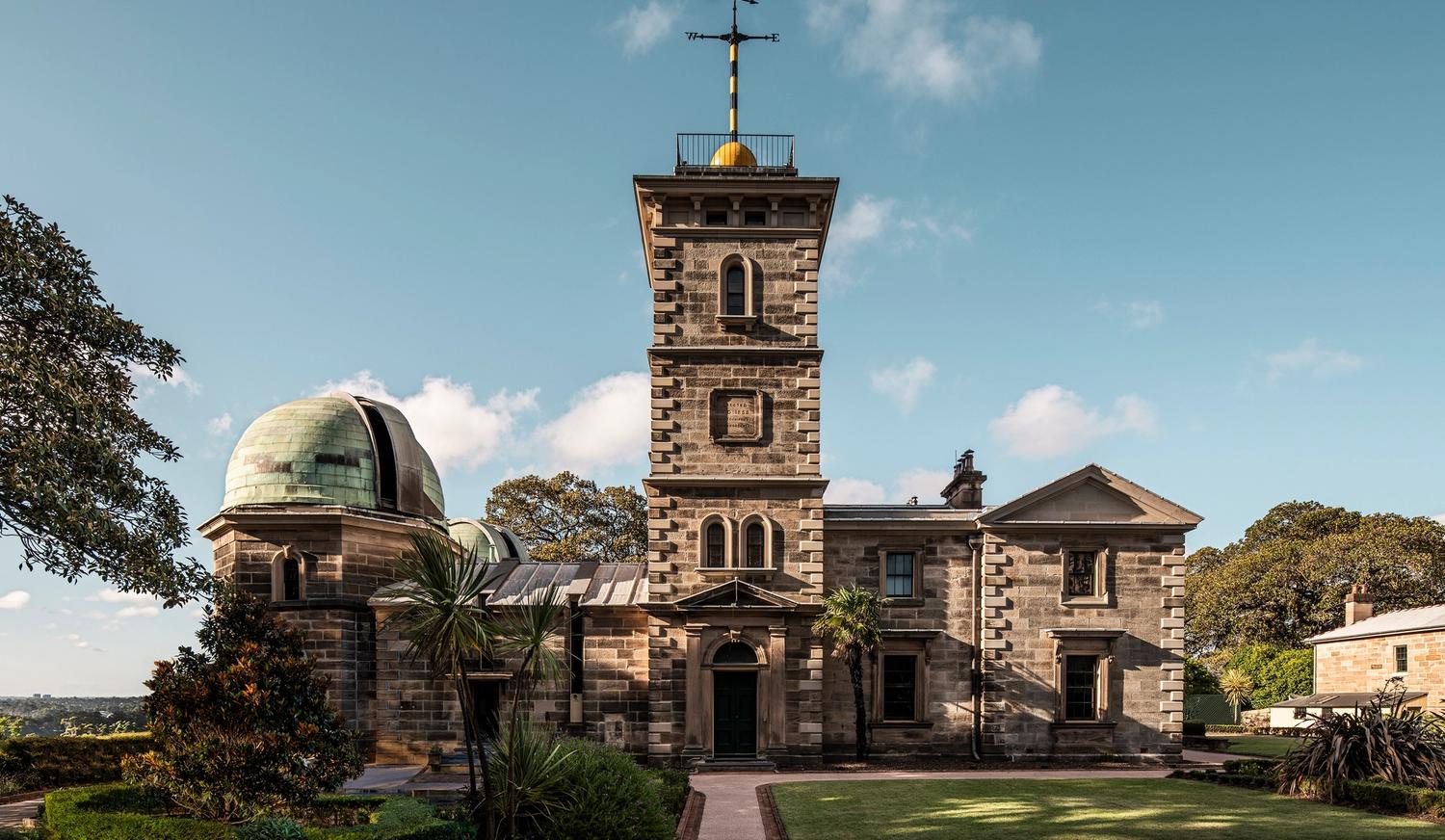
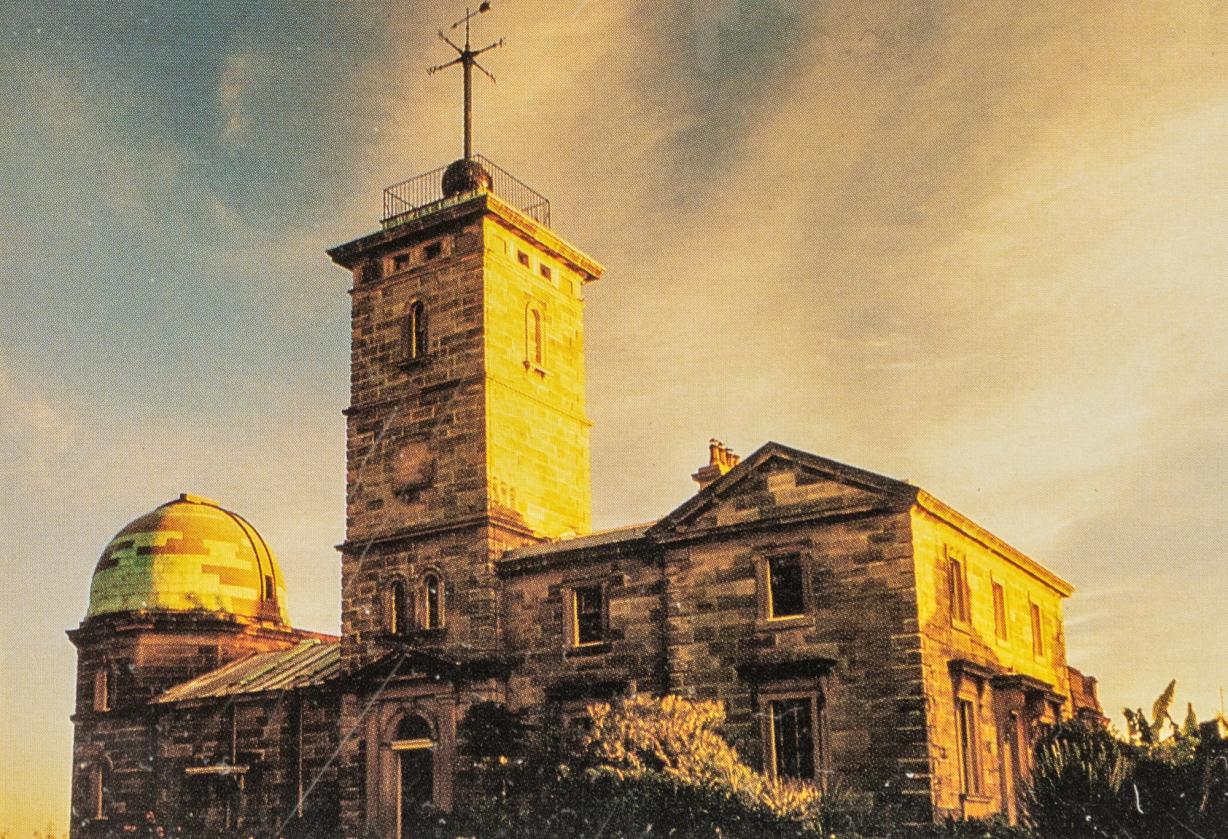
The apparatus was used at Sydney Observatory, Watson Road, Observatory Hill, Sydney, New South Wales, Australia to check the circularity of the pivots of transit telescope H9899. It was thus important in maintaining the precision alignment of the telescope.

Observatory Stock Number 152

 This text content licensed under CC BY-NC.

Description
Testing equipment, pivot testing apparatus used with transit telescope, metal / glass, used at Sydney Observatory, made by [Troughton and Simms], [London, England], 1876.

Pivot testing apparatus used with transit telescope H9899. The pivot testing apparatus consists of a metal cylinder that tapers towards one end. There is a 2 1/2" lens in one end of the cylinder and an eyepiece micrometer in the opposite end.

Observatory stock number 152.

Made: Troughton & Simms; England; 1876


Owned: Sydney Observatory; Sydney Observatory

: Sydney Observatory; Sydney Observatory
H9976
Production date
1876
Height
205 mm
Width
965 mm
Depth
205 mm

 This text content licensed under CC BY-SA.
Acquisition credit line
Ex Sydney Observatory 1983
This object belongs to:
Sydney Observatory Collection
Subjects
+ Astronomical equipment
+ Scientific equipment
+ Sydney Observatory
+ Australian culture
+ Astronomy
+ Russell, Henry Chamberlain
+ Astronomical telescopes
Short persistent URL
Concise link back to this object: http://from.ph/259362
Cite this object in Wikipedia
Copy and paste this wiki-markup:

{{cite web |url=http://from.ph/259362 |title=Pivot testing apparatus used with transit telescope at Sydney Observatory. |author=Powerhouse Museum |accessdate=22 May 2013 |publisher=Powerhouse Museum, Australia}}


Copyright
Images on this site are reproduced for the purposes of research and study only. Whilst every effort has been made to trace the Copyright holders, we would be grateful for any information concerning Copyright of the images and we will withdraw them immediately on Copyright holder's request.
Object viewed 8638 times. Parent IRN: 2143. Master IRN: 2143 Img: 219238 Flv: H:2216px W:3468px SMO:0 RIGHTS:.