Powerhouse Museum Collection Search 2.53
Category history:
   

Support the Powerhouse with a tax-deductible gift

Make a donation

Make a donation

Make a donation
Currently on public display
Parent object
Mural circle and parts for telescope made by Edward Troughton, London, England, 1807-1809, 1807 - 1809
zoom image

Object statement
Astronomical equipment, mural circle, brass, designed and made by Edward Troughton, London, England, 1807-1809, used at Parramatta Observatory, 1815-1825
There are two main types of telescopes. One uses a curved reflecting mirror to capture an image of celestial bodies the other uses a refracting lens to gather the light. This mural circle was used in conjunction with a telescope and was set into a wall. It was then turned on an axle so the telescope could observe the stars as they passed through their meridian.

These are the remaining parts of the mural circle which arrived in Australia with Governor Brisbane in late 1821. They and presumably the telescope were made by Edward Troughton, one of the most respected instrument makers of the day. It was used at Australias first permanent observatory situated at Parramatta. After the departure of Brisbane in 1825 and the dismissal of Charles Rumker in 1830 James Dunlop was appointed Government astronomer in 1831. Upon his return to Australia Dunlop found the equipment in a bad state of repair but nevertheless he commenced observations around the middle of January 1832 using the Troughton transit (H9891) and this mural instrument.

In 1835 a new transit telescope made by Jones was delivered to the observatory which replaced the Troughton transit. The Jones telescope however proved too difficult for Dunlop to manage on his own and instead he used the Troughton mural circle (H9893) for most of his observations.

One of the consequences of this was that Dunlop's observations for the 1835 'Catalogue of 7385 Stars', the first published catalogue of stars based on observations in Australia, proved full of inaccuracies. This mistake had serious ramifications for astronomy in Australia as local Governments and British scientists maintained a degree of skepticism about the value of investing in a new observatory. The instrument was put in storage after the Parramatta observatory was closed down in 1847 and remained so until the new Sydney Observatory was built above the Rocks.

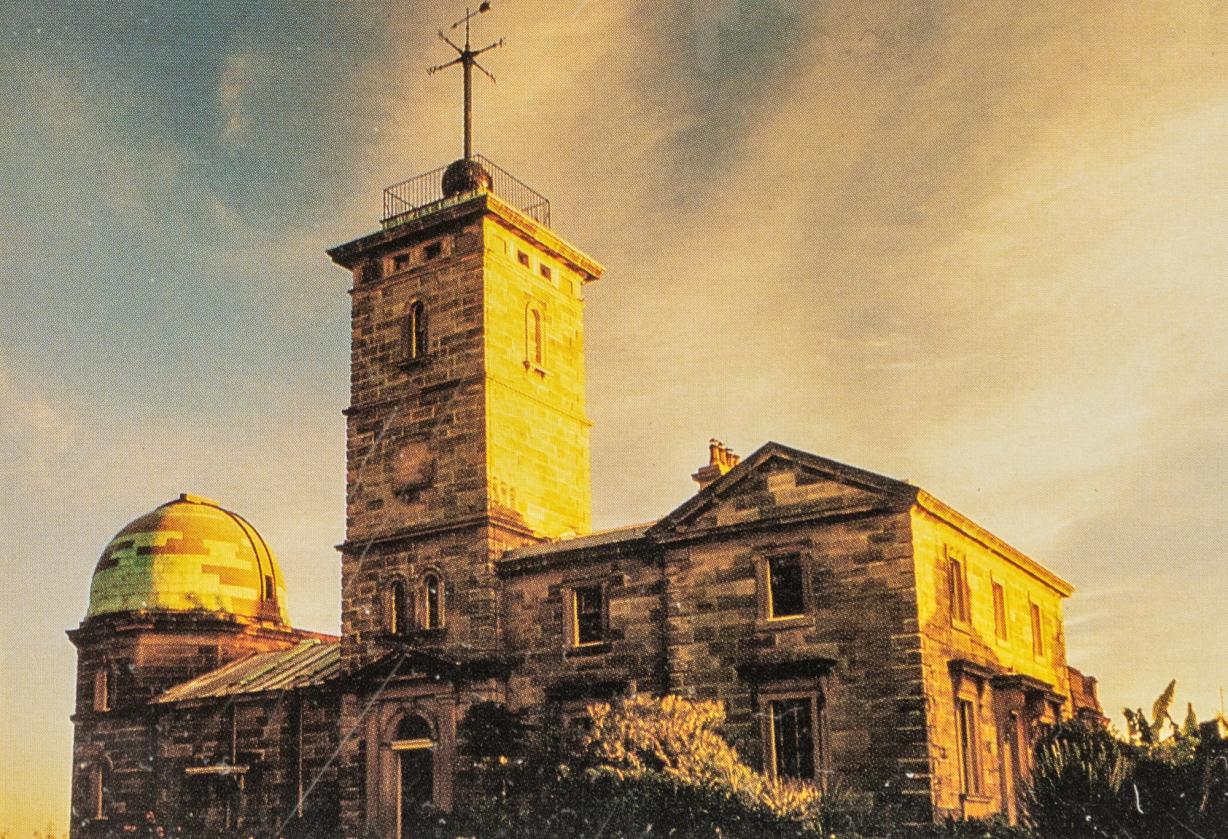
The opening of the new observatory in 1858 saw many of the original Brisbane instruments taken out of storage. Given their age it is not surprising that the new Government Astronomer Rev. W.Scott felt this instrument was substandard. Perhaps as a result the instrument was little used by Scott but his successor H.C. Russell found little wrong with the instrument and in 1872 he used it to re-observe the southern star cluster Kappa Crucis.

This mural was also significant as it may have the prototype for one of Edward Troughton's early successes. Around 1807 he submitted an innovative design for a mural circle to Nevil Maskelyne the Astronomer Royal at Greenwich Observatory around 1807. In support of his design Troughton showed the board of visitors a two foot prototype of this circle which he had made for Sir Thomas MakDougall Brisbane. This is possibly the one which is now in the Powerhouse museum's collection. Its importance can be measured by the fact that the design was accepted by Greenwich Observatory and Troughton's mural circle set for the design standard for these instruments.

Unfortunately the telescope associated with this mural circle went missing sometime after being loaned to Sydney University in 1905. But even with its faults this instrument remains of national significance due to its pioneering role in Australian science and its association with Australia's earliest astronomers. It is also significant for its association withe early nineteenth century astronomical instruments and their makers.

 This text content licensed under CC BY-NC.

Description
Astronomical equipment, mural circle, brass, designed and made by Edward Troughton, London, England, 1807-1809, used at Parramatta Observatory, 1815-1825.

A flat, hollow, brass circle with numbers engraved around the outside edge. The circle is divided into two, each half being numbered from 0-180. There are four equidistant indentations on the inside edge of the circle and four equidistant holes in the surface of the ring.

Made: Troughton, Edward; London, England; 1807 - 1809


Used: Parramatta Observatory; Parramatta, New South Wales; 1815 - 1825

: Brisbane, Thomas Makdougall;
H9893-1
Production date
1807 - 1809
Height
6 mm
Diameter
640 mm

 This text content licensed under CC BY-SA.
Currently on public display
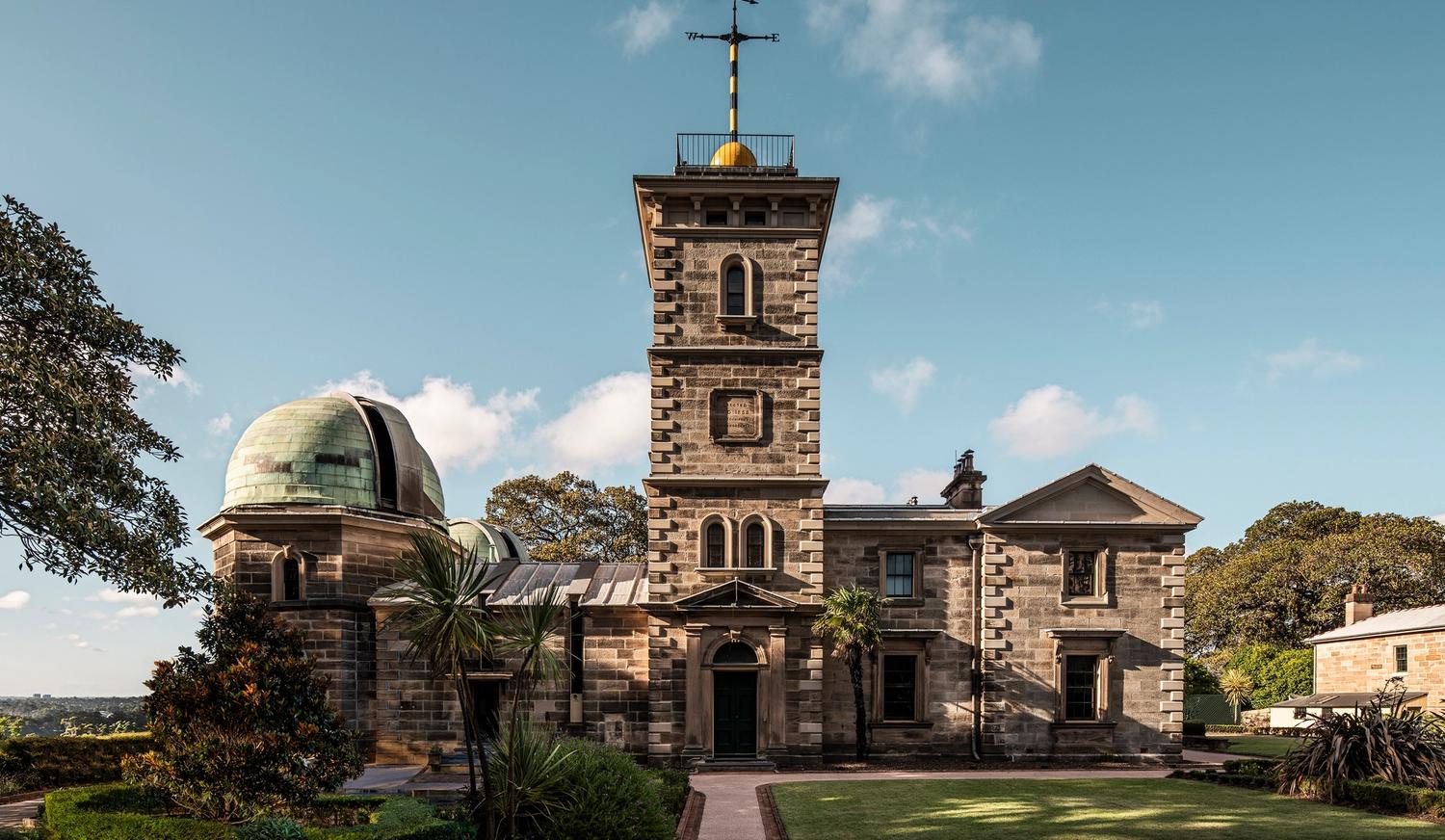
+ By the Light of the Southern Stars Exhibition, Sydney Observatory
Short persistent URL
Concise link back to this object: http://from.ph/258797
Cite this object in Wikipedia
Copy and paste this wiki-markup:

{{cite web |url=http://from.ph/258797 |title=Mural circle and parts for telescope made by Edward Troughton, London, England, 1807-1809 |author=Powerhouse Museum |accessdate=24 May 2013 |publisher=Powerhouse Museum, Australia}}


Copyright
Images on this site are reproduced for the purposes of research and study only. Whilst every effort has been made to trace the Copyright holders, we would be grateful for any information concerning Copyright of the images and we will withdraw them immediately on Copyright holder's request.
Object viewed 2335 times. Parent IRN: 2143. Master IRN: 2143 Img: 185240 Flv: H:2232px W:1984px SMO:0 RIGHTS:.