Object statement
Bicycle, 28 inch, safety, and parts, metal/rubber/mixed media, unknown maker, manufactured before 1896, used by Mr (Albert) Henry Grace, Sydney, Jannali, New South Wales, Australia, 1911-1966
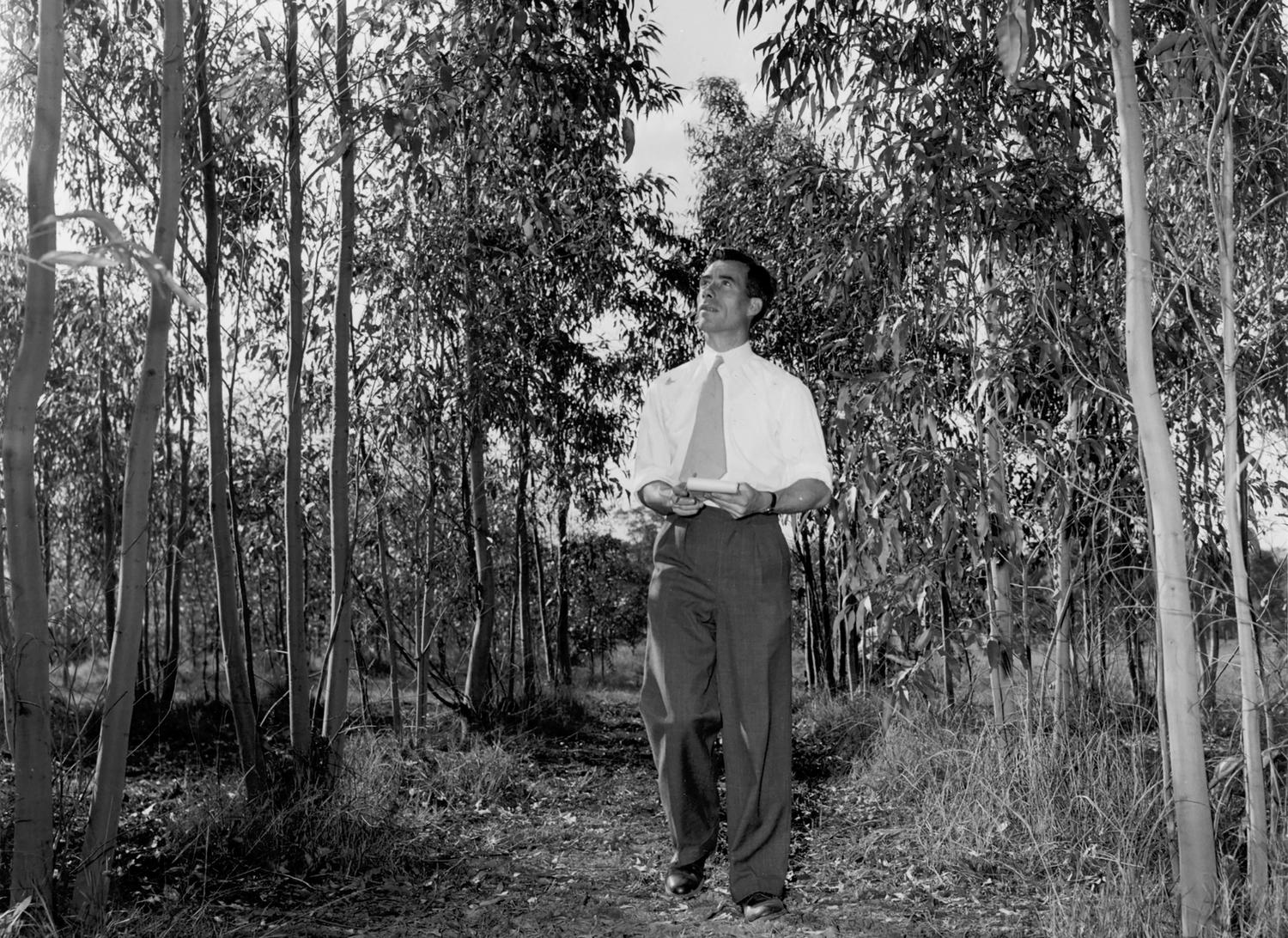
For over 70 years this bicycle was used by the eccentric Sydney bird enthusiast, Henry Grace (1885-1966), to ride to the Royal National Park and other bush locations south of Sydney including Thirroul, Minnamurra Falls and Kiama, to listen to and record bird calls. Henry made complex bird whistles in his backyard workshop which imitated the bird calls and would load this bicycle with his lunch, a billy can, camp kettle, firewood, field glasses, his whistles and notebooks, then catch a train with his bike to the closest station and then ride off into the most remote locations in the national parks.
Using the same "bush mechanic" methods to construct his whistles, Henry modified his bicycle, which has virtually been rebuilt and repaired with scarp pieces of metal and wood many times over during its hard, 70-year use. His workshop was equipped with tools including files, pliers, hacksaws, a soldering iron and hammer. Grace's interest in scientifically recording bird calls began before the ready availability of portable personal sound recording equipment such as small cassette players.
Apart from its fascinating association with an eccentric Sydney personality this bicycle is very significant because it appears to be an example of one of the earliest safety bicycles in Australia. Henry was said to have been given this bicycle, formerly used by the police, by his father in 1896, probably when the family were living in the Wollongong area. The first safety bicycle, that is the modern configuration with rear driven wheels of equal size, arrived in Australia between 1889 and 1890. Before that cyclists were restricted to riding ordinary or penny farthing bicycles which were difficult and dangerous to ride. Safety bicycles revolutionised personal transport being safe, easy to ride and inexpensive to purchase.
Margaret Simpson
Curator, Science, Technology & Industry
September 2010
Carter, Jeff, "stout hearts and leathery hands", Rigby Limited, Adelaide, 1968, pp. 65-8.
Fitzpatrick, Jim, "The Bicycle and the Bush: Man and Machine in Rural Australia", Oxford University Press, 1980.
"The Man Who Talked Bird-Talk" in "The Sun Herald", 1 September, 1968, p.70.
O'Callaghan, Jennifer, "Grace, Henry Albert (1885-1966), "Australian Dictionary of Biography", Supplementary Volume, Melbourne University Press, 2005, p.150-1.
Information provided by Myra Grace in correspondence to the Royal National Park in 1986.
It is not known who manufactured this bicycle. By the time Henry Grace received it in 1896 second hand from the police, Australia was participating in a world bicycle craze. English, German, American and Canadian-made bikes were imported into Australia and suppliers struggled to keep up with the demand. By 1897 there were over 150 different brands on the Australian market from Europe and North America. Safety bicycles at this time were nearly all steel, diamond frame configurations.
Within the frame of this bicycle is a roughly finished metal case or frame bag. These are thought to have been an Australian innovation, made commercially of cloth, metal and leather to carry water, food or other equipment on the long distances travelled in Australia on bicycles. Over its 70-year period of use Henry Grace made numerous modifications to the bicycle adding various carrying frames, brackets, boxes and stands. He is quoted in Jeff Carter's "stout hearts and leathery hands" as saying "The only original part left would be the handle bars - I've replaced everything else several times". Henry Grace adapted the bike to fit his own needs. The extent of the adaption includes: the addition of a compartment between bars and a carrier at rear.
The bicycle was used by Henry Grace, a bird enthusiast, for about 70 years. (Albert) Henry Grace was born at Moree, New South Wales, in 1885, the son of Albert Henry Grace, a solicitor, and Catherine Ruth (nee Muirson). Henry was the eldest of five children. Henry spent his early years at Moree and by 1895 the family had moved to the Wollongong area where according to the New South Wales Births, Deaths and Marriages historical indexes, Henry's youngest sibling, Ruby, was born.
While in England in 1910 Henry married Deborah Whatling Carter from the county of Norfolk. Back in Sydney, Henry and Deborah lived at Willoughby. Henry began his fascination with birds in 1917. He would take his family on excursions to the Royal National Park to see the birds and wild flowers. His daughter, Myra Grace, recalled catching the steam train from Hurstville to Waterfall in the 1920s and walking down to the Upper Causeway and on to Audley, sometimes hiring a boat and rowing along the river watching kingfishers and lyre birds.
When he was about 11 in about 1896 Henry's father had given him this bicycle, which had formerly been used by the police. Henry used this bicycle throughout his life, to carry his bird-watching equipment and supplies and rode it down through bush areas around Sydney and through the national parks. Myra Grace also recalled a special seat her father made for her which was fitted onto the frame of the bicycle in front of the saddle, complete with a bar for a footrest. Together Henry and Myra would ride for miles admiring the waratahs, Christmas bells and Gymea lilies in the bush around Wattamolla.
After the Second World War the family lived at 108 Railway Crescent, Jannali, a southern Sydney suburb. Later, family picnics were undertaken in Henry's Model T Ford taking the seven family members to favourite picnic spots in the Royal National Park including Bola Creek and Calala.
Henry was an electrician by trade and spent 43 years employed by the New South Wales Government Railways and Tramways. He was stationed at Hurstville signal box and rose to be Shift Electrician in charge of railway electrical substations. During his working life he developed a love of the bush but after his retirement he began to concentrate on bird watching and bird listening in particular. He designed and made a series of bird whistles so that he could "talk with the birds". These were fashioned in his backyard workshop from tin, brass tubing, wire, solder, rubber bands and even screw-top jar lids. Henry regarded his shed as off limits to his children and grandchildren. Even the path leading to the shed was out-of-bounds.
Henry would ride this old bicycle down into the Royal National Park loaded with his whistles, camping gear, firewood and food, often camping overnight in order to hear the magical 20-minute dawn chorus, testing and refining his whistles. He could imitate some 50 bird calls. In notebooks he created his own bird call notation (or bird music), said to have been a cross between Morse code and short hand, which recorded the birds' replies to his whistles. Henry was an honorary ranger in the National Park for 27 years. As he became older Henry's hearing deteriorated and he made metal ear trumpets to amplify the bird calls. Just prior to his death on the 4th July, 1966, at the age of 81, he was still riding his bike to the Park, testing his whistles and entertaining picnickers.