
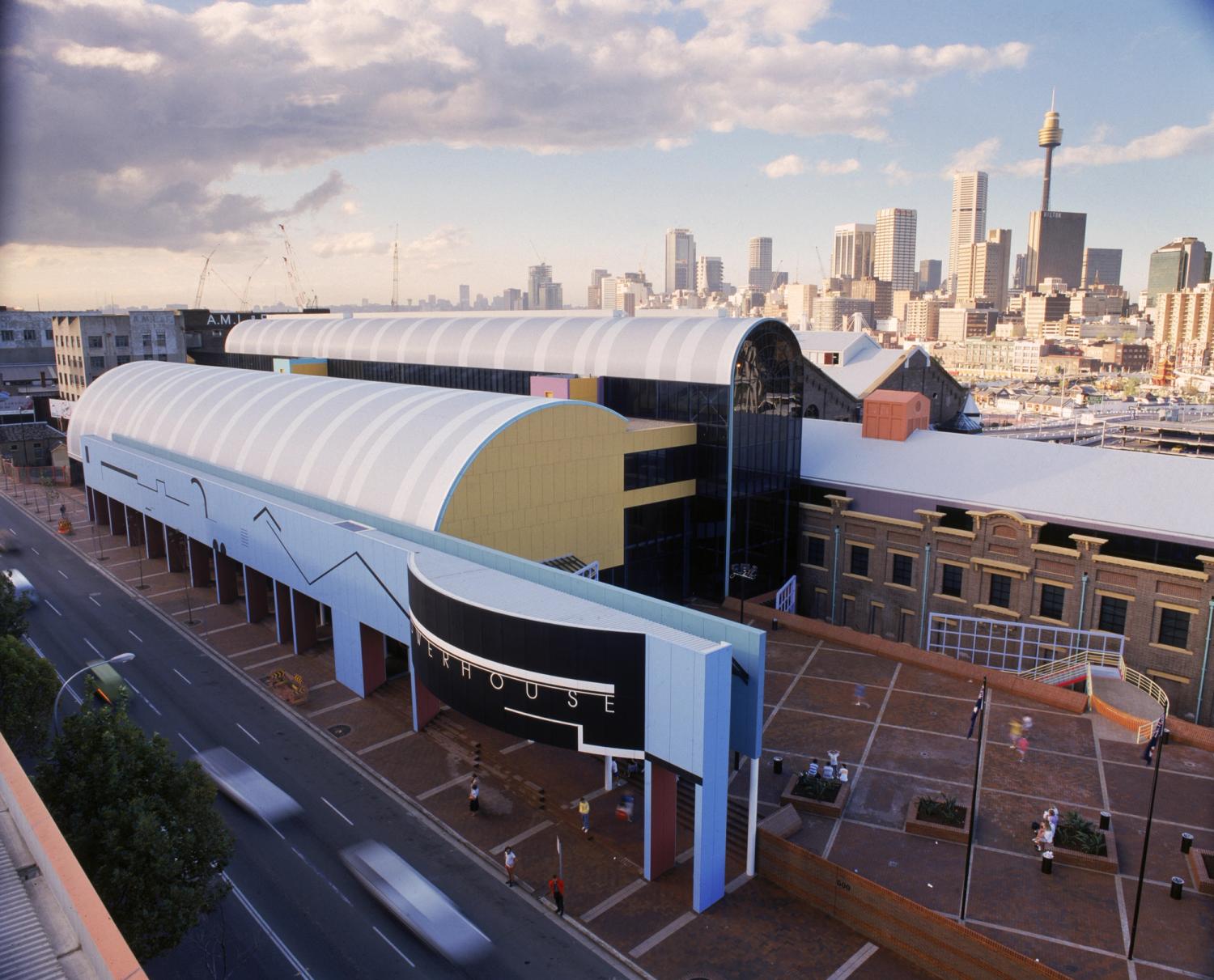


This the first transparent anatomical model of a woman ever to be exhibited in Australia.
In 1939 the director of the Museum, Arthur Penfold, embarked on an international study tour visiting many different museums and galleries overseas. He visited museums in both Chicago and New York and became captivated by their displays of transparent human models and their promotion of healthy living and sanitary practices. Due to lack of funding, the Transparent Woman was not acquired by the Museum until 1954. She was the first electronic scientific anatomical model to be displayed in Australia and was acquired to further the Museum's mission to shape model citizens.
People have historically been curious about seeing what is inside objects, especially the human body. In the nineteenth century members of the public were able to witness dissections on cadavers; however the sights, and smells must have been overwhelming at times. The technology then became available topreserve human organs and make them semi-transparent by passing light through them. People were able to see what was inside the body without the blood and guts of dissections. Papier mache and wax models were used and, with advancements in plastics technology, clear and flexible plastic became available for model making.
These models were a German innovation, originating in the early 1930s at the Museum of Hygiene in Dresden. They served as a teaching aid for students of anatomy, and promoted a message of health and sanitation to the general public. The models were based on 'perfect forms', of young men and women, and symbolised the healthy body that people should strive to achieve. Germany was undergoing rapid industrialisation; thus prompted rapid urban growth accompanied by inadequate sanitation. The German Government promoted the use of these models as a way of educating and preserving a healthy working class. In the early 1950s the Health Museum in Cologne, West Germany, was established and began producing the transparent models and exporting them to America and other countries.
In the late 1930s some thought that the transparent models were symbols of Nazi ideal racial ideology, most who saw them were transfixed by the eugenic ideal of a healthy body. The Powerhouse Museum's Transparent Woman arrived in 1954 to advocate a message of individual responsibility to maintain a healthy body.
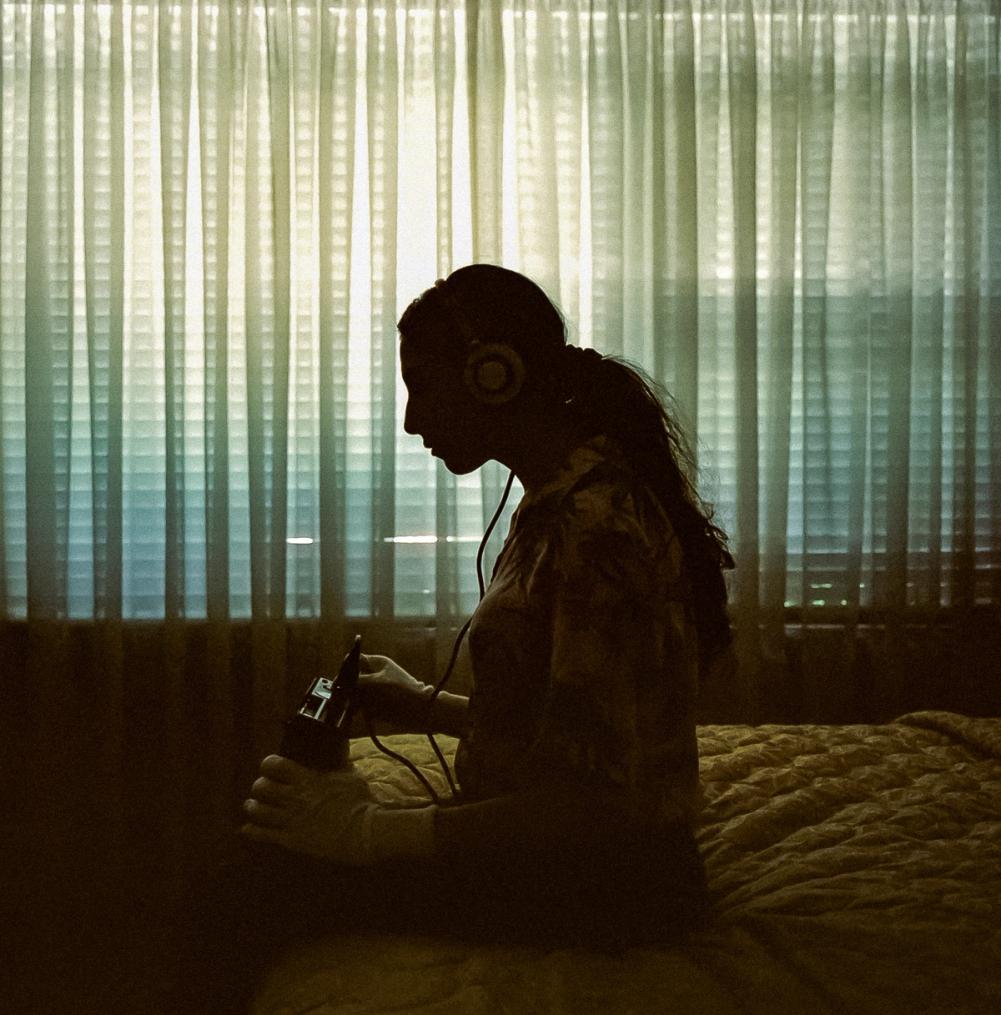
It is hard to imagine being shocked or offended by this model, but the Transparent Woman must have been something of a spectacle in the 1950s. On importation it is recorded that one customs official was so offended by the nature of the exhibit that she almost never made it into the country. To cover some of the huge cost involved in obtaining the model, she was put on displayed in the State Theatre and the public were charged 2 shillings per adult and 9 pence per child to see her. The viewing sessions were segregated by gender and a trained nurse was on standby to assist if anyone was overcome by the experience. To add to the sensationalism she was marketed using images depicting a dark and shadowy 'sex siren' type of woman.
After several months at the State Theatre, the Transparent Woman was moved to the Museum where she continued efforts to promote health and hygiene. The accompanying souvenir booklet proclaimed, "The transparent woman will help us to understand the mysteries of our body, nature's crowning masterpiece. The transparent woman tells us how our body is made and how it works [she] provides us with the means towards greater understanding of ourselves - so necessary to our wellbeing and healthy living, it is the responsibility of the individual to keep his body healthy so that he may live a useful and a successful life.".
She later assisted in the Museum's first attempts to discuss the subject of sex. During the 1970s and 1980s the museum utilised the Transparent Woman to provide human anatomy lessons for school groups. Children were allowed to ask questions and teachers were assured that the museum's education officers would "endeavour to answer each question openly and as scientifically as possible if the subject of reproduction was raised". The model was a significant public education tool and, as her accompanying booklet declares, "has helped lift the veil of mystery from womanhood".
The Transparent Woman has a long history of service to Museum. Starting life as a controversial sensation, she then became the iconic symbol of the Museum's hygienic crusade. In the past 50 years she has been used to demonstrate how the nervous system works, for sex education, and to demonstrate the areas of the body where contraceptive activities take place. The Powerhouse Museum has a collection of over 380,000 objects, only a small amount of which are on display at any one time, yet the Transparent Woman has spent little of her working life in storage. In the modern age of museum exhibitions with complex interactive exhibits and high-tech gadgetry, the Transparent Woman still finds her place: in 2007 she is still proudly on display in the 'Cyberworlds' exhibition at the Powerhouse Museum.
References:
Correspondence. A. R. Penfold to F.R. Morrison, 27th Oct 1952, museum records.
The Transparent Woman [souvenir booklet]. Sydney, 1954.
Internal Correspondence. A.R. Penfolds overseas trip, 1939, museum records.
Internal Correspondence. Memorandum to the Secretary: Department of Technical Education, Sydney, From A. R. Penfold, Museum Director, 22nd November, 1954, museum records.
Terence Measham, Discovering the Powerhouse Museum, Powerhouse Publishing, Sydney, 1997. pg139-147.
Klaus Vogel. Manifesting Medicines, Bodies and Machines: The transparent man- some comments on the history of a symbol, Harwood Academic Publishers, Netherlands, 1999.
Graeme Davidson and Kimberley Webber. Yesterday's Tomorrows: The Powerhouse Museum and its Precursors 1880-2005. Powerhouse Publishing, Sydney, 2005. pg 68-81.
The Museum of Applied Arts and Sciences Annual Report, 1954, museum records.
Written by Erika Dicker
Assistant Curator, October 2007.
The idea of transparent models originated at the Hygiene Museum in Dresden, Germany, in the early 1930s. Using models was popular at exhibitions but with the advancement in plastics technology clear transparent models began to be created. New plastics that were flexible and able to be moulded had become easily available and the museum began experimenting with them. Franz Tschakert was an expert in such plastics, and was employed as the Hygiene Museum's preparer. To make the first prototype of a transparent model he obtained a real human skeleton and structured a wire frame around it, which he stuffed with wood chips to make a statue. The flexible plastic was then moulded over this statue and the internal body parts added. Interestingly the first models Tschakert made were of men, however models of females soon saw a high demand.
In the early 1950s the German Health Museum in Cologne, which was modelled off the Hygiene Museum in Dresden, began making these transparent models for export to the western world. One of these unique female models was commissioned by the Museum of Applied Arts and Sciences in the early 1950s. The accompanying souvenir booklet describes how the model was made: "A well developed young woman was chosen to model, she was coated with a rubber composition, which on hardening was peeled off. This formed the mould for the transparent acrylic plastic sheet, which is the casing or 'skin' of the figure. The skeleton is made of aluminium, while the arteries, veins, nerves, and lymphatic system consist of wire covered with red, yellow, and green plastic respectively. The principal organs are made of various coloured plastics".
The Museum had quite a struggle to import the model as one high ranked customs official though it was undesirable that such a large sum, 7000 pounds, be spent outside the country; he was also offended at the nature of the exhibit. The Museum of Applied Arts and Sciences Transparent Woman became the first electronic scientific anatomical model to be displayed in Australia.
References:
Correspondence. A. R. Penfold to F.R. Morrison, 27th Oct 1952, museum records.
The Transparent Woman [souvenir booklet]. Sydney, 1954.
Internal Correspondence. Memorandum to the Secretary: Department of Technical Education, Sydney, From A. R. Penfold, Museum Director, 22nd November, 1954, museum records.
Klaus Vogel. Manifesting Medicines, Bodies and Machines: The transparent man- some comments on the history of a symbol, Harwood Academic Publishers, Netherlands, 1999.
In 1939 the director of the Museum, Arthur Penfold, embarked on an international study tour visiting many different museums and galleries overseas. He visited museums, in both Chicago and New York and became captivated by their displays of transparent human models and their promotion of healthy living and sanitary practices. In a letter to deputy curator Frank Morrison, Penfold exclaimed that to have such an exhibit would be "a wonderful step forward in Australian progress and a marvellous teaching aide". Unfortunately funding for the purchase of such a model was not found till years later, in the early 1950s.
In the early 1950s the Health Museum in Cologne, Germany, was commissioned to create a transparent woman to be sent to Australia. The first model arrived by sea in 1953, but was damaged in transit and had to be replaced. The second model arrived by air from Germany in February 1954.
Greater Union Theatres Pty Ltd assisted the museum in funding the venture and, to re-coup some of the large cost in acquiring the object, the model was placed on show in the ballroom of the Sydney State Theatre, Market Street, Sydney. Greater Union Theatres began advertising the exhibit, and although the Transparent Woman was meant to promote a message of health and sanitation, she was advertised in a dramatic souvenir booklet as a somewhat sexual figure.
After several months on display at the theatre the Transparent Woman took up permanent residence at the Museum of Applied Arts and Sciences, where she assumed her intended role to promote sanitation and healthy living. She was marvellously displayed at one end of a hall, which was built in to show the figure against a background of blue draping, with a cherry red velvet curtain in front. She was unveiled several times a day for the next 30 years.
The Transparent Woman has a long history of service to the Powerhouse Museum, both as a whole figure, and as unique parts, which have been used for decades to exemplify different subject matters. After 30 years in her alcove at the museum she was relegated to an exhibition called 'Creativity: the human experience' with only her nervous system electrified, she demonstrated the direct link between the senses and the brain. The Transparent Woman was also featured in the 'Taking Precautions' exhibition. Simultaneously relegated to the role of historic curio and reinstated as a health exhibit. She does not have a vagina but, with her red womb glowing, she added historic context by representing the 'scientific' sex education of former decades. At the same time her visible organs served to demonstrate the approximate anatomical location of the exhibition's contraceptive activities. In 1985 she took a brief tour to the Museum of Victoria to be displayed in the Children's Museum exhibition entitled 'Everybody'. In 1987 she was returned to the Powerhouse Museum and in 2002 she was used in the 'Cyberworlds' exhibition. No longer promoting healthy living or sex education, she is still on display in 2007 as a representation of didactic displays that predate computerised virtual visualisations of the body.
References:
The Museum of Applied Arts and Sciences Annual Report, 1954, museum records.
Terence Measham, Discovering the Powerhouse Museum, Powerhouse Publishing, Sydney, 1997. pg139-147
Klaus Vogel. Manifesting Medicines, Bodies and Machines: The transparent man- some comments on the history of a symbol, Harwood Academic Publishers, Netherlands, 1999.
Internal Correspondence. A.R. Penfolds overseas trip, 1939, museum records.