Powerhouse Museum Collection Search 2.53
Category history:
   

Support the Powerhouse with a tax-deductible gift

Make a donation

Make a donation

Make a donation
Currently on public display
Jewellery > Brooches

+ 2011/9/1 Brooch, 'Diamond machine', silv...
+ 2012/65/1 Brooch, 'Voluptuous Woman no 4...
+ A97 Pin brooch, imitation cloisonne, gol...
+ 2013/21/1 Brooch, 'Here or there', rimu ...
+ 86/1452 Brooch, Snow White, plastic, c. ...
+ 2007/112/2 Brooch and box, silver / blis...
+ 86/1480 Brooch, gold set with Italian sh...
+ 85/192-2 Brooch, part of parure, silver ...
+ 86/1523 Brooch, enamel on gold coloured ...
+ 85/194-1 Brooch, goldfields, gold / gold...
+ 86/1525 Brooch, gold coloured metal with...
+ 85/195 Brooch, gold, emerald/ glass/phot...
+ A1229 Brooch with box, Christmas bell mo...
+ 87/1515 Brooch, anodized aluminium/gold,...
+ 87/1516 Brooch, anodized aluminium/gold,...
+ 88/658 Brooch (model), plaster, Brian Th...
+ 88/695 Brooch, 'Building', slate / stain...
+ 88/696 Brooch, 'Building', gold leaf / s...
+ 88/1046 Brooch, aluminium/gold/sterling ...
+ 88/1047 Brooch, gilded brass, Barbara He...
+ 2004/72/1 Brooch, silver / amber, design...
+ 2004/72/2 Brooch, silver/ hand-painted p...
+ 2004/138/1 Brooch and box, gold / enamel...
+ 2004/139/1 Brooch and case, womens, gold...
+ 88/170 Brooch, silver, 1930s...
+ 88/175 Brooch, enamelled metal, Ken Lane...
+ 88/177 Brooch & earrings, metal/beads/di...
+ 88/178 Brooch, metal/beads/diamantes, c ...
+ 88/181 Brooch, paste/metal, Australia, c...
+ 88/182 Brooch, paste/metal, c 1960....
+ 2005/181/1 Brooches (3), 'Marion and Wal...
+ 2005/181/1-1 Brooch (1 of 3), part of 'M...
+ 2005/181/1-2 Brooch (2 of 3), part of 'M...
+ 2005/181/1-3 Brooch (3 of 3), part of 'M...
+ 2005/201/13 Brooch, gilt metal / moonsto...
+ 85/1596 Brooch, 'Opal Oz', Mick Milligan...
+ 85/1799 Brooch, 'Lakes Entrance', silver...
+ 85/1800 Brooch, 'Estuary', silver, Maria...
+ 2006/143/1 Tiara, brooch, hairpins (5) a...
+ 2006/144/1 Brooch, eye portrait, glass /...
+ 2006/147/11 Brooch, 'Banksia leaf', ster...
+ 85/2344 Brooch, acrylic/mixed media, Lyn...
+ 85/2346 Brooch, 'Boozers are Losers', al...
+ 86/1536 Jewellery, silver / cultured pea...
+ 86/1537 Jewellery suite, silver and blis...
+ 86/1537-2 Brooch, silver / blister pearl...
+ 86/1575 Brooch, oxidised sterling silver...
+ 86/1669 Brooch, hair/gold, unknown maker...
+ 90/336 Brooch, from 'Semangat' Series, b...


Brooches made from casein plastic, 1943
zoom image
Images: 01 02 03 04

Object statement
Brooches (2), casein plastic / metal, made by General Plastics Ltd, Taree, New South Wales, Australia, 1943
Plastics have been described as 'materials that can be moulded or shaped into different forms under pressure or heat.' They were a cultural phenomenon in the twentieth century when they changed the way objects were produced, designed and used. It was also in the twentieth century that most plastic products moved away from natural raw materials to synthetically produced ones.

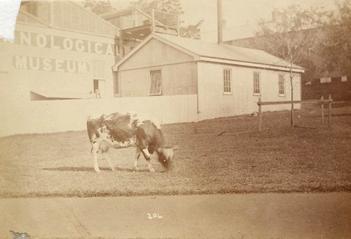
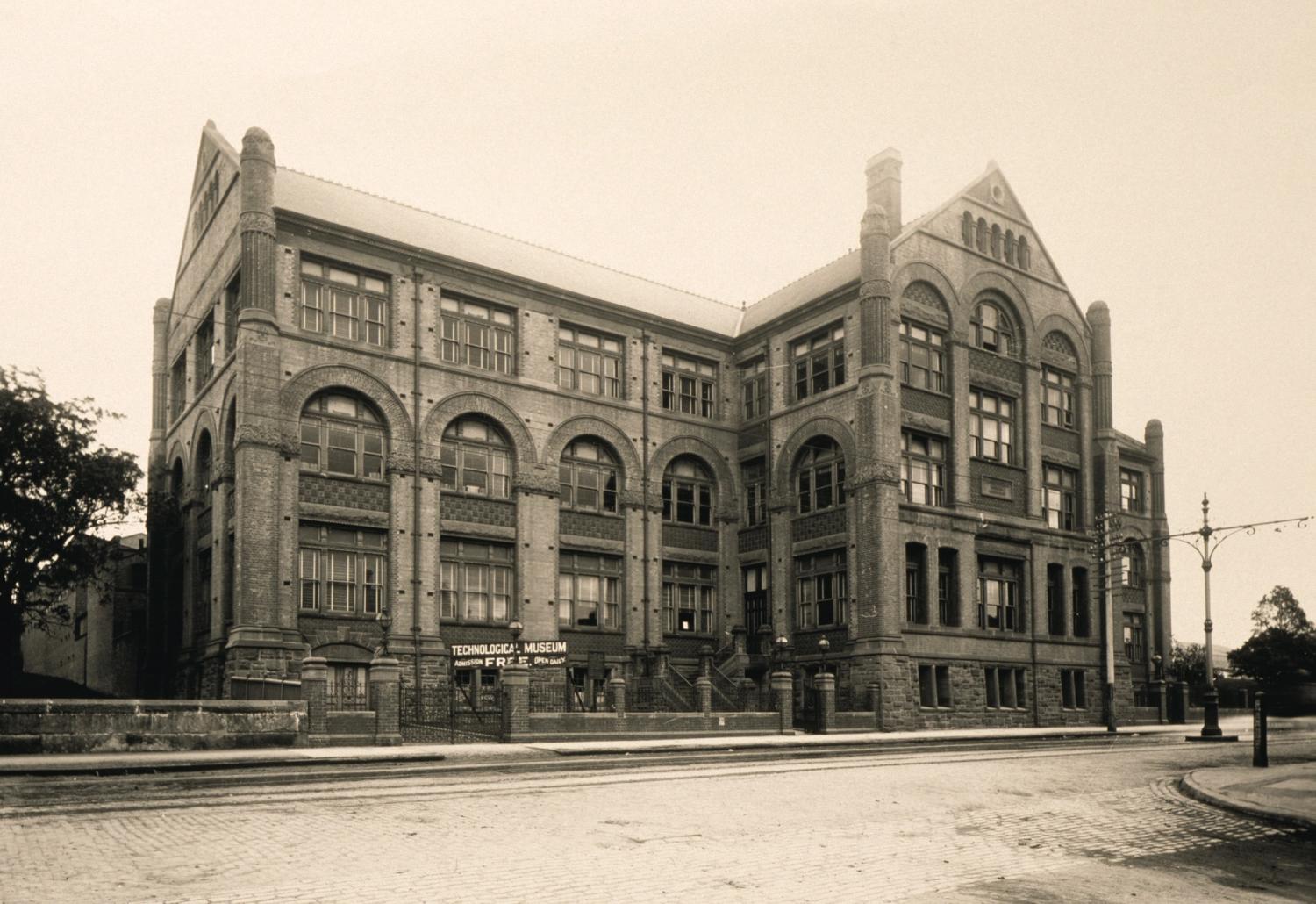
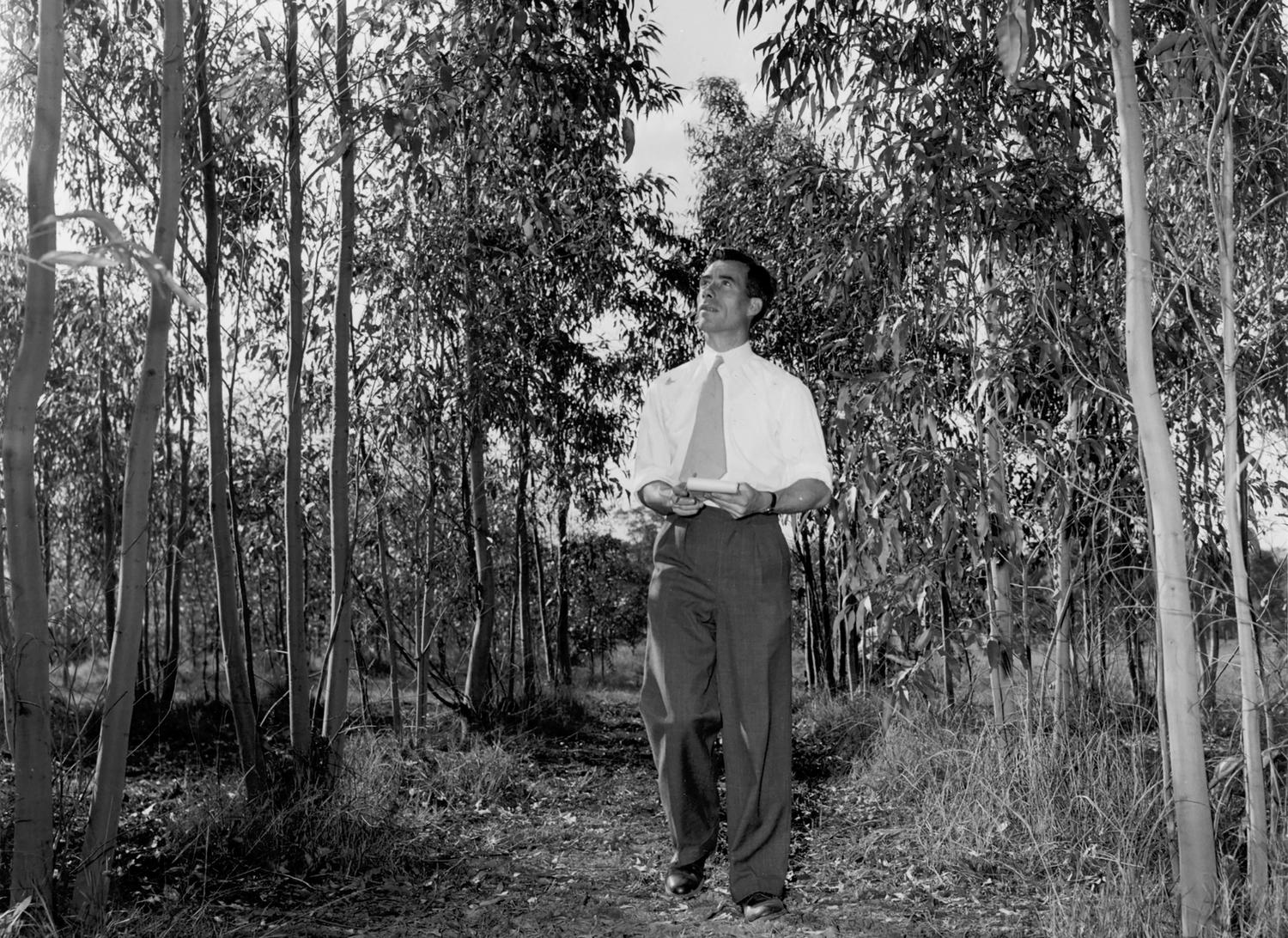
The museum's plastics collection began in the 1930s with the acquisition of specimens of plastic raw materials and finished products. The collection was driven by Arthur de Ramon Penfold (1890-1980), a former industrial chemist, who worked as curator and later director of the museum from 1927 until 1955.

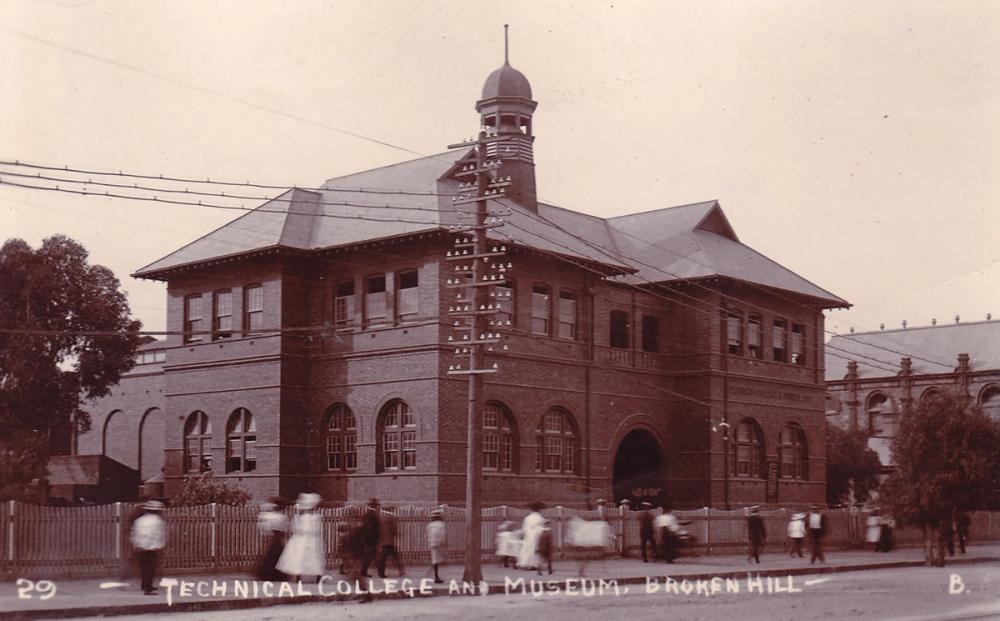
Between 26 and 28 of September 1934, the Technical College and the museum collaborated to develop what was advocated as the first Plastics Industry Exhibition in Australia. A permanent display of plastics was established at the museum, and was described by the Sunday Telegraph as 'the best display of plastics and fibres in the world show(ing) the complete history of plastics from first experiments to the latest developments'.

Casein plastics are made from a protein found predominantly in milk, mixed with formaldehyde to produce a plastic that was easily dyed into a variety of colours. Due to its extensive colour range, casein was popular for small, decorative, and functional objects, and was used extensively in the button trade. The use of casein in plastics is now almost obsolete due to more advanced plastics technology and a rise in the demand for dairy products for human consumption.

These examples of casein plastic brooches were donated to the Museum in 1943. They are an example of casein plastic being manufactured in Australian in the early 1940s.

This object is part of a large collection of plastics and plastic moulding powders acquired by the museum during Arthur Penfold's career. This collection gives an insight into a period of great social, material, technological and scientific development as well as the collecting practices of the museum at the time. Plastics continues to be an area that is explored and represented in the museum's collection, however today it reflects some of the more ambivalent attitudes towards plastics and their use, particularly in regards to the environment and sustainability.

REF:

Sunday Telegraph, 'For plastics he saw great things', 11 November 1945.
M. Kaufman, the First Century of Plastics, The Plastics Institute, London, 1963. pg 55

Written by Erika Dicker / Michelle Brown / Rachel Dowling
Assistant Curators, March 2008.
These brooches were made by General Plastics Ltd inTaree, New South Wales, 1943.

Casein plastics are based on a protein found predominantly in milk, the word casein being derived from the Latin word 'caseus', which means cheese. They are often known as casein formaldehyde.

Casein plastic was patented in Germany in 1899 . It was produced in rods, or sheets, made into knitting needles, pen barrels, or stamped out into buttons and buckles, then hardened in a mixture of formaldehyde. These products could be easily dyed into whatever colours were fashionable at the time.

Casein plastic was first introduced to the world under the product name 'Galalithe' at the Paris Universal Exhibition in 1900. In the following years the development process of casein plastics was undertaken by two companies; Vereinigten Gummivarenfabriken in Germany and Pellerin & Orosdi in France. These companies merged under the one name, International Galalithe Gesellschaft Hoff & Company, in 1904. The company developed a manufacturing process that used dried casein granules, which became the universal standard in processing casein, and remained virtually unchanged throughout its history.

This 'dry process' involved using rennet casein, precipitated from skim milk, which was then dried and ground into a powder. The resulting powder was then mixed with water, colorants, and chemicals and extruded in a machine to produce sheets or rods . This process superseded the manufacturing procedures that were based on using wet milk curds as a primary material and was a long and costly process.

This type of plastic is rarely manufactured in the 21st century due to its labour intensive manufacturing process and the development of cheaper and more easily made products. Some also say that the popularisation of dairy products added to the demise of casein plastics.

These brooches are an example of the type of products being made from casein in Australia in the 1940s.

Reference:
John Morgan, From Milk to Manicure Sets the Casein Process, in the Journal of the Plastics Historical Society, No. 1, Winter, 1988, pg 13
M. Kaufman, The First Century of Plastics, The Plastics Institute, London, 1963. pg 55
Casein information sheet, Plastiquarian, available at: www.plastiquarian.com/casein2.htm, 2008.

Written by Erika Dicker
Assistant Curator, March 2008.
It is often perceived that plastics are a material of the twentieth century; however, its beginnings go back to eighteenth century Europe and conditions created by rapid industrialisation, scientific curiosity and opportunities to create great wealth through innovative and entrepreneurial ideas. Many of the semi-synthetic plastics of the nineteenth century and the synthetic plastics of the twentieth century were influenced by earlier manufacturing methods of making products out of natural plastics such as horn and tortoiseshell. The development of synthetic plastics, however, allowed for a product that was not subject to availability and fluctuating costs.

The Australian plastics processing industry began around 1917, growing significantly after World War Two. In 1939 production of plastics was around one thousand tonnes per year and fifty years later it had grown to around nine hundred thousand tonnes . New innovations in plastics, a rising population and increasing home ownership and household consumption were major influences on this growth. Today the plastics industry is one of Australia's largest manufacturing sectors.

Between 26 and 28 September 1934, the Sydney Technical College and the museum collaborated to develop what was advocated as the first Plastics Industry Exhibition in Australia. This exhibition was advocated as the first plastics exhibition in Australia. The museum contributed the majority of the exhibits, which included colourful moulded objects and synthetic resin powders. The highlight of the exhibition was a standard hydraulic press that produced synthetic resin objects while the audience watched. This was loaned by John Heine and Son and run by staff from the College's Mechanical Engineering department. It utilised dies made by College students and synthetic moulding resin powders from local plastic companies. A Conversazione was held on the evening of 26th September, 1934 'to which prominent citizens, including representatives of the Plastics Industry were invited', and at which both Penfold and Dr N H Lang gave lectures on the plastics industry

A permanent display of plastics was established at the museum, and was described by the Sunday Telegraph as 'the best display of plastics and fibres in the worldÂ?show(ing) the complete history of plastics from first experiments to the latest developments' . Penfold was greatly concerned with the technical and commercial development of local industries, such as the plastics industry, and believed that the museum was 'destined to play a conspicuous part in bringing Science to the aid of industry' through both research and display.

In December 1944 Penfold, along with Mr C H Hunt of Newcastle Technical College, was commissioned by the NSW Government to investigate overseas technological trends in the plastic industry, including the training of technical personnel, throughout the United States, Canada and the United Kingdom. On his return Penfold continued to promote the importance of Australia's development of a vigorous research and training program in developing local technical expertise arguing that: 'The field is so vast and the potentialities of plastics is so promising, that no effort should be spared to provide adequate training for all persons wishing to acquire a knowledge of these new materials' .

Reference::
Chemlink Consultants, Australia's Chemical Industry - History and development, available at http://www.chemlink.com.au/chemhist.htm, accessed 08/08/2007.
Penfold, A. R., 'Reports on Plastics Investigation, 1945, in the United States of America, Canada and the United Kingdom', 31/10/1945
Penfold, A. R., paper, 'Recent Developments of Plastics Overseas', delivered before the Plastics Institute of Australia, NSW Section, 29/11/1945
Penfold, A. R., 'The Influence of Science Museums on Industry', read at the first Biannual Conference of International Council on Museums, 1948
Sunday Telegraph, 'For plastics he saw great things', 11/11/1945
Sydney Technological Museum, Annual Report, 1934

 This text content licensed under CC BY-NC.

Description
Brooches (2), casein plastic / metal, made by General Plastics Ltd, Taree, New South Wales, Australia, 1943

Two brooches made in casein plastic. One has a dagger shape and one in shape of an orchid flower.
Made: General Plastics Limited; Taree, New South Wales; 1943
Marks
No marks.
H4519
Production date
1943

 This text content licensed under CC BY-SA.
Acquisition credit line
Gift of General Plastics Ltd, 1943
Subjects
+ Brooches
+ Plastics technology
+ Plastics technology production
+ Materials technology
+ Penfold, Arthur
Currently on public display
+ Experimentations Exhibition
Short persistent URL
Concise link back to this object: http://from.ph/240088
Cite this object in Wikipedia
Copy and paste this wiki-markup:

{{cite web |url=http://from.ph/240088 |title=Brooches made from casein plastic |author=Powerhouse Museum |accessdate=18 June 2013 |publisher=Powerhouse Museum, Australia}}


Copyright
Images on this site are reproduced for the purposes of research and study only. Whilst every effort has been made to trace the Copyright holders, we would be grateful for any information concerning Copyright of the images and we will withdraw them immediately on Copyright holder's request.
Object viewed 4106 times. Parent IRN: 2141. Master IRN: 2141 Img: 320972 Flv: H:2008px W:3125px SMO:0 RIGHTS:.