

Powerhouse Museum Collection Search 2.53
Category history:
   

Support the Powerhouse with a tax-deductible gift

Make a donation

Make a donation

Make a donation
Currently on public display
Themes containing this object

Matthew Flinders marine chronometer, 1790 - 1801
zoom image

Object statement
Box chronometer, serial No 520, brass / wood / steel / glass, made by Thomas Earnshaw, London, England, 1801, used by Captain Matthew Flinders, 1801-1803
When Matthew Flinders set out in 1801 to circumnavigate Australia, he took with him a collection of five chronometers. The only one to survive the journey was this one. It was made in London by Thomas Earnshaw in early 1801. The escapement and compensating balance wheel which were invented by Earnshaw are incorporated into this chronometer and reflect his skill and precision in workmanship. Flinders expressed his enthusiasm for E520 in his book 'A Voyage to Terra Australis' where he referred to it as "this excellent timekeeper".

Like three other timekeepers on the investigator, the E520 was a box chronometer. That is, it was mounted in a wooden box fitted with gimbals, to compensate for the movement of the ship. During the voyage the chronometers were removed from the ship only to be checked. An observatory tent was erected at selected points along the coast where the timekeepers were checked against a regulator clock to determine whether they gained or lost time each day. There were also regular checks of the chronometer rates by astronomical observation on board ship.

The E520 was with Flinders when, on his return passage to England, he was taken prisoner-of-war by the French in Mauritius. In 1805 Captain Aken, the master of the 'Investigator' who had been travelling with Flinders, was released by the French and allowed to return England. He arrived there with the chronometer in December 1805, and the Astronomer Royal, Neville Maskelyne, reported to the Board of Longitude on December 12, that E520 had been delivered to the Greenwich Observatory.

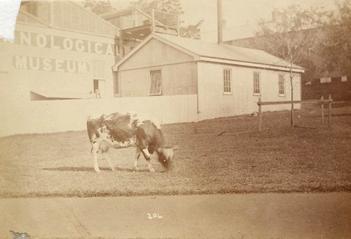
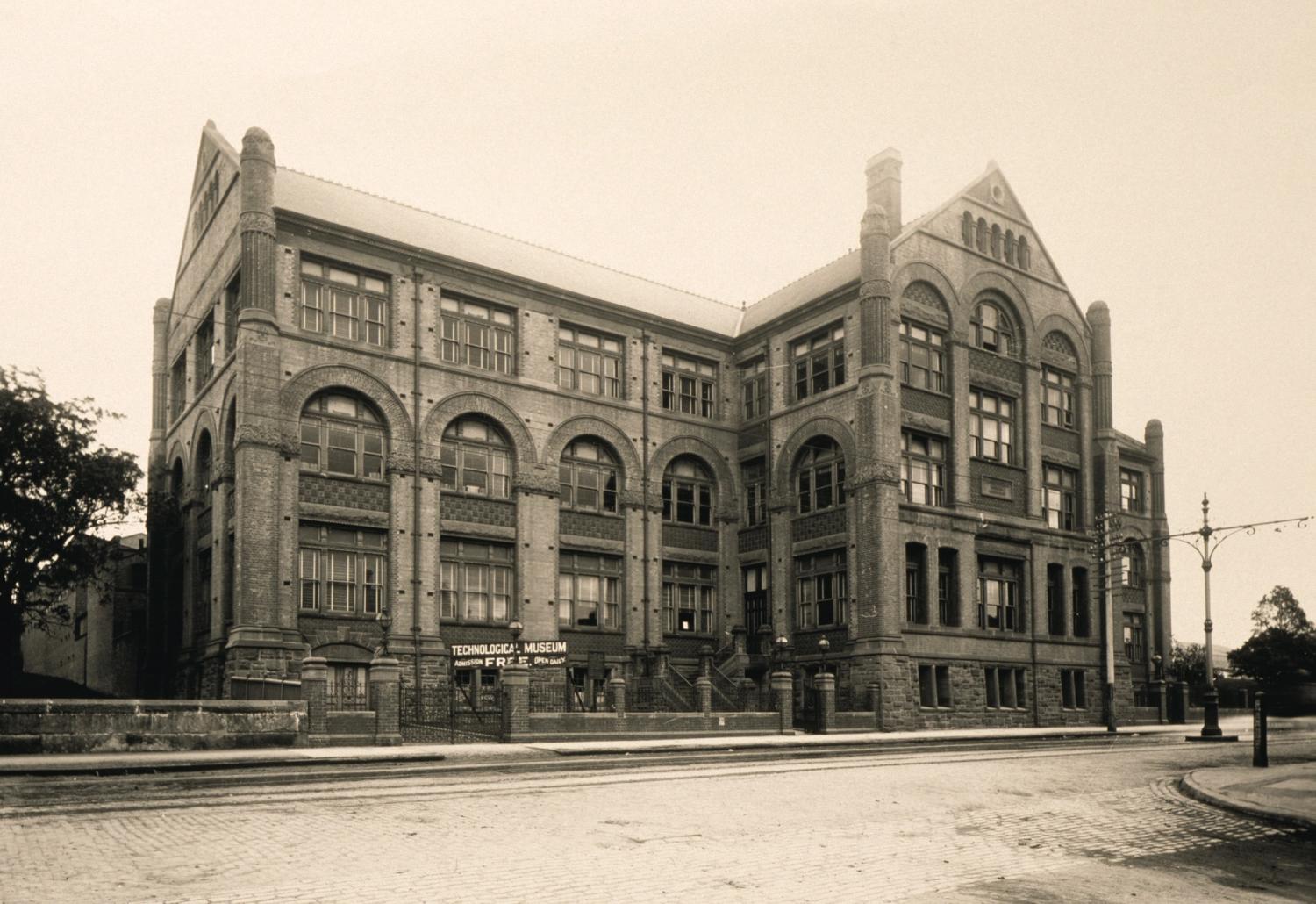
No more was heard of E520 until 1937 when the records of the then Sydney Technical Museum show that it was purchased from Mr. J. Nisbet of Double Bay.

At that time however, it was not recognised as the chronometer carried by Flinders. This situation remained until 1976, when this author identified it by its serial number as a chronometer from the 'Investigator'. This would normally have been sufficient identification but a search of British Admiralty records indicated that they had been offered and had declined the purchase of an Earnshaw chronometer no. 520 in 1943.

Subsequent research in England revealed that the owners of this chronometer had since died and the family were unaware of its existence. To further complicate matters the Admiralty had destroyed most of the records pertaining to the chronometer.

However, there was what appeared to be a second serial number engraved on the back plate of the Museum's chronometer which could possibly provide additional proof of its authenticity. A further search at the National Maritime Museum in London revealed that all known Earnshaw chronometers made between 1790 and 1810 carried a second number. In our case the number is 2865. A study of a graph prepared by Mr. Christopher Wood, of Edinburgh, comparing the first and second serial numbers, together with a check of other Earnshaw chronometers leaves no doubt that this Earnshaw chronometer was the one carried by Matthew Flinders on the 'Investigator'. The most probable explanation of the chronometer offered to the Admiralty in 1943 was that due to repairs to the dial the number was indistinct and was misread by the recording clerk.

But what of Mr. N. J. Nisbet, who once owned E520? At first all attempts to trace him failed. Then in 1979, with the valuable assistance of Caroline Jones of ABC Radio in Sydney, the family of Mr. Norman John Nisbet was located. Unfortunately, Mr. Nisbet died in 1943 and little is now known of E520's connection with his family. Mr. Nisbet was, however, a collector of clocks and watches and may have acquired the chronometer during a visit to England.

Whatever the history of E520 from 1805 to 1937 it is extremely fortunate that this historic old timekeeper which played so important a part in our early history, found its way back to Australia.

By Thomas Tooth, 1981

References
Thomas Tooth, transcript from 'The Earnshaw Chronometer' a monograph originally published by the Powerhouse Museum of Applied Arts and Sciences, 1981
The chronometer was made by Thomas Earnshaw in London, England in 1801.
The marine chronometer was used for finding longitude by comparing its time with a measurement of the local time at the ship's position. Used by Matthew Flinders (1774-1814) in his circumnavigation of Australia on the HMAS Investigator in 1801-1803.

 This text content licensed under CC BY-NC.

Description
Box chronometer, serial No 520, brass / wood / steel / glass, made by Thomas Earnshaw, London, England, 1801, used by Captain Matthew Flinders, 1801-1803

A marine chronometer contained within a cedar wood box with a hinged lid. The chronometer, which can be viewed through a circular glass window in the lid, sits in a brass gimbal ring that is fixed inside the box. The chronometers mechanism is encased in a circular brass surround. The steel dial or face of the chronometer is marked with Roman numerals from 'I' to 'XII'. There is a smaller subsidiary dial marked from '10' to '60' towards the bottom of the main dial . The small dial has a single second hand. A circular glass cover sits over the face of the chronometer. On either side of the box is a brass drop handle. The interior of the box is lined with green felt. Two keys are associated with the chronometer, one of which can be stored in a compartment in one corner of the box.

Made: Earnshaw, Thomas; England; 1790 - 1801


Used: Flinders, Matthew; Australia; 1801 - 1803
H3940
Production date
1790 - 1801
Height
155 mm
Width
212 mm
Depth
212 mm

 This text content licensed under CC BY-SA.
Acquisition credit line
Purchased 1937
Subjects
+ Marine exploration
+ Timekeeping
+ Sydney Observatory
+ Astronomy
+ Horology
+ Horology and astronomy
+ Flinders, Matthew
Currently on public display
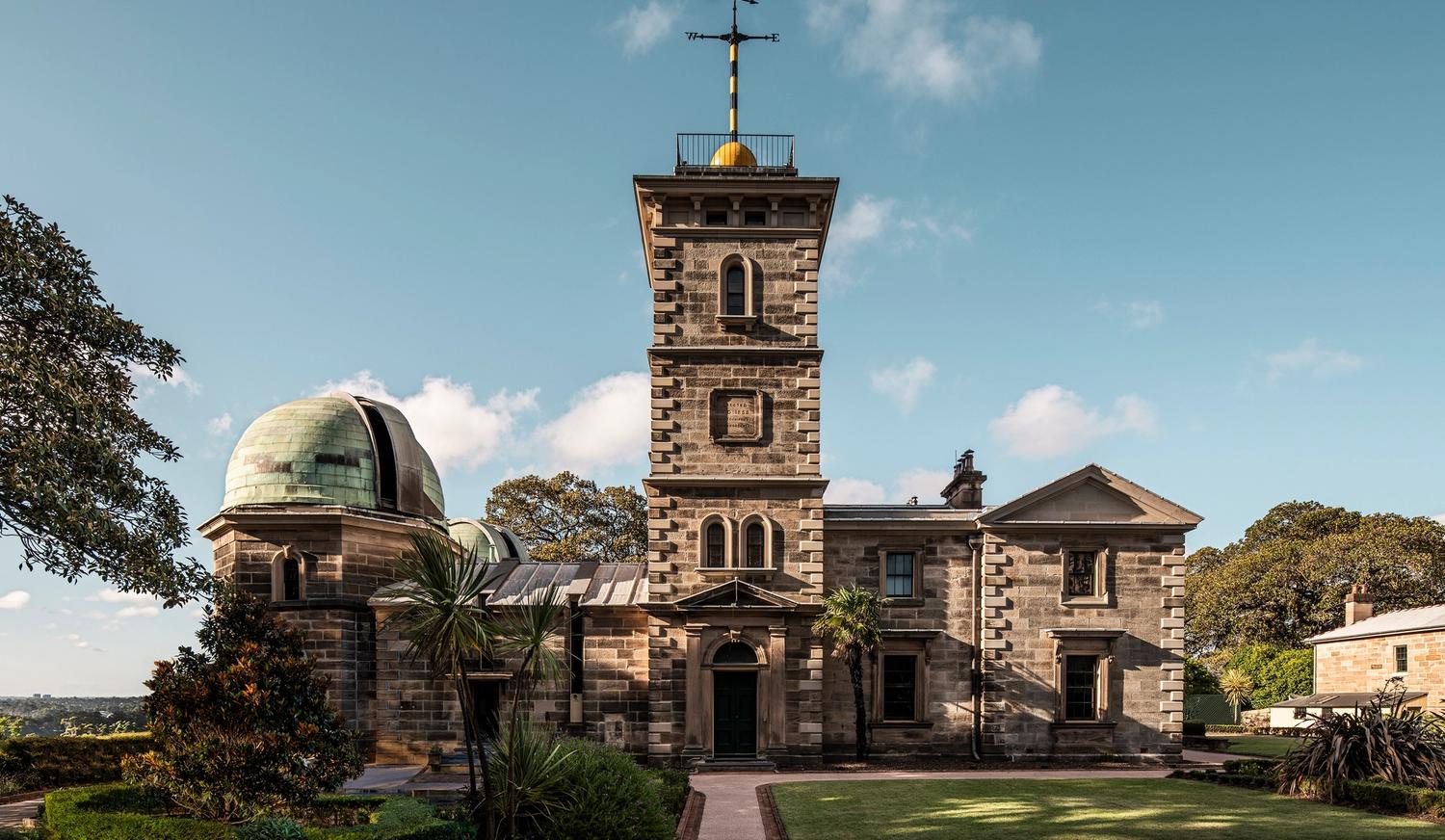
+ By the Light of the Southern Stars Exhibition, Sydney Observatory
Short persistent URL
Concise link back to this object: http://from.ph/237881
Cite this object in Wikipedia
Copy and paste this wiki-markup:

{{cite web |url=http://from.ph/237881 |title=Matthew Flinders marine chronometer |author=Powerhouse Museum |accessdate=24 May 2013 |publisher=Powerhouse Museum, Australia}}


Copyright
Images on this site are reproduced for the purposes of research and study only. Whilst every effort has been made to trace the Copyright holders, we would be grateful for any information concerning Copyright of the images and we will withdraw them immediately on Copyright holder's request.
Object viewed 11413 times. Parent IRN: 2140. Master IRN: 2140 Img: 219185 Flv: H:3102px W:2336px SMO:0 RIGHTS:.