


Powerhouse Museum Collection Search 2.53
Category history:
   

Support the Powerhouse with a tax-deductible gift

Make a donation

Make a donation

Make a donation
This object belongs to
Theme containing this object

Astronomical star diagonal., 1897 - 1922
zoom image
Images: 01 02 03 04 05 06

Object statement
Optical instrument, astronomical star diagonal, metal / glass, used by Sydney Observatory, made by T Cook and Sons Limited, England, 1897-1922
In 1874, after two years of inquiries, the NSW Government Astronomer H. C. Russell acquired a number of new instruments in preparation for the upcoming Transit of Venus. One of these was a new 11.4 inch telescope (H9886) purchased for the observation of double stars from the optician and instrument maker, Hugo Schroeder.

In 1870 Schroeder had made an objective for the Hamburg Observatory and the success of this instrument may have been one reason Russell sought him out. As well as the telescope Russell purchased some additional instruments from Schroeder for use with the telescope. These were a solar polarising eyepiece (H10380) designed for viewing the sun, a filar micrometer mounted on a graduated circuit (H10007), eyepieces (H10294).

This sun diagonal used in conjunction with the Schroeder telescope was purchased separately. The sun diagonal was attached to the view end of the telescope and allowed for the dissipation of heat caused by the magnification of the suns rays.

In the nineteenth century Cooke & Sons Ltd established a reputation as one of the most reputable optical instruments makers in Britain. Thomas Cooke started his business in York in 1837 and by 1855 had established his reputation as a maker of fine lenses for telescopes by winning a First Class medal for his 7 1/4-inch equatorial telescope. In 1860 he was commissioned by Queen Victoria's husband Prince Albert to construct a telescope for Osborne House in the Isle of Wight. The quality of their work was such that a lens and mounting completed in 1871 was still being used at the Cambridge University in the 1950s.

In 1879 some time after the death of Thomas Cooke in 1868 the firm was taken over by his sons Thomas (Jnr.) and Charles. The firm continued to supply many British Government institutions including the Admiralty, the War Office, Board of Works, and the Post Office. In 1894 Frederick retired from the business which was taken over by the Director Alfred Taylor and in 1897 it was reformed as a limited liability company. In 1922 T. Cooke & Sons brought out their rivals Troughton and Simms becoming Cooke, Troughton & Simms.

References
Todd, David, P., Stars and Telescopes, Sampson Low, Marston, and Co., 1900
Chaldecott, J., 'Printed Ephemera of Some Nineteenth Century Instrument Makers', in Blondel, C., Parot, F., Turner, A., Williams, M., (eds), Studies in the History of Scientific Instruments, Rogers Turner Books, London, 1989
King, H., C., The History of the Telescope, Dover Publications, New York, 1955
McConnell, A., Instrument Makers to the World; a History of Cooke, Troughton and Simms, William Sessions, York, England, 1992
Haynes, Raymond, Haynes, Roslynn, Malin, David, McGee, Richard, Explorers of the Southern Sky, Cambridge University Press, 1996
Russell, H., C., "Report of Astronomer for 1874 & 1875', New South Wales Government Printer, 1876

Geoff Barker, August, 2007
The astronomical star diagonal was made between 1897 and 1922 by T Cook and Sons Limited in London or York, England.
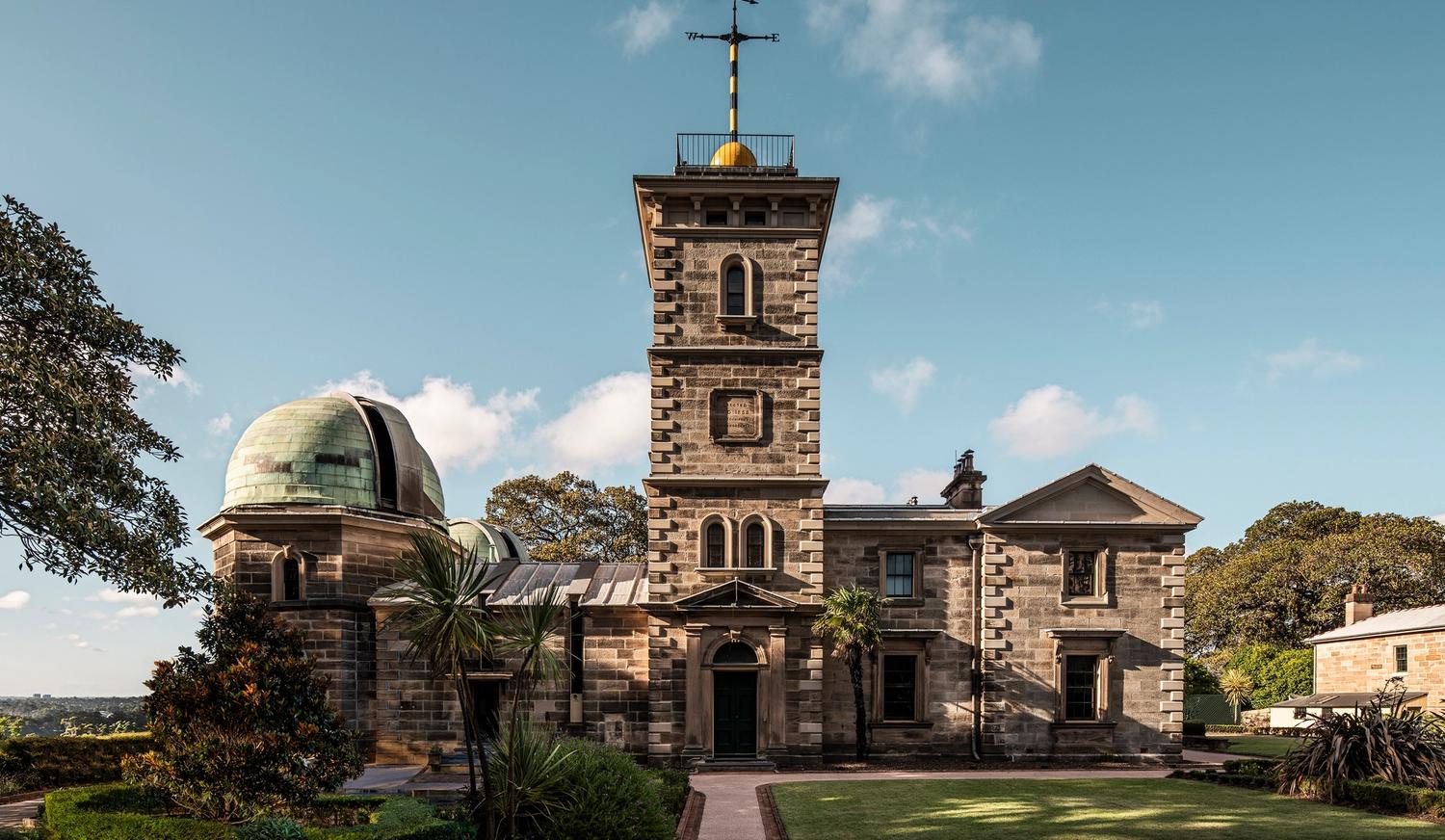
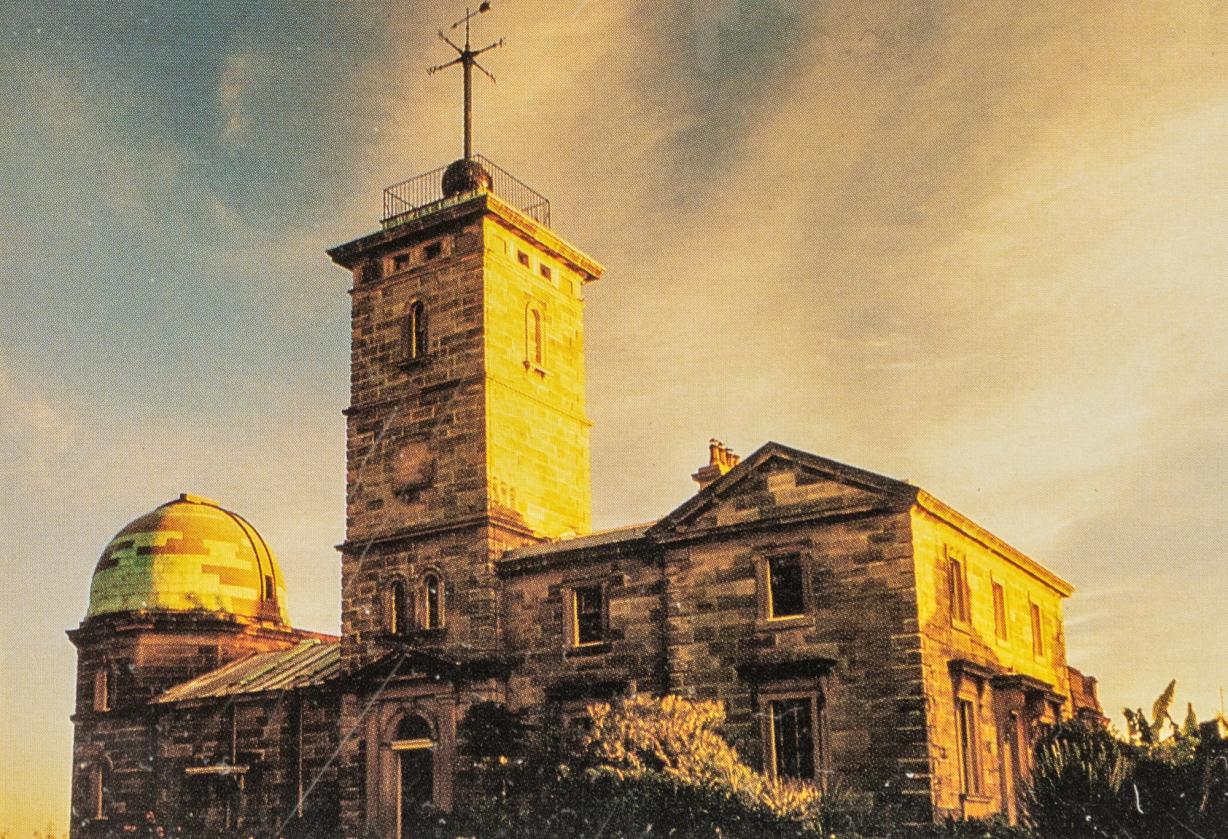
The astronomical star diagonal was used at the Sydney Observatory, Watson Road, Observatory Hill, Sydney, New South Wales, Australia.

 This text content licensed under CC BY-NC.

Description
Optical instrument, astronomical star diagonal, metal / glass, used by Sydney Observatory, made by T Cook and Sons Limited, England, 1897-1922.

An astronomical star diagonal for use with an 11 1/2" refractor. The star diagonal consists of a central brass cylinder containing an angled mirror. There is a hole in the side of the central cylinder into which another brass cylinder has been fixed at a right angle. An additional brass cylinder has been fixed with three screws into the open top of the central cylinder.

Made: T Cooke & Sons Ltd; London, England; 1897 - 1922

Made: T Cooke & Sons Ltd; York, England; 1897 - 1922


Used: Sydney Observatory; Sydney Observatory, Watson Road, Observatory Hill, Sydney, NSW

Owned: Sydney Observatory;
Marks
Text engraved into the base of central cylinder reads 'T. COOKE & SONS LTD / LONDON & YORK'. The number '8' has also been engraved into the base of the central cylinder.
H10295
Production date
1897 - 1922
Height
98 mm
Width
75 mm
Depth
50 mm

 This text content licensed under CC BY-SA.
Acquisition credit line
Ex Sydney Observatory, 1984
This object belongs to:
Sydney Observatory Collection
Subjects
+ Australian culture
+ Astronomy
+ Russell, Henry Chamberlain
+ Sydney Observatory
+ Optics
Short persistent URL
Concise link back to this object: http://from.ph/232251
Cite this object in Wikipedia
Copy and paste this wiki-markup:

{{cite web |url=http://from.ph/232251 |title=Astronomical star diagonal. |author=Powerhouse Museum |accessdate=20 June 2013 |publisher=Powerhouse Museum, Australia}}


Copyright
Images on this site are reproduced for the purposes of research and study only. Whilst every effort has been made to trace the Copyright holders, we would be grateful for any information concerning Copyright of the images and we will withdraw them immediately on Copyright holder's request.
Object viewed 8399 times. Parent IRN: 2143. Master IRN: 2143 Img: 219201 Flv: H:3210px W:2336px SMO:0 RIGHTS:.