
Powerhouse Museum Collection Search 2.53
Category history:
   

Support the Powerhouse with a tax-deductible gift

Make a donation

Make a donation

Make a donation
This object belongs to
Theme containing this object
Scientific Instruments > Microscopes

+ 2010/26/1 Environmental scanning electro...
+ B1805 Microscope "Carl Zeiss", "Jena" (S...
+ 2007/171/1 Binocular microscope, metal /...
+ 2007/171/2 Stereo microscope, 'SDZ-AL', ...
+ 2007/173/1 Microtome, 'Reichert OmS seri...
+ 2007/173/4 Binocular microscope, model E...
+ 2007/173/5 Stereo binocular microscope, ...
+ 2007/173/6 Monocular microscope, with ca...
+ 85/130 Microscope, compound monocular, L...
+ 86/1720 Microscope, Compound Binocular, ...
+ 89/1637 Microscope set, children's, Wond...
+ 86/3366 Tooth Collection: Microscope, bi...
+ H3007 Scintilloscope.(SB). Radium micros...
+ 86/4129 Tooth Collection: Microscope, "B...
+ H5251 Microscope, projecting, Newton & C...
+ H5291 Old vertical Microscope on stand, ...
+ H5292 Microscope, dissecting, Ellis-type...
+ H5317 One small microscope in wooden cas...
+ H5545 Microscope, compound, 'Culpeper ty...
+ H5597 Microscope, with case and accessor...
+ H5598 Pocket microscope in case, metal/g...
+ H5599 Old Microscope - 1897, made by Car...
+ H5600 Microscope, petrological, with acc...
+ H5624 An exact reproduction of the brass...
+ H5640 1 stand microscope with vertical &...
+ H6724 Microscope, binocular, in case, wi...
+ H6725 Binocular microscope, with two obj...
+ H6774 Monocular microscope made by C. Re...
+ H7062 Microscope, Martin's improved, com...
+ H7519 Microscope, made by C. Reichert, W...
+ H7613 Microscope, cabinet type, with rot...
+ H8502 Drum microscope in wooden box with...
+ H8503 1 small stand microscope contained...
+ H8760 1 brass microscope, binocular, lab...
+ H8761 1 Brass Microscope, incomplete. (L...
+ H8961 Microscope, monocular, with case a...
+ H9077 Microscope with accessories, binoc...
+ H9294 Microscope, metallographic,..."Car...
+ H9490 Collection of microscopes and acce...
+ H9494 Microscope, Zeiss (LC)....
+ H9308 Electron microscope, metal / plast...
+ H9869 Compound monocular microscope, Swi...
+ H9870 Compound monocular microscope, T. ...
+ H9871 Compound monocular microscope, Zei...
+ H9872 Compound monocular microscope, Gun...
+ H9875 Microscope, Lieberkuhn type, in ca...
+ H9877 Compound monocular microscope, bra...
+ H9878 Microscope, compound monocular, ca...
+ H9905 Microscope plate reader, binocular...
+ H9913 Microscope, drawtube, pivoting, fo...


Scientific Instruments > Optical instruments

+ 2010/1/184 Optical calibration device wi...
+ 2008/83/1 Stereo-plotting machine, Wild ...
+ 2008/128/1 Optical flat, with case, glas...
+ 2008/128/2 Optical flat, with case, glas...
+ H7464 Collection of optical plastics as ...
+ H9975 Telescope, 3 1/4" refractor with a...
+ H10025 Astronomical equipment, sun diago...
+ H10026 Optical equipment, polarizing eye...
+ H10031 Spectroscope, McClean type, in ca...
+ H10032 Spectroscope eyepiece in storage ...
+ H10033 Optical equipment in storage box,...
+ H10063 Measuring instrument, scaleometer...
+ H10066 Optical instrument, for measureme...
+ H10139 Optical instrument, for measureme...
+ H10140 Optical instrument, for measureme...
+ H10183 Optical instrument, for measureme...
+ H10256 Telescope and tripod, 2" refracto...
+ H10257 Astronomical equipment, telescope...
+ H10272 Reseau in case, glass / metal / l...


Microscope plate reader in case, 1890 - 1917
zoom image
Images: 01 02 03

Object statement
Microscope plate reader in case, metal / glass / wood, used at Sydney Observatory, made by Dollond and Company, Ludgate Hill, London, England, 1890-1917
This microscope plate reader was used at Sydney Observatory in the late 19th century to measure small angles and arcs on photographic plates. These plates had been exposed to the night sky via a telescope as part of a major international research project, the Astrographic Catalogue that mapped the positions of the stars visible form both the northern and southern hemisphere.

Stellar photography began in the mid 1800s. With the development of better equipment, good quality photographic plates could be produced that allowed measurements to be taken from the plate, rather than through the telescope.

Sydney Observatory began producing astronomical photographs from the late 1800s. Government Astronomer H. C. Russell conducted numerous experiments with astronomical photographic equipment, presenting some of his earliest photographs to the Royal Society of New South Wales in 1890. The scientific instruments associated with taking astronomical photographs held an important place at the Observatory. In 1887 Russell commented that "the important place which photography has now assumed as a means of promoting astronomical discovery and research, demands some record should be preserved of the instruments" .

The device uses two very fine parallel wires or threads that can be manipulated by the observer to take very minute measurements. One wire is placed over a viewed object and the other wire is moved by a screw mechanism over the other object, and the distance in between can be measured using the scale on the micrometer. Some micrometers can be attached to a telescope to take direct measurements, while others can be used to take measurements from a photographic plate.

This microscope plate reader remains of national significance due to its pioneering role in Australian science and its association with Australia's earliest astronomers. It is also significant for its association with nineteenth century instruments and their makers.

Reference:
Russell, H. C., Description of the Star Camera at The Sydney Observatory, Alfred James Kent, Government Printer, 1923, p.4

Written by Erika Dicker
Assistant Curator, February 2008.
The instrument was made by Dollond and Company in Ludgate Hill, London, England between 1890 and 1917.

The Dollond workshops in England produced quality precision and scientific instruments over a long period of time in the 19th century. A large number of scientific instruments in museum collections are signed with the Dollond signature; however it can be difficult to know which specific member of the Dollond family would have made the object. As the Dollond firm was so highly respected, numerous instruments were produced by others with misleadingly similar maker's marks such as Dolland.

John Dollond (1706-1761) began his working life as a textile weaver to support his family after the death of his father. He devoted his spare time to the study of mathematics and natural philosophy. Dollond raised his own family and continued in his weaving business, where he was eventually joined by his eldest son, Peter.

Peter Dollond (1730-1820) had adopted his father's passion for science and mathematics and quit the silk trade in the mid 1700s to commence his own business as an optician. He commenced business in 1750 and was only moderately successful until he was joined by his father, John, in 1752. After quitting the weaving trade, John Dollond wasted no time in putting his passion into practice and by 1753 was presenting his micrometer improvements to the Royal Society.

His micrometer, used in astronomy, allowed the user to determine the distance separating two objects observed through a telescope. John Dollond preferred this device to be used with a reflecting telescope, but his son soon adapted the device so it could also be used with a refracting telescope. This instrument is now know as a divided object-glass micrometer, and was one of the most useful instruments for measuring small angles in astronomy. The usefulness of this invention made the Dollond name instantly popular with both amateur and professional astronomers.

John Dollond, and the Dollond name, rose to more fame with his development of the achromatic lens, which corrected chromatic aberration by combining lenses made of different types of glass. This destroyed the surrounding fringe of colours that had previously made the images formed in a refracting telescope indistinct. This development was hugely beneficial to observing telescopes. John Dollond's achromatic lenses were presented to the Royal Society in 1758 , and he was awarded the society's highest award, the Copley Medal, for his achievements.

Through John and Peter Dollond's achievements, the Dollond name became one of prestige and quality in regard to scientific instruments in the mid 1700s. During this time, they were also commissioned to produce precision instruments for the Royal Observatory, which was a huge asset to a maker's name.

John Dollond was granted fellowship of the Royal Society in 1761 , the same year he died from apoplexy (stroke). Peter Dollond continued to work in the business alone, becoming optician to His Majesty and to His Royal Highness the Duke of York in 1763. In 1766 Peter Dollond was joined in the business by his younger brother, John Dollond (2), who left to pursue his own career in 1804.

Peter Dollond's nephew, George Huggins (1774-1852), joined him in business in 1804. George changed his name to George Dollond upon entering the partnership. The new partnership was extremely successful, with the Dollonds being described as the "most prestigious optical instruments makers in Britain" in the early 1800s.

George Dollond was elected to a fellowship of the Royal Society in 1819 and was an active participant in founding the Astronomical Society in 1820.

George Dollond took ownership of the business in 1820, upon the death of his uncle Peter, and was joined by his son George Huggins (2). As his father had done, half a century before him, George Huggins (2) changed his last name to Dollond upon entering the business. Upon George Dollond's (1) death in 1852, the Dollond business was taken over by his son, George Dollond(2).

The following is a list of dates and corresponding workshop addresses, found inscribed on Dollond instruments in museum collections (please note this list may not be totally accurate but can be used as a rough guide):

John and Peter Dollond:
1750 to 1752= Vine Street, Spitalfields, London
1752 to 1763= Golden Spectacles and Sea Quadrant, near Exeter Exchange,
Strand, London.

Peter Dollond
1763 to 1766= at the Sign of the Prisms, London

1766 to 1795= 59 St. Paul's Churchyard, London

1795 to 1804= 35 Haymarket, London

Peter and George Dollond:
1804 to 1820= St Paul's Churchyard, London

George Dollond (1) George Dollond (2)
1820 to 1854= St Paul's Churchyard, London

George Dollond (2)
1854 to 1856= 61 Paternoster Row, London


Reference:
Arthur Thomas Malkin, The Gallery of Portraits with memoirs, Volume 3, London, 1834 pp 12-19
David Brewster, Treatise on the Kaleidoscope, 1819
J. A. Bennet, The Divided Circle, A history of instruments for astronomy navigation and surveying, Christies Ltd, England, 1987
Myles W Jackson, Spectrum of Belief, Joseph Von Fraunhofer and the craft of precision optics, MIT Press, USA, 2000
Webster Signature Database, available at: http://historydb.adlerplanetarium.org/signatures/
Julian Holland's work on scientific instrument makers, available at:
www.usyd.edu.au/museums/whatson/exhibitions/kater1.shtml

Written by Erika Dicker, Assistant Curator, November 2007.
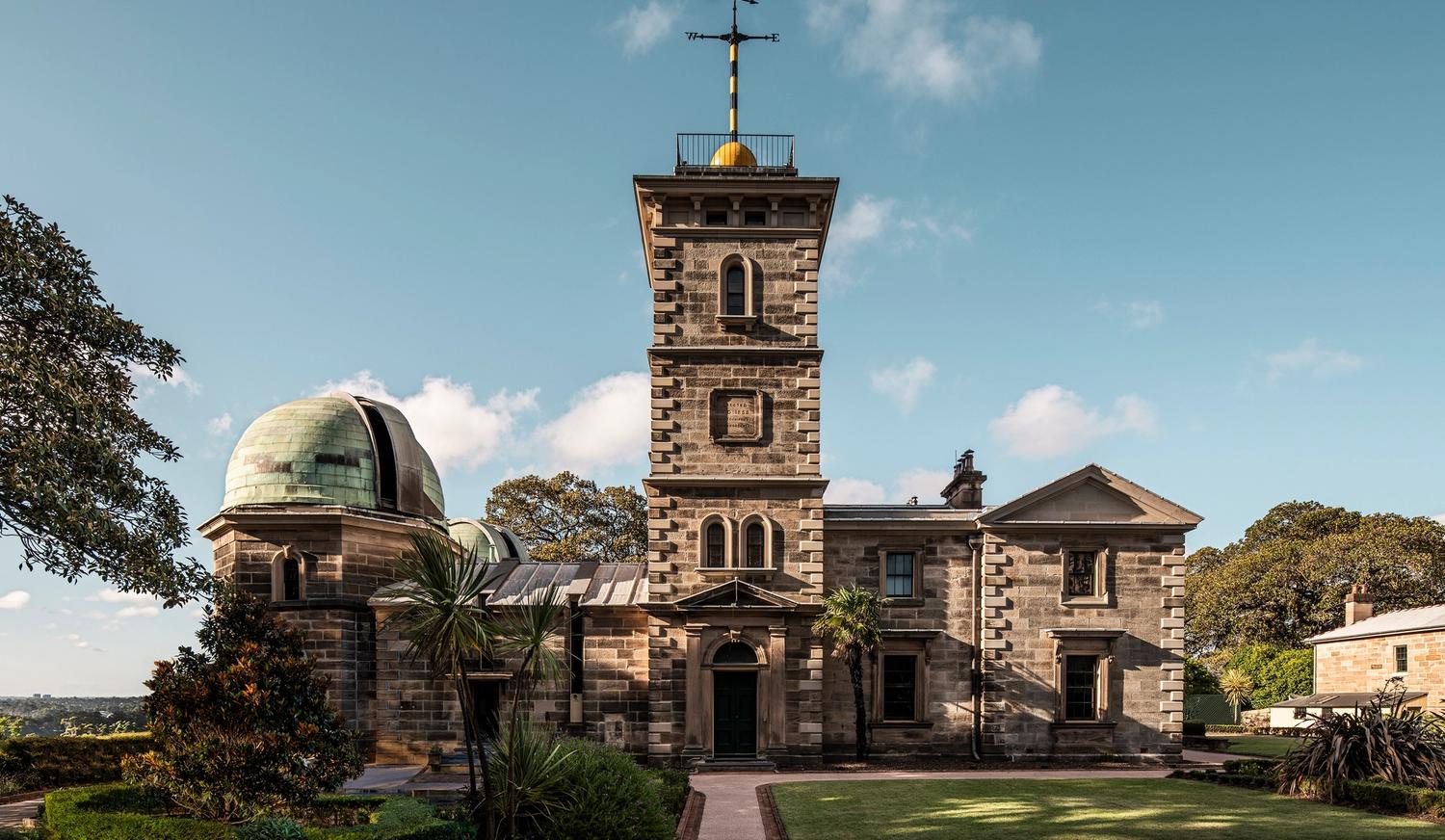
The microscope plate reader was used at Sydney Observatory, Watson Road, Observatory Hill, Sydney, New South Wales, Australia.

 This text content licensed under CC BY-NC.

Description
Microscope plate reader in case, metal / glass / wood, used at Sydney Observatory, made by Dollond and Company, Ludgate Hill, London, England, 1890-1917.

A plate reader consisting of a brass microscope with an attached micrometer. The microscope is fixed to a brass column that screws into a circular stand. The microscope and stand fit in a purpose-made polished wooden case with a hinged lid. The maker's name and details are displayed on a paper label inside the lid of the box

Sydney Observatory stock number 122.
Made: Dollond & Co; London, England; 1890 - 1917

Used: Sydney Observatory; Sydney Observatory
H10060
Production date
1890 - 1917

 This text content licensed under CC BY-SA.
Acquisition credit line
Source unknown
This object belongs to:
Sydney Observatory Collection
Subjects
+ Astronomy
+ Optics
+ Sydney Observatory
Short persistent URL
Concise link back to this object: http://from.ph/230710
Cite this object in Wikipedia
Copy and paste this wiki-markup:

{{cite web |url=http://from.ph/230710 |title=Microscope plate reader in case |author=Powerhouse Museum |accessdate=19 May 2013 |publisher=Powerhouse Museum, Australia}}


Copyright
Images on this site are reproduced for the purposes of research and study only. Whilst every effort has been made to trace the Copyright holders, we would be grateful for any information concerning Copyright of the images and we will withdraw them immediately on Copyright holder's request.
Object viewed 6769 times. Parent IRN: 2143. Master IRN: 2143 Img: 219345 Flv: H:2336px W:3304px SMO:0 RIGHTS:.