




Powerhouse Museum Collection Search 2.53
Category history:
   

Support the Powerhouse with a tax-deductible gift

Make a donation

Make a donation

Make a donation
This object belongs to
Theme containing this object

Shortt regulator clock, 'No. 8'
zoom image

Object statement
Sidereal regulator clock, Shortt 'No. 8', master and slave units, metal / glass / wood, designed by W. H. Shortt, manufactured by the Synchronome Company Ltd, 32 and 34 Clerkenwell Rd, London, England, 1925-1927, used at the Sydney Observatory, Observatory Hill, Sydney, Australia
Free pendulum clocks were introduced to the public in 1925 and almost immediately free-pendulum clocks made by Shortt were installed in many observatories around the world. The first to install one was Greenwich Observatory after the successful trials conducted by R. A. Sampson at Edinburgh Observatory. Shortt 'No.3', was adopted as the standard for sidereal time in January 1925.

Shortt clocks are in fact made up from two separate clocks: a master with a free pendulum and a secondary or slave to maintain the pendulum and count its beats. One of the reasons for their Shortt's success was their ability to detect slight variations in the Earth's rotation for the first time. The pendulum is made from a nickel steel alloy called 'invar' which is resistant to temperature change. This alloy was first made by the Swiss physicist Dr. Charles Guillaume in 1899.

Sydney Observatory's regulator clock Shortt 'No. 8' is among the earliest timepieces produced by the company. Its early production number also reveals Sydney, along with Melbourne who had installed Shortt 'No. 5' by March 1926, was an early adopter of free-pendulum technology. A second Shortt clock 'No. 11' was installed at Greenwich in 1927 suggesting this clock was manufactured before this date.

This clock is of national significance as it was used for keeping standard time in New South Wales from 1927 until the installation of atomic clocks at the Observatory. It is also of international significance for its association with early developments in electrical horology by the one of the most significant makers of these instruments.

Geoff Barker, Assistant Curator, Total Asset Management Project, March, 2008

References
Clark, Barry, 'Melbourne Observatory: new inventories of associated items, status of the site, and proposals for heritage conservation and development', version 3.3, Astronomical Society of Victoria, 2006
Hope-Jones, F., 'Electrical Timekeeping', N.A.G. Press, London, 1931
Stevenson, Roger, 'Mechanical and Electrical Clocks at Greenwich', appendix three in Howse, Derek, 'Greenwich Time and the Discovery of Longitutde', Oxford University Press, Oxford, England, 1980

 This text content licensed under CC BY-NC.

Description
Sidereal regulator clock, Shortt 'No. 8', master and slave units, metal / glass / wood, designed by W. H. Shortt, manufactured by the Synchronome Company Ltd, 32 and 34 Clerkenwell Rd, London, England, 1925-1927, used at the Sydney Observatory, Observatory Hill, Sydney, Australia

A free pendulum Shortt No. 8 sidereal time master clock with Synchronome slave clock. The master clock consists of a copper cylinder with a glass bell jar that fits over the open top of the cylinder creating a vacuum for the free pendulum to function in. The pendulum with an attached bob hangs inside the cylinder held by a mechanical mounting frame. Mechanical components for the free pendulum accompanying the master clock. The Synchronome long case slave clock consists of a rectangular wooden box with a hinged door at the front through which a pendulum with an attached bob can be seen. The door has a circular glass panel at the top allowing a large circular dial to be seen. This dial counts seconds and is marked from '5' to '60'. Below this is rectangular glass panel through which two smaller clock dials can be seen. The clock dial on the left gives the time according to the free pendulum or master clock while the clock dial on the right gives the time according to the slave pendulum. Accompanying the clock are two sets of keys, a thermometer and two typed instruction booklets.

Observatory stock number 22.

Designed: Shortt, William Hamilton; England

Made: The Synchronome Co. Ltd; London, England; 1921 - 1924


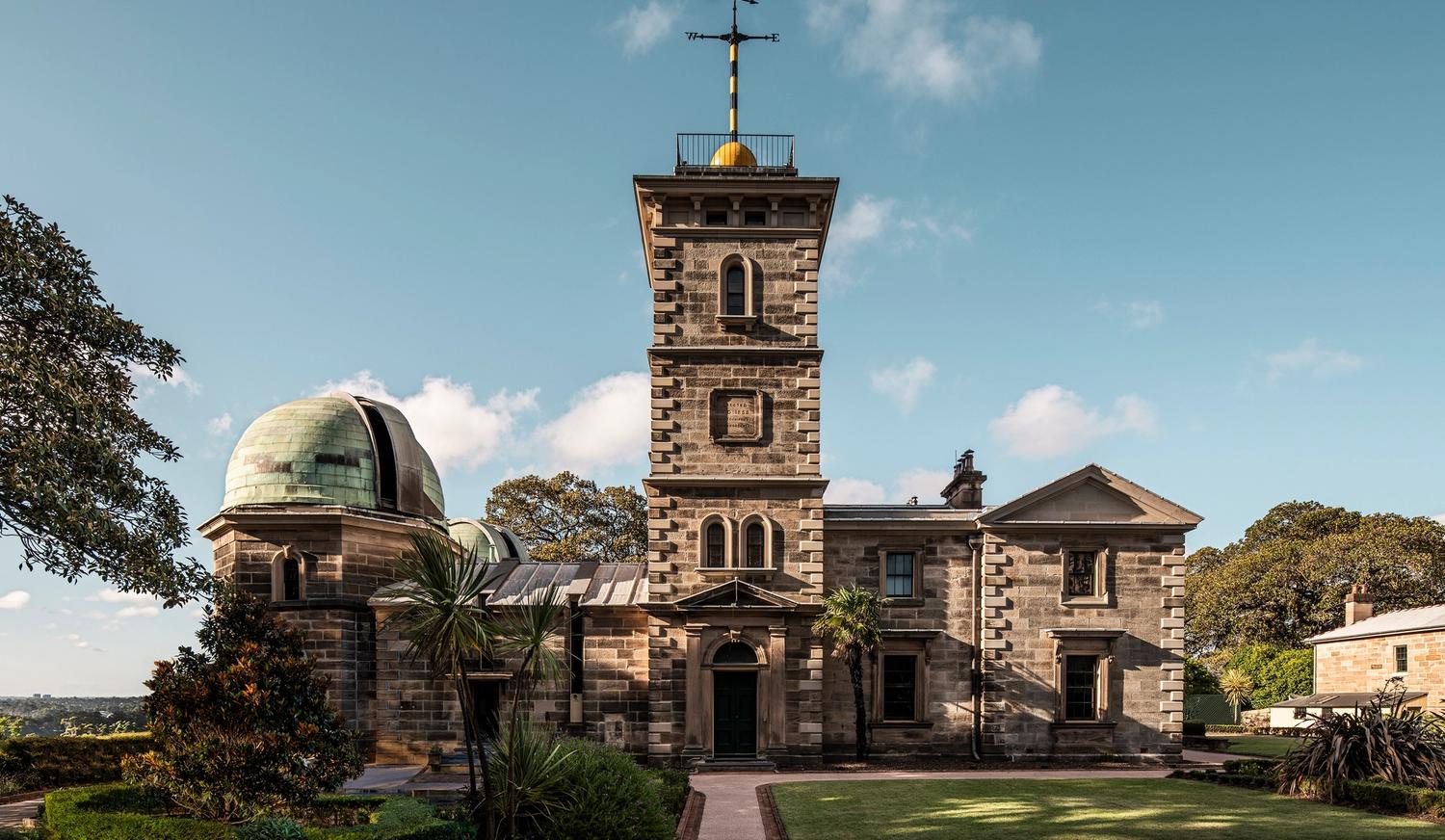
Used: Sydney Observatory;

Owned: Sydney Observatory;
H10010

 This text content licensed under CC BY-SA.
This object belongs to:
Sydney Observatory Collection
Subjects
+ Timekeeping
+ Sydney Observatory
+ Horology and astronomy
Short persistent URL
Concise link back to this object: http://from.ph/230534
Cite this object in Wikipedia
Copy and paste this wiki-markup:

{{cite web |url=http://from.ph/230534 |title=Shortt regulator clock, 'No. 8' |author=Powerhouse Museum |accessdate=26 May 2013 |publisher=Powerhouse Museum, Australia}}


Copyright
Images on this site are reproduced for the purposes of research and study only. Whilst every effort has been made to trace the Copyright holders, we would be grateful for any information concerning Copyright of the images and we will withdraw them immediately on Copyright holder's request.
Object viewed 5455 times. Parent IRN: 2143. Master IRN: 2143 Img: 219159 Flv: H:3977px W:2809px SMO:0 RIGHTS:.