

Powerhouse Museum Collection Search 2.53
Category history:
   

Support the Powerhouse with a tax-deductible gift

Make a donation

Make a donation

Make a donation
This object belongs to
Animal Samples and Products > Specimens

+ D6602 Log of screw pine Pandanus peduncu...
+ D8456 Precipitated Gum from Western Aust...
+ 87/1556 Wool, extrafine saxon (merino), ...
+ F22 Wool specimen, stud ewe, bred by Geo...
+ F28 Wool specimen, stud ram, bred by Dar...
+ F29 Wool specimen, stud ram, bred by Dar...
+ F30 Wool specimen, stud ram, bred by Dar...
+ F32 Wool specimen, stud ewe, bred by Dar...
+ F33 Wool specimen, stud ewe, bred by Dar...
+ F34 Wool specimen, ewe, bred by Darling ...
+ F35 Wool specimen, ewe, bred by Darling ...
+ F36 Wool specimen, ewe, bred by Darling ...
+ F37 Wool specimen, ewe, bred by Darling ...
+ F39 Wool specimen, ewe, bred by Darling ...
+ F45 Wool specimen, hogget, bred by Darli...
+ F46 Wool of hogget, progeny of Tooralie ...
+ F48 Wool of hogget, progeny of Tooralie ...
+ F49 Wool of hogget, progeny of Tooralie ...
+ F50 Wool specimen, hogget, bred by Darli...
+ F51 Wool specimen, ewe hogget, bred by D...
+ F53 Wool specimen, ewe hogget, bred by D...
+ F55 Wool specimen, hogget progeny of Rod...
+ F56 Wool specimen. ewe, bred by Darling ...
+ F57 Wool specimen. ewe, bred by Darling ...
+ F61 Wool specimen, ewe, bred by Darling ...
+ F65 Wool specimen, bred by Darling Downs...
+ F66 Wool specimen, bred by Darling Downs...
+ F67 Wool specimen, bred by Darling Downs...
+ F69 Wool specimen, bred by Darling Downs...
+ F70 Wool specimen, bred by Darling Downs...
+ F72 Wool specimens (2), ram, bred by Dar...
+ F73 Wool specimen, stud ram, bred by Dar...
+ F74 Wool specimen, stud ram, bred by Dar...
+ F75 Wool specimen, ewe, bred by Darling ...
+ F76 Wool specimens (2), ewe, bred by Dar...
+ F77 Wool specimen, ewe, bred by Darling ...
+ F78 Wool specimen, ewe, bred by Darling ...
+ F79 Wool specimen, lamb, bred by Darling...
+ F80 Wool specimen, lamb, bred by Darling...
+ F81 Wool specimen, lamb, bred by Darling...
+ F82 Wool specimen, lamb, bred by Darling...
+ F83 Wool specimen, lamb, bred by Darling...
+ F84 Wool specimen, six-tooth ewe, breede...
+ F87 Wool specimen, stud ram, bred by T D...
+ F88 Wool specimen, ram, bred by T Dowlin...
+ F89-1 Wool specimen, ram, bred by T Dowl...
+ F90 Wool specimens (2), winner of 'Grand...
+ F90-1 Wool specimen, winner of 'Grand Ch...
+ F91 Wool specimens (2), ram, bred by T D...
+ F91-1 Wool specimen, ram, bred by T Dowl...


Animal Samples and Products > Wool specimens

+ 87/1556 Wool, extrafine saxon (merino), ...
+ 2004/51/2 Wool sample and certificate, f...
+ F2 Wool (2), stud rams, station bred, fr...
+ F3 Wool specimens (3), stud rams, statio...
+ F4 Wool, stud rams, station bred, from E...
+ F5 Wool, stud rams, station bred, from E...
+ F6 Wool, stud rams, station bred, from E...
+ F7 Wool, stud rams, station bred, from E...
+ F8 Wool specimen, stud ram, bred by Geor...
+ F9 Wool, stud rams, station bred, from E...
+ F10 Wool, stud rams, station bred, from ...
+ F12 Wool, stud rams, station bred, from ...
+ F13 Wool, stud rams, station bred, from ...
+ F14 Wool, stud rams, station bred, from ...
+ F15 Wool specimen, stud ewe, bred by Geo...
+ F18 Wool, stud ewe, station bred, from E...
+ F20 Wool (3), stud ewe, station bred, fr...
+ F22 Wool specimen, stud ewe, bred by Geo...
+ F28 Wool specimen, stud ram, bred by Dar...
+ F29 Wool specimen, stud ram, bred by Dar...
+ F30 Wool specimen, stud ram, bred by Dar...
+ F32 Wool specimen, stud ewe, bred by Dar...
+ F33 Wool specimen, stud ewe, bred by Dar...
+ F34 Wool specimen, ewe, bred by Darling ...
+ F35 Wool specimen, ewe, bred by Darling ...
+ F36 Wool specimen, ewe, bred by Darling ...
+ F37 Wool specimen, ewe, bred by Darling ...
+ F39 Wool specimen, ewe, bred by Darling ...
+ F45 Wool specimen, hogget, bred by Darli...
+ F46 Wool of hogget, progeny of Tooralie ...
+ F48 Wool of hogget, progeny of Tooralie ...
+ F49 Wool of hogget, progeny of Tooralie ...
+ F50 Wool specimen, hogget, bred by Darli...
+ F51 Wool specimen, ewe hogget, bred by D...
+ F53 Wool specimen, ewe hogget, bred by D...
+ F55 Wool specimen, hogget progeny of Rod...
+ F56 Wool specimen. ewe, bred by Darling ...
+ F57 Wool specimen. ewe, bred by Darling ...
+ F61 Wool specimen, ewe, bred by Darling ...
+ F65 Wool specimen, bred by Darling Downs...
+ F66 Wool specimen, bred by Darling Downs...
+ F67 Wool specimen, bred by Darling Downs...
+ F69 Wool specimen, bred by Darling Downs...
+ F70 Wool specimen, bred by Darling Downs...
+ F72 Wool specimens (2), ram, bred by Dar...
+ F73 Wool specimen, stud ram, bred by Dar...
+ F74 Wool specimen, stud ram, bred by Dar...
+ F75 Wool specimen, ewe, bred by Darling ...
+ F76 Wool specimens (2), ewe, bred by Dar...


Wool specimen from a stud ram, 1889
zoom image
Images: 01 02 03

Object statement
Wool specimen, stud ram, bred by George Clark, East Talgai, Hendon, Darling Downs, Queensland, Australia, 1889
The wool collection held by the Powerhouse Museum contains thousands of wool samples collected between 1804 and 2003. These samples provide a record of wool growing in Australia. The different fleeces reflect the breeding programs and environmental conditions under which the fleeces were grown and, as such, they provide a valuable history of the areas of Australia in which sheep were grazed.

Sheep were introduced into Australia in 1788 from Cape Town in South Africa. Since then sheep from other countries, including the Spanish Merino were imported into Australia and selectively crossbred. Careful crossbreeding, paying particular attention to the impact of the environment on both animal and fleece, led to the evolution of the Australian Merino. It is an excellent example of the engineering, through selective breeding, of a domestic animal. Wool went on to become the mainstay of the Australian Economy from 1807 to 1960.

This particular wool specimen came from a sheep bred at East Talgai station in the Darling Downs region of Queensland. East Talgai was an influential sheep station established in 1867 with ewes and rams from Victoria. These sheep did not prosper well and subsequently Tasmanian-bloodlines were introduced. One of the Tasmanian rams chosen to breed from was the famous sire Sir Thomas which proved hugely beneficial to the station. The quality of the station's stock became so popular that, by the 1880s, East Talgai was sending stud rams back to the best of the Tasmanian studs and into New South Wales and Victoria. By 1883 it was turning out more than 2000 rams a year, which qualifies it as one of Australia's great and influential studs in the late nineteenth century.

Erika Dicker
Assistant Curator
September 2007

Reference:
Charles Massy. 'The Australian Merino', Penguin Books Australia Ltd, Victoria, 1990.
The wool was produced in 1889 by George John Edwin Clark in East Talgai, Hendon, Darling Downs, Queensland, Australia.
In 1890 Alfred Hawkesworth, honorary wool-classer to the Museum, noted the following about this specimen:

A useful type of combing; nice length of staple with good quality, dense, bright, silky, soft, elastic; beautifully serrated, light even tips, giving very noil, desirable condition. Spinning quality 84s, value 12d per lb. (Alfred Hawkesworth's valuation)

This is a most extensive collection (F1-F27), and interesting, especially taking into consideration the great disadvantages, under which the wool was grown, having passed through a nine months drought. I find that the wool retains its quality, lustre and density, but naturally has not that lengthy staple found in specimens sent some time since to the Museum.

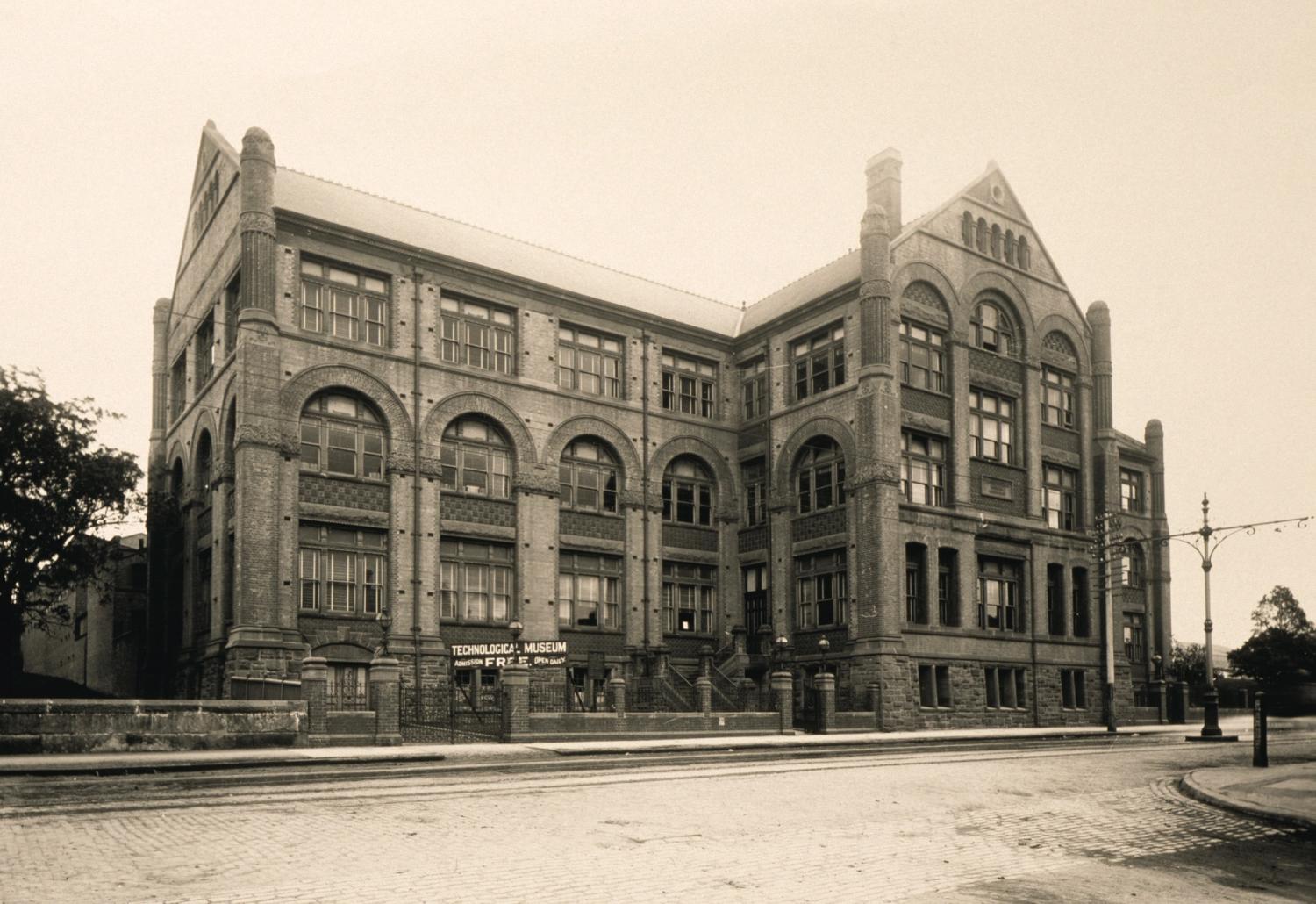
Alfred Hawkesworth, Technological Museum, Sydney, Descriptive Catalogue No 1. Raw wools and specimens to illustrate the woollen manufacture. Sydney Government Printer. 1890.

Originally donated by George Clark, East Talgai, Hendon, Darling Downs, Queensland, 1889

This wool specimen is part of the Bill Montgomery Wool Collection which consists of approximately 7000 samples. In the older part of the collection there are 5000 samples from Australian sheep fleeces grown between 1856 and 1906. The samples were collected by the Museum at a time when scientific research was prominent in the Museum's activities. In 1979, when the Museum's focus changed, most of its wool collection was transferred to the teaching collection of Mr Bill Montgomery, a wool classing teacher at Newcastle Technical College. When Bill retired from the College, the collection was again in danger of being thrown away. He took the entire collection home and stored it in his garage for 15 years. His Collection also contains approximately 1500 wool samples grown between 1950 and 2000 and collected by Bill himself. It includes 147 examples of faults and stains occurring in Australian flocks, 20 pigmented wools and 33 rare and extinct breeds from around the world. The Museum purchased the entire collection in 2003. Bill Montgomery died on 7th July, 2007.

 This text content licensed under CC BY-NC.

Description
Wool specimen, stud ram, bred by George Clark, East Talgai, Hendon, Darling Downs, Queensland, Australia, 1889.

Wool specimen from a station bred stud ram. There is a blue ribbon tied around the middle of the specimen and a small green tag attached to the ribbon.

This sample of wool was tested in June 2007 by the Interactive Wool Group. They used the OFDA2000 instrument for fleece testing. The following are the results for this specimen:

Microns: 17.3 microns (3 Standard Deviation)
(average fibre diameter)

Staple length: 45mm

Mean fibre curvature: 115.2 Dg/mm
(A measurement in degrees
per mm related to
crimp frequency)

Comfort Factor: 100 %
(The % of fibres equal
to or less than 30 microns)

A second sample was taken from this specimen:

Microns: 19.4 microns (4.3 Standard Deviation)
(average fibre diameter)

Staple length: 75 mm

Mean fibre curvature: 101.9 Dg/mm
(A measurement in degrees
per mm related to
crimp frequency)

Comfort Factor: 98.4 %
(The % of fibres equal
to or less than 30 microns)

Made: Clark, George John Edwin; Darling Downs, Queensland; 1889
Marks
Handwritten text on tag reads 'F1 / G Clarke (sic) Esq / East Talgai / Q'land' and on reverse 'No 1 1888 / Stud Ram'.
F1
Production date
1889
Width
110 mm
Depth
25 mm

 This text content licensed under CC BY-SA.
Acquisition credit line
Purchased 2003 (originally gift of George Edwin Clark, 1891)
This object belongs to:
Bill Montgomery Vintage Wool Collection
Subjects
+ Agriculture
+ Sheep farming
+ Wool Industry
+ Livestock breeding
Short persistent URL
Concise link back to this object: http://from.ph/228965
Cite this object in Wikipedia
Copy and paste this wiki-markup:

{{cite web |url=http://from.ph/228965 |title=Wool specimen from a stud ram |author=Powerhouse Museum |accessdate=26 May 2013 |publisher=Powerhouse Museum, Australia}}


Copyright
Images on this site are reproduced for the purposes of research and study only. Whilst every effort has been made to trace the Copyright holders, we would be grateful for any information concerning Copyright of the images and we will withdraw them immediately on Copyright holder's request.
Object viewed 2537 times. Parent IRN: 2139. Master IRN: 2139 Img: 180672 Flv: H:2564px W:3780px SMO:0 RIGHTS:.