





Object statement
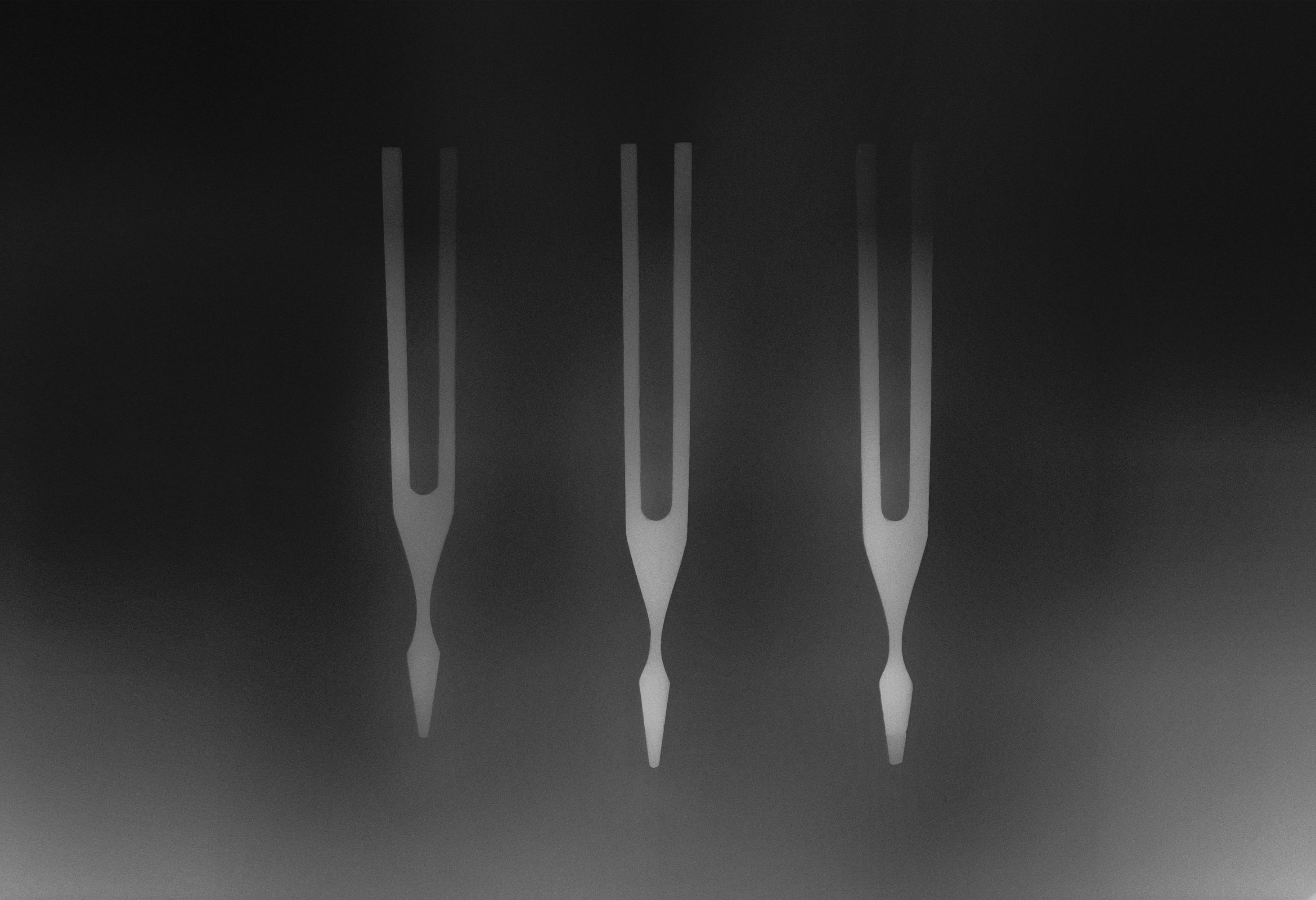
Umbrella handles (20), horn / mother of pearl / metal, maker unknown, Australia , 1890-1920
Plastics have been described as "materials that can be moulded or shaped into different forms under pressure or heat." In the twentieth century the move away from natural raw materials to synthetically produced plastics changed the way objects were produced, designed and used.
Before the arrival of synthetic resins natural plastics such as amber, horn, tortoiseshell, bitumen, shellac, gutta-percha and rubber were used to mould and manufacture artifacts. Horn was the most used of these products. As it is prone to decay in the ground little is known of its pre-history but by 1200 horn making appears in European records. Horn was a popular raw material because it could be heated and moulded and the search to mould products quickly and cheaply rather than carve them became the prime motivating force behind the development of plastics.
Horn differs from ivory, (tusks, teeth and bone) as it is made up of the keratinous hard tissue which also creates claws, hooves, hair and baleen in whales. The most frequently used of these by early European manufacturing industries were horn and baleen. Horn is found on artiodactyls (even toes ungulates) and is not to be confused with antlers which are the direct outgrowth of bone.
Horn grows around a bony core that needs to be separated before it can be worked and the most common way of doing this was to leave the severed horns in water and allow the connecting membrane to rot. As a result the horn trade was not for the faint hearted and in the 1700s the smell of rotting horn was offensive enough to ensure 'Horners' resided outside the city walls.
In the 1600s London 'Horners' began to export worked and un-worked horn from America, India, and America to Europe. Much of this horn was split into thin layers or leaves which were used as windows in lanterns or lant-horns as they were originally known. Horn was also used to make combs: buttons, fans, spoons, drinking horns, powder horns, window panes, and umbrella handles.
It was a popular raw material because it could be heated and moulded into a range of products as well as carved and dyed. Moulded products were faster and more economical to produce than carved ones. For this reason of horn was pivotal to the later development of plastics in Europe as the methods used to shape horn and tortoiseshell were adapted in the search for more synthetic products.
Umbrellas with some form of fabric covered frame to protect people against sun and rain can be found in ancient cultures around the globe. These umbrella handles are all European, probably from between 1850 to 1900.
In the Medieval period ceremonial umbrellas were used by catholic popes, and during the Renaissance parasols were introduced as a fashion accessory but it sometime between 1685 and 1705 that the waterproof umbrella took off in Europe. English church wardens were early adopters of the umbrella which were used to protect the minister while performing a funeral service. In France commercial manufacture of folding parasols by traders like Marius of Paris started around 1700 and an English portrait of the Duchess of Bedford painted in 1730 shows her protected by a conical umbrella.
From 1750 to 1800 the umbrella established itself as a practical household item. Over this period heavy and often leaky umbrellas were replaced with lighter designs with more efficient folding mechanisms.
By 1874 'Knights Mechanical Dictionary' states that the manufacture of the umbrella saw the division of labour taken to a high degree of precision. "In preparing an ordinary umbrella-stick it passes through 19 separate processes or movements, each of the ribs requires 13 distinct manipulations, making 104 for the 8 ribs. Weighing the ribs, to give them an equal flexure, requires 8 more transfers from hand to hand, and threading the ribs to the stretchers brings up the total series of operations required for the frame to nearly 150."
By 1850 the image of the umbrella as a ladies item had been tempered with a range of etched bone and tusk handles and dark silk covers. English manufacturers were able to take advantage of whalebone, ivory and horn from its colonies as well as the flourishing textile industry. In 1849 Samuel Fox began making steel ribs of tubular steel which would replace whalebone and by 1851 London had around 1300 workers making umbrellas many of whom were women.
References
MacGregor, A., 'Bone, Antler, Ivory and Horn: the technology of skeletal materials since the Roman period', Barnes and Noble Books, New Jersey, 1985.
Mossman, S., (ed.), Early Plastics; perspectives, 1850-1950, Leicester University Press, London, 1997
Crawford, T. s., 'A History of the Umbrella', David and Charles, Devon, England, 1970
Schaverien, A., 'Horn, its History and its Uses', Everbest Printing Co., 2006
Mossman, S., Morris, P. J. T., (eds.), 'The Development of Plastics', Royal Society of Chemistry, Cambridge, 1993
Knight, E., H., (ed), 'Knights American Mechanical Dictionary', Vol 1, J.B. Ford and Company, New York, 1874