
Object statement
Ship model, working scale model of mail and passenger paddle steamer "Scotia" (LC). ...finished in white and black with red and black funnels, mounted on stand; part of A A Stewart Collection (OF).
The "Scotia" was the last ocean going paddle steamer in the world. She held the Blue Riband in 1863 for the fastest westbound trans-Atlantic voyage. At the time of her launch in 1861, she was the second largest ship in the world, after the "Great Eastern". However, her limited cargo space and heavy coal consumption rendered her uneconomic, so she was eventually sold and refitted as a propeller driven cable layer .She was used successfully in this role for 25 years until finally wrecked on a reef near Apra Harbour, Guam in 1904.
This model is a part of the A. A. Stewart collection of ship, mechanical, and railway models acquired by the Powerhouse Museum over nearly 30 years from 1938 to 1963. Albyn A. Stewart was a trained engineer fascinated by engineering models and he constructed some of those in the collection. Others however were brought from amateur and commercial modellers at great expense to Stewart who travelled regularly to England to seek out models. In January 1938, Percival Marshall, the editor of 'The Model Engineer' England's premiere modelling magazine devoted editorial space to the collection where he stated that "Mr. Stewart has been fortunate in acquiring some excellent examples of both screw and paddle marine engines of considerable value as records of real prototype practice."
In April of the same years he expanded his comments on the collection by saying, "As a trained engineer himself, his judgement of the technical merits of a model is very sound, and I should imagine that his collection is now the finest of its kind in Australia, in private hands. Many of the models are undoubtedly worthy of careful preservation, and I hope that they will eventually find a suitable resting place in one or other of the Australian national museums."
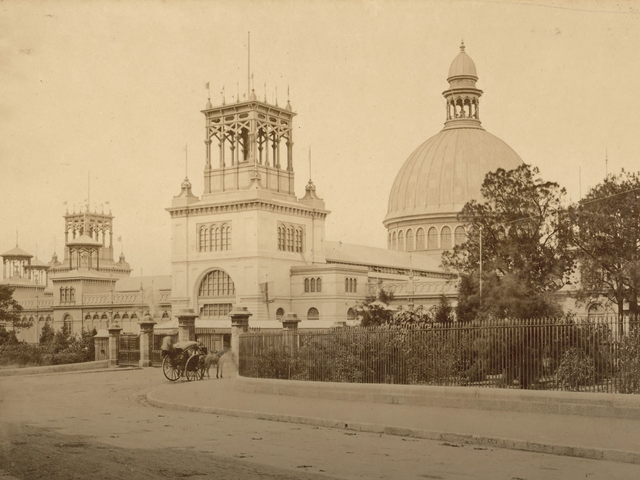
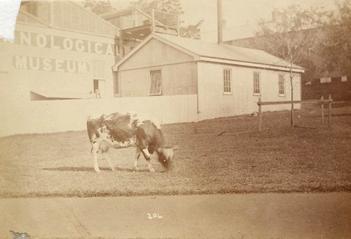
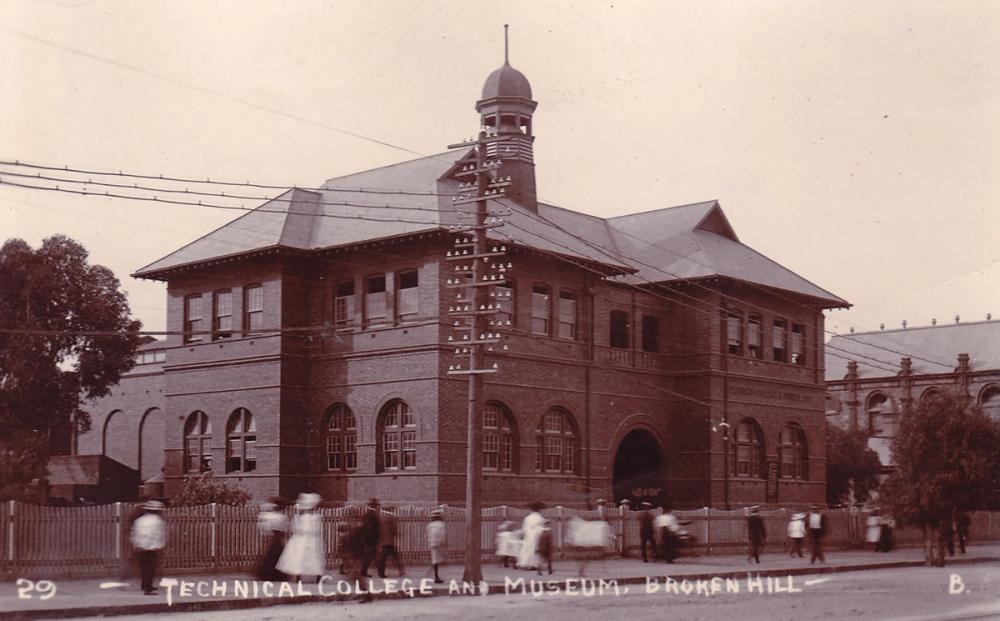
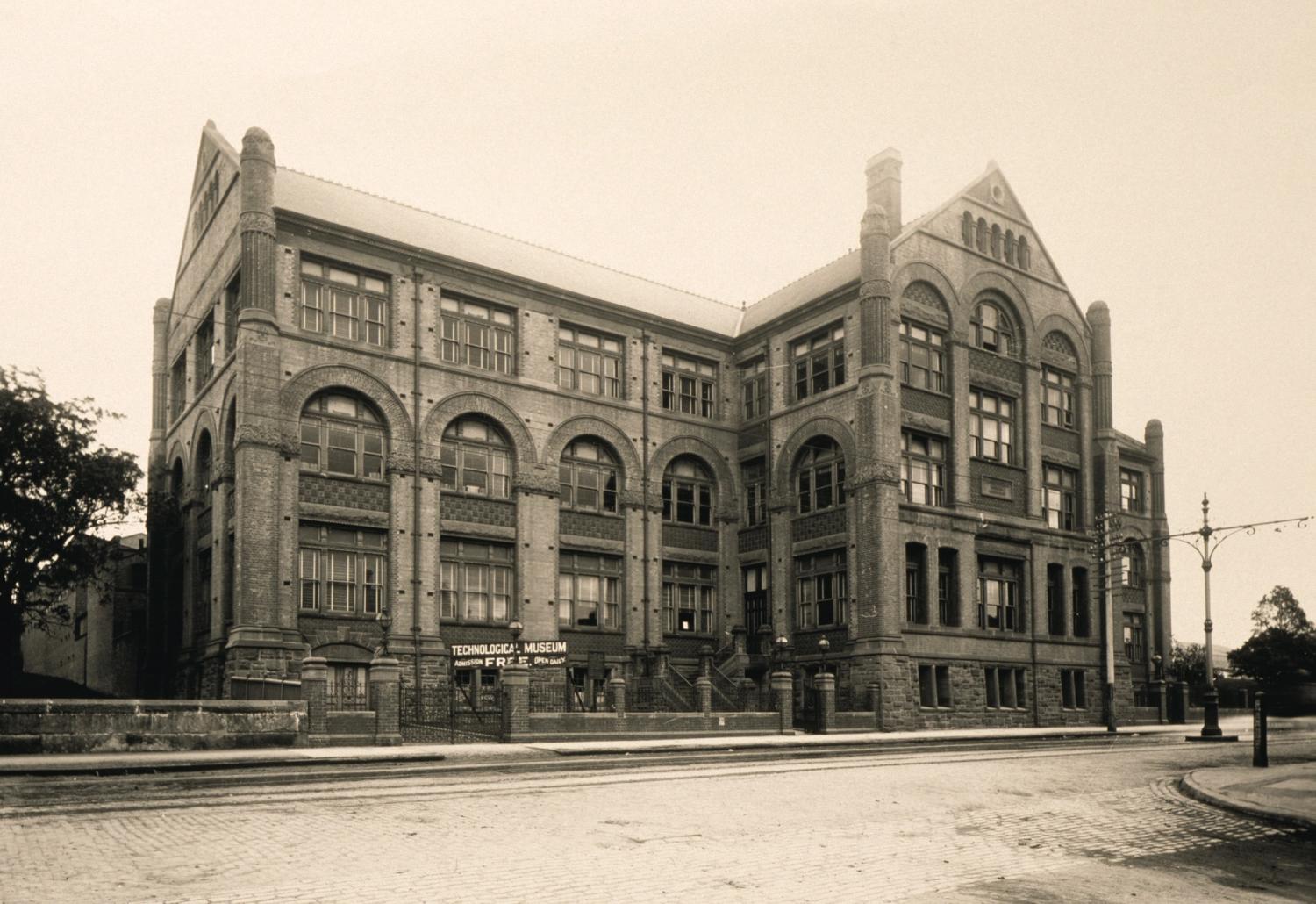
Stewart was first contacted by the Technological Museum, as the Powerhouse Museum was then known, in 1933. The then Director/Curator A. R. Penfold immediately recognised the importance of the engineering models and in 1935 began to loan items for display. Penfold expanded the area available for displaying the models as they were seen as instructive for students at the adjacent Technical College as they were for the general public.
In early 1938 Stewart's company 'Lymdale Ltd.' which owned most of the models was approached about the purchase of a large part of the collection. Stewart was appointed to the Advisory Board of the Museum and in July 1938 it began to purchase the models it had loaned as well as the best examples in the rest of the collection. The cost of this was estimated at over 3000.00 pounds. By 1943 the museum was still acquiring material from the collection and the Advisory Committee made a special appropriation request to the Minister of Education. "In view of the advantage of retaining a collection intact, and the national asset which the museum possesses, the committee recommends the purchase of the remainder of the Stewart collection offered at approximately 2,400. This sum was approved and between 1943 and 1945 around 80 more models were purchased. Apart from the monetary limitations the acquisition was spread over a number of years because some of Stewart's models needed to be finished before they could be sold.
The high costs reflected the quality of the models. Many of the working steam engines are one-off examples hand crafted by amateur modellers over the course of years. The same is true of some of the ship and locomotive models many of which are made to exact scale and include working parts. The models were carefully collected by Stewart who collected as much for posterity as he did for personal interest. Once contacted by the museum he deliberately sought models which would fill historical and technological gaps and as a result the collection is one of the most significant in still extant in Australia. A. A. Stewart died in 1961.
The museum purchased this model in 1938.
Geoff Barker, March, 2007
References
Marshall, Percival, 'The Model Engineer ', London, April 29, 1937
Marshall, Percival, 'The Model Engineer ', London, May, 27, 1937
Marshall, Percival, 'The Model Engineer', London, January, 27, 1938
Marshall, Percival, 'The Model Engineer ', London, April, 14, 1938
Chalmers, A. Mar, 'The Model Engineer in Australia and New Zealand, Melbourne, January, 1939
Davison, G., Webber, K., 'Yesterday's Tomorrows; the Powerhouse Museum and its precursors 1880-2005', Powerhouse Publishing, 2005
Lavery, B. and Stephens, S., 'Ship Models; their purpose and development from 1650 to the present', Zwemmer, London, 1995
The RMS "Scotia", 3871 gross tons, was built by Robert Napier & Sons, Glasgow, for the Cunard Line and was launched 25th June 1861.When launched, she was the second largest ship in the world after the "Great Eastern". Her construction was state-ot-the-art for her day with seven watertight compartments, a double bottom, a reinforced forward bulkhead and buoyancy chambers. She was powered by a twin -cylinder (100" diameter) 4000 hp side-lever engine driving twin paddles. Steam at 20 lb. pressure was supplied by eight boilers with 40 furnaces, daily consuming 159 tons of coal . The "Scotia" won the "Blue Riband" in 1863 for the fastest westbound trans-Atlantic voyage. She was the last ocean going paddle steamer before being superceded by propeller driven ships.
The "Scotia" was one of the most luxurious vessels of her time; she carried 273 first class passengers and 50 second class but no steerage class passengers. However, limited cargo space and heavy consumption of coal made her uneconomic. She was withdrawn from passenger liner service in1875 and sold to the Telegraph Construction and Maintenance Company which converted her to twin screws and refitted as a cable layer. In 1896, she suffered an explosion off Plymouth that destroyed her fore-part. She was only saved by the strength of her construction. Repaired, "Scotia" was sold in 1902 to the Commercial Pacific Cable Company. On 11th March 1904, the "Scotia" met her fate when, on approaching Guam to deliver cables and spares, she veered off course while entering Apra Harbour and ran hard aground on a reef. The ship broke in two and sank. The wreck is now a popular diving location.
An interesting side story is that the "Scotia" makes an appearance in Jules Verne's "Twenty Thousand Leagues under the Sea". The "Scotia" is accidentally struck by the submarine "Nautilus" and the narrative reads "Two and a half metres below the water-line appeared a neat hole in the form of an isosceles triangle". In the story, the "Scotia" makes it safely back to Liverpool.