Object statement
Model of horse-drawn phaeton sulky; certificates (2) Young People's Industrial Exhibition, 1901; and correspondence from the Public Service Board, Sydney Technical College, Crown Street Superior Public School, and an obituary; all relating to the motor body builder, Jacob Emanuel Steenbhom, New South Wales, Australia, 1899-1924
This collection of items comprising: a model of a horse-drawn phaeton sulky; two certificates; and correspondence relate to the Sydney-born coach builder, Jacob Emanuel Steenbhom (1881-1956).
The model is a very fine example of a phaeton sulky, a light, two-wheeled, horse-drawn vehicle for a single horse and driver. The first full-size phaeton sulky in Australia was exhibited at the Sydney Agricultural Show in 1895. It features a drop floor, no doors and shafts bent at the heels for easy access. The phaeton sulky became a favourite horse-drawn vehicle design. The model was made as part of Jacob's coach building apprenticeship in Sydney in about 1899. Jacob's family were involved in the trade with his brother, Abraham, established a coach building firm in 1885 and another brother, Menasseh, joining as an upholsterer. Jacob went on to establish his own motor coach works in the Sydney suburb of Campsie in 1910 and was said to be one of the founders of the motor body industry in New South Wales. He later became involved as a teacher of motor body building in the 1920s and was one of those instrumental in having the former Darlinghurst Gaol converted for use as East Sydney Technical College.
Jacob Steenbohm's fine model and the two certificates awarded for it are a legacy to his skill as a coachbuilder. His work illustrated the successful change from the horse-drawn carriage trade to motor vehicle body construction, which indicates how they were initially allied in the first decades of the twentieth century.
References
Bader, Ian, "Australian Horse-drawn Vehicles", Rigby Ltd, Melbourne, 1977.
Cuffley, Peter, "Buggies and Horse-drawn vehicles in Australia", Pioneer Design Studio Pty Ltd, North Ryde, NSW, 1981.
Luke, Gary, "Business and Communal Pursuits of the Steenbhom family", Society of Australian Genealogists, Diploma in Family Historical Studies, June 2002.
Luke, Gary, "Dun's Gazette for New South Wales, 1909-1945' in "Descent: The Journal of the Society of Australian Genealogists", Vol 31, Part 3, September 2001, pp.122-126.
Stringer, Michael, "Australian Horse Drawn Vehicles", Rigby Ltd, Sydney, 1980.
Margaret Simpson
Curator, Science & Industry
July 2009
This fine model of a phaeton sulky was undertaken by Jacob Emanuel Steenbhom as part of his coach building apprenticeship in Sydney, in about 1899.
Jacob Emanuel Steenbhom was born on 18 October 1881 in Sydney, the son of Aaron Moses Steenbhom, a Polish born convict, and Rachel Symons. He attended Crown Street Superior Public School, Sydney, and undertook manual training from 1893-6. It is not known where Jacob did his coach building apprenticeship. However, his older brother Abraham Newyear Steenbhom (1862-1942), began a coach building firm in 1885 at the age of 23, in Palmer Street, Sydney. According to Gary Luke's family history study of the Steenbhom family, "within a few years he [Abraham] was a regular exhibitor at the Royal Agricultural Show, winning prizes for butchers and baker's delivery wagons and light weight pleasure carriages such as sprung phaeton sulkies".
Jacob was a partner in his brother's business which became Steenbhoms Ltd, and after his marriage on 1 September 1909 to Bertha Lillian Hyman (1904-1972), Jacob opened his own coach and motor works in Campsie. Before this he had been in the naval militia, serving 8 years with the Australian Engineers. In 1916 Jacob closed down his business and became fully involved again in Steenbhoms Ltd. By the 1920s four of the Steenbhom brothers, Abraham (director), Menasseh (upholsterer), David (accountant) and Jacob (coach builder), were all involved in the firm's coach and motor body building firm. During the busiest years in the 1920s, 600 staff were employed in their purpose-built factory in the inner-Sydney suburb of Alexandria. Abraham was said to be among the earliest coachbuilders to change from horse-drawn carriage work to motor bodies. By 1911 they were almost exclusively undertaking motor body work and their principal design was the fashionable "torpedo" style. Several Steenbhom car bodies survive today, including those used on a 1909 Napier, a 1913 Talbot, a 1913 Crosely, a 1903 French FL and few Model T Fords.
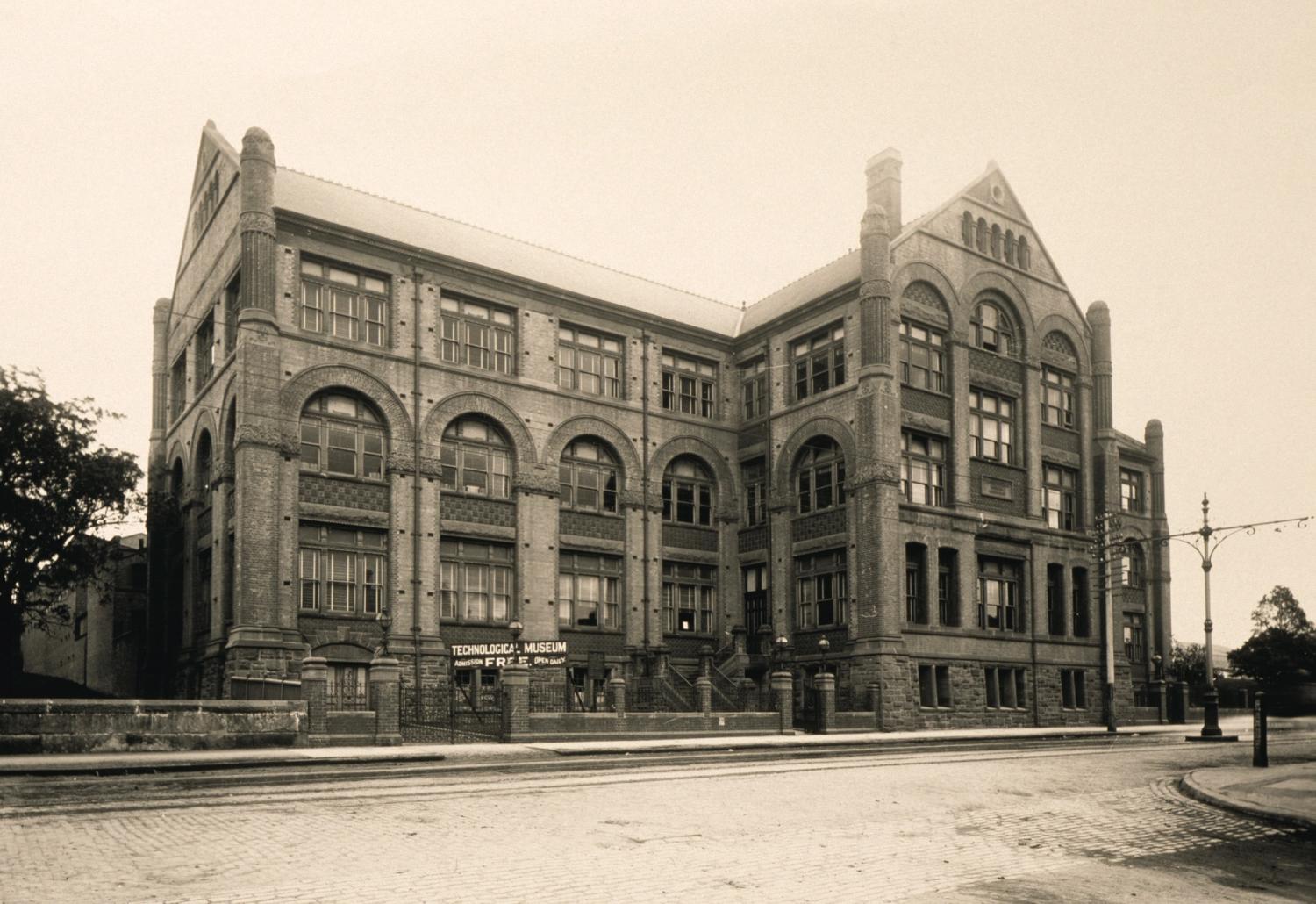
Jacob Steenbhom became an outspoken advocate for the Motor Traders' Association, established in 1911, on Australian production, employees' conditions and apprentice training schemes. He initiated schemes to train returned soldiers from the First World and was instrumental in establishing a motor body building department at East Sydney Technical College, in the newly converted Darlinghurst Gaol, in 1922. In 1924 he was appointed by the Governor as a member of the Motor Body Building Advisory Committee of Sydney Technical College, where he sat on selection committees to appoint teachers of motor body building, panel beating and motor car trimming at the College and set exam questions for students. Jacob died at Centennial Park in Sydney on 25 June 1956.
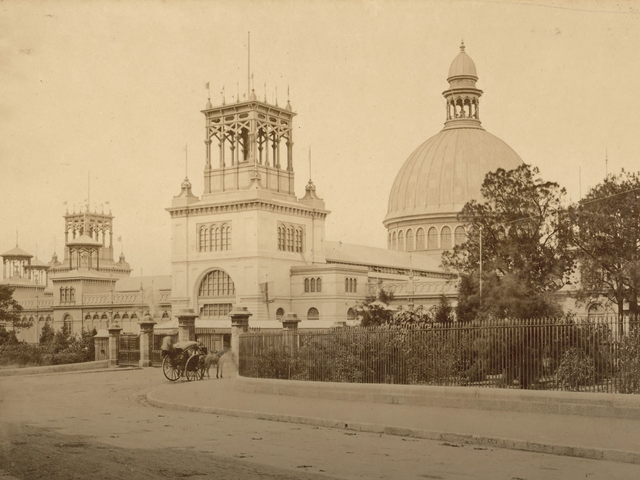
The phaeton sulky model was made by Jacob Emanuel Steenbhom at the age of 18, probably while still an apprentice. In 1901 Jacob entered his model in the Young People's Industrial Exhibition held in May 1901 during the Royal visit to Australia of the Duke and Duchess of Cornwall and York. The aims of the exhibition were to "stimulate the energies, educate the minds, and elicit the sympathies of our young people" and the patrons included the then Governor General of Australia, the Earl of Hopetoun.
The phaeton sulky derives its name from the horse-drawn vehicle phaeton, which refers to a whole family of vehicles all designed to be owner-driven, and so had no box-seat for a coachman. It originated in the late 18th century and was much favoured by young men of the Regency period to dash about in. It was built very high and looked unsteady. In Greek mythology Phaeton was the son of Helios, the sun god, who stole his father's fiery chariot and, unable to drive it, crashed into the sea. In the late 19th century the phaeton name was joined with the term sulky, a light carriage for only one person to ride alone, to form "phaeton sulky".