

Object statement
Archive, Charles Babbage/Neville Babbage, England/Australia, 1826-1959
Charles Babbage was a nineteenth century mathematician, philosopher, inventor, reformer, political economist and socialite. He is probably best known for his invention (designed but not built) of two Difference Engines and his Analytical Engine, which is now regarded as the first programmable computer. He is known as the grandfather of modern computing.
Charles Babbage was born on 26 December 1791 in Totnes, Devonshire. 1814 he married Georgiana Whitmore. They had eight children together, before her death in 1827.
In 1810 he went to Trinity College, Cambridge, and in 1811 he was elected Lucasian Professor of Mathematics. He played a major role in the reformation of British mathematics, which had stagnated in the late eighteenth and early nineteenth centuries.
Babbage published prolifically and was made a Fellow of the Royal Society while still in his twenties. The Royal Society was founded in 1660 and is the oldest scientific society in Britain. Babbage published books which were critical of the Society, and recommended its reform.
His primary interest in mathematics was with mathematical tables, which were then used as aids in calculation in a number of fields like navigation, surveying and actuary. The many mistakes that occurred in the human made tables drove Babbage to seek a mechanical method for perfecting them.
The design and construction of his engine was to take the rest of his life. It proved to be his greatest disappointment as he never completed it, and few understood the significance of his efforts.
In the initial stage of the Difference Engine project, Babbage went on a study tour of Britain and the continent to establish a suitable manufacturing process for the components of his machine. The results of his study were collected into a work called "On the Economy of Manufactures", now regarded as his most influential work. It was a reference for Marx and Engels.
Charles Babbage was a well known figure in London Society. He was friends with many prominent people, such as Dickens, Carlyle, Hershel and Darwin. He held regular Saturday evening parties at his home in Manchester Square for many years, which were apparently attended by two or three hundred people and were said to t>e a meeting place for Europe's liberal intelligentsia. The correspondence in the archive includes letters from many of these important figures. He was also a good friend of Countess Ada Lovelace, the daughter of Lord Byron. She translated a commentary on Babbage by Luigi Menabrea from French to English, and added lengthy notes to it in consultation with Babbage. Babbage referred to her as the "Enchantress of Numbers".
Babbage was extraordinarily diverse in his interests and talents. And has a. range of achievements besides his Calculating Engines. The wide range of topics on which he published illustrates this. Areas in which he contributed include astronomy, ophthalmoscopy, meteorology, linguistics, theories of mass production and operations research and politics.
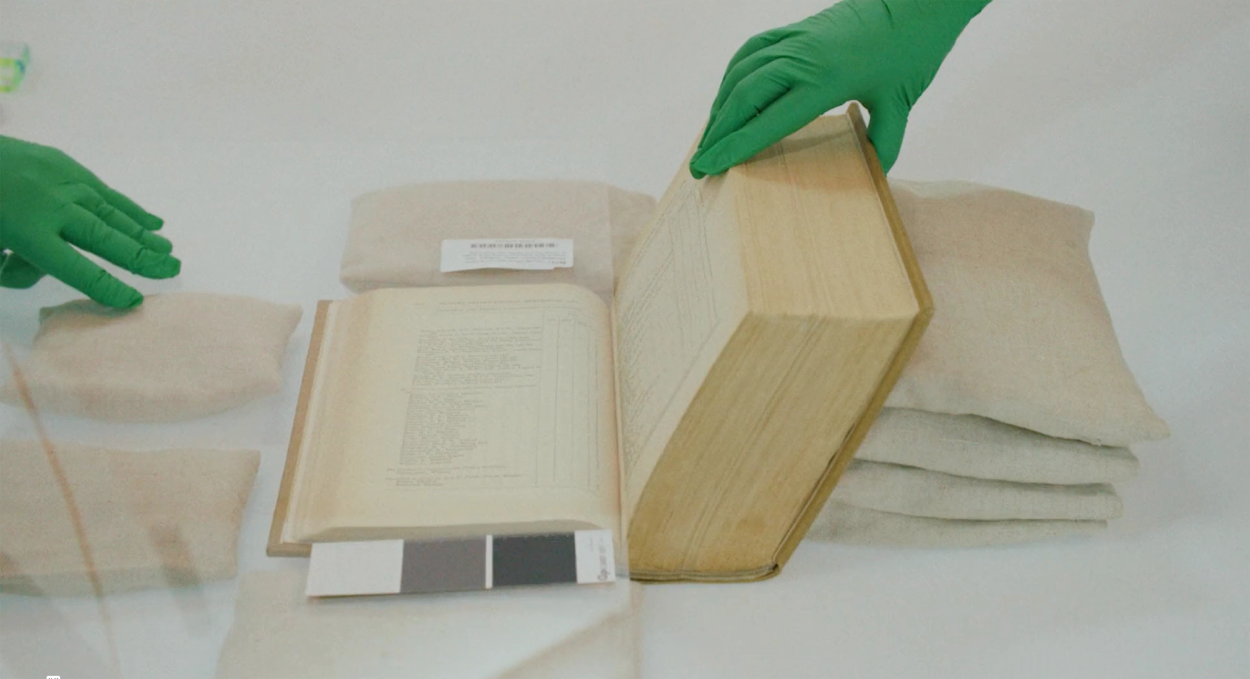
This archive was acquired from Dr Neville Babbage. Most of the items were handed down through the family. Although some items were purchased by Dr Neville Babbage, many items would appear to have been sent by Charles' son, Henry Prevost Babbage to Eden Herschel Babbage in 1908, who lived in Sydney. It was Henry Prevost who assembled Charles' Difference Engine. Henry's two elder brothers both emigrated to Australia. One of them was Benjamin Hershel Babbage (1815-1878). Benjamin was an engineer who went to South Australia and carried out geological and mineralogical surveys. He was also involved in the overland telegraph project. His son was Eden Hershel Babbage, who was Neville Babbage's grandfather. Although the archive relates primarily to Charles there are numerous references throughout the archive to other members of the Babbage family.
Administrative history
Charles Babbage was a nineteenth century mathematician, philosopher, inventor, reformer, political economist and socialite. He is probably best known for his invention (designed but not built) of two Difference Engines and his Analytical Engine, which is now regarded as the first programmable computer. He is known as the grandfather of modern computing.
Charles Babbage was born on 26 December 1791 in Totnes, Devonshire. 1814 he married Georgiana Whitmore. They had eight children together, before her death in 1827.
In 1810 he went to Trinity College, Cambridge, and in 1811 he was elected Lucasian Professor of Mathematics. He played a major role in the reformation of British mathematics, which had stagnated in the late eighteenth and early nineteenth centuries.
Babbage published prolifically and was made a Fellow of the Royal Society while still in his twenties. The Royal Society was founded in 1660 and is the oldest scientific society in Britain. Babbage published books which were critical of the Society, and recommended its reform.
His primary interest in mathematics was with mathematical tables, which were then used as aids in calculation in a number of fields like navigation, surveying and actuary. The many mistakes that occurred in the human made tables drove Babbage to seek a mechanical method for perfecting them.
The design and construction of his engine was to take the rest of his life. It proved to be his greatest disappointment as he never completed it, and few understood the significance of his efforts.
In the initial stage of the Difference Engine project, Babbage went on a study tour of Britain and the continent to establish a suitable manufacturing process for the components of his machine. The results of his study were collected into a work called "On the Economy of Manufactures", now regarded as his most influential work. It was a reference for Marx and Engels.
Charles Babbage was a well known figure in London Society. He was friends with many prominent people, such as Dickens, Carlyle, Hershel and Darwin. He held regular Saturday evening parties at his home in Manchester Square for many years, which were apparently attended by two or three hundred people and were said to t>e a meeting place for Europe's liberal intelligentsia. The correspondence in the archive includes letters from many of these important figures. He was also a good friend of Countess Ada Lovelace, the daughter of Lord Byron. She translated a commentary on Babbage by Luigi Menabrea from French to English, and added lengthy notes to it in consultation with Babbage. Babbage referred to her as the "Enchantress of Numbers".
Babbage was extraordinarily diverse in his interests and talents. And has a. range of achievements besides his Calculating Engines. The wide range of topics on which he published illustrates this. Areas in which he contributed include astronomy, ophthalmoscopy, meteorology, linguistics, theories of mass production and operations research and politics.
This archive was acquired from Dr Neville Babbage. Most of the items were handed down through the family. Although some items were purchased by Dr Neville Babbage, many items would appear to have been sent by Charles' son, Henry Prevost Babbage to Eden Herschel Babbage in 1908, who lived in Sydney. It was Henry Prevost who assembled Charles' Difference Engine. Henry's two elder brothers both emigrated to Australia. One of them was Benjamin Hershel Babbage (1815-1878). Benjamin was an engineer who went to South Australia and carried out geological and mineralogical surveys. He was also involved in the overland telegraph project. His son was Eden Hershel Babbage, who was Neville Babbage's grandfather. Although the archive relates primarily to Charles there are numerous references throughout the archive to other members of the Babbage family.