Powerhouse Museum Collection Search 2.53
Category history:
   

Support the Powerhouse with a tax-deductible gift

Make a donation

Make a donation

Make a donation
Currently on public display
Clocks and Watches > Longcase clocks

+ 85/615 Longcase clock, Samuel Coxall, En...
+ 86/888 Clock, longcase, mahogany/brass, ...
+ H4603 Clock, lantern, Henry Jones, Londo...
+ A1582 Old oak inlaid grandfather clock (...
+ H5639 Longcase clock, cedar / pine / met...
+ H6727 Clock, long case, strike, swan nec...
+ H6839 Clock, long case, Dutch "Hood", [H...
+ H7167 Clock, long case, pagoda top, bras...
+ H7250 Grandfather clock, made by Moore o...
+ H7377 Late 17th century English longcase...
+ H7378 Clock, long case, 8 day, regulator...
+ H7440 Long case clock, with lapis-blue J...
+ H9246 Longcase clock, regulator, Eardley...
+ H9316 Longcase Master Clock, mahogany ca...
+ H9469 Longcase Clock, walnut marquetry c...
+ H9473 Longcase Clock, regulator, James F...
+ H9476 Clock, Long Case, Ignas Kerner (LC...
+ H9477 Clock, small long case, marked 181...
+ H9847 Longcase clock, cedar, Australia, ...
+ H9889 Regulator clock, sidereal-time, wo...
+ H9890 Regulator clock, Breguet mean-time...
+ H9902 Clock, regulator, meantime, glass ...
+ H9903 Sidereal regulator clock, wood / m...
+ H10014 Mean-time regulator clock, used a...
+ 97/262/1 Longcase clock, eight-day, wood...
+ A10698 Small plastic grandfather clock, ...


Clocks and Watches > Regulator clocks

+ H7378 Clock, long case, 8 day, regulator...
+ H9246 Longcase clock, regulator, Eardley...
+ H9473 Longcase Clock, regulator, James F...
+ H9889 Regulator clock, sidereal-time, wo...
+ H9890 Regulator clock, Breguet mean-time...
+ H9902 Clock, regulator, meantime, glass ...
+ H9903 Sidereal regulator clock, wood / m...
+ H10010 Sidereal regulator clock, Shortt ...
+ H10012 Sidereal regulator clock, Shortt ...
+ H10013 Regulator clock, used at Sydney O...
+ H10014 Mean-time regulator clock, used a...


Long case clock by Thomas Earnshaw, 1791
zoom image
Images: 01 02

Object statement
Long case clock, astronomical regulator, sidereal time, metal / mahogany, Thomas Earnshaw, London, England, 1791
This regulator clock by Thomas Earnshaw has great historical significance as it is associated with the explorers Matthew Flinders and George Vancouver and was taken on some of the great voyages of exploration during the late 18th and early 19th centuries.

The clock was used by George Vancouver between 1791 and 1795 on his voyage to the north-west coast of North America, where he accurately charted its coastline. After the voyage the clock was returned to the Board of Longitude in London and was subsequently given to Matthew Flinders for use aboard HMS Investigator during his circumnavigation of Australia from 1801 to 1803. On this voyage Flinders mapped the entire coast of Australia for the first time. Aboard the HMS Investigator the clock was used as part of a tent observatory that was occasionally set up on shore to make astronomical observations to check the accuracy of the chronometers on board ship which were used to calculate longitude. One of these chronometers Earnshaw 520 (H3940), which is the only one to survive, is also in the Powerhouse Museum's collection. On return to Sydney the clock was handed over to the astronomer aboard HMS Investigator, James Inman in July 1803 and repaired soon afterwards by Henry Lane, a Bristol clock maker who had been transported to the New South Wales colony for forgery but who was later appointed as the Government Clock Maker under Governor Macquarie. The clock was returned to England aboard the ship Rollo about 1805 and remained with the Board of Longitude until the dissolution of the Board in 1828. Ownership of the clock then passed to the Royal Observatory in Greenwich. Later in 1874 the clock was used during the Transit of Venus Expedition to Hawaii.

The clock is also a good illustration of the best equipment available for timekeeping and navigation in the late 18th and early 19th centuries.
Earnshaw (1749-1829),well known English clockmaker who invented the spring indent escapement.
Used by George Vancouver, 1791-95, by Matthew Flinders in his circumnavigation of Australia 1801-1803 on the HMS Investigator and by the Transit of Venus Expedition to Hawaii, 1874.

Previous owners: Board of Longitude (1791-1828); Royal Observatory Greenwich (1828-1932); Clowes & Jauncey; Mark Dinley, then to his son the vendor.

 This text content licensed under CC BY-NC.

Description
Long case clock, astronomical regulator, sidereal time, metal / mahogany, Thomas Earnshaw, London, England, 1791

A precision astronomical regulator clock ( month going, sidereal time), in a flat-topped and bombe sided mahogany longcase of short stature. Dial: a 10 inch square silvered brass dial with inscribed markings and Arabic numerals coloured black, the large outer minutes ring enclosing two smaller dials - a seconds ring with five-second observation markers, and a 14-hours dial (signed "Earnshaw/ London"), each dial with a slender blue steel hand, the winder square is to right. Movement: a month going (30 day) five-pillar movement with shouldered plates, black-painted angle supports, five-wheel train, dead-beat escapement with jewelled pallets and jewelled pivot holes to the escapement, maintaining power and stop-work, the weight driven movement has a grooved drum with a brass-cased 7kg cylindrical weight suspended on a wire cable. Pendulum: a separately suspended Harrison's grid-iron pendulum, with a temperature compensated grid-iron shaft composed of nine parallel rods in brass and steel, a massive lenticular bob in brass, and a graduated regulation nut. (The pendulum is a post 1932 replica of the 1791 origional-fitted by Clowes & Jauncey to replace the c.1870 E Dent & Co zinc and steel cylindrical pendulum.) Case: a flat-topped longcase (of quite short stature) in mahogany veneers with a dark polished surface, the flat-topped hood has a moulded cornice and reeded canted corners edging a glazed square door, the sides are panelled, the hood slides forward for removal and is held in place by a wooden swivel catch inside the door, the trunk is straight at the top and swells to bombe sides (near the pendulum), the rectangular door at front has a glazed aperture near the lower edge, the clock is raised on a high panelled plinth (not original - post 1932) with reeded canted corners and bracket feet, there are five holes in the backboard with one at hood and one at lower trunk fitted with a threaded brass roundel. Accessories: with weight, pendulum (gid-iron rod, bob & adjuster), winder, and hood door key and trunk door key.

Made: Earnshaw, Thomas; ; 1791


Used: Vancouver, George;

Used: Flinders, Matthew;

Owned: Royal Observatory, Greenwich;
Marks
The dial is signed "Earnshaw/London". The case is stamped with the Admiralty mark ( broad arrow below asterisk) on the hood door front, on case front, on both sides of trunk case door, and case backboard inside the trunk. The interior of the trunk door with four paper labels: (1) cleaning label by Dent, dated 1887 and 1896; (2) Royal Observatory Greenwich label, repaired 1899, November by Messrs Barnsdale & Co; (3) Clowes & Jauncey, Beauchamp Place; (4) modern label, Evans & Evans, Alresford, Hampshire. Label under plinth , restored cabinet work 1986/ A J Weston, Finches Lane, Twyford, Hampshire.
94/15/1
Production date
1791
Height
1805 mm
Width
480 mm
Depth
320 mm

 This text content licensed under CC BY-SA.
Acquisition credit line
Purchased 1994
Subjects
+ Transit of Venus Expedition to Hawaii, 1874
+ Astronomy
+ Flinders, Matthew
Currently on public display
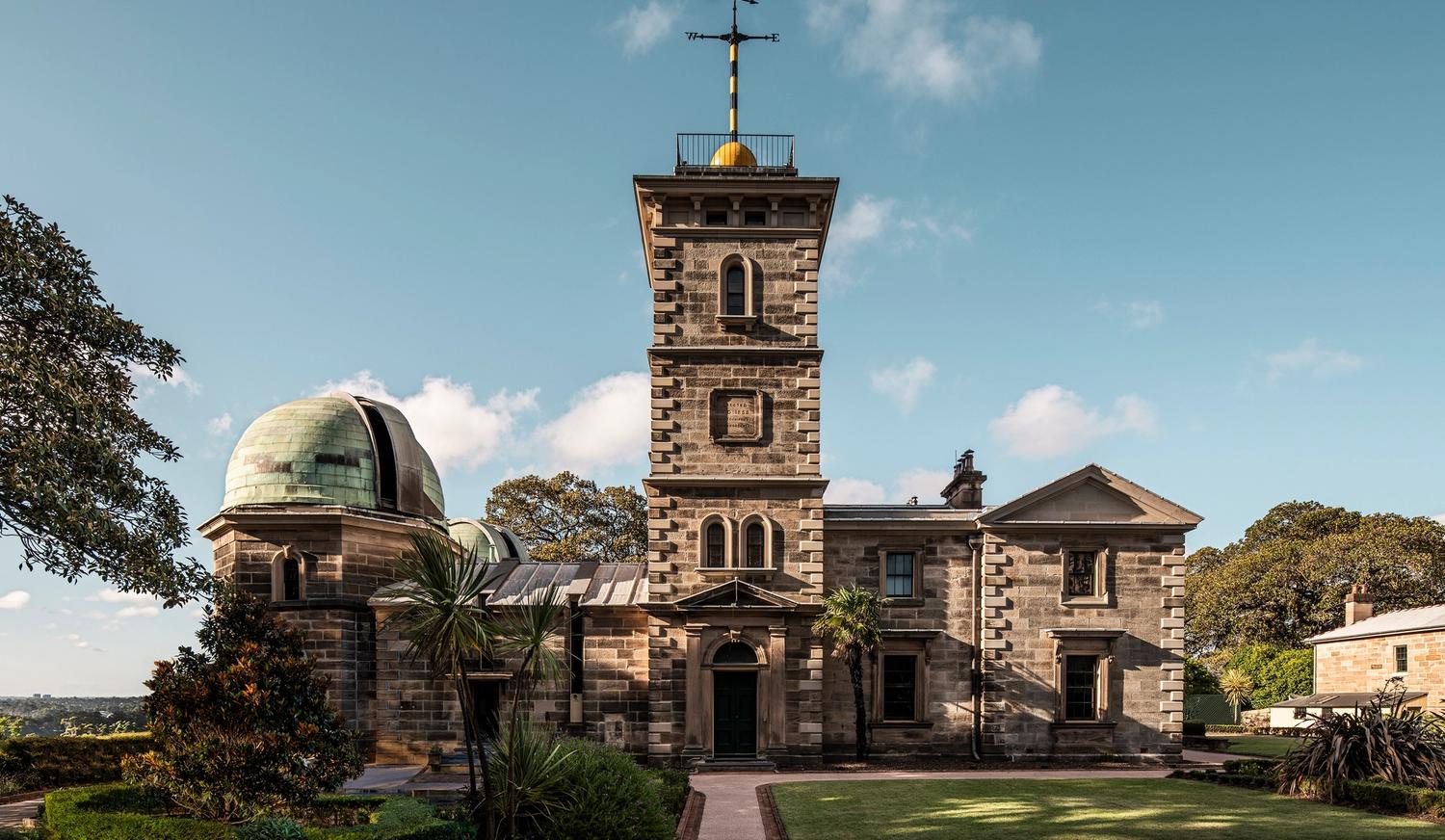
+ By the Light of the Southern Stars Exhibition, Sydney Observatory
Short persistent URL
Concise link back to this object: http://from.ph/138867
Cite this object in Wikipedia
Copy and paste this wiki-markup:

{{cite web |url=http://from.ph/138867 |title=Long case clock by Thomas Earnshaw |author=Powerhouse Museum |accessdate=20 June 2013 |publisher=Powerhouse Museum, Australia}}


Copyright
Images on this site are reproduced for the purposes of research and study only. Whilst every effort has been made to trace the Copyright holders, we would be grateful for any information concerning Copyright of the images and we will withdraw them immediately on Copyright holder's request.
Object viewed 8317 times. Parent IRN: 2122. Master IRN: 2122 Img: 126779 Flv: H:2100px W:1251px SMO:0 RIGHTS:No known copyright restrictions.