Object statement
Dye recipes and fabric swatches (in 2 boxes), used by Alexandra Mackenzie and Anne Outlaw of Annan Fabrics, Sydney, New South Wales, Australia, 1941-1954
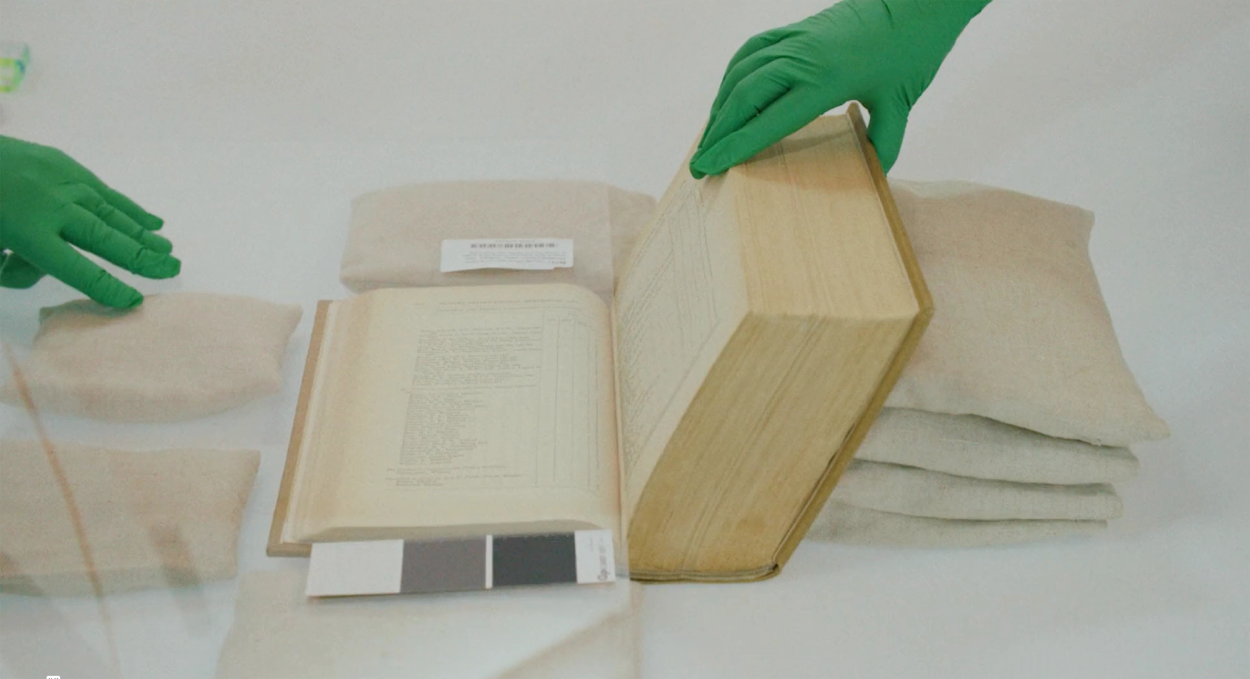
Australian textile designers, Anne Outlaw and Nance Mackenzie (later Kirkwood), collected and used these two boxes of dye recipes between 1941 and 1954 when they operated the textile design company, 'Annan Fabrics'. Typed in black ink on card, the recipes advise on ingredients and boiling temperatures, and reveal the precision necessary for making commercial-grade dyes.
During the war years, a scarcity of German dyes forced Mackenzie and Outlaw to develop and perfect recipes that could be made readily at home. At times, they enlisted the services of dye makers, such as C. Gilkes, to invent and test dyes for Annan Fabrics (Gilkes name appears on one recipe box). These recipes commonly feature dyed swatches that demonstrate the colours and tones achievable. The boxes remained in Mackenzie's possession until her death in 1998 when they were sent to the National Art School and then bequeathed to the Powerhouse Museum. (Though her married name was Kirkwood, she used her maiden name, Mackenzie, for most of her career.)
Mackenzie (1912-1998) first developed an interest in textile design in the 1930s when she trained at East Sydney Technical College, specialising in drawing, printing and general design. In 1941, her interest evolved into a successful career when she established the textile design company, Annan Fabrics, with friend and business partner, Anne Outlaw (1891-1991). Together, the women designed and made furnishing fabrics that melded bright colours, geometric patterns and Australian motifs.
At their Mosman studio (a former stable and cordial factory), Mackenzie and Outlaw worked on all aspects of silk-screen printing: making screens; mixing dyes; drawing and printing designs; drying fabrics; fixing colours; and soaping and rinsing the final product - around 36 metres of fabric each day. Their skill and craftsmanship characterised their work, which appealed to interior decorators, select department stores (including David Jones in Sydney and the Myer Emporium in Melbourne) and specialist boutiques.
In 1954, an unpaid contract forced Annan Fabrics to a sudden end, freeing Mackenzie for a teaching position at East Sydney Technical College. Throughout this latter period, she continued to screen-print textiles and experiment with a range of imported colourfast dyes.
One box of dye recipes was developed by C. Gilkes specially for Annan Fabrics. Gilkes was probably an expert in the manufacture of home-made dyes.
These dye recipes were compiled and used by Sydney textile designers, Anne Outlaw and Nance Mackenzie, at their Mosman studio from 1941 to 1954.
These dye recipes were compiled and used by Nance Mackenzie and Anne Outlaw of Annan Fabrics from 1941 to 1954.
These dye recipes were collected and used by Sydney textile designers, Anne Outlaw and Nance Mackenzie, at their Mosman studio from 1941 to 1954. Operating as Annan Fabrics, they printed up to 36 metres of fabric each day, relying on these recipes to produce their commercial-grade dyes.
This collection belonged to Sydney textile designer, Nance Kirkwood (nee Mackenzie), who was a partner in the textile design company, Annan Fabrics, in Sydney from 1941 to 1954. The material remained in Kirkwood's possession until her death in 1998 when her executor, John Ulm, sent it to the National Art School (formerly East Sydney Technical College) where Mackenzie taught in the late 1950s. In turn, the school passed this material on to the Powerhouse Museum which has significant collections of textiles and archives relating to Annan Fabrics. A collection of dye manuals was sent to the Museum library on 15 March 2000.
Administrative history
Annan Fabrics, a studio enterprise which printed textiles by the silk and screen process, was established in 1941 by Anne Outlaw (1891-1991) and Alexandra Mackenzie (1912-1998, she was also known as Nan, but was more commonly referred to as Nance. When Mackenzie married she changed her name to Kirkwood, but still used Mackenzie professionally). The two women had met through the New South Wales Society of Arts and Crafts, of which they were both members. Mackenzie first developed an interest in textile design in the 1930s when she trained at East Sydney Technical College, but she could find no one willing to print her designs. Initially, Outlaw and Mackenzie intended to open a restaurant, but this led to them opening their own textile design studio. Together, the women designed and made furnishing fabrics that melded bright colours, geometric patterns and Australian motifs. Mackenzie created the designs for the fabrics, while Outlaw mixed the dyes and managed the business.
The two established their studio in a building in Mosman which had previously been a stable and later a cordial factory. Here they worked on all aspects of silk-screen printing: making screens; mixing dyes; drawing and printing designs; drying fabrics; fixing colours; and soaping and rinsing the final product - around 36 metres of fabric each day. Their customers included interior decorators, select department stores (including David Jones in Sydney and the Myer Emporium in Melbourne) and specialist boutiques. Qantas was also a major customer, while the Department of Public Works commissioned 'Banksia' for the Parliament House dining room (Vivien Leigh also bought 'Banksia' for her home in England).
In 1954 Annan Fabrics secured the sub-contract to print the Aboriginal and heraldic emblems on the official street banners for the Royal Tour. All other work was suspended, but the contract was unpaid for as the contractor declared himself bankrupt. Due to this fact, they could not support their loss and were forced to close. This, however, freed up Mackenzie for a teaching position at East Sydney Technical College. Throughout this latter period, she continued to screen-print textiles and experiment with a range of imported colourfast dyes.