Powerhouse Museum Collection Search 2.53
Category history:
   

Support the Powerhouse with a tax-deductible gift

Make a donation

Make a donation

Make a donation
This object belongs to
Directly related objects

Richard Beck design archive, 1926 - 1984
zoom image
Images: 01 02 03 04 05 06 07 08 09 10 11 12 13 14

Object statement
Archive, design, Richard Beck, including sketches, designs, publications, advertisements and photographs, made in London / Sydney / Melbourne, 1926-1984
Early commercial art and graphic design archives, like this collection of Richard Beck's, highlight the breadth, scope and diversity of projects undertaken by designers working in Australia during the 20th century.
While best known for his black and white Coonawarra Estate claret label and modernist Melbourne Olympic Games poster, both designed in the 1950s, Richard Beck's archive covers a much wider period, from the 1920s through to the 1980s. It contains and documents a variety of projects from small personal jobs like the cookbook for his wife Barbara Joan Beck and textiles for the family home, small one-off commissions for bookplates and magazine cover designs, and larger and more significant commissions for symbols, logos, posters and other designs for clients including London Transport, the Orient Line, S Wynn & Co Wines, the Reserve Bank of Australia, Australia Post, the 1956 Melbourne Olympic Games Organising Committee, Bell Chemical Company, Glazebrook Paints, Prahran Technical College (now Swinburne University of Technology) and the Department of Civil Aviation. There are also packaging designs and advertisements and photographs of murals, mosaics and exhibitions designed by Richard Beck, reflecting the diversity of his professional portfolio.
The biographical component of the archive contains newspaper clippings, correspondence, awards, portraits of the photographer, sketches and other documents which highlight Beck's personal and collaborative processes, professional recognition and achievement which culminated in posthumous recognition in 1992 with Beck selected as a foundation/inaugural member of Australian Graphic Design Association's newly established, pinnacle 'Hall of Fame' award.

Anne-Marie Van de Ven
Curator
October 2012
Richard Beck (1912-1985)
Biography: Anne-Marie van de Ven, Curator, 1992 (updated 2012)

Graphic designer and photographer Richard Beck trained and studied in England and Germany before migrating to Australia. Born in Hampshire, England, in 1912 and educated at the Glasgow Academy and Sevenoaks School in Kent, the Slade School of Art in London and the Blocherer School in Munich, Richard Beck arrived in Australia in 1940 after leaving England for New Zealand in 1939.

In London, Beck had his own design consultancy service before the war where he earned a reputation as an artist and designer for illustrations in a number of English newspapers and for his poster and publicity designs for London Transport, Shell Mex Ltd and the Orient Line.

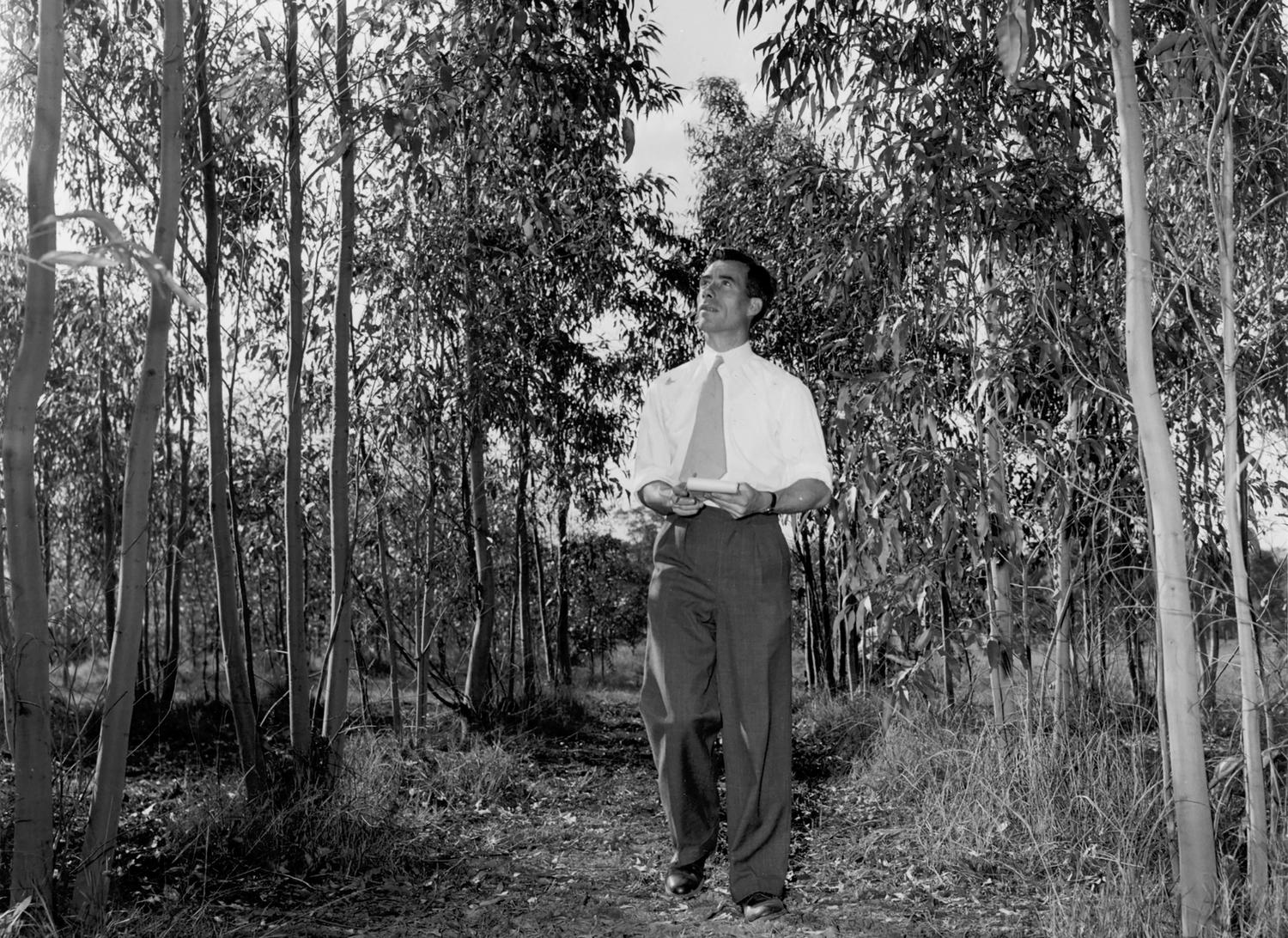
During WWII, Beck served with the Australian Imperial Force (AIF). In 1943 he married Joan Barbara Isaacson and they had four children: Jonathan, Angela, Vanessa and Christopher who took the portrait of his father which survives in the Powerhouse MuseumÂ?s Richard Beck design archive.

After the war, Beck established Richard Beck Associates, design consultants for advertising and industry, producing packaging, corporate image design, exhibition and general advertising work - including freelance designs for several Melbourne advertising agencies including George Patterson, Patons Advertising, Castle Jackson Advertising, and Walker, Robertson, Maguire.

Throughout his career, Richard Beck sustained a keen interest in raising standards in typography, design for industry and commerce, posters and photography in Australia. In the early 1950s he was one of a group of Melbourne designers and illustrators (including Lance Stirling, Owen Foulkes, Eric Macguire, Joe Greenberg, Ron Thompson and Arthur Leydin) who met informally to discuss design and the design profession in the United Kingdom, Europe, America and Australia. At the group's wine and food gatherings, Beck introduced many of these designers to the work of the Bauhaus and British poster artists like FHK Henrion, Abram Games and Hans Schleger (known as 'Zero').

His friends and colleagues included many leading Australian artists, architects, designers and photographers: Gordon Andrews, Douglas Annand, Arthur Baldwinson, Paul Beadle, Kevin Borland, Robin Boyd, Max Dupain, Max Forbes, Richard Haughton James, Elaine Haxton, Hal Missingham, Helmut Newton, Guelda Pyke, Wolfgang Sievers, Henry Talbot and Eric Thake.

During the 1950s, Richard Beck won many awards and prizes, particularly in the Outdoor Advertising Association of Australia and the Australian Commercial and Industrial Artists Association's annual competitions and exhibitions. These competitions were designed to improve relations between artists, designers, commerce and industry. Among the many other awards won throughout his career are the National Packaging Association's gold medal for the best Australian export pack of 1960 (awarded to S Wynn and Co Pty Ltd for the Coonawarra Claret bottle designed by Beck) and prizes for his Neptune Service Station, Glazebrook Paints and Shell 24 sheet outdoor advertising posters. He received a runner-up award for his advertisement in the Architecture and Arts best full page magazine advertisement competition of 1954 and a bronze medal from the Italian Government at the International Stamp Congress in Milan for his Olympic Games stamp design of 1956. In 1961, Beck was awarded the Australian National Packaging Association certificate for his designs for the Bell Chemical Company's plastic packages and in 1963 he was awarded the gold medal at the Royal Adelaide Exhibition for his complete range of Bell Chemical Company's containers that were later exhibited at the International Design Exhibition in Paris during 1963. Richard Beck was also awarded a Certificate of Merit for outstanding excellence of work exhibited in the Australian Commercial and Industrial Artists Association's exhibitions.

Beck's diverse range of design commissions included the design for Melbourne's first decorated tram during the Royal visit in 1954 and a number of stamps for Australia Post, including the centenary of the first Western Australian postage stamp in 1954, the Australian American Friendship stamp of 1955, Olympic Games publicity stamps between 1954 and 1956 and the 1971 Centenary of the Foundation of the Australian Native's Association stamp.As well as being selected to design the official poster for the Melbourne Olympic Games in 1956 and to work with a panel in designing the street decorations for the city, Beck also contributed work to the Graphic Arts exhibition of the Arts Festival of Olympic Games.

Between 1963 and 1964, Beck was invited by the Reserve Bank of Australia and the Commonwealth Treasury to submit designs for Australia's new decimal banknotes and coinage. Beck also contributed illustrations and cover designs for a number of notable Australian journals including Art and Australia, Meanjin and the Australian National Journal.

In 1958 Richard Beck was elected an Associate of the Industrial Design Institute of Australia. Along with Douglas Annand, he received the prestigious award of Fellow of the Australian Commercial and Industrial Artists Association (ACIAA) for his outstanding excellence of work and notable contribution to the advancements of the interests of the profession. Beck was also an Honorary member of the Art Director's Club of Melbourne.

In 1969, Richard Beck was appointed Head of Graphic Design at the Prahran Technical College. He remained there until1972. He was also a visiting lecturer at the Royal Melbourne Institute of Technology (RMIT).

Richard Beck's work is represented in several local and international collections including the Victoria and Albert Museum in London, the London Transport Museum, the Art Gallery of Western Australia, the Art Gallery of Victoria, the Australian National Gallery, the National Library of Australia, RMIT Design Archives and the Powerhouse Museum (Museum of Applied Arts and Sciences) in Sydney.

In 1992 Richard Beck was posthumously awarded the inaugural Hall of Fame Pinnacle Award by the Australian Graphic Design Association.

Reference:
'Richard Beck Designer/Photographer' exhibition catalogue, Horsham Art Gallery, Victoria, 1996
The Richard Beck design archive was acquired from Beck's widow, Joan Barbara Beck, in 1992.
Administrative history
Richard Beck was born in Hampshire, England in 1912. He was educated at the Glasgow Academy and Sevenoaks School in Kent, the Slade School of Art in London and the Blocherer School in Munich.

In London, Beck had his own design consultancy business. He earned a distinguished reputation as an artist and designer. His work was featured in magazines such as "Art and Industry" and "Modern Publicity". He designed posters, booklets and advertisements for organisations such as London Transport, the Orient Line, the Shell Company, and the London G.P.O. He also did illustrations for newspapers such as the Evening Standard and the BBC Radio Times.

Richard Beck arrived in Australia in 1940 after leaving England for New Zealand in 1939. During the war he served with the Australian Imperial Force (AIF). He was stationed in Egypt, and his drawings and photographs from that time appeared in the magazine "Australia National Journal". In 1943 he married Joan Isaacson and they had four children: Jonathan, Angela, Vanessa and Christopher. They lived first in Sydney and then moved to Melbourne.

After the war he established Richard Beck Associates in Melbourne. He worked as a design consultant for advertising and industry, producing packaging, corporate image designs, exhibitions and general advertising work. He also created freelance designs for several Melbourne advertising agencies.

Throughout his career, Richard Beck sustained a keen interest in raising standards in typography, designs for industry and commerce, posters and photography in Australia. In the early 1950s he was one of a group of Melbourne designers and illustrators who formed a society to discuss developments in design both in Australia and overseas. Other members of he group were Lance Stirling, Owen Foulkes, Eric Macguire, Joe Greenberg, Ron Thompson and Arthur Leydin. Beck introduced the others to the Bauhaus and to the work of British poster artists such as F.H.K. Henrion, Abram Games and Hans Schleger (known as Zero).

During the 1950s, Richard Beck won many awards and prizes, particularly in the Outdoor Advertising Association of Australia and the Australian Commercial and Industrial Artists Association's annual competitions and exhibitions. These competitions were designed to improve relations between artists, designers, commerce and industry.

Beck's diverse range of design commissions included the design of Melbourne's first decorated tram for the Royal visit in 1954. He won the competition to design the official poster for the Melbourne Olympic Games in 1956. For the Olympic Games he also worked with a panel to design street decorations for the city, and he contributed to the graphic arts exhibition of the Arts Festival of the Olympic Games.

He created a number of stamps for Australia Post, including a stamp to publicise the Melbourne Olympics in 1956. The design for the stamp was based on his poster and won him the bronze medal from the Italian Government at the International Stamp Congress in Milan.

Richard Beck worked as a design consultant for S. Wynn and Co. The family winemaking company was expanding during the 1950s and in 1950 Beck began an association with the company which lasted into the late 1970s. Beck was responsible for the entire image of the company, from packaging to advertising. In 1958 he was awarded the National Packaging Association's first gold medal for the best export design of the year for his Wynns Coonawarra Estate Claret label. And in 1959 was awarded first prize from the Industrial Design Council of Australia for his design of a shipping container for Wynns.

Another of Richard Beck's diverse design commissions was for the Bell Chemical Company. Beck designed the company logo as well as a complete range of packaging for the company's products. In 1961 he was awarded first prize for his designs for the Bell Chemical Company's plastic packaging from the Australian National Packaging Association. In 1963 he was awarded the gold medal at the Royal Adelaide Exhibition for his complete range of Bell Chemical Company's containers, which were later exhibited at the International Design Exhibition in Paris.

In 1964 Richard Beck was invited by the Reserve Bank of Australia and the Commonwealth Treasury to submit designs for Australia's new decimal currency. Beck developed designs for both notes and coins.

Some of the other companies and organisations which Beck worked as a designer for include the Australian Civil Aviation Department, Glazebrooks Paints, Australian Paper Manufacturers, Gilbeys Ltd, F.W. Cheshire publishers, Neptune Oil Co, SAFCOL, Kelly & Lewis, Mitchell's Brushes, Vickers, and Sands & McDougall.

Beck also contributed illustrations and cover designs for a number of Australian journals such as "Art and Australia", "Meanjin" and the "Australia National Journal".

In 1958 Richard Beck was elected an Associate of the Industrial Design Institute of Australia. He also received the award of Fellow of the Australian Commercial and Industrial Artists Association for outstanding excellence of work and for a notable contribution to the advancements of the interests of the profession.

In 1969 Richard Beck was appointed Head of Graphic Design at the Prahran Technical College. He was there until 1972. He was also a visiting lecturer at the Royal Institute of Technology (RMIT).

In 1992 he was awarded posthumously the inaugural Hall of Fame Pinnacle Award by the Australian Graphic Design Association.

This biographical note is taken mainly from the biography written by Anne-Marie Van de Ven, curator of Decorative Arts & Design; which appeared in Design World No.25 1992 and the catalogue of the 1996 Richard Beck exhibition at the Horsham Art Gallery.

 This text content licensed under CC BY-NC.

Description
This design archive documents the work of the designer Richard Beck. It contains examples of Richard Beck's early London work such as a poster for London Transport as well as a comprehensive collection documenting his Australian career. The archive includes a large number of his sketches and designs for advertisements and company logos, biographical material and awards, newspaper and magazine illustrations, photographs, publications and journals. It documents Beck's diverse range of design commissions throughout his career and includes work for the Melbourne Olympic Games in 1956, for S. Wynn & Co winemakers, and for the Reserve Bank of Australia, for which he was involved in the designs for the new decimal currency in 1963.

Made: Richard Beck; London, England; 1926 - 1984

Made: Richard Beck; Melbourne, Victoria; 1926 - 1984
92/1256
Production date
1926 - 1984

 This text content licensed under CC BY-SA.
This object belongs to:
Richard Beck Archive Collection
Subjects
+ Graphic design
+ Melbourne Olympic Games, 1956
+ Exhibition design
+ Advertising
+ Decimal currency
+ Reserve Bank of Australia
+ Australian commercial art
+ S Wynn & Co
Short persistent URL
Concise link back to this object: http://from.ph/119846
Cite this object in Wikipedia
Copy and paste this wiki-markup:

{{cite web |url=http://from.ph/119846 |title=Richard Beck design archive |author=Powerhouse Museum |accessdate=26 May 2013 |publisher=Powerhouse Museum, Australia}}


Copyright
Images on this site are reproduced for the purposes of research and study only. Whilst every effort has been made to trace the Copyright holders, we would be grateful for any information concerning Copyright of the images and we will withdraw them immediately on Copyright holder's request.
Object viewed 6152 times. Parent IRN: 2120. Master IRN: 2120 Img: 385273 Flv: H:2796px W:3500px SMO:0 RIGHTS:PHM copywork - object copyright applies.