Object statement
Furnishing fabric, woven cotton, 'Roses', designed for Coverings & Co Pty Ltd of Mascot by Shirley de Vocht, Shirley de Vocht, Sydney, New South Wales, Australia, 1950-1951
Shirley de Vocht (nee Martin)'s small personal archive documents and provides insight into how one young Australian woman found a path into working as a designer in a range of post-WWII Australian design and manufacturing industries after entering the art course offered by East Sydney Technical College.
Shirley de Vocht's first job was as a textile designer with Silk and Textile Printers Pty Ltd (STP), Darlinghurst between 1944 and 1946, during which time the founder, Claudio Alcorso (1913-2000) was involved in Australia's war effort.
Shirley left Silk & Textile Printers to work as a ceramic designer with Modern Ceramic Products (MCP), Redfern (1947-1948), returning to textile design when she joined Tennyson Textile Mills Pty Ltd, Gladesville (1949 - 1950), Coverings & Co Pty Ltd, Mascot (1949 - 1951) and Dri-Glo Towels Pty Ltd, Five Dock (1951-1959). There are two lengths of complex furnishing fabric designed by Shirley for Coverings and Co, a woven 'Roses' and a 'Poppy' design.
At Dri-Glo she was responsible for designing the 1956 Melbourne Olympic Games towel which later went into production without the Olympic motifs.
During her career, Shirley also worked as a freelance textile designer creating textile designs of Australian flora including native heath, flannel flowers, wattle and other Australian flora. Several of these were forwarded to FW Grafton & Co Ltd in England in 1952 where one was purchased for production and another exhibited. Nine of these textile designs in poster colour are included in the archive - flannel flowers, bottle brush, waratah, flowering gum, native heath and others, dating from 1948 to 1952.
Shirley also entered local textile design competitions such as the Leroy-Alcorso design competition in 1954 where the 100 best entries received were exhibited. The winning textile, a design by Douglas Annand, is represented in the collection of the Powerhouse Museum.
In her retirement, Shirley de Vocht continued to work as an artist, painting endangered species such as the native cat, the quoll and the snowy numbat onto mass-produced blank ceramic plates.
Anne-Marie Van de Ven, Curator, 2002
(updated by the curator after the family of Shirley de Vocht visited the Museum to view the archive on 14/11/2008).
Furnishing fabrics made by Coverings & Co Pty Ltd, 72 Gardeners Rd, Mascot, Sydney
Shirley de Vocht (nee Martin), textile and ceramic designer (b. Carlingford, Sydney 1929, d. 30 June 2003)
Draft biography: Anne-Marie Van de Ven, Curator
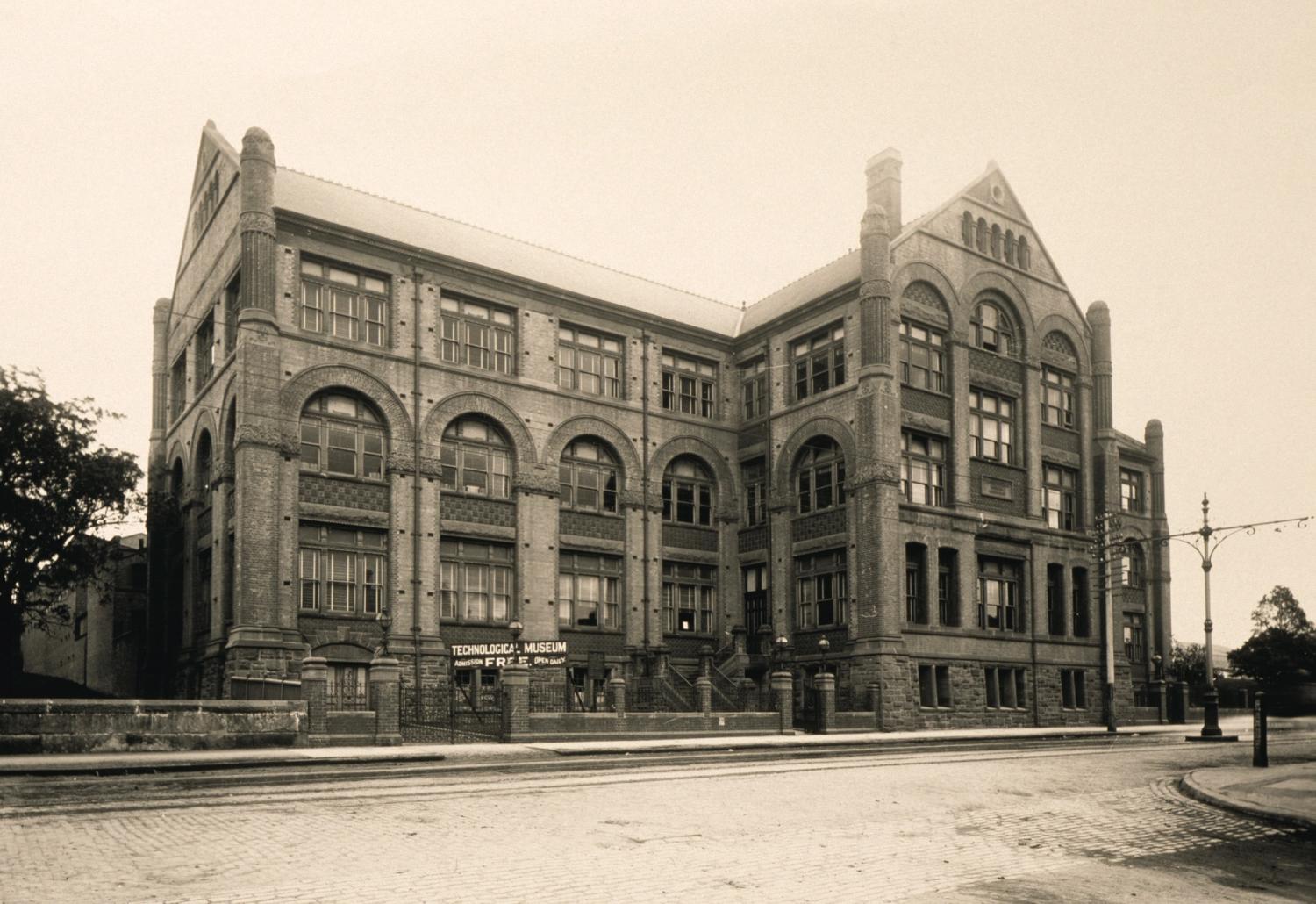
Shirley de Vocht studied at East Sydney Technical College (ESTC) from 1944 through to 1946 (2 evenings and one day ie Fridays) under Phyllis Shillito (1895-1980), an English designer who had come to Australia from the Yorkshire Textile Centre. Shillito later started a private school at 60 Grosvenor Street, The Rocks, Sydney where students were often taken around The Rocks area to study and draw. Students usually stayed at ESTC for five years, however Phyllis Shillito helped Shirley get a position with Silk and Textile Printers Pty Ltd (STP) at 30-62 Barcom Ave, Darlinghurst in 1944, and Shirley worked there till 1946.
Claudio Alcorso (1913-2000), his brother Orlando and Paul Sonnino, had established STP in 1939. STP is best known for having developed a milestone exhibition in the 1940s of Australian artist-designed Modernage Fabrics, a pioneering early attempt to link Australian art to textile design.
In 1947, Shirley went to work for Modern Ceramic Products (MCP) at 107 Redfern Street, Redfern, and worked with MCP till 1948 under the MCP manager, Mr. Impei.
In 1948, Shirley married John de Vocht, a photographer who was in the Dutch Air Force. Their daughter Nicolle Leigh de Vocht was born in 1962. Nicolle (now Nicolle Drake) also studied colour and design with Phyllis Shillito. Their son Vaughn Willem de Vocht was born in 1960.
John de Vocht had trained in England and was sent to Australia in lieu of being sent to the Dutch East Indies. Initially based at the Archerfield Aerodrome in Qld, John de Vocht moved to Bradfield Park, Sydney where he met Shirley de Vocht around 1945. He then went onto the East Indies for two and a half years, and continued to correspond with Shirley until they married in 1948.
Between 1949 and 1950, Shirley worked as a textile designer at Tennyson Textile Mills Pty Ltd, Gladesville, and between 1949 and 1951, she also worked for Coverings & Co Pty Ltd, 72 Gardners Road, Mascot producing jacquard weave designs. During theses years, 1949 to 1951, Shirley also created freelance textile designs of Australian flora including native heath, flannel flowers, wattle and other Australian flora. Several of these were forwarded to FW Grafton & Co Ltd in England in 1952 where one was purchased for production while another was exhibited in England before being returned to Australia.
In 1954, two of Shirley de Vocht's textile designs were selected for inclusion in the Leroy-Alcorso design competition where the 100 best entries received were exhibited. The exhibition included a textile design by Douglas Annand which won first prize.
From 1951 to 1959, Shirley worked as a designer with Dri-Glo Towels Pty Ltd, 213-253 Parramatta Road, Five Dock where she designed a towel for the 1956 Melbourne Olympic Games, among other towel designs, including a daffodil design and a complex merging colour design with vertical stripes.
Towards the end of her life, Shirley de Vocht focused on hand painting Australia's endangered species such as the native cat, the quoll and the snowy numbat onto commercially available blank ceramic plates, with each design becoming a one-off requiring 3 to 4 kiln firings. Shirley de Vocht's love of native animals and motifs, and incorporation of Aboriginal motifs into her textile designs, possibly grew out of her own personal Indigenous heritage. (Unfortunately I never had an opportunity to speak to Shirley about this aspect of her work when we met, as I only learnt about Shirley's Aboriginal heritage from her daughter, after Shirley died of cancer in 2003.)
Compiled by Anne-Marie Van de Ven, Curator, 2002 with the assistance of Shirley and John de Vocht, updated by the curator after the family of Shirley de Vocht visited the Museum to view the archive on 14/11/2008.