

1980s quotes

I am starting to gather some classic quotes from the 1980s. Most of the ones I have found are from politicians, but I am looking for quotes from other areas of public life and popular culture. Here are some of the quotes I have found so far from real people (as opposed to film and TV characters):

‘We want to be respected again.’ (Ronald Reagan, 1980)

‘Trees cause more pollution than automobiles do.’ (Ronald Reagan, August 1980)

‘The eighties will belong to the computer’. (Kraftwerk’s Ralf Hutter in Australia, 1981)

‘Yes … whatever that may mean.’ (Prince Charles, when asked if he was in love, after the announcement of his engagement to Lady Diana Spencer, 1981)

‘How does it feel to have blood on your hands?’ (Richard Carleton interviewing the new Opposition Leader Bob Hawke, 3 February 1983)

‘Any boss who sacks a worker for not turning up today is a bum’. (Prime Minister Bob Hawke, after the America’s Cup, 1983)

‘We don’t pay taxes. Only the little people pay taxes.’ (Leona Helmsley, hotel owner and the ‘queen of mean’, October 1983. She was convicted in 1989 for tax evasion.)

‘I guess in a way they are counterrevolutionary, and God bless them for being that way. And I guess that makes them contras, and so it makes me a contra, too.’ (President Ronald Reagan, March 1986)

‘We did not — repeat, did not — trade weapons or anything else for hostages, nor will we’. (President Ronald Reagan, November 1986)

‘From this day onwards, Howard will wear his leadership like a crown of thorns, and in the Parliament I’ll do everything to crucify him’. (Treasurer Paul Keating, 1986)

‘By 1990 no Australian child will be living in poverty’. (Prime Minister Bob Hawke, 23 June 1987)

‘I did not have three thousand pairs of shoes, I had one thousand and sixty.’ (Imelda Marcos, 1987)

‘Read my lips: no new taxes.’ (George H W Bush, 18 August 1988)

‘That’s Lazarus with a triple bypass.’ (John Howard, on the day he lost the leadership of the Liberal Party, when asked if he could make a comeback, 9 May 1989)

Can you think of more classic 1980s quotes?

Oh no, not a vision statement!

Development of the 1980s exhibition is proceeding fairly well. We hope to have it up and running by December 2009. I am having a little Christmas holiday break but have been working on a kind of ‘vision statement’ (I hate the term. It sounds so institutional but I can’t think of a what else to call it). I guess I’m trying to sum up what this exhibition is going to be all about, to get it clear in my mind. Anyhow, how does this sound for starters?

‘This exhibition takes a light-hearted look at Australian popular culture in the 1980s. It examines the cultural activities, pastimes and entertainments practised and enjoyed in mainstream society. This period shaped the so-called Generation X, and the exhibition will have a strong focus on youth culture.

‘It will interpret the 1980s through subcultures, movements and trends expressed in music, film, television, magazines, celebrity, design and street fashion. It will address the broad sweep of popular culture, placed into historical context through a timeline of newsworthy events. While the emphasis is on the everyday experiences of ‘ordinary’ young Australians, these experiences are contextualised within a global setting.

‘This is conceived as a fun exhibition, but based on a substantial framework of research and knowledge. Its content will draw heavily on the Powerhouse Museum’s collection. The 1980s exhibition will resonate with visitors whose formative years were in the 1980s.’

Fads and crazes

Some of the recent comments posted here by Wendy and Christen mention fads or crazes from the 1980s, like yo-yos, Sunnyboys and sherbet-filled straws. For me this is déjà-v revisited all over again. You see, I have to fess up to being a mouldy old, dyed-in-the-wool baby boomer. That’s why I need your help on 1980s childhood stuff. The weird thing is that yo-yos, Sunnyboys and sherbet-filled straws were all the rage at my school around 1966. Years later, Peter Allen wrote a song called ‘Everything Old is New Again’ and he was right. As well as Sunnyboys (frozen orange drink in a pyramid-shaped pack, right?), there was Razz – frozen red drink, supposedly raspberry-flavoured. These were highly prized in the school playground on a hot day. I was just wondering if they still exist, did a quick google and voila! There was a suburban myth in my neighbourhood that if you ripped open the empty packaging there was some kind of serial number printed inside that could land you a free Sunnyboy.

It is reasonable to assume that Sunnyboys inspired the name of Jeremy Oxley’s post-punk band from the early 1980s, the Sunnyboys. They had a great song called ‘Alone with You’ around 1981, but I digress.

By my definition, fads are products or practices that come into sudden popularity and disappear just as quickly. And in many cases they return and fade again some years later. Sometimes you think a product is just a fad, but it never goes away. I think the Twister game might fall into this category. It was a big craze when I was a kid in the 1960s, along with were hula hoops and Scanlen’s bubble gum cards dedicated to a particular TV show (I still have a complete set of cards from the Japanese TV series The Samurai – what a show!) And also those slightly bizarre things that were advertised on the back of American comic books – Sea Monkeys, X-Ray Specs and Bullworker body building kits. They were fads, weren’t they? Oh, and folk music.

Anyhow, back to the 80s and its fads and crazes. There was Rubik’s Cube, of course, Trivial Pursuit, Scratch ’n’ Sniff products and some of stuff mentioned here recently under ’1980s toys and games’. What other fads or crazes were there in the 1980s?

1980s hand-held electronic games

Octopus

Octopus

Before Game Boy arrived in 1989, there was Game & Watch, a brand of hand-held electronic games from Nintendo. These weren’t multi-function toys — each Game & Watch allowed you to play just one game. Their success funded the research and development of the Nintendo Entertainment System and Game Boy.

In the Powerhouse Museum’s collection there are a few Game & Watch games dating from the early 80s. The one shown above is called Octopus and came to the Museum from Barbara Palmer, who remembers playing the console in the school playground in the early 80s, when she was in Year 7 or 8.

Photo Nº: 00x03276

The other four, Turtle Bridge, PopEye, Donkey Kong Jr and Fire, were donated to the Museum by a generous guy called Michael Henry, who was given Donkey Kong Jr for his 9th birthday in 1982. I wonder if anybody else has kept Game & Watch games from the 80s. Do you remember playing with them?

We also have this game called Shuttle Voyage, which is a bit of a mystery. Michael Henry said it was a cheap Chinese-made imitation of Nintendo games and we think it dates from around 1983.

Photo Nº: 00x03271

Does anybody know more about these Chinese hand-held games from the early 80s?

1980s toys and games

Wow, I’ve been busy. My days have been too clogged to blog. I’ve been trying to make some solid progress on this 80s exhibition before the Xmas break. I’m really getting excited about this project.

I have been asking lots of people what they would like to see in an exhibition about the 1980s and have received some interesting responses. People who were children at that time often suggest toys and games. It seems to me that toys were shifting from being things that mimicked adult life (trains, guns etc) towards more reliance on fantasy, science fiction and TV cartoons. They were increasingly made of plastic, rather than metal or wood.

There are many toys that people talk about that we don’t have. Does anybody remember playing with any of the following things in the 1980s, and do you still have them?

Slyvanian families (plush toys), Glo Friends, Koosh balls, a corporate Barbie doll or Barbie and the Rockers, a troll doll. We are on the lookout for toys and merchandise from cartoons like Rainbow Brite, He-Man and She-Ra, Smurfs, Care Bears, Gummi Bears, Teenage Mutant Ninja Turtles, Popples, Muppet Babies, Pound Puppies, My Little Pony, Teddy Ruxpin, Strawberry Shortcake & Friends.

We want to include children’s fads from the 80s. Two things that are frequently mentioned are Cabbage Patch Kids and Rubik’s Cube. Luckily we have one of each in the Powerhouse Museum’s collection. Here is the Cabbage Patch doll.

Cabbage Patch Kid

Cabbage Patch Kid

Talking about 80s fads, I am also looking for a Hypercolour t-shirt (so many people mention these!) and flourescent clothing.

What other classic 1980s toys and games were there?

Music video clips

So, what were your favourite Australian clips of the 80s and do you know who made them?

Before he became a Hollywood film maker, Russell Mulcahy produced some imaginative clips, despite having lower budgets that his overseas counterparts. Mulcahy made clips for people like Air Supply, Little River Band, Icehouse and Richard Clapton. He moved to London and made videos for Elton John, Paul McCartney and most other members of the English rock royalty.

Crowded House and INXS always seemed to have great clips. ‘Don’t Dream It’s Over’ and ‘Kiss the Dirt (Falling Down the Mountain)’ come to mind and I recall that they were both made by Alex Proyas’ production company Meaningful Eye Contact. Proyas was a prolific clip-maker and he too became a Hollywood film director (The Crow, Dark City, I Robot).

Richard Lowenstein made an amazing clip for the Hunters and Collectors song ‘Talking to a Stranger’. My namesake Peter Cox made a stack of excellent music videos, including the clip for Cold Chisel’s ‘Cheap Wine’. There was an adults-only clip for the Stephen Cummings song ‘Gymnasium’, directed by Kimble Rendall. Midnight Oil’s classic ‘Beds Are Burning’ had a great clip directed by Claudia Castle.

On the humorous side, there was that clip where Paul Kelly was driving a taxi – was it ‘Before Too Long’? — and just about anything that involved Mental as Anything.

Some of the notable clips that I recall from overseas artists in the 80s are ‘I Wanna Be Loved’ by Elvis Costello, ‘Cry’ by Godley & Crème, ‘Girls Just Wanna Have Fun’ (Cyndi Lauper), ‘Relax’ (Frankie Goes to Hollywood), ‘Sledgehammer’ (Peter Gabriel), ‘Money for Nothing’ (Dire Straits), ‘The Boys of Summer’ (Don Henley), ‘You Might Think’ (The Cars), ‘Take on Me’ (A-Ha), ‘Dancing in the Street’ (Jagger and Bowie), ‘Rockit’ (Herbie Hancock) and ‘Jump’ (Van Halen). There are literally hundreds, thousands of others but the big daddy was Michael Jackson’s epic clip for ‘Thriller’.

And what about those Robert Palmer clips? Does anybody epitomise the suave, affluent 80s more than that guy?

I love the literal versions of 80s video clips that have appeared on the web, with revised, banal lyrics that match what’s happening on the screen. Check out literal versions of ‘Take on Me’ by A-Ha and ‘Head Over Heels’ by Tears for Fears.

What do you remember as the iconic 80s music video clips of the 80s?

Music video shows

I’m hoping we can show some classic video clips in this 1980s exhibition we are planning. Video clips were crucial to the development of both music and television in the 1980s. This was the decade when, as the Buggles had predicted, ‘Video Killed the Radio Star’. In fact when MTV, the 24 hour-a-day music television cable channel, commenced in the USA in 1981, the first item shown was the Buggles’ prophetic clip. From this time music was consumed increasingly on TV rather than just on radio. It came with an explosion of imagery and movement, as artists would use clips to parade their style and update their look. Celebrated as an original way to promote recording artists, video clips had a profound influence on record and concert sales and shifted the place of music in daily life.

I found some useful internet resources associated with the USA’s Rock ’n’ Roll Hall of Fame. There are some great 80s music web links here.

Music video existed for years before MTV, in the form of film clips inserted into TV shows, as far back as Brian Henderson’s Bandstand . Without buying into insoluble arguments about what was the first music clip, I would point to Crash Craddock’s ‘Boom Boom Baby’, which got a lot of airplay on Bandstand around 1960. It made the singer a star in Australia, although he was relatively unknown back in the States. In terms of creativity and originality, the trail was blazed by Bob Dylan’s ‘Subterranean Homesick Blues’, a clever black and white clip filmed in 1965 by D A Pennebaker. Included as the first scene in the film Don’t Look Back, it didn’t get much TV airplay until later but was highly influential.

In Australia, the ABC’s Countdown is remembered as a 70s phenomenon but it was equally an 80s thing, as it continued until 1987. Aimed specifically at a teenage audience, Countdown helped to consolidate the age of music video by screening the latest clips from overseas. It introduced hundreds of Australian performers to a mass audience and developed a capacity to create stars and hit records. Being a national program, it had the power to make Australian acts well-known all around the country.

Also in the 1980s, a lot of clips were seen on the Saturday morning TV show Sounds. It was an important vehicle for promoting music but rarely receives the recognition that Countdown gets. I think I am right in saying that in 1974 Graham Webb had started The Sat Today Show, which only showed music video clips. Sydney DJ Donnie Sutherland took over as host and the show became Sound Unlimited (later Sounds) and ran until December 1987, live for three hours a week, 52 weeks a year. Sounds not only introduced a generation of Australians to rock music, but, in the years before MTV hit American screens, it ushered in the era of music video. Sounds could not compete with Countdown’s insistence on the right to premiere new clips, but it presented an unparalleled breadth of Australian and overseas talent. Check out this 1980 promo for Sounds.

Around the time of Countdown’s demise in 1987 (I won’t mention the short-lived Countdown Revolution!), the ABC launched its long-running weekend music program Rage, playing clips through the night and into the morning. Rage remains an important platform for emerging Australian talent, screening videos from various genres and eras without commercial pressures.

Just weeks later, the Nine network launched its new music program MTV, a kind of local, free-to-air franchise of the American cable channel. You will remember Richard Wilkins as the genial host. Now there’s a character who emerged in the 80s. He was actually a singer in the early 80s and I recall that he toured Australia with Grace Jones. More about her later!

What are your memories of music video on TV in the 80s?

Defining the 80s

Decades cannot easily be categorised. They are mathematically arbitrary and have become a clichéd journalistic convention. But I suspect that our audience will latch on to the notion of an exhibition about the 80s as an idea that has legs.

Other decades are defined by slogans – the roaring twenties, the boring fifties, the swinging sixties. What defines the eighties? The greed decade? The mean decade? One big party?

The 1980s have been characterised as a period of consumerist excess, riding on the back of an economic and industrial boom, expressed in a contemptuous flaunting of wealth through expensive homes, cars and designer label fashion. A superficial and frivolous decade. The ‘greed is good’ thing is a stereotype, there is something to it. Business and finance seemed to be dominated by tycoons like Alan Bond, Christopher Skase, Rupert Murdoch and Kerry Packer. In many ways it was a period when conservatism was re-asserted. After all, this was the era of Thatcher and Reagan, monetarism and economic rationalism.

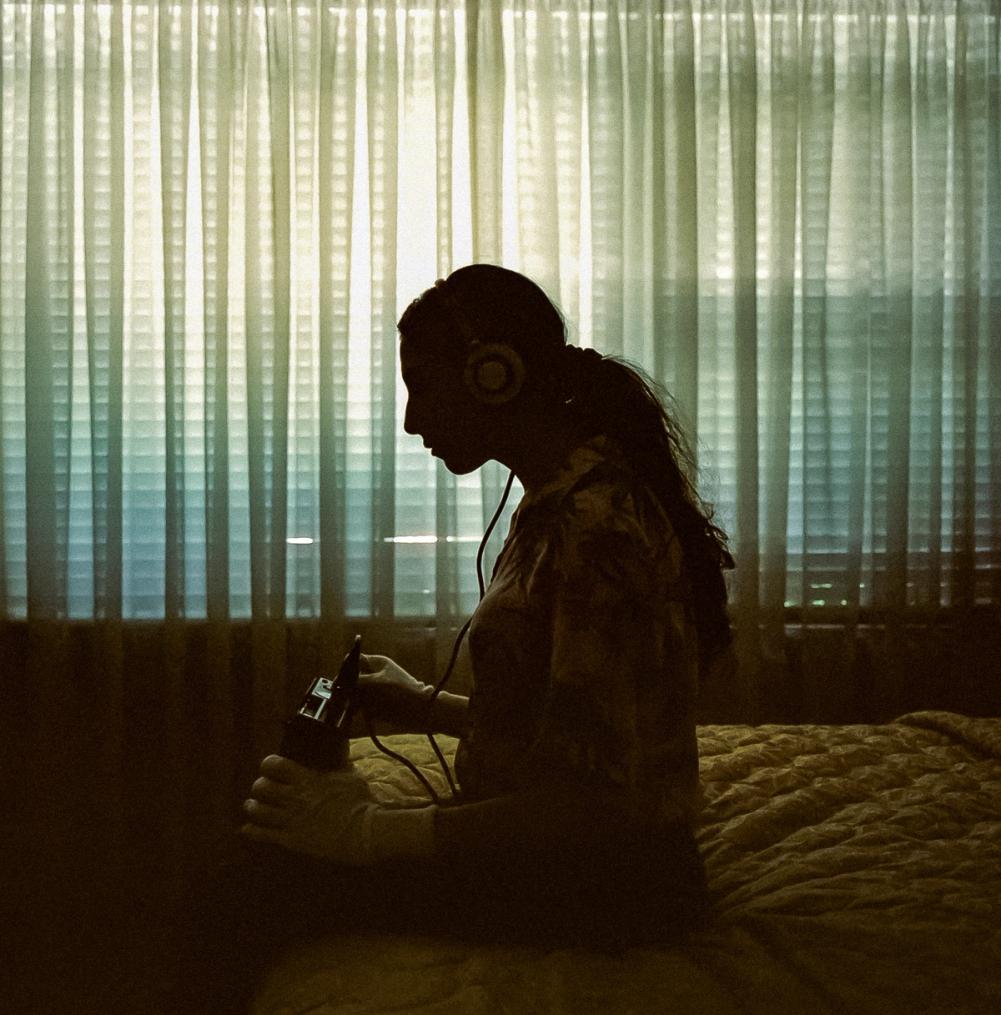
However there is another side to the 1980s. Paradoxically, it was also a period of change. There were significant developments in the roles of women in society. Homosexuality was decriminalised in most Australian states. Environmental issues came to public attention, especially with the aftermath of 1979’s Three Mile Island nuclear accident and 1986’s Chernobyl disaster. Cigarette advertising in cinemas was banned, smoking decreased, cocaine apparently became fashionable. The personal computer appeared, and video games like Space Invaders and Pac-Man became popular. The Walkman and video cassette recorders took off. AIDS appeared and safe sex followed. Cities were redeveloped. Australia celebrated the Bicentennial of European settlement. Brisbane held World Expo ’88. The late 80s saw the fall of the Berlin Wall and end of the Cold War, a monumental shift.

I found a useful 80s popular culture site called inthe80s.com. Check it out.

Maybe we should question the ‘greed decade’ and conservative decade stereotypes. Do they do justice to the importance, diversity and creativity of the time. What do you think?

Here we go!

Australia in the 1980s is such a broad subject for an exhibition. I am pondering how to give it a clear focus.

Somebody once said that history doesn’t have to be ancient, just relevant. What would our Gen X audience find relevant? I’m thinking that they would hope to see an interpretation of the 1980s in terms of what they experienced as young people, within the broad sweep of popular culture. An exhibition about their everyday life, making reference to their favourite TV shows, movies, music, products, celebrities, fads and newsworthy events. It is all about how people spent their leisure time, what they ate and drank, the clothes they wore, what shows they went to see, their first encounters with computers etc. The emphasis would be on the experiences of ‘ordinary’ Australian people, not just the great, the powerful, the brilliant and the beautiful.

The idea is for an exhibition about Australian life in the 80s but we cannot ignore what was going on in the world. So there would have to be a global context, a background of national and international events. I wonder what is the best balance. I mean, an exhibition about the 80s needs to at least mention crucial events and people like the trial of Lindy Chamberlain, the death of John Lennon, the wedding of Charles and Di, the Falklands war, the Ash Wednesday bushfires, the AIDS epidemic, the America’s Cup victory, Bob Hawke, Cliff Young, Olympic boycotts, the first Apple Mac, AUSSAT, Allan Border, the Sydney Swans, Chernobyl, the Challenger disaster, the stock market crash of 1987, the Bicentenary and Brisbane World Expo ’88, the fall of the Berlin Wall and Tiananmen Square. Maybe we need an illustrated timeline as a kind of backdrop to a bunch of other yet-to-be-determined themes. I’ll keep thinking.


500 Harris Street Ultimo, PO Box K346 Haymarket, Sydney NSW 1238, Australia.
NSW Government | About this website | Privacy statement

all contents © copyright Powerhouse Museum
Powerhouse Museum collection index